
Executive Overview
The landscape of pet-friendly travel has undergone a profound transformation over the past several years, marked by logistical milestones, cross-country migrations, and, most recently, an unprecedented global pause brought on by the COVID-19 pandemic. For Dog Jaunt, a premier digital community and resource hub dedicated to traveling with canine companions, this period of stillness represents both a conclusion to a massive personal undertaking and the reinvigoration of a beloved online enclave.
For the better part of the last half-decade, the publication’s founder operated largely behind the scenes, dedicating time, energy, and extensive resources to orchestrating the complex relocation of both sets of aging parents—first the in-laws and subsequently her own—from their respective distant homes to the Pacific Northwest hub of Seattle. These cross-country transitions required exhaustive planning, intricate navigation of the American highway system, and the steadfast companionship of Chloe, the blog’s resident mascot and seasoned travel dog.
Just as these multi-generational family relocations successfully concluded, the emergence of a global health crisis abruptly halted the international and domestic tourism sectors. Travel ground to an absolute standstill. Yet, rather than remaining dormant, Dog Jaunt is staging a strategic return. By updating critical industry resources—such as comprehensive domestic and international airline pet-policy matrices—and fostering a renewed sense of community among pet owners confined to their homes, the platform is positioning itself as an anchor of resilience. This report examines the intersection of pet travel logistics, family relocation dynamics, and the psychological role of digital communities during times of systemic disruption.
Detailed Chronology: The Road to Seattle and Beyond
To understand the current revival of Dog Jaunt, one must retrace the logistical marathon that preceded it. The narrative of the past few years has been defined by asphalt, interstate navigation, and the meticulous coordination required to move households thousands of miles apart.
Phase One: The In-Law Relocation
The journey began with the decision to bring the founder’s in-laws out to Seattle. While many families delegate such monumental shifts to commercial moving companies and senior relocation specialists, the involvement of beloved family pets added layers of complexity. The operation served as an early testing ground for long-distance transit protocols, testing the limits of vehicle-based pet travel over thousands of miles of varied terrain.
Phase Two: The Parental Migration
Hardly had the dust settled from the initial move when the second phase commenced: relocating the founder’s own parents to the Seattle area. This undertaking required traversing the American continent multiple times. Over the course of these successive voyages, the travel team—consisting of the founder, her husband, and Chloe—mapped out virtually every major east-to-west transit corridor in the United States.
While conventional wisdom often dictates taking the most direct interstate route to minimize travel fatigue, these cross-country migrations evolved into exploratory expeditions. On the final major relocation leg, the travelers made a deliberate departure from the well-trodden asphalt of historic Route 66, peeling off north even before reaching Gallup, New Mexico. Their destination: the striking, terracotta-hued landscapes of Moab, Utah, and the surrounding canyon country.
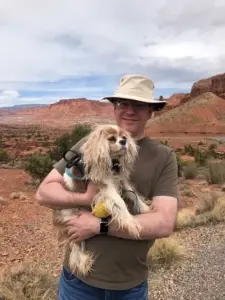
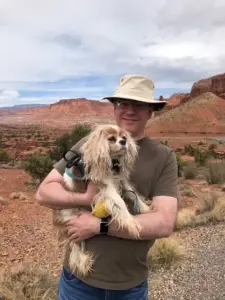
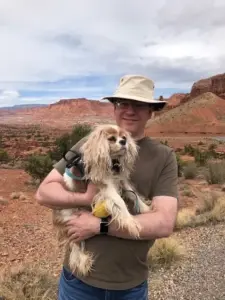
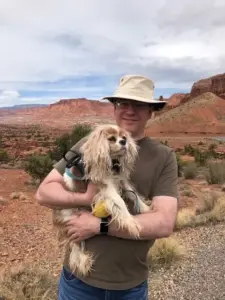
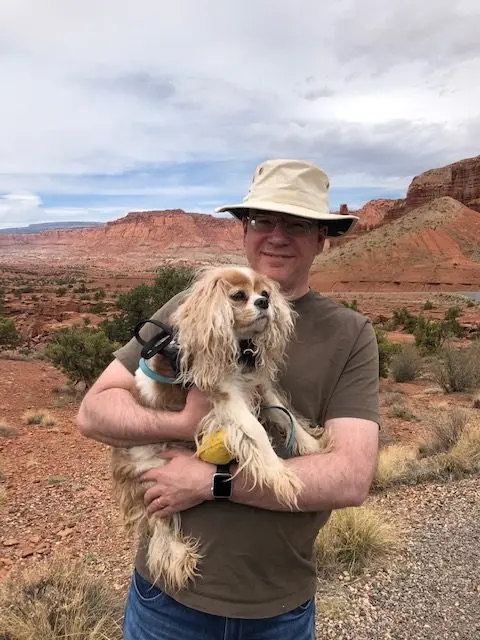
It was during these excursions that Chloe cemented her status as an elite road-trip veteran. Passing through locations such as Capitol Reef National Park in Utah, the environment left an indelible mark—literally. True to the striking geology of the region, Chloe’s fur acquired a distinct, sun-kissed, terracotta hue affectionately dubbed "Capitol Reef Red." Photographic documentation from these trips captured the resilient canine resting comfortably in her handler’s arms, seemingly unfazed by the thousands of miles logged through desert heat, high-altitude mountain passes, and sprawling plains.
Phase Three: The Pandemic Interruption and Re-Entry
By early 2020, the grand family relocation project was complete. All parents were comfortably settled in Seattle, and the stage was set for a triumphant return to regular Dog Jaunt publishing schedules. However, reality intervened. The rapid escalation of the COVID-19 pandemic imposed sudden, sweeping restrictions on human mobility. Airports emptied, flight schedules were slashed, and the very concept of leisure travel became an impossibility.
Faced with this sudden inertia, Dog Jaunt chose not to retreat into silence, but to pivot. Recognizing that physical travel restrictions would inevitably lift in the future, the platform initiated a comprehensive audit and update of its core informational assets. Chief among these was the meticulous overhaul of the U.S. Airlines Pet Policies and International Airlines Pet Policies for In-Cabin Travel charts. These resources, relied upon by thousands of globetrotting pet owners, were brought completely up to date to reflect the shifting regulatory environment of the aviation industry during a global health crisis.
Supporting Context & Metrics: The Mechanics of Pet Mobility
To fully appreciate the value of Dog Jaunt’s updated travel matrices, one must examine the broader economic and logistical ecosystem surrounding pet travel in the modern era. The pet humanization trend—accelerated dramatically during periods of extended isolation—has turned companion animals into core members of the family unit, with travel expectations shifting accordingly.
Industry Metrics and Regulatory Complexity
Navigating pet policies across commercial airlines has historically been a fragmented and high-stakes endeavor. According to aggregate industry data from the U.S. Department of Transportation (DOT), millions of animals are transported via commercial air carriers annually in the United States alone. However, policies vary wildly among carriers:
- In-Cabin Accommodation: While some major legacy carriers permit small dogs and cats in the cabin subject to strict carrier-dimension rules and weight limits (typically up to 20 pounds including the carrier), others restrict in-cabin travel entirely or limit it based on aircraft type.
- Cargo and Baggage Compartments: Due to safety concerns, regulatory pressure, and varying climate-control standards, several major airlines have permanently altered or restricted their acceptance of pets as checked baggage, steering owners toward in-cabin travel or specialized commercial pet-shipping brokers.
- International Nuances: International transit introduces an entirely separate matrix of requirements, including USDA endorsement of health certificates, microchip ISO compliance, destination-specific rabies titer testing, and quarantine mandates that can range from zero days to several months depending on the country of import.
By maintaining up-to-date, centralized comparative charts, platforms like Dog Jaunt fulfill an essential public service for pet owners. These tools reduce the risk of administrative errors that could otherwise result in denied boardings, extended quarantines, or safety hazards for traveling animals.
The Psychology of Community in Isolation
The decision to reactivate the Dog Jaunt blog and its associated social channels highlights an often-underestimated aspect of digital media: psychological sustenance. As an admitted textbook introvert, the founder’s pivot back to community engagement underscores the universal human need for connection, particularly during periods of high anxiety.
Psychological studies on isolation during public health emergencies indicate that shared-interest communities act as vital buffers against stress. For pet owners, whose daily routines are anchored by the care and companionship of animals, discussing travel logistics, sharing past adventure narratives, and looking forward to future journeys provides a cognitive escape hatch from immediate constraints. The platform’s deliberate choice to prioritize blog comments—which remain permanently accessible as a searchable archive—over ephemeral social media feeds emphasizes the building of a lasting digital repository of shared experiences.
Official Statements & Community Feedback
The revival of Dog Jaunt has been met with an enthusiastic response from its long-standing readership, affectionately referred to as "Dog Jaunt Nation." The dialogue between the platform and its audience highlights a shared resilience and an eager anticipation of future mobility.
Reflections from the Founder
In her announcement addressing the community, the founder reflected on the irony of timing:
"Isn’t it ironic? (Don’t cha think?) For the past few years, I’ve been entirely focused on moving my in-laws, and then my own parents, out to Seattle from their respective homes, and you haven’t heard a peep from me or Chloe. Now the parents are settled… and this dreadful virus is upon us, and no one is traveling. But Dog Jaunt Nation is resilient, and hopeful, and we can share tips and stories and look forward to better days."
Addressing concerns regarding Chloe’s well-being after a prolonged public hiatus, she offered reassurance:
"First things first: Chloe is absolutely fine. She’s — well, let’s call it blonder — than she was, but she’s full of pep and bounce. Thank you to all of you who worried about her during this downtime, and forgive me for not writing back with reassurance."
Highlighting the emotional core of the platform, the founder noted:
"The thing I valued most about Dog Jaunt — and this is odd, coming from a textbook introvert — was the community we created together. Especially in this anxious time, it’ll be a great source of comfort to be back in touch with Dog Jaunt Nation."
Engagement and the Reader Response Loop
In response to calls for community participation, readers have flooded the platform’s designated communication channels with anecdotes, photographs, and inquiries regarding future travel plans. The integration of direct email submissions alongside traditional blog commentary has created a multi-layered feedback loop.
Rather than functioning as a unidirectional broadcast channel, Dog Jaunt is re-establishing itself as an interactive forum where community members can share personal travel victories, troubleshoot upcoming regulatory hurdles, and document how their own pets have coped with the shifts in daily routines during periods of confinement.
Future Outlook: Preparing for the Return of Travel
As global health conditions eventually stabilize and transportation networks fully reopen, the pent-up demand for travel—both human and canine—is projected to surge. The strategic repositioning of Dog Jaunt places it at the vanguard of this anticipated recovery.
Anticipated Trends in Post-Pandemic Pet Travel
- Hyper-Localized Road Trips: Following the success of cross-country migrations through Utah and New Mexico, industry analysts expect domestic road travel to remain the preferred method for pet owners wary of complex airline restrictions in the near term. National parks, pet-friendly boutique lodgings, and scenic byways are expected to see sustained high demand.
- Regulatory Vigilance: International pet travel will likely require heightened attention to documentation. Changing entry requirements, fluctuating quarantine rules, and potential health-screening protocols will necessitate the exact type of real-time policy tracking that Dog Jaunt provides through its continuously updated airline matrices.
- Community-Driven Content Expansion: Future iterations of the platform will likely incorporate expanded user-generated travelogues, reflecting the diverse ways members of Dog Jaunt Nation adapted their travel styles during the hiatus.
Conclusion
The story of Dog Jaunt’s return is emblematic of a broader cultural resilience. By successfully completing a massive family relocation logistics project, weathering a global health crisis, and re-engaging an anxious community through meticulous resource updates and shared storytelling, the platform demonstrates that the desire to explore the world with our canine companions remains undiminished. As living-room daydreams inevitably transition back to real-world itineraries, Dog Jaunt Nation stands ready for the adventures ahead.