
Executive Overview
Long before a puppy learns to reliably sit on command, heel alongside a handler, or navigate bustling urban crosswalks, an intricate, high-stakes developmental symphony is already playing out behind the scenes. In the specialized world of assistance dog breeding and training, the journey of a future guide or service dog does not begin in formal obedience classes at six months of age; rather, it starts during the fragile, quiet hours of the neonatal period.
Organizations such as Dogs Inc recognize that crafting a world-class assistance dog requires a meticulous, science-backed continuum of care from day one. Central to this early intervention philosophy is Early Neurological Stimulation (ENS)—a specialized protocol consisting of brief, gentle tactile exercises administered during the first two weeks of life. While ENS is frequently misunderstood as early obedience training, it is actually a scientifically grounded method designed to jump-start neurological pathways, enhance cardiovascular performance, and bolster stress resilience.
When combined with subsequent developmental windows, such as the critical socialization period and adolescent boundary-testing phases, ENS acts as the foundational cornerstone for future emotional stability. This comprehensive report explores the biology of the neonatal stage, the mechanics and intended benefits of ENS, how it differs from active socialization, and why investing in a puppy’s earliest days is vital for producing calm, focused, and life-changing service partners.
Detailed Chronology: A Puppy’s Lifespan of Early Development
Understanding how a service dog is forged requires tracing their maturation through distinct, chronological developmental milestones. Each stage introduces unique neurobiological changes and environmental requirements that shape the adult animal.

1. The Neonatal Stage (Birth to 2 Weeks)
During this initial phase, newborn puppies are entirely reliant on their mother and littermates. Their eyes are tightly sealed, their ear canals are closed, and they lack the physiological capacity to regulate their own body temperature.
- Behavioral Profile: Puppies spend the vast majority of this window sleeping and nursing. Movement is limited to crawling toward warmth and milk.
- Internal Development: Despite their outwardly vulnerable appearance, the brain and central nervous systems are undergoing explosive development. This is the precise window in which Early Neurological Stimulation (ENS) is introduced. Because puppies cannot yet process complex sights or sounds, the focus is entirely on tactile stimulation and mild, controlled thermal shifts designed to activate neurological pathways without inducing distress.
2. The Transitional Stage (2 to 4 Weeks)
As puppies cross the threshold into the transitional period, their sensory world dramatically expands.
- Sensory Awakenings: Eyes and ears begin to open, exposing the puppies to light, shadow, and ambient sounds for the first time.
- Physical Milestones: By four weeks of age, puppies begin taking their first wobbly steps and experimenting with barking. Deciduous (baby) teeth erupt, signaling the gradual biological transition away from exclusive nursing toward soft gruel and, eventually, solid food. Social interactions with littermates intensify, laying the groundwork for basic bite inhibition and canine communication.
3. The Socialization Period (3 to 12 Weeks)
Widely recognized by animal behaviorists as the most critical window in a dog’s life, the socialization period bridges early infancy with independent exploration.
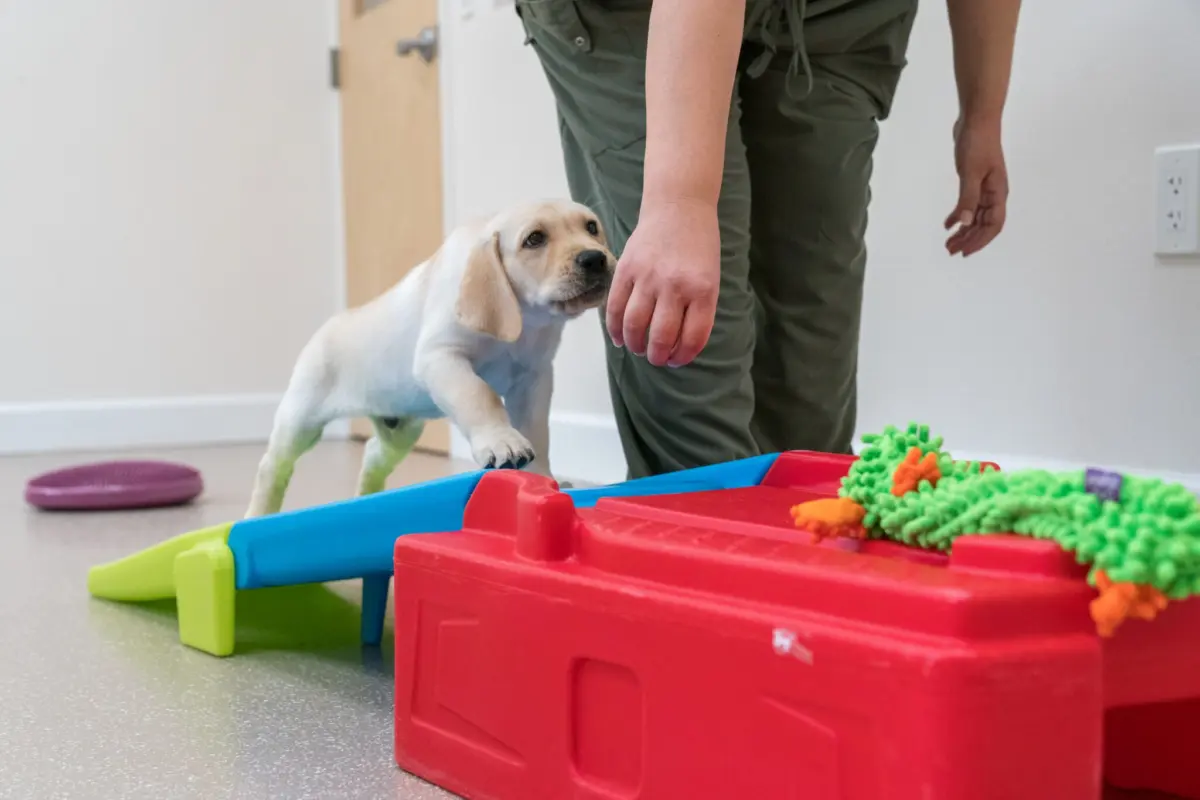
- Building Associations: Between 3 and 12 weeks, a young puppy’s brain is exceptionally plastic, eagerly absorbing novel environmental stimuli. Safe, positive exposure to diverse human demographics, varied flooring textures, unusual sounds, and novel objects is vital.
- Curbing Fear and Aggression: Experiences gathered during this window directly dictate future confidence. Without proper, structured socialization, dogs are at a much higher risk of developing chronic anxiety, fear-based reactivity, and aggression in adulthood. By 8 weeks of age, foundational impressions are forming that will define a friendly, well-adjusted temperament. By 12 weeks, puppies should actively navigate varied environments to cement these coping mechanisms.
4. The Juvenile and Adolescent Stage (6 Months to 12+ Months)
As puppies mature into adolescence, they begin navigating complex physiological and psychological shifts.

- Testing Boundaries: Much like human teenagers, canine adolescents often begin testing boundaries around the 6-month mark.
- Hormonal Milestones: Reproductive maturity typically unfolds between 6 and 12 months. For female dogs, this includes navigating initial heat cycles, while intact males may exhibit novel, hormone-driven behaviors.
- Fear Periods: Veterinary behaviorists note that puppies navigate an average of four distinct fear periods during their maturation. During these transient phases, familiar objects or harmless noises may suddenly cause hesitation or alarm. Thoughtful handling, positive reinforcement, and patience are paramount during these times to prevent long-term phobias.
Supporting Context & Metrics: The Science and Protocol of ENS
To appreciate the value of Early Neurological Stimulation, one must examine its origins and specific execution. Originally developed as the "Biosensor" program (and later popularized as the U.S. Military Dog program), ENS was designed to improve the adaptability and stress tolerance of working canines.
The Five-Step ENS Protocol
Administered once daily between days three and sixteen of a puppy’s life, ENS involves five distinct, gentle tactile exercises. Each exercise lasts for approximately three to five seconds:
- Tactile Stimulation: Holding the puppy in one hand, the handler uses a Q-tip to gently tickle the paw pad between the toes. This stimulates neurological pathways in the extremities.
- Head Up: Holding the puppy upright perpendicular to the floor, the handler supports the head and body, allowing the puppy to experience a mild gravitational shift.
- Head Down: The puppy is gently inverted so that its head points toward the ground, encouraging minor cardiovascular and circulatory adjustments.
- Supine Position: The puppy is placed flat on its back in the palm of the handler’s hand, resting comfortably for a few seconds.
- Thermal Stimulation: A damp towel that has been cooled in a refrigerator is placed inside a box, and the puppy is placed upon it for a brief moment, introducing a mild, non-harmful thermal challenge.
Documented Physiological and Psychological Impacts
While critics sometimes confuse handling protocols with overstimulation, structured ENS is brief, controlled, and deeply beneficial. Decades of observation by working dog organizations and canine researchers indicate that puppies subjected to this protocol exhibit several measurable advantages:
- Improved Cardiovascular Performance: Enhanced heart rates and stronger cardiac output under stress.
- Stronger Stress Tolerance: Greater resilience when confronted with novel, unexpected environmental changes.
- Enhanced Adrenal Function: More balanced hormonal responses to unfamiliar stimuli.
- Greater Disease Resistance: Anecdotal and observational studies suggest improved immune system resilience.
However, experts emphasize that ENS is merely one chapter in a comprehensive developmental library. It does not replace genetics, proper veterinary care, targeted socialization, or structured puppy-raising protocols.

Official Statements and Organizational Perspectives
Leading institutions dedicated to breeding and training elite working dogs view early intervention not as a luxury, but as an absolute necessity.
Organizations at the forefront of the industry, such as Dogs Inc, maintain that preparing a canine partner to navigate the complex challenges of a visually or physically impaired handler begins long before formal placement.
"Preparing future guide dogs and service dogs starts long before formal training begins," organizational representatives note. "At Dogs Inc, that journey starts from day one. A puppy’s first weeks may pass quickly, but they mark the beginning of a journey that continues long after those tiny paws start exploring the world."
Industry experts stress that elite service work demands a rare combination of unwavering focus, high stress tolerance, and unconditional gentleness. These traits cannot be manufactured overnight through coercive training methods; they must be cultivated organically from the neonatal stage onward. By introducing controlled sensory milestones—starting with ENS in the neonatal box, transitioning into structured socialization at four weeks, and continuing through adolescent obedience classes—organizations ensure that every potential guide dog is systematically insulated against future panic, distraction, and reactivity.

Future Outlook: Building Life-Changing Partners for Tomorrow
The evolution of canine developmental science has transformed how society views assistance dogs. What was once treated as an intuitive, trial-and-error process has matured into a precise discipline grounded in neurobiology, behavioral science, and ethical animal husbandry.
Looking forward, the integration of early intervention protocols like ENS with modern puppy-raising techniques holds immense promise for the service dog community. As breeding programs refine their selection criteria and incorporate advanced behavioral tracking, the attrition rates of working dogs are expected to decrease, ensuring that more highly qualified canines successfully graduate to support individuals in need.
Ultimately, the goal of early neurological stimulation, transitional enrichment, and lifelong positive reinforcement is not to manufacture an automaton, but rather to foster a confident, emotionally resilient companion. Whether guiding a visually impaired individual through a bustling transit hub or providing mobility assistance to a veteran, tomorrow’s service dogs owe their extraordinary capabilities to the quiet, careful, and scientifically validated investments made during their very first weeks of life.