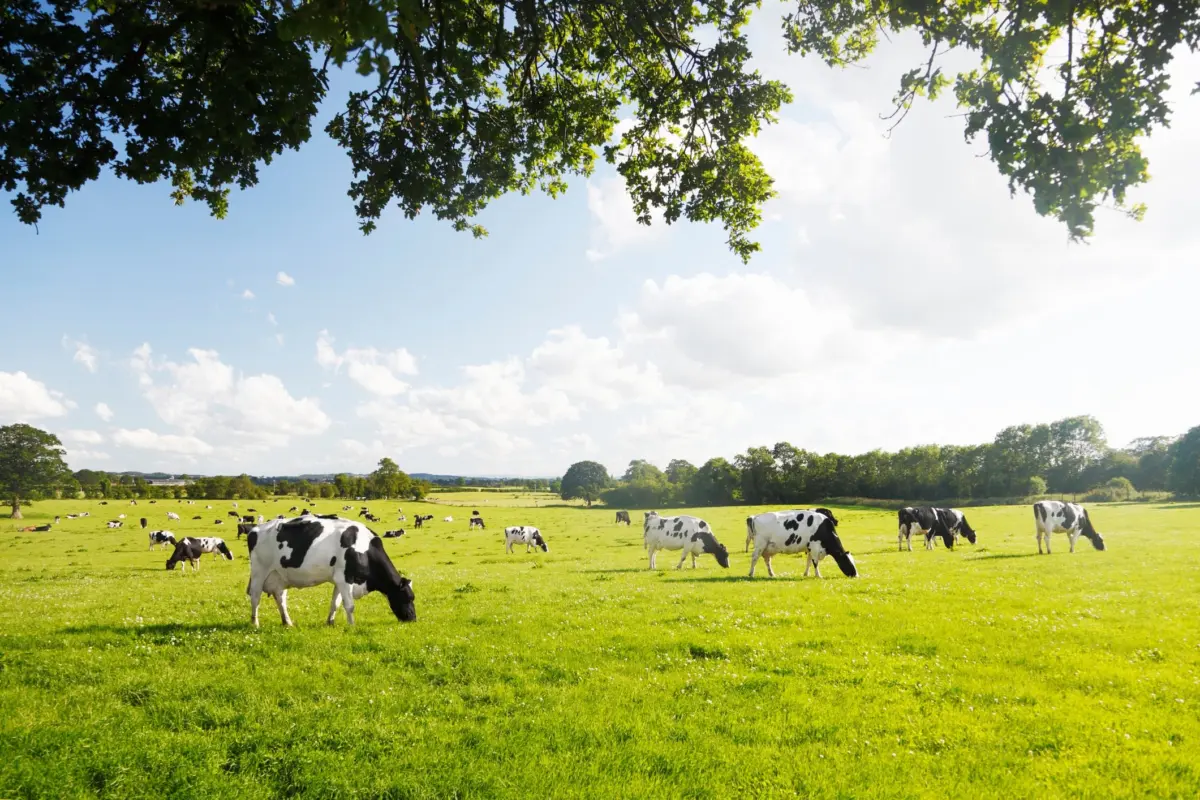

WWELLINGTON — In a watershed moment for New Zealand’s primary agricultural economy, the newly released New Zealand Dairy Statistics 2025/26 report has confirmed a historic industry milestone. Jointly published by DairyNZ and the Livestock Improvement Corporation (LIC), the data reveals that the national dairy sector has produced 21.76 billion litres of milk, surpassing two billion kilograms of milksolids in a single season for the first time in history.
This record-breaking output was achieved against a backdrop of structural contraction in total herd numbers, underscoring a profound shift toward intensive efficiency, data-driven breeding, and advanced on-farm management. Industry leaders attribute the milestone to decades of cumulative investment in animal genetics, reproductive technology, and refined pasture-based farming systems. However, as the sector celebrates these unprecedented productivity metrics, agricultural economists and environmental strategists are closely examining the broader implications of doing more with less structural footprint.
Executive Overview: A Paradigm Shift in National Dairy Output
The 2025/26 dairy season will be remembered as a turning point for New Zealand agriculture. For decades, the growth of the nation’s dairy industry was closely correlated with the physical expansion of the national herd and the conversion of land into dairy pasture. However, the latest statistics illustrate a fundamentally different economic and operational paradigm: one defined by biological optimization rather than geographic expansion.
According to the report, national milk production crossed the two billion kilogram milksolids threshold due to dramatic gains in per-cow performance. Average milk production reached an all-time high of 428 kilograms of milksolids per cow, representing a substantial leap from the 414 kilograms recorded in the previous season.
Crucially, this surge in output occurred despite a contraction in the number of operational dairy herds across the country.
Total dairy herds fell to 10,268, while the national cow population experienced a marginal 1% increase, settling at 4.72 million. This divergence between declining operational units and soaring production metrics highlights an intensifying trend of consolidation and efficiency. Farms are operating with tighter margins, fewer overall resources, and strict environmental parameters, yet they are extracting unprecedented value from every animal in the paddock.
Detailed Chronology: The Journey to Two Billion Kilograms
To understand the magnitude of the 2025/26 milestone, it is necessary to examine the historical trajectory of New Zealand’s dairy sector over the past quarter-century. The journey to surpassing two billion kilograms of milksolids was not an overnight anomaly; rather, it is the culmination of sustained, multi-decadal investments in science, technology, and animal husbandry.
The Turn of the Century: Expanding Horizons
At the turn of the millennium, New Zealand’s dairy industry was characterized by rapid land conversion, particularly in the South Island, and a heavy reliance on pasture acreage. Milk composition at the time was significantly leaner; during the 2000/01 season, milksolids accounted for just 8.48% of total milk volume. Farmers focused primarily on volume, and herd management practices relied heavily on traditional, less-targeted methodologies.
The Decade of Intensification (2010–2020)
Throughout the 2010s, facing increasing environmental scrutiny, fluctuating global dairy prices, and constraints on land and water resources, the sector began a deliberate pivot. The focus shifted away from expanding cow numbers toward optimizing farm systems. Farmers began widely adopting herd-testing protocols, investing in premium genetics, and refining split-calving and seasonal management practices. During this period, the six-week in-calf rate—a critical metric for herd efficiency—began a steady upward climb, moving from 63.5% in 2008 to over 67% by the end of the decade.
The 2025/26 Breakthrough Season
The culmination of these long-term trends materialized during the 2025/26 season. Favorable climatic conditions in key dairying regions, combined with near-record adoption rates of artificial breeding and performance-monitoring tools, created a compounding effect. Cows entered the milking season with superior health profiles, enhanced fertility, and genetic traits specifically tailored to New Zealand’s unique pasture-based systems. By the conclusion of peak milking, the national aggregate crossed the historic two billion kilogram mark, validating the industry’s strategic migration toward precision agriculture.
Supporting Context & Metrics: Unpacking the Data
A granular analysis of the New Zealand Dairy Statistics 2025/26 report reveals that the sector’s success is anchored across three primary pillars: genetic improvement, reproductive efficiency, and milk composition quality.
1. The Genetic Revolution and Herd Testing
The report indicates that New Zealand farmers are accelerating their adoption of advanced breeding and performance tools to a degree not seen in a generation. Herd-testing participation reached its highest level since the early 2000s, with a staggering 3.94 million cows—representing 83.3% of the entire national herd—undergoing testing during the 2025/26 season.
Simultaneously, artificial breeding (AB) adoption climbed to a 30-year high, with 84.8% of all national cows mated via AB. The correlation between these interventions and productivity is direct and measurable: herd-tested cows achieved an average production of 4,999 litres of milk and 452 kilograms of milksolids per cow, significantly outperforming the national average of 428 kilograms.
2. Reproductive Performance and Fertility Gains
Efficiency on a pasture-based dairy farm is intrinsically linked to reproductive success. A cow that calves promptly within the herd cycle maximizes her milking days and contributes to overall farm profitability.
The 2025/26 season set new benchmarks in this domain. Farmers recorded an average of 1.41 inseminations per cow, a historic high. More importantly, the six-week in-calf rate across seasonal and split-calving herds rose to 70.2%—a dramatic improvement from the 63.5% baseline recorded in 2008. This compounding improvement in fertility ensures that herds maintain optimal age structures, reduce empty rates, and operate with maximum biological efficiency.
3. Milk Composition and Quality Indicators
Beyond sheer volume, the intrinsic quality and composition of the milk itself have undergone a structural evolution. Milksolids now account for 9.27% of total milk volume, up from 8.48% in 2000/01. This means that every single litre of milk produced today contains a higher concentration of valuable fats and proteins.
From a logistical and environmental standpoint, this higher concentration yields profound efficiencies: processing plants handle less water volume per kilogram of product, transport emissions per kilogram of milksolids are reduced, and global processing yields are optimized. Furthermore, udder health indicators reached historic highs, with average somatic cell counts falling to a record-low 149,000 cells/mL, reflecting meticulous on-farm animal health management.
Official Statements: Industry Leadership Responds
The release of the milestone report has drawn widespread commentary from key figures across New Zealand’s agricultural sector, emphasizing both the economic significance of the data and the human effort required to achieve it.
Campbell Parker, Chief Executive of DairyNZ, praised the resilience and adaptability of the country’s farming community:
"Surpassing two billion kilograms of milksolids is a significant milestone for New Zealand dairy. It reflects the skill, investment, and day-to-day management of farmers, alongside long-term gains in genetics, reproduction, animal health, and farm systems. The figures show productivity and milk quality moving in the right direction. This matters for the competitiveness and resilience of farm businesses and the wider dairy sector."
Parker emphasized that the ability to achieve these records while navigating complex economic and regulatory landscapes demonstrates the enduring viability of New Zealand’s pasture-based model.
David Chin, Chief Executive of the Livestock Improvement Corporation (LIC), focused on the transformative role of data and technology in driving agricultural progress:
"The lift in reproductive performance is particularly encouraging. The six-week in-calf rate reached a record 70.2% across seasonal and split-calving herds, up from 63.5% in 2008. Strong fertility supports herd efficiency, while better-quality information helps farmers breed cows that are well suited to New Zealand’s pasture-based farming systems. Record participation in herd testing and artificial breeding gives farmers more information and more options to accelerate genetic gain."
Chin noted that the willingness of farmers to invest in data-driven decision-making tools is safeguarding the long-term competitive advantage of New Zealand dairy on the global stage.
Future Outlook: Challenges and Opportunities Ahead
While the 2025/26 Dairy Statistics present an undeniably triumphant picture of biological and operational efficiency, industry stakeholders are acutely aware that the future will demand continuous evolution.
Navigating Environmental and Regulatory Pressures
The primary challenge facing New Zealand dairy producers moving forward is the harmonization of record-level productivity with increasingly stringent environmental frameworks. As global markets demand lower carbon footprints and enhanced biodiversity protections, the dairy sector must prove that intensification through genetics and efficiency does not compromise environmental integrity. The reduction in somatic cell counts and higher milksolids concentration per litre are positive indicators of resource-efficient farming, but policymakers will continue to demand transparent metrics regarding greenhouse gas emissions and freshwater quality.
Technological Adaptation and Connectivity
Modern precision agriculture relies heavily on real-time data transmission, automated drafting gates, and cloud-based herd management software. However, external vulnerabilities—such as the ongoing decommissioning of legacy telecommunications infrastructure (including the broader impacts of the 3G network shutdowns on rural connectivity)—pose real challenges for farmers attempting to leverage advanced farm systems. Ensuring that rural infrastructure keeps pace with on-farm technological adoption will be a critical policy priority in the coming years.
Global Market Competitiveness
New Zealand remains a cornerstone exporter of dairy products to international markets, where it competes against subsidized European producers and rapidly expanding Asian and North American mega-dairies. The unique selling proposition of New Zealand dairy has always been its pasture-based, grass-fed pedigree combined with world-leading genetics. By crossing the two billion kilogram milestone while reducing the total number of operational herds, the sector has demonstrated that it can scale value without compromising its foundational model.
As the industry looks toward the latter half of the decade, the 2025/26 season will serve as the new benchmark. It proves that through disciplined science, unwavering dedication at the farm gate, and a commitment to continuous improvement, New Zealand’s dairy farmers are well-equipped to write the next chapter of the nation’s agricultural legacy.