
Published: October 22, 2026
Originally featured in the Alley Cat Action® 2026 Fall Newsletter. Read the full newsletter edition here.
Executive Overview
The summer of 2026 will be remembered in climate history as a period of punishing, record-shattering extremes. Across the United States and its territories, historic heatwaves and prolonged droughts collided with peak summer celebrations, creating life-threatening conditions for vulnerable populations. While human populations faced air-conditioning strains and power grid alerts, outdoor animals—specifically community and unhoused cats—confronted an invisible and immediate crisis: a desperate scarcity of hydration and shade.
In response to this escalating environmental emergency, the Rapid Response Team mobilized a nationwide and territorial intervention. Operating under the banner of Alley Cat Allies, field teams deployed critical supplies to regions overwhelmed by weather-induced resource collapse. From the humid mid-Atlantic streets of Richmond, Virginia, to the subtropical climate of Jackson, Florida, and onward to the drought-stricken neighborhoods of San Juan, Puerto Rico, the mission was clear: deliver vital wet food, emergency bottled water, and logistical support to the dedicated caregivers on the front lines.
This report details the scope of that crisis, the logistical triumphs of the Rapid Response Team, the testimonies of community caregivers, and the broader implications of climate volatility on outdoor animal welfare management.
Detailed Chronology
July 2026: A Fiery Fourth of July
As municipalities across the nation prepared for Independence Day festivities in early July 2026, meteorologists tracked an unprecedented thermal dome settling over the United States. Heat indexes soared well past 100 degrees Fahrenheit in dozens of states, breaking decades-old temperature records.

While community cats are resilient, adaptive creatures that instinctively seek out shaded refuges, undercrofts, and cross-breezes during high temperatures, the intensity of this specific heatwave surpassed normal coping thresholds. Prolonged exposure to extreme heat places cats at severe risk of heatstroke, dehydration, and organ failure.
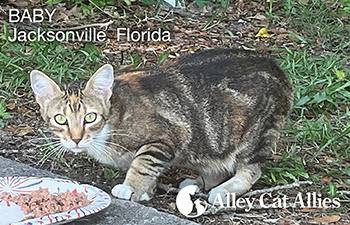
Recognizing the impending catastrophe, the Rapid Response Team preemptively staged operations to target high-risk urban colonies. By July 4, field coordinators were on the ground in Richmond, Virginia, and Jackson, Florida. Rather than waiting for local shelter systems to become overwhelmed, the team bypassed bureaucratic bottlenecks by directly supplying community cat food banks. Thousands of meals consisting high-moisture wet cat food—a critical tool in preventing feline dehydration—were unloaded into local distribution networks. Among the beneficiaries was "Baby," a young cat emblematic of the thousands who survived the holiday heatwave thanks to immediate nutritional intervention.
Mid-Summer 2026: The Compounding Crisis in Puerto Rico
While mainland cities wrestled with brief but intense heat domes, the archipelago of Puerto Rico faced a prolonged, systemic disaster. Persistent high temperatures throughout the summer exacerbated a longstanding, multi-year crisis: severe water shortages born from a historic drought combined with decades of critical infrastructure neglect.
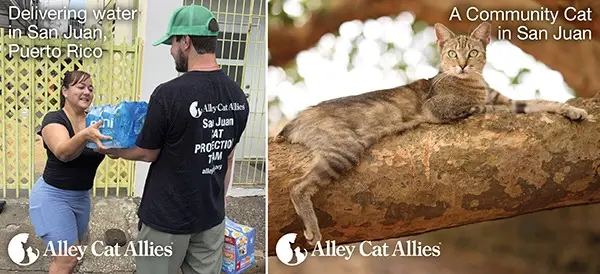
By mid-summer, municipal water authorities in San Juan and surrounding districts implemented aggressive water rationing programs. Local residents—already burdened by the high cost of living and grid instability—were forced to survive on severely restricted access to running water. Under these harrowing conditions, ensuring the survival of dependent companion animals became a herculean task. Many human caregivers faced the agonizing choice between preserving scarce household water for human consumption or hydrating the large, free-roaming cat colonies they managed.
Understanding that leaving outdoor colonies without water was never an option for these dedicated individuals, the Alley Cat Allies Rapid Response Team redirected emergency logistics toward San Juan. Arriving with pallets of bottled water and bulk supplies of wet cat food, the team set up relief distribution points directly within impacted neighborhoods.
Supporting Context & Metrics
The intersection of climate change and animal welfare is an increasingly urgent field of study within veterinary medicine and urban ecology. Understanding the physiological vulnerability of felines during extreme weather explains why targeted interventions like those executed by Alley Cat Allies are life-saving.
The Physiology of Feline Hydration in Extreme Heat
Unlike dogs, which regulate body temperature primarily through panting, cats possess limited sweat glands located mainly on their paw pads and rely heavily on grooming and behavioral adaptations to cool down. In temperatures exceeding 90°F, ambient cooling becomes inefficient.
Furthermore, free-roaming cats obtain a significant portion of their daily moisture from natural prey or standing water sources. During extreme droughts and heatwaves, these natural sources evaporate rapidly or become contaminated. Without adequate hydration, felines quickly succumb to hyperthermia and renal failure. Wet cat food contains approximately 70% to 80% moisture, compared to dry kibble, which typically contains only 10%. Providing wet food during a heatwave acts as a vital secondary hydration source, mitigating the risks of acute kidney injury in outdoor populations.
Scale of the Operations
- Geographic Reach: Multiple states including Virginia (Richmond) and Florida (Jackson), extending to the Caribbean territory of Puerto Rico (San Juan).
- Supply Volumes: Thousands of meals of high-moisture wet cat food distributed through localized food banks.
- Colony Impact: Support extended to caregivers managing massive colonies, with individual networks frequently housing upwards of 120 cats per site.
Official Statements and Caregiver Testimonies
The success of the Rapid Response Team’s mission relied heavily on grassroots infrastructure—specifically the tireless dedication of local community cat caregivers who maintain daily surveillance over urban colonies.
Estrella Zerpa, a veteran cat caregiver in San Juan, Puerto Rico, spoke candidly about the crushing pressures placed on her colony management routine prior to the intervention of Alley Cat Allies.
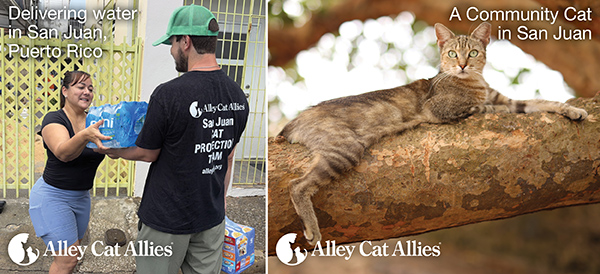
"It means a lot, because the colonies are big. There are about 120 cats that we feed every night," Zerpa explained, pausing as she loaded heavy cases of emergency drinking water provided by the response team into her vehicle. "I have to fill up about 10 gallons of water daily just for the cats."
For caregivers like Zerpa, the combination of municipal water rationing and blistering summer temperatures threatened to halt their life-saving work entirely. Carrying 10 gallons of water daily across multiple sites under a tropical sun is physically punishing; when tap water access is legally restricted or intermittent, the burden becomes insurmountable.
With the arrival of Alley Cat Allies, that structural strain was immediately alleviated. The infusion of bottled water and emergency wet food provisions meant that on that critical night—and for weeks following—Zerpa and dozens of fellow San Juan caregivers could maintain their rigorous feeding and hydration schedules without fearing a deficit in human or feline resources.
Future Outlook: Preparing for the New Climate Normal
The 2026 extreme weather events are not isolated anomalies; they represent an escalating trend of climate volatility that poses persistent threats to unhoused and community animal populations worldwide. As global temperatures continue to rise and municipal water grids experience infrastructural strain, the intersection of animal advocacy, disaster relief, and climate resilience must evolve.
Strategic Imperatives for Animal Welfare Organizations
- Pre-Positioning Supplies: Future disaster mitigation requires establishing regional climate-resilient depots stocked with non-perishable wet foods, collapsible watering stations, and portable filtration units before peak heat and hurricane seasons commence.
- Expanding Caregiver Networks: Empowering local caregivers with specialized training in heat-stress identification, emergency hydration protocols, and infrastructural shading techniques creates a decentralized safety net capable of operating when centralized organizations face travel disruptions.
- Infrastructure Advocacy: Long-term protection for community cats demands systemic municipal investment. Urban planning must account for outdoor animal populations by integrating shaded green spaces, accessible public watering spigots, and heat-resistant shelters into city codes.
Conclusion
The trials faced in Richmond, Jackson, and San Juan during the summer of 2026 underscore both the fragility of modern urban infrastructure and the unbreakable dedication of animal advocates. Through the swift intervention of the Alley Cat Allies Rapid Response Team, thousands of cats were spared the fatal consequences of drought and heatstroke. As environmental pressures mount, this operation serves as a blueprint for how compassionate, targeted, and mobilized action can safeguard our most vulnerable community animals through the harshest of seasons.