
Executive Overview
The intersection of animal welfare, veterinary medicine, and the profound psychological resilience of dogs is vividly illustrated in the survival story of Hedgie, a rescue dog who transitioned from a severely neglected, chained puppy to an emblem of hope for animals with special needs. Found severely traumatized, Hedgie’s initial recovery was a testament to the power of patient, family-centered rehabilitation. However, his journey took an unexpected turn when he was diagnosed with megaesophagus—a severe gastrointestinal disorder that often leads to euthanasia due to the intensive care required to manage it.
This investigative report examines the chronology of Hedgie’s rescue and rehabilitation, the physiological and psychological challenges of canine neglect, and the innovative medical interventions that saved his life. Furthermore, we contextualize Hedgie’s story within the broader landscape of national animal rescue efforts, examining the vital metrics of community-funded programs that support vulnerable animals, survivors of domestic violence, and disabled veterans.
Detailed Chronology: From the Chains of Neglect to a Life of Devotion
[Early Life: Severe Neglect & Tethering]
                   │
                   ▼
[Rescue & Adoption: Profound Trauma & Isolation]
                   │
                   ▼
[The Breakthrough: Overcoming Fear via Bonding with Mason]
                   │
                   ▼
[Medical Crisis: Onset of Mobility & Swallowing Issues]
                   │
                   ▼
[Diagnosis: Megaesophagus & Decision to Avoid Euthanasia]
                   │
                   ▼
[Adaptive Management: Bailey Chair Feeding & Ongoing Recovery]
The Dark Beginnings of Tethering and Isolation
Hedgie’s life began under conditions of extreme deprivation. As a young puppy—a critical window for socialization and cognitive development—he was kept chained outdoors by his original owners. Denied human touch, shelter from the elements, and basic emotional stimulation, Hedgie developed severe psychological trauma.
When animal rescue advocates finally intervened, removing him from the neglectful environment, the damage of chronic tethering was starkly apparent. Upon his adoption into a permanent home, Hedgie exhibited acute neophobia (fear of anything new) and profound trauma-induced isolation. For the first several weeks in his new home, the puppy refused human interaction, choosing instead to cower silently behind a dining room table, trembling at the slightest sound or movement.
The Breakthrough Night
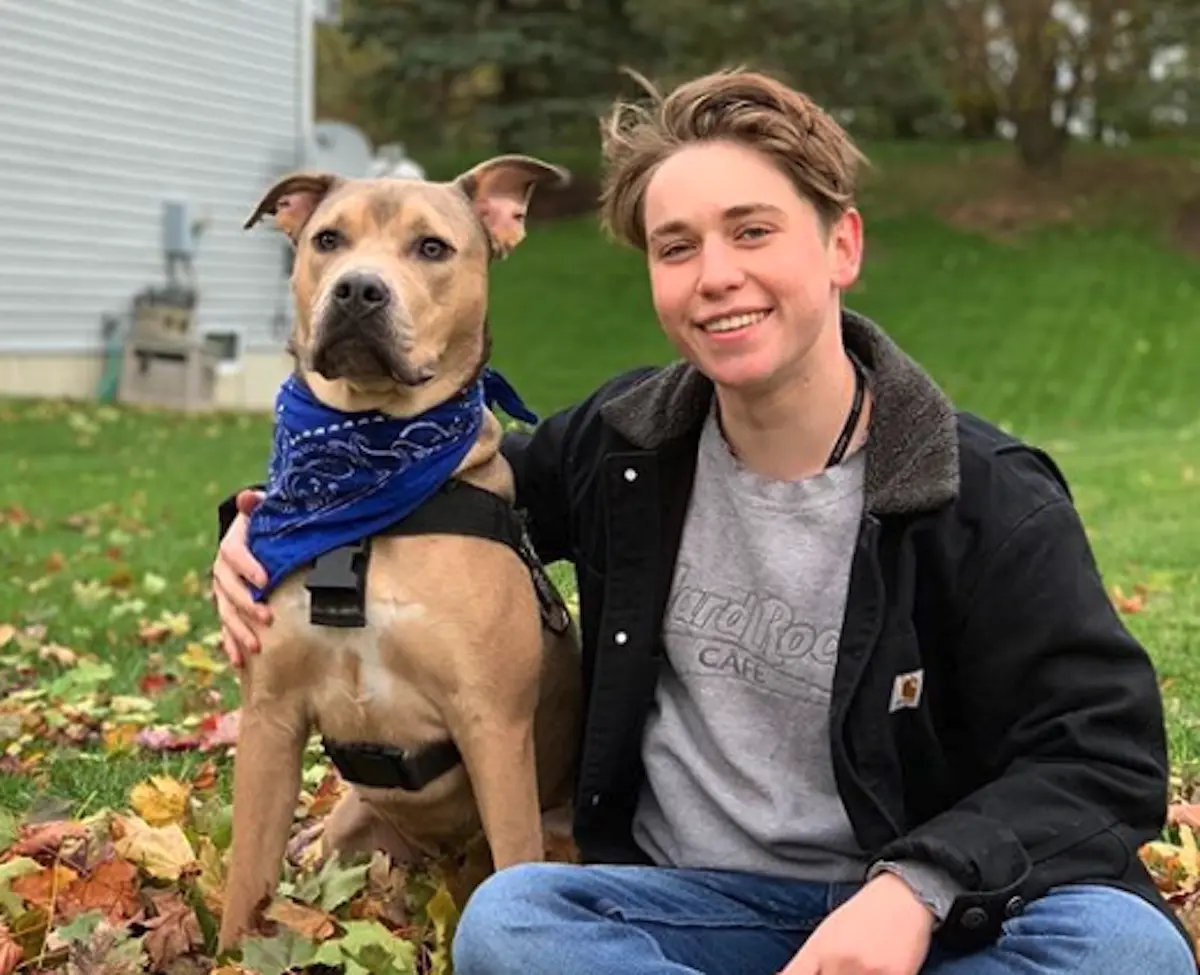
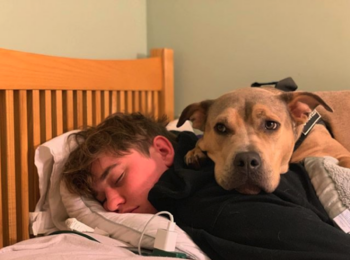
Rehabilitating a dog with this level of emotional damage requires immense patience and an understanding of canine decompression. The turning point in Hedgie’s recovery occurred unexpectedly one night when he began barking persistently from his designated safe space on the ground floor. Sensing the dog’s escalating anxiety, the family’s son, Mason, decided to bring Hedgie up to his bedroom for the night, offering a secure, elevated, and highly personal environment.
This single act of close-quarters comfort shifted Hedgie’s psychological state. By morning, the dog’s defensive barriers had collapsed. He emerged from the bedroom not as a terrified, hiding animal, but as an affectionate companion. From that day forward, Mason and Hedgie formed an unbreakable bond, navigating daily life as constant companions. This dramatic shift highlights the "safe haven" effect in canine psychology, where a single trusted human can act as a secure base, allowing a traumatized animal to explore and accept the world around them.

The Onset of a Silent Killer: Megaesophagus
Years after his successful psychological rehabilitation, Hedgie faced a sudden, debilitating physical crisis. His owners observed a rapid decline in his motor skills, characterized by weakness, difficulty walking, and persistent regurgitation after eating.
A battery of diagnostic tests at a veterinary clinic revealed that Hedgie had developed megaesophagus. This condition is characterized by the dilation and loss of muscle tone in the esophagus, preventing the normal transport of food and liquids to the stomach.
For many families and veterinary clinics, a diagnosis of megaesophagus is treated as a terminal event. Because dogs with this condition cannot move food mechanically down their esophagus, they run an extremely high risk of aspirating food particles into their lungs, leading to fatal aspiration pneumonia. The daily, highly structured care required to keep these dogs alive often leads to surrender or euthanasia.
For Hedgie’s family, however, ending his life was never considered. Recognizing that his organs were otherwise healthy and his spirit remained unbroken, they committed to implementing a specialized, gravity-assisted care regimen.
Supporting Context & Metrics
Understanding Megaesophagus and the "Bailey Chair"
To understand the commitment required to manage Hedgie’s condition, it is necessary to examine the mechanics of canine digestion. In a healthy dog, the esophagus uses waves of muscular contractions (peristalsis) to push food into the stomach. In a dog with megaesophagus, these muscles are paralyzed, causing food to pool in the throat until it is regurgitated.
Normal Digestion:
Food Intake ──> Active Peristalsis (Esophageal Muscles) ──> Stomach

Megaesophagus Digestion (Passive):
Food Intake ──> Pooled in Esophagus ──> Regurgitation / Aspiration Risk

Adaptive Digestion (Bailey Chair):
Food Intake ──> Gravity-Assisted Descent (Upright Position) ──> Stomach
To bypass this physical limitation, veterinary medicine utilizes gravity. Dogs with megaesophagus must be fed while sitting completely upright, perpendicular to the ground, in a custom-built device known as a Bailey Chair.

- The Feeding Protocol: The dog must sit in the chair for all meals and liquids.
- Post-Meal Management: After consuming a highly specialized, slurry-like diet, the dog must remain upright in the chair for 20 to 30 minutes. This allows gravity to slowly pull the food down the passive esophagus and into the stomach, where normal digestion can safely occur.
- The Risk Factor: Even a minor deviation from this routine can cause immediate regurgitation and increase the risk of aspiration pneumonia, making this a highly demanding, round-the-clock care protocol.
The Broader Ecosystem of Animal Rescue and Advocacy
Hedgie’s survival is part of a larger, global effort by animal lovers, rescue organizations, and donors who work to save at-risk animals. The financial and emotional resources required to care for dogs like Hedgie are often provided by community-driven advocacy networks.
The scale of these collective efforts is reflected in the impact metrics of major animal welfare campaigns:
| Cause / Initiative | Quantifiable Impact Metric | Operational Outcome |
|---|---|---|
| Shelter Nutrition Programs | 50,000,000+ Meals Donated | Sustains nutrition for animals in underfunded municipal shelters nationwide. |
| Emergency Relocation Flights | 1,201 At-Risk Dogs Saved | Transports highly adoptable animals from high-kill shelters to no-kill facilities. |
| Domestic Violence Pet Advocacy | $66,782 Funded | Assists domestic abuse survivors in securing pet-friendly housing, keeping families together. |
| Veteran Service Dog Pairing | $1,881,595 Funded | Trains and pairs specialized service animals with military veterans experiencing PTSD. |
These metrics demonstrate that when communities pool their resources, they build a robust safety net. This support system enables families to care for pets with complex medical needs, rather than facing the heartbreaking choice of surrender or euthanasia.
Official Statements & Expert Commentary
Veterinary Internal Medicine Perspective
Veterinary specialists emphasize that megaesophagus, while challenging, is not an automatic death sentence. Dr. Arlene G. Morrison, a veterinary internist specializing in canine gastroenterology, explains:
"The management of megaesophagus is entirely dependent on the dedication of the owner. From a purely physiological standpoint, if we can successfully utilize gravity to guide nutrients into the stomach, the dog’s digestive tract can process those nutrients normally. The challenge is not the disease itself, but the rigorous lifestyle change it demands from the family. Devices like the Bailey Chair, combined with precise dietary management, have transformed what was once a universally fatal diagnosis into a highly manageable chronic condition."
Canine Behaviorists on Abuse and Rehabilitation
Addressing Hedgie’s early childhood trauma, canine behaviorist Marcus Thorne notes the importance of structured environments in recovering abused animals:
"Tethering syndrome in dogs causes severe developmental delays and chronic hyper-vigilance. When a dog is chained, their natural flight response is physically restricted, leaving fight or freeze as their only options. When these dogs are adopted, they require a ‘decompression period’ that cannot be rushed. In Hedgie’s case, the breakthrough with Mason highlights how a secure, quiet environment allows the nervous system of a traumatized animal to finally downregulate, paving the way for deep emotional bonding."
Future Outlook: Redefining "Unadoptable"
Hedgie’s story, which has gained significant traction on digital platforms like Instagram (@hedgiethehedgedog) and The Dodo, serves as an educational tool for pet owners worldwide. Historically, animals diagnosed with congenital or acquired megaesophagus were routinely euthanized due to a lack of public awareness regarding treatment options.
[Traditional Paradigm]                          [Modern Paradigm]
Diagnosis: Megaesophagus                       Diagnosis: Megaesophagus
       │                                              │
       ▼                                              ▼
Automatic Euthanasia                         Custom Bailey Chair & Slurry Diet
                                                      │
                                                      ▼
                                             Extended, High-Quality Life
Through the widespread sharing of Hedgie’s daily routine, his family has helped demystify the use of Bailey Chairs and adaptive feeding protocols. This advocacy is shifting public perception, encouraging shelters to rescue rather than euthanize dogs with esophageal disorders, and inspiring DIY communities to build and donate custom feeding chairs to families in need.
As veterinary medicine continues to advance with therapies aimed at improving esophageal motility, the immediate future for dogs like Hedgie relies heavily on dedicated home care. Hedgie’s journey shows that with patience, adaptive tools, and a committed family, dogs with severe physical and psychological challenges can live long, happy, and fulfilling lives.