
Executive Overview
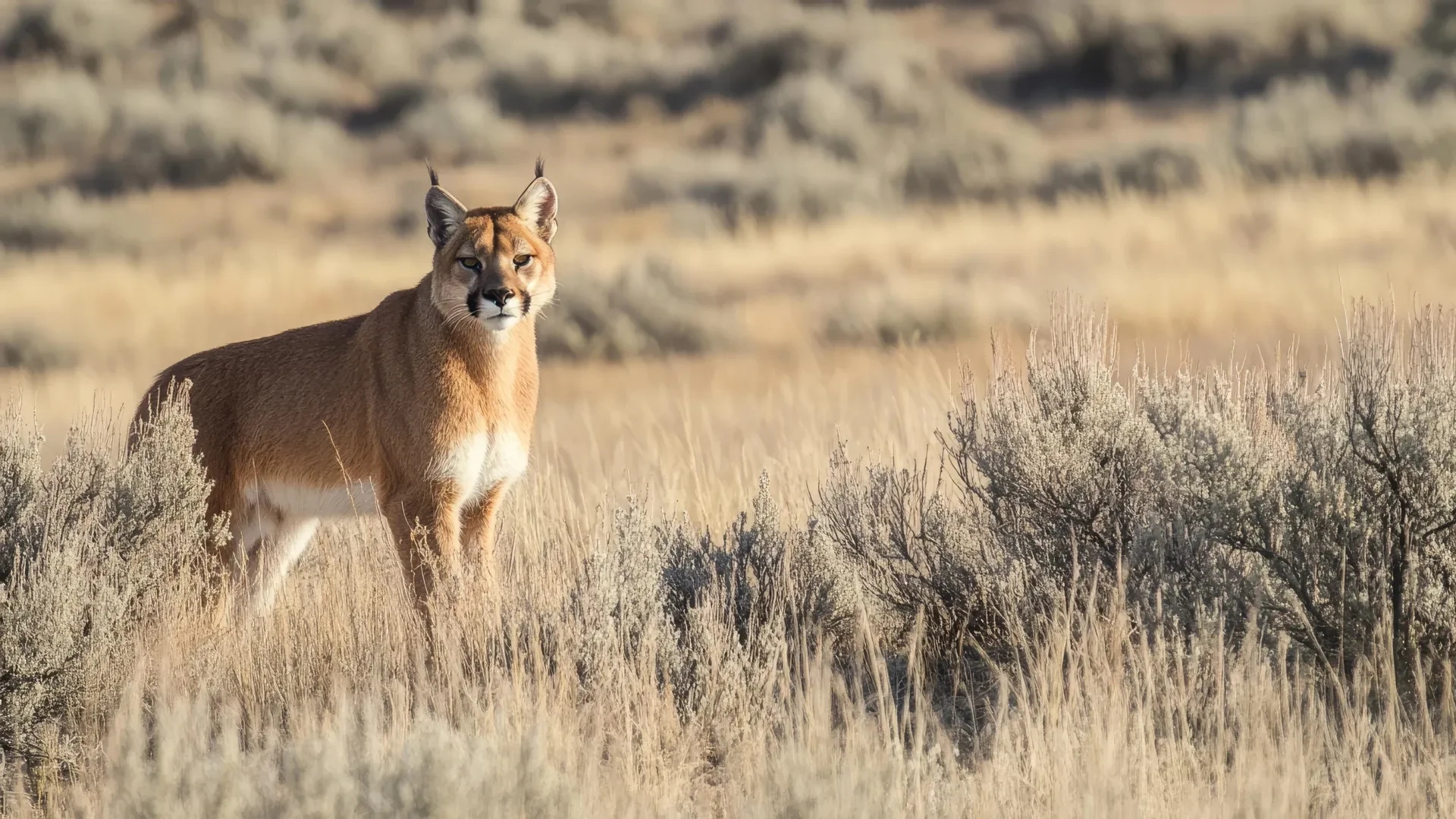
Deep within the rugged valleys and sweeping thermal basins of Yellowstone National Park, an invisible, high-stakes game of ecological chess is constantly underway. At the heart of this contest are two of North America’s most formidable apex predators: the gray wolf (Canis lupus) and the cougar (Puma concolor). While popular imagination often paints the American wilderness as a theater of indiscriminate bloodshed, a landmark scientific study published in the Proceedings of the National Academy of Sciences (PNAS) reveals a far more nuanced reality. The relationship between wolves and cougars is not defined by constant, chaotic warfare, but by a delicate, highly calculated dance of avoidance, spatial maneuvering, and behavioral adaptation.
For decades, biologists, wildlife managers, and conservationists have watched with bated breath as gray wolves—reintroduced to the ecosystem in 1995—and naturally recovering cougars reclaim their historical territories across the western United States. As their ranges increasingly overlap, the potential for lethal conflict escalates. However, this rigorous new nine-year study demonstrates that cougars are not simply passive victims of wolf dominance, nor are they locked in a permanent battle for supremacy. Instead, through sophisticated behavioral shifts—such as targeting smaller prey to minimize carcass-guarding times and hugging the safety of rocky cliffs and dense timber—cougars are actively engineering strategies to survive alongside their pack-hunting rivals.
The findings offer a profound revelation: the peaceful coexistence of these apex predators hinges less on the sheer abundance of prey across the landscape and more on habitat heterogeneity. Specifically, cougars rely on a diverse prey base and immediate access to "escape terrain"—vertical architecture like trees and rock outcroppings that they can scale to elude canine aggression. As carnivore communities undergo massive restructuring across the globe, this research provides a vital blueprint for understanding how large predators partition space, mitigate risk, and share landscapes that human development has increasingly compressed.
Detailed Chronology: Unraveling the Predator Paradox
To understand how wolves and cougars navigate their shared domain today, one must look backward through the complex history of wildlife management in the American West.
The Erasure and Return of the Titans
For the better part of the 20th century, aggressive federal and state eradication policies nearly purged both gray wolves and cougars from the contiguous United States. Bounties, poisoning campaigns, and unchecked predator control programs succeeded in silencing the howl of the wolf and dropping the cougar population to near-zero across the Greater Yellowstone Ecosystem.
The turning point for these species occurred in waves. Protected by shifting public attitudes and evolving legal frameworks, solitary cougars began a slow, natural recovery across the West during the 1960s and 1970s. They reclaimed niches in steep canyons and forested foothills largely out of the sight of humans. Two decades later, the monumental 1995 wolf reintroduction program brought gray wolves back to Yellowstone. Suddenly, two major carnivores—one a social, pack-hunting courser, the other a solitary, ambush predator—were thrust back into an evolutionary cage together.
A Decade on the Ground: The Methodological Blueprint
The methodology behind the PNAS study is as impressive as its conclusions, representing nearly a decade of grueling fieldwork and cutting-edge data analysis. The research effort heavily leveraged the groundwork laid by the Yellowstone Cougar Project. Beginning in 2022, lead author Wesley Binder—who spent nearly ten years tracking cougars in the park—and his colleagues integrated high-tech monitoring with old-school ecological detective work.
Between 2016 and 2024, researchers deployed GPS tracking collars on both wolves and cougars, logging millions of precise spatial coordinates to map their movements across the park’s northern range. Concurrently, field crews conducted exhaustive ground investigations at nearly 4,000 potential kill sites. Every bone fragment, drag mark, and tuft of fur was examined to verify whether a predator had successfully hunted, what species it had consumed, and which animal laid claim to the carcass.
Training the Algorithm: Machine Learning Meets Ecology
Because tracking two elusive, wide-ranging carnivores generates an insurmountable mountain of spatial data, the research team turned to machine learning. By feeding confirmed kill-site data into advanced predictive algorithms, the scientists combined GPS movement patterns with environmental variables to identify undocumented feeding events.
This technological leap allowed researchers to reconstruct the timeline of predator encounters with unprecedented accuracy. The models revealed a stark, unmistakable asymmetry in how wolves and cougars interact. Approximately 42% of all recorded wolf-cougar interactions occurred at predicted sites where cougars had successfully made a kill. Conversely, only a single interaction was documented at a site where a wolf pack had brought down prey.
The numbers tell a story of systemic vulnerability: cougars are frequently hunted at the dinner table, while wolves enjoy virtual immunity from feline predation. Over the eight-year study window, researchers documented 12 adult cougar deaths, two of which were directly inflicted by wolves. In both tragic instances, the cougars were cornered in areas devoid of nearby escape terrain. Intriguingly, the wolves did not consume the cougars they killed; instead, they appropriated the fresh elk carcasses the cats had secured, leaving the big cats dead simply for being in the wrong place at the wrong time. Meanwhile, among 90 documented wolf deaths during the same period, zero were attributed to cougars, with wolf mortality driven primarily by intraspecific aggression (pack conflicts), natural causes, or human interactions.
Supporting Context & Metrics
The dynamic between Yellowstone’s wolves and cougars cannot be viewed in a vacuum. It is deeply tethered to broader shifts in the park’s ungulate populations, primarily the fluctuating numbers of elk (Cervus canadensis) and deer (Odocoileus species).
The Elk-to-Deer Shift: A Calculus of Time and Risk
Historically, elk served as the staple dietary currency for both wolves and cougars in Yellowstone. However, as overarching environmental pressures—including wolf predation, variable winter severity, and changing vegetation dynamics—led to fluctuations and localized declines in elk numbers, cougars adapted with remarkable behavioral flexibility.
Instead of stubbornly competing head-to-head with wolf packs for dwindling or heavily contested elk, cougars shifted their dietary focus toward deer. This tactical pivot offered profound survival benefits rooted in simple mathematics and temporal exposure. Deer are significantly smaller than elk. Consequently, a cougar can consume a deer carcass much faster, drastically reducing the duration of time the solitary predator must loiter around a single feeding site.
In the world of apex predators, time spent on a carcass is time spent exposed to risk. A lingering cougar broadcasting the scent of fresh blood acts as a beacon for wandering wolf packs. By switching to smaller prey and shrinking their time at the table, cougars effectively lowered their visibility footprint, sharply reducing the probability of a fatal encounter with wolves.
The Spatial Geography of Survival
Beyond dietary adjustments, the study underscored the critical role of physical geography in mediating predator coexistence. Cougars demonstrated an innate spatial awareness, systematically steering clear of zones where wolf packs had recently made kills or established dens.
More importantly, cougars tethered their daily movements to "escape terrain." Whether navigating steep rocky escarpments, deep ravines, or dense clusters of climbable conifers, cougars relied on three-dimensional sanctuary. When a wolf pack—which holds the upper hand on flat ground due to numerical superiority and cooperative stamina—approaches a cougar kill, the feline’s only reliable defense is vertical ascension. Without a tree or a cliff face within immediate sprinting distance, a solitary cougar facing a pack of wolves stands little chance.
Official Statements & Expert Perspectives
The implications of this research stretch far beyond the borders of Yellowstone, offering critical insights for wildlife managers tasked with restoring carnivore guilds across North America and around the globe.
"In North America and worldwide, carnivore communities are undergoing major changes," noted Wesley Binder, a doctoral student in the Department of Fisheries and Wildlife at Oregon State University and lead author of the study. "Our research provides insight into how two apex predators compete, which informs recovery efforts."
Binder’s perspective is forged from years of boots-on-the-ground experience. Having spent a decade managing the Yellowstone Cougar Project—an endeavor that included deploying 140 remote cameras across the park’s rugged northern tier and safely capturing and collaring wild cats—he understands the subtle behavioral cues that separate life from death in the backcountry.
Reflecting on the broader context of wildlife restoration in the American West, Binder emphasized the novelty of the modern ecological landscape:
"You’ve had these places that in the last 20, 30 years have had cougars come back, and now wolves are coming back as well. There are a lot of people asking questions like, ‘What are our ecological communities going to look like now that we have both of these large carnivores back on the landscape?’"
The research team behind the PNAS study brings together an interdisciplinary powerhouse of ecologists, engineers, and park scientists. Co-authors include Joel S. Ruprecht, Rebecca Hutchinson, and Taal Levi from Oregon State University’s College of Agricultural Sciences; Jack Rabe of the University of Minnesota and the Yellowstone Center for Resources; and Matthew Metz and Daniel Stahler, veteran biologists with the Yellowstone Center for Resources. (Hutchinson also holds a dual appointment in Oregon State’s College of Engineering, reflecting the heavy computational and machine-learning architecture required to process the vast GPS datasets).
Future Outlook: Coexistence in a Compressed Wilderness
As conservation initiatives continue to bear fruit, the return of apex predators to historical ranges is shifting from a localized Yellowstone phenomenon to a continent-wide reality. From the rugged mountains of the Pacific Northwest to the forested expanses of the Rocky Mountains, states are increasingly forced to manage landscapes shared by wolves, cougars, bears, and humans.
The traditional ecological theory of "interference competition"—where dominant predators routinely suppress subordinate ones through lethal violence—tells only part of the story. While wolves unquestionably dominate the hierarchy due to their pack structure, the Yellowstone study proves that subordinate carnivores are far from helpless victims. Through behavioral plasticity, spatial vigilance, and dietary shifts, cougars demonstrate that coexistence is achievable even under the shadow of a superior competitor.
Management and Conservation Implications
For wildlife managers, the takeaways from the PNAS paper are both practical and urgent:
- Habitat Protection is Predator Protection: Conserving flat, broad valleys is not enough. If states wish to maintain healthy populations of both wolves and cougars, landscape-level planning must prioritize the preservation of rugged, heterogeneous terrain—rocky outcrops, steep canyons, and mature forests that provide essential escape routes for cougars.
- Prey Diversity Matters: Management frameworks must look beyond singular game species like elk. Maintaining a diverse prey base (including deer and smaller ungulates) gives subordinate predators the flexibility to adapt their foraging strategies, thereby reducing direct, violent friction with wolves.
- Anticipating Human-Wildlife Interfaces: As overlapping carnivore territories expand closer to rural and exurban communities, understanding how predators interact away from human eyes helps agencies predict livestock conflicts and human-wildlife encounters. When wolves displace cougars from preferred valley bottoms, those cats may occasionally shift into marginal habitats closer to human developments.
The shadows of Yellowstone’s northern range will continue to conceal a perpetual, silent drama. Yet, thanks to nine years of rigorous science, machine-learning innovation, and dedicated fieldwork, humanity’s window into that wild world has never been clearer. Cougars and wolves will likely never be friends, but their ability to share the same earth is a testament to the resilience of nature—and a reminder that survival in the wild is as much about outsmarting danger as it is about raw power.