
Executive Overview
Agricultural technology is undergoing a structural transformation. Whether it is precision planting, targeted weeding, high-resolution scouting, or localized chemical spraying, crop robotics remains a vibrant and fiercely competitive sector of agtech innovation. Major original equipment manufacturers (OEMs)—ranging from legacy heavyweights like John Deere and AGCO to an agile fleet of global startups—are increasingly prioritizing advanced automation, artificial intelligence (AI), and machine learning in their long-term growth and capital allocation strategies.
This maturation of the sector is comprehensively documented in the 2026 Crop Robotics Landscape report, released by strategic consulting firm The Mixing Bowl. Published biennially since 2022, the report tracks the rapid development, regional shifts, and commercial evolution of robotic solutions designed to assist growers across the globe.
The 2026 findings reveal a dynamic ecosystem. The landscape now features roughly 400 global crop robotics companies, representing a substantial 25% increase from the 2024 tracking period. Beneath this headline growth, however, lies a dynamic market shakeout: approximately 36% of the companies included are fresh entrants, while 20% of the firms tracked in 2024 have exited the market.
This churn is symptomatic of an industry moving past the initial speculative hype cycle into a phase of disciplined commercialization. While venture capital (VC) funding has plateaued relative to historical peaks—with tracked companies raising a combined $600 million between 2024 and 2026—industry experts view this not as a sign of sector decline, but as a healthy indicator of market maturity. Furthermore, as the industry scales, technologists and economists are re-evaluating the ultimate destination of farm automation. Rather than moving toward entirely autonomous, "lights-out" farming operations devoid of human oversight, the future points toward a pragmatic, highly integrated hybrid model combining robotic efficiency with human expertise.
Detailed Chronology: The Evolution of Agricultural Robotics (2022–2026)
To understand the current state of crop robotics, it is necessary to examine how the market has evolved over the past four years through the lens of The Mixing Bowl’s biennial tracking.
2022: Establishing the Baseline
When The Mixing Bowl introduced its inaugural crop robotics landscape report in 2022, the industry was riding the tailwind of pandemic-era agtech enthusiasm and a broad influx of venture capital. At that time, crop robotics was largely characterized by early-stage innovators experimenting with novel mechanical weeding platforms, electric autonomous utility tractors, and niche harvesting arms for specialty crops.
OEMs were still largely watching from the sidelines or making early-stage exploratory investments, while software and computer vision startups rushed to build foundational algorithms for plant detection and autonomous path-planning. The focus during this period was predominantly technological capability—proving that a robot could successfully navigate a field or identify a weed without destroying the cash crop.
2024: The Hype Peak and Market Realities
By 2024, the market had expanded significantly, but it was also beginning to grapple with macroeconomic headwinds, rising interest rates, and a broader cooling of global venture capital. The 2024 report captured a crowded field of hopeful startups competing for capital in a tightening economic climate.
During this window, the limitations of pure software plays without robust hardware-market fit became apparent. Supply chain disruptions, high manufacturing costs, and the harsh realities of farm-level durability forced many early-stage companies to pivot, scale back, or seek acquisition by larger agricultural conglomerates. Yet, it was also during this period that foundational technologies—such as GPS-guided tractor steering, computer vision spraying, and automated row-crop navigation—began moving from early adopter trials to mainstream commercial deployment.
2026: Consolidation, Maturation, and Hybridization
The recently published 2026 report paints a picture of a sector undergoing a healthy pruning process. Featuring 400 global companies—a 25% increase over 2024—the latest landscape demonstrates that innovation has not slowed down. However, the composition of the market has shifted dramatically.
With 36% new entrants joining the fold alongside a 20% market exit rate, the sector is separating the sustainable enterprises from ephemeral startups. Major OEMs are no longer just experimenting; they are baking robotics directly into their core product portfolios. John Deere has expanded its advanced See & Spray ecosystem with integrated field-scouting capabilities, while AGCO continues to funnel aggressive research and development (R&D) capital into AI-driven automation systems, as outlined by company leadership at recent industry forums like the Farm Progress Show.
Supporting Context & Metrics: Navigating the 2026 Landscape
The complexity of the modern agricultural robotics sector cannot be captured by a single metric. The Mixing Bowl’s 2026 report segments the market across two primary axes: technological function and crop application.
Technological Segments
The report categorizes innovations into distinct functional buckets, including:
- Navigation and Autonomy: Guidance systems, retro-fit kits, self-steering mechanisms, and autonomous platform carriers.
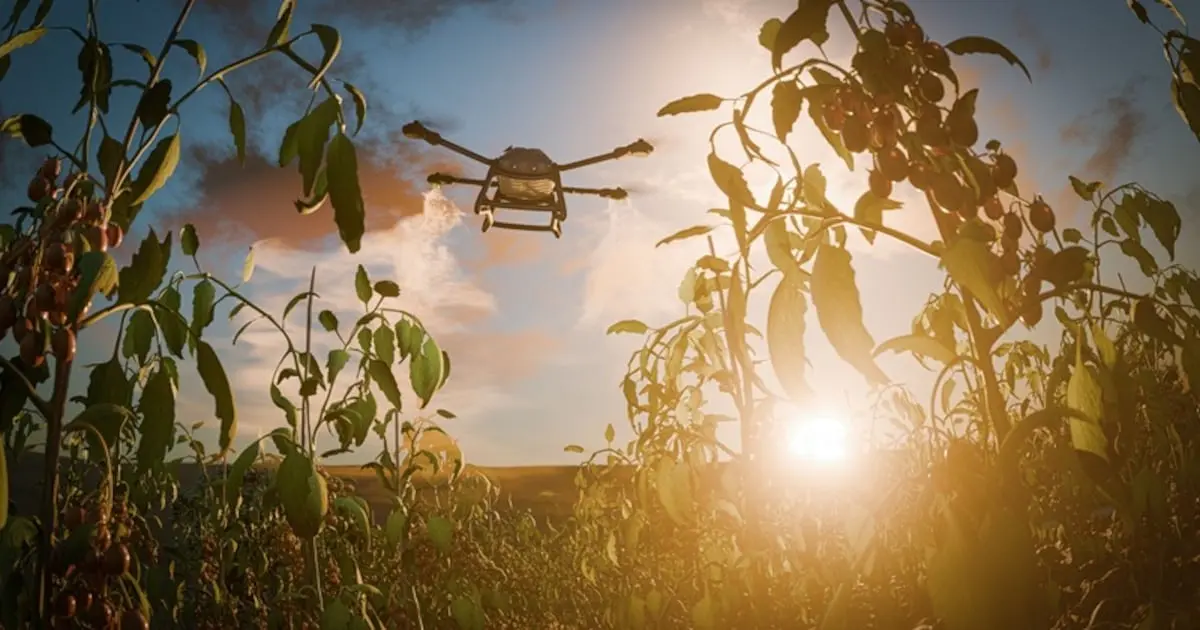
- Smart Spraying: AI-powered, targeted application systems that reduce chemical usage by applying inputs only where weeds or pests are detected.
- Harvesting: Mechanical and robotic arms, vacuum systems, and automated fruit-picking platforms.
- Other Cultural Practices: Precision planting, mechanical weeding, pruning, thinning, and data-driven field scouting.
Crop Categories
Robotic adoption varies wildly depending on the biology and economic structure of the crop being managed. The 2026 landscape segments technologies across:
- Row Crops: High-acreage staples like corn, soybeans, and wheat.
- Specialty Crops: High-value, labor-intensive produce such as berries, tree nuts, vegetables, and vineyards.
- Permanent Crops: Orchards and vineyards requiring specialized, multi-year canopy management.
- Indoor Crops: Controlled Environment Agriculture (CEA), vertical farms, and greenhouse automation.
Regional Dynamics and the Silicon Valley Fallacy
Geographically, the 2026 report highlights a distinct international footprint. European companies account for roughly 50% of the tracked entities, reflecting strong regulatory pressures regarding chemical reductions, labor shortages in certain regions, and robust public-private funding ecosystems for agtech. Meanwhile, the United States accounts for 18% of the global crop robotics landscape.
Within the U.S., California remains the undeniable epicenter of agtech innovation, housing approximately 40% of all American crop robotics companies. However, industry insiders warn against the dangers of insular development. Michael Rose, a partner at Better Food Ventures and a key contributor to The Mixing Bowl’s robotics landscape, emphasizes that proximity to the end-user is non-negotiable.
"You can’t sit in Silicon Valley and spin up a company and then sell it to the market," Rose notes. Startups must embed themselves where farmers and agricultural producers operate to ensure that engineering visions actually align with practical agronomic realities. If a robotic tool cannot withstand mud, dust, erratic weather, and the rigorous operational schedules of a working farm, it will fail regardless of its software sophistication.
Official Statements & Industry Insights
To gain a deeper perspective on how these metrics translate to real-world deployment, insights from market participants highlight a nuanced transition in how robotic technology is integrated into farm operations.
The Trajectory of Navigation and Autonomy
According to Michael Rose, the adoption curve of agricultural robotics is directly tied to the maturity of the underlying technology. While some specialized harvesting robots are still navigating early commercialization phases, navigation and autonomy solutions have achieved widespread, mainstream acceptance.
"Navigation and autonomy that is well deployed—you look at navigation technology in tractors and combines for row crops, it’s been there a long time and fully deployed, fully commercialized, and broad adoption," Rose explains. "Everybody is playing in that space, either through retrofit kits or OEM units themselves."
This ubiquity has turned automated guidance from a high-tech luxury into standard operating equipment for modern row-crop farmers. Autonomy has shifted from a novelty to a baseline expectation, paving the way for more complex, task-specific robotic attachments—such as intelligent weeders and precision sprayers—to piggyback on proven carrier platforms.
The Question of Full Automation vs. Hybrid Models
A persistent narrative in tech circles is the pursuit of "full automation"—the ultimate vision of a completely unmanned agricultural enterprise. However, industry experts caution that farming does not lend itself easily to the rigid standardization of an industrial assembly line.
Addressing the viability of entirely unmanned operations, Rose draws a distinct line between manufacturing and agriculture:
"You’ll have full automation where it makes sense. Will we see a farm run like a lights-out manufacturing facility that we can see in China, where there are no human beings? I don’t think so."
Agriculture is inherently variable, subject to unpredictable weather events, biological anomalies, soil composition shifts, and immediate mechanical repairs. Consequently, the future model of farm robotics is shaping up to be a collaborative hybrid system. In this model, autonomous machinery executes repetitive, labor-intensive, or precision-critical tasks (such as targeted spraying or continuous scouting), while skilled human operators supervise, manage exceptions, and handle complex agronomic decision-making.
Financial Realities: Why Lower Venture Capital is a Sign of a Maturing Market
One of the most widely misunderstood aspects of the 2026 agtech landscape is the behavior of venture capital. Total VC funding for companies featured in the landscape held relatively steady between 2024 and 2026, with tracked firms raising approximately $600 million over the two-year span.
While this figure is down from the hyper-inflated peaks of the broader agtech investment boom years earlier, analysts argue this downward normalization is entirely natural. As an industry matures, early-stage speculative venture capital naturally recedes, making room for private equity, strategic corporate acquisitions, equipment financing, and revenue-driven growth.
Drawing parallels to previous technological revolutions, Rose compares the current agtech funding cycle to the evolution of consumer electronics and computing hardware:
"Where’s the role for venture anyway? It was actually a couple years ago. So, did we see this in handset manufacturers? Did we see this in PC hardware? There’s a point where early-stage venture does drop off."
As the market transitions from an experimental sandbox to a consolidated commercial marketplace, the fundamental question facing investors and entrepreneurs is no longer just about raising capital to build new tools, but rather rationalizing the market space.
"The question is how many more companies do you need to address the space?" Rose poses.
With 400 companies currently populating The Mixing Bowl’s 2026 landscape, the industry is entering an era where consolidation, interoperability, and proven return on investment (ROI) for the grower will dictate which companies survive the decade.
Future Outlook: What Lies Ahead for Crop Robotics?
As the agricultural sector looks beyond 2026, the trajectory of crop robotics points toward greater standardization, ecosystem interoperability, and pragmatic problem-solving.
- Ecosystem Integration: Growers are increasingly resistant to "vendor lock-in" or managing fragmented fleets of incompatible robotic tools. The future belongs to platforms that can integrate seamlessly with existing farm management information systems (FMIS) and multi-brand equipment fleets.
- Data-Driven Agronomy: Robotics will increasingly double as mobile data collection units. With advanced scouting tools integrated into spraying and planting platforms—such as John Deere’s latest portfolio additions—robots will provide real-time, hyper-local agronomic intelligence, transforming every pass through the field into actionable data.
- Labor Augmentation Over Replacement: Given ongoing rural labor shortages, the immediate value proposition of crop robotics will remain centered on augmenting human labor rather than eliminating it entirely. Robots will shoulder the dull, dirty, and dangerous tasks—minimizing chemical exposure, reducing operator fatigue, and optimizing input efficiency.
Ultimately, the 2026 crop robotics landscape demonstrates that the industry has graduated from speculative dreaming to grounded execution. By balancing technological ambition with the pragmatic realities of the dirt, crop robotics is securing its place as an indispensable pillar of modern, sustainable agriculture.