
Executive Overview
For generations, modern agriculture has relied on a foundational triad of soil macronutrients: nitrogen, phosphorus, and potassium (NPK). These three elements have dictated the rhythm of global crop production, shaping supply chains, fertilizer markets, and geopolitical strategies. However, as soil degradation intensifies, climate volatility threatens crop yields, and the agricultural sector faces mounting pressure to decarbonize, a paradigm shift is underway. Silicon—long viewed as a secondary or merely beneficial element—is rapidly emerging as an essential input for modern farming.
At the vanguard of this transition is Mafix, a Seattle-based agtech pioneer and spin-out from Stanford University. Mafix has developed a proprietary mineral conversion process designed to overcome one of agriculture’s greatest historical hurdles: making silicate rock weather rapidly enough to be economically viable as a crop fertilizer. By supercharging natural silicate weathering through the innovative use of idle cement kilns, Mafix can accelerate a geological process that normally takes millennia down to a single growing season.
This breakthrough does more than just nourish crops; it also locks away carbon dioxide. As the silicate rock weathers in the soil, it permanently sequesters atmospheric carbon by converting greenhouse gases into stable bicarbonates. Capitalizing on this dual-benefit model, Mafix announced on August 20 a successful $5.4 million pre-seed funding round led by Azolla Ventures. The capital injection includes participation from the Astera Institute, Counteract VC, Impact Science Ventures, Plug and Play Ventures, and a Dutch family office.
This comprehensive report examines the science, economics, and strategic implications of Mafix’s breakthrough. We explore the shifting regulatory landscape that now classifies silicon as an essential plant nutrient, analyze the mechanics of enhanced silicate weathering, and outline the start-up’s ambitious roadmap to scale production, lower costs for farmers, and reshape the future of agronomy and carbon removal.
Detailed Chronology of a Breakthrough: From Stanford Labs to Commercial Scale
The journey of Mafix from an academic research project to a heavily backed commercial venture reflects the accelerated timeline of modern climate tech innovation. While the core scientific principles behind enhanced rock weathering have been understood by geologists for decades, bridging the gap between theoretical chemistry and scalable, low-cost agricultural inputs has stymied researchers for years.
The Academic Foundation at Stanford
Long before the ink dried on their pre-seed funding papers, the founders of Mafix were examining the intersection of materials science, geochemistry, and climate remediation at Stanford University. Researchers recognized that while silicon is the second most abundant element in the Earth’s crust—trailing only oxygen—vast majority of it exists in forms that are entirely unavailable to plants. Inert silicate rocks hold immense nutritional and carbon-sequestering potential, but their natural weathering cycle is exasperatingly slow, operating on geologic timescales spanning hundreds to thousands of years.
The Stanford spin-out set out to solve this kinetic bottleneck. By experimenting with thermal and chemical mineral conversion techniques, the founding team engineered a process that mimics and drastically accelerates natural silicate weathering. Instead of waiting millennia for natural rain and atmospheric $CO_2$ to break down silicate minerals, Mafix discovered how to jump-start the reaction loop, reducing the weathering timeline to a single agricultural growing season.
The Pivot to Idle Cement Infrastructure
One of the most significant hurdles facing enhanced weathering startups is capital expenditure. Constructing custom industrial processing facilities requires massive upfront capital, driving up the final cost of the product and making it difficult to compete with legacy synthetic fertilizers.
Mafix solved this economic puzzle by looking at an underutilized global asset: the cement industry. Cement manufacturing relies on kilns capable of operating at extreme temperatures to calcine limestone. However, due to fluctuating market demands, regional economic shifts, and overcapacity, roughly 30% of global cement kiln capacity sits idle at any given time.
By strategically partnering with or utilizing these idle cement kilns, Mafix bypasses the prohibitive capital costs associated with building greenfield manufacturing plants. This asset-light approach allows the company to produce its silicon-rich mineral amendments at a fraction of the cost, ensuring that the final product remains affordable for everyday farmers operating on tight margins.
The $5.4 Million Pre-Seed Milestone
The commercial validation of Mafix’s technology reached a major turning point on August 20, when the company officially closed its $5.4 million pre-seed funding round. Led by Azolla Ventures—a fund known for backing high-impact climate tech companies with gigaton-scale carbon removal potential—the round attracted a syndicate of specialized investors.
These included the Astera Institute, Counteract VC, Impact Science Ventures, Plug and Play Ventures, and a strategic Dutch family office. According to Jade Marcus, CEO and co-founder of Mafix, the newly secured capital will be deployed immediately to scale up manufacturing operations. The primary operational objective is the production of at least 1,000 tons of specialized silicon fertilizer, a volume that will allow the company to transition smoothly from small-scale plot trials to expansive, multi-regional field trials across diverse cropping systems.
Supporting Context, Science, and Metrics
To fully understand the disruptive potential of Mafix’s technology, it is necessary to examine the changing botanical and regulatory status of silicon, the chemistry of enhanced weathering, and the economic metrics governing the global fertilizer market.
The Shift from Beneficial to Essential Nutrient
For decades, agricultural textbooks and regulatory bodies classified silicon as a "beneficial" substance rather than an "essential" plant nutrient. While agronomists acknowledged that silicon could help certain crops withstand environmental stresses, it was not deemed strictly necessary for a plant to complete its life cycle.
That classification changed earlier this year when the Association of American Plant Food Control Officials (AAPFCO) officially reclassified silicon as an essential crop nutrient. This regulatory reclassification represents a watershed moment for the fertilizer industry. It opens the door for standardized product labeling, legal guarantees of silicon content, and broader acceptance among agronomists and crop consultants who design fertility programs for commercial growers.
Despite its abundance in the Earth’s crust, agricultural soils are systematically depleted of plant-available silicon over time. Every harvest removes silica that plants have pulled from the soil profile, and conventional NPK fertilizer programs do little to replenish these pools.
Botanical Mechanics: How Silicon Empowers Crops
When farmers apply plant-available silicon using advanced formulations like those developed by Mafix, specialized genetic mechanisms within the plant are activated. Jade Marcus elaborates on the precise biological pathway:
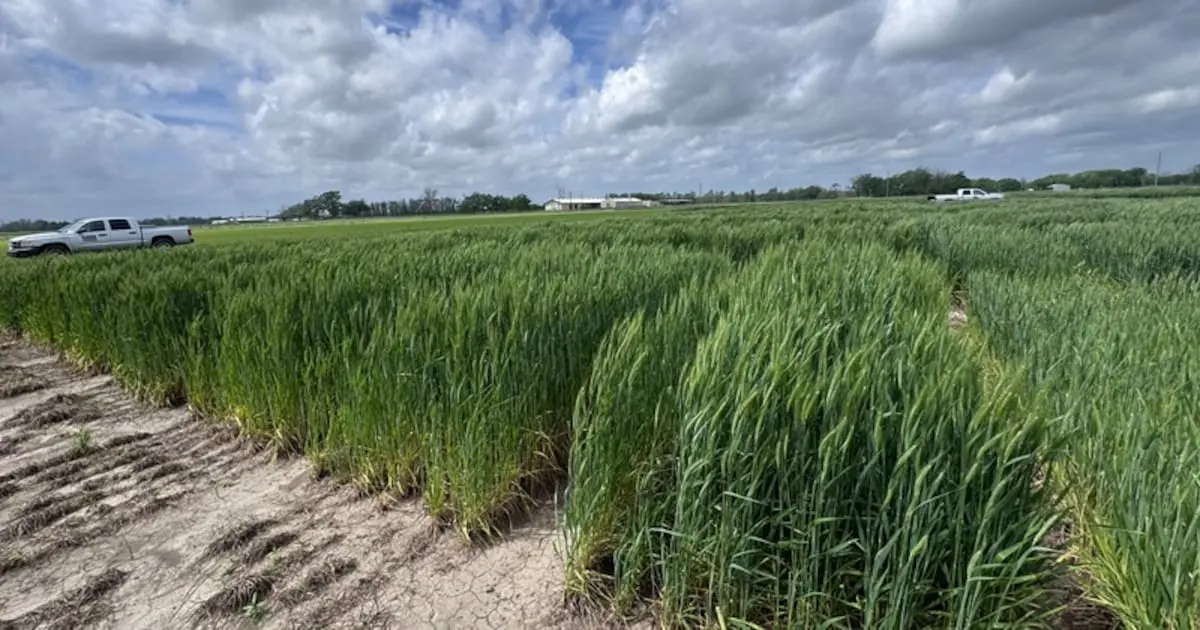
"When you’re able to apply plant-available silicon, there are very specific transporter genes. So, in rice, there’s Lsi1, Lsi2, and Lsi6, and these actually direct the plant-available silicon from the roots all the way to the shoots, where it polymerizes, precipitates out, and increases the structural integrity of the crop, so it’s better able to do photosynthesis. It stands straighter, so you don’t have to worry about lodging."
This physical fortification provides multiple agronomic benefits:
- Enhanced Structural Integrity: By accumulating silicon in cell walls (forming a phytolith layer), plants stand more erect. This prevents "lodging"—the tendency of heavy-headed cereal crops to fall over during heavy rains or windstorms, which can devastate yields and complicate harvest operations.
- Optimized Photosynthesis: Upright leaves capture sunlight more efficiently, maximizing photosynthetic capacity across the entire crop canopy.
- Abiotic and Biotic Stress Resistance: Polymerized silicon creates a physical barrier that deters insect pests and fungal pathogens, while also helping plants manage drought stress and heavy metal toxicities.
The Carbon Removal Math
What sets Mafix apart from traditional fertilizer manufacturers is its dual-purpose value proposition: it is an agronomic input first, but a carbon dioxide removal (CDR) engine second.
When silicate rocks undergo weathering—whether naturally or accelerated via Mafix’s cement-kiln process—a chemical reaction takes place. The silicates react with water and carbon dioxide from the atmosphere, breaking down and ultimately transforming the $CO_2$ into stable bicarbonate ions ($HCO_3^-$). These bicarbonates are washed down through the soil profile into groundwater systems and eventually locked away in the deep ocean for hundreds of thousands of years.
Unlike traditional corporate carbon offset programs that rely on tree planting or temporary soil carbon storage (which can be easily reversed by tillage or climate shifts), enhanced silicate weathering offers permanent, geologic-scale carbon storage. By leveraging agricultural supply chains to distribute these silicates globally, Mafix can achieve gigaton-scale carbon dioxide removal without requiring dedicated land use changes or massive direct air capture infrastructure.
Official Statements and Industry Insights
The emergence of silicon as a high-growth agricultural input has caught the attention of investors, environmental scientists, and farming communities alike. Below are key insights gathered from leadership and strategic partners driving the Mafix initiative.
Jade Marcus on the Dual-Product Philosophy
Refining the company’s market positioning, CEO and co-founder Jade Marcus emphasizes that agronomic performance must always precede carbon accounting if a product is to succeed in the rough-and-tumble agricultural market:
"We are fertilizer first, but we also can remove carbon dioxide from the atmosphere, which is very different than a lot of the agronomic products that are put on fields today."
This philosophy addresses a common pitfall in the agtech sector: developing products that prioritize carbon credit generation at the expense of farmer utility. By ensuring that Mafix’s silicon fertilizer delivers tangible yield protection, stress tolerance, and structural benefits, the company aligns its commercial success directly with the profitability of the grower.
Investor Perspective: Why Azolla Ventures Stepped In
Leading the $5.4 million pre-seed round, Azolla Ventures identified Mafix as a rare combination of scalable climate impact and immediate market pull. Climate tech investors have increasingly scrutinized carbon removal start-ups for their unit economics and capital expenditure requirements. By utilizing idle cement kilns and tapping into established agricultural distribution networks, Mafix presents a capital-efficient pathway to commercialization that mitigates traditional manufacturing risks.
Furthermore, the participation of specialized funds like Impact Science Ventures and Counteract VC underscores the deep-tech nature of Mafix’s mineral conversion process. These investors recognize that transforming inert, stubborn silicates into rapid-weathering, plant-available nutrients requires sophisticated chemical engineering—an intellectual property moat that protects Mafix from fast-following competitors.
Future Outlook: Challenges, Strategies, and the Road Ahead
As Mafix transitions from its pre-seed funding phase into active field trials and commercial scale-up, the company faces a dynamic and evolving agricultural marketplace. Looking toward the horizon, several strategic imperatives and potential hurdles will dictate the start-up’s trajectory.
Go-to-Market Strategies and Product Blends
To maximize adoption across diverse agricultural regions and cropping systems, Mafix is exploring a flexible menu of go-to-market strategies. Rather than forcing farmers to adopt an entirely new application routine, the company is evaluating multiple product formats:
- Standalone pH-Modulation Products: Formulations designed to correct acidic soils while simultaneously releasing silicon and sequestering carbon.
- Dedicated Carbon Products: Tailored silicate applications aimed at corporate buyers seeking verified, permanent carbon removal credits.
- Fertilizer Blends: Co-granulating or blending Mafix silicon minerals with traditional nitrogen, phosphorus, and potassium fertilizers. This approach improves overall nutrient use efficiency (NUE), helping farmers reduce runoff and get more value out of their traditional fertilizer investments.
Navigating Agronomic Adoption and Education
Despite the recent AAPFCO reclassification of silicon as an essential nutrient, many agronomists and commercial growers remain unfamiliar with silicon management. A key challenge for Mafix will be farmer education. Overcoming decades of NPK-centric thinking requires robust, transparent data from ongoing field trials.
By scaling up production to 1,000 tons and expanding field trials across major grain, rice, and specialty crop regions, Mafix aims to generate the empirical yield data necessary to convince skeptical growers and crop advisors. Demonstrating consistent return-on-investment (ROI) through lodging reduction, enhanced stress resistance, and improved crop quality will be essential for widespread market penetration.
Scaling the Cement Kiln Partnership Model
The success of Mafix’s economic model hinges on its ability to secure reliable, cost-effective access to idle cement kiln capacity. As the company scales, it will need to formalize partnerships with cement manufacturers worldwide. This strategy not only solves Mafix’s manufacturing infrastructure needs but also offers cement producers an innovative way to monetize downtime and participate in the circular bioeconomy.
However, coordinating industrial processing schedules with agricultural demand cycles will require sophisticated supply chain management. Ensuring consistent product quality, optimal particle sizing, and seamless blending characteristics will be critical as production scales from tons to kilotons and, eventually, megatons.
Conclusion
Mafix stands at the intersection of two critical global transformations: the urgent need to decarbonize the atmosphere and the imperative to restore resilience to agricultural soils. By turning an abundant, inert mineral into a high-performance plant nutrient through an energy-smart, idle-infrastructure approach, the Stanford spin-out has engineered a compelling solution to modern farming’s most complex challenges.
As the agricultural industry digests the AAPFCO’s reclassification of silicon as an essential nutrient, companies like Mafix are perfectly positioned to lead the charge. With $5.4 million in fresh capital, a growing portfolio of strategic investor backing, and a dual-value proposition that feeds crops while healing the climate, Mafix is well-equipped to write the next chapter in the evolution of global agriculture.