
Executive Overview
In the field of animal rescue, volunteers are accustomed to witnessing the physical and emotional tolls of abandonment. However, a recent rescue operation conducted by Northeast Animal Rescue has highlighted the extraordinary cognitive capabilities and emotional depth of canine companions. What began as a routine patrol escalated into a striking demonstration of referential communication and altruism when a lone, malnourished puppy successfully recruited human intervention to save his hidden, endangered sibling.
This case serves as more than a heartwarming anecdote; it is a profound clinical example of canine problem-solving under extreme stress. By analyzing the step-by-step chronology of this rescue, examining the underlying cognitive science of canine-human communication, and contextualizing the incident within the broader metrics of global animal welfare, this investigative report explores the realities of the stray animal crisis and the systemic frameworks required to address it.
Detailed Chronology of the Rescue
The sequence of events unfolded in a suburban-industrial sector characterized by abandoned infrastructure—a common harbor for stray animals seeking shelter from the elements.
[Initial Contact] -> [Referential Solicitation] -> [Guided Navigation] -> [Discovery & Extraction] -> [Medical Triage]Phase 1: The Initial Contact and Referential Solicitation
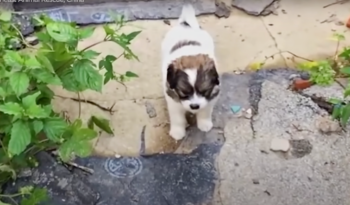
Volunteers from Northeast Animal Rescue were surveying the perimeter of a known stray hot spot when they were approached by a juvenile mixed-breed canine, estimated to be under four weeks old. Unlike typical stray puppies, who exhibit either fearful avoidance or passive submission, this individual displayed highly directed, urgent behavior.
The puppy bypassed opportunities for immediate foraging, instead focusing his attention entirely on the rescue team. He utilized high-frequency vocalizations, intense gaze fixation, and rapid forward-and-backward movement patterns—behaviors recognized by animal behaviorists as "referential solicitation."
Phase 2: Guided Navigation
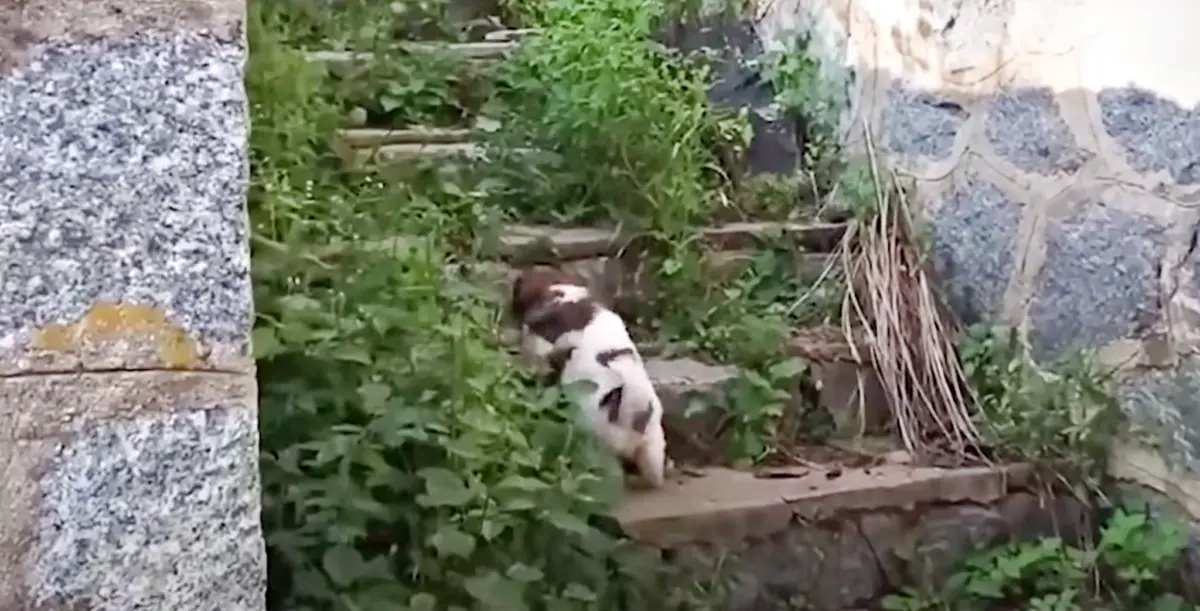
Recognizing that the puppy’s behavior was goal-oriented rather than erratic, the rescue team elected to follow the animal. The puppy immediately initiated a route toward a dilapidated, multi-story abandoned structure nearby.

Throughout the transit, the puppy demonstrated remarkable spatial awareness and communication feedback loops:
- The "Look-Back" Response: Every few meters, the puppy paused, turned his head to confirm the rescuers were maintaining visual contact, and waited for them to close the distance.
- Obstacle Negotiation: He navigated broken concrete, debris, and steep stairs, consistently vocalizing to draw the humans upward.
- Target Identification: Upon reaching the upper landing of the structure, the puppy halted outside a darkened, recessed doorway, signaling that the destination had been reached.
+-----------------------------------------------------------------+
|                  PATHWAY OF REFERENTIAL RESCUE                  |
+-----------------------------------------------------------------+
|  [Stray Puppy] ---> Approaches Rescuers with Urgent Gaze       |
|       |                                                         |
|       +---------> Leads Rescuers to Abandoned Building          |
|                        |                                        |
|                        +---------> Pauses & Looks Back (Feedback)|
|                                         |                       |
|                                         +---------> Sibling Saved|
+-----------------------------------------------------------------+
Phase 3: The Discovery and Extraction
Inside the structural ruins, tucked away in a drafty, hazardous corner, lay a second puppy. This sibling was physically weaker, lethargic, and unable to seek help on his own. He had remained silent and hidden to avoid predators, relying entirely on his sibling’s search-and-rescue mission.
The immediate contrast in the puppies’ conditions was stark. While the guide puppy had expended his remaining energy reserves to secure help, the hidden sibling was suffering from advanced exposure and mild dehydration. The rescue team immediately administered emergency wet food to stabilize both puppies’ glucose levels before carefully extracting them from the hazardous structure.
Phase 4: Clinical Triage and Rehabilitation
Upon arrival at the Northeast Animal Rescue clinical facility, both animals underwent a standardized veterinary intake protocol:
                  [Intake Diagnostics]
                           |
         +-----------------+-----------------+
         |                                   |
 [Decontamination]                     [Clinical Workup]
 - Warm medicated baths                - Hematology & fecal analysis
 - Ectoparasite removal                - Hydration therapy
- Nutritional rehabilitation- Decontamination: Both puppies were treated for severe ectoparasite infestation (fleas and ticks) and given warm, medicated baths to restore skin barrier health.
- Clinical Workup: Pediatric blood chemistry panels and fecal analyses were conducted to screen for parvovirus and internal parasites.
- Nutritional Rehabilitation: The puppies were placed on a highly digestible, nutrient-dense refeeding schedule to prevent refeeding syndrome while addressing caloric deficits.
Both puppies survived the critical 48-hour post-rescue window and are currently thriving in a specialized foster-to-adopt program.
Supporting Context & National Metrics
The success of local operations like this rescue is intrinsically linked to the broader infrastructure of animal welfare. To understand the scale of the challenges faced by organizations like Northeast Animal Rescue, we must examine the macro-level metrics of animal advocacy, shelter funding, and logistical support.

The Scale of National Rescue Efforts
According to data compiled from leading animal welfare databases, the survival of stray animals depends on a highly coordinated network of food distribution, emergency transport, and specialized safety programs.
| Metric Area | Nationwide Impact Milestone | Operational Focus |
|---|---|---|
| Nutritional Support | 50 Million+ Meals Distributed | Combating food insecurity in municipal and rural shelters. |
| Emergency Relocation | 1,201+ At-Risk Dogs Flown to Safety | Transporting animals from high-kill shelters to regions with high adoption rates. |
| Domestic Violence Support | $66,782+ in Direct Funding | Keeping pets and domestic violence survivors together in crisis shelters. |
| Veterinary Service Pairings | $1,881,595+ Funded | Training rescue dogs to serve as service animals for military veterans. |
These metrics illustrate that the rescue of two puppies in an abandoned building is not an isolated event. Rather, it is a micro-level success story supported by a massive, underfunded macro-system of philanthropic capital and volunteer labor. Without national distribution networks for food and medical supplies, local shelters would lack the capacity to take in new cases, leading to higher euthanasia rates in overcrowded municipal facilities.
Canine Cognition and Sibling Bonds: A Scientific Perspective
The behavior exhibited by the guide puppy challenges historical assumptions regarding canine cognition. For decades, classical behaviorists viewed dogs primarily as stimulus-response organisms. However, modern veterinary cognitive science paints a far more complex picture.
Referential Communication and "Theory of Mind"
Referential communication occurs when an individual uses a sign or behavior to direct the attention of another individual to an external entity. In this case, the puppy utilized:
- Gaze Alternation: Looking at the rescuers, then at the building, and back to the rescuers.
- Intentionality: Persisting in the behavior until the human partner responded and followed.
- Elaboration: Altering the behavior (e.g., louder vocalizations or physically pulling back) when the rescuers slowed down.
Studies conducted at the Family Dog Project in Budapest, Hungary, indicate that domestic dogs have evolved unique socio-cognitive skills designed specifically to exploit human cooperative behavior. This evolutionary adaptation allows even young puppies, with minimal human socialization, to recognize humans as resource providers and problem-solvers.
The Biology of Sibling Bonds
In feral and stray canine populations, littermates represent the primary social unit. The survival rate of isolated stray puppies is exceptionally low. By remaining together, siblings benefit from thermal regulation (huddling for warmth) and shared defense. The decision of one sibling to leave the nest to solicit aid, while the other remains silent to avoid detection, suggests an instinctual division of labor designed to maximize the survival probability of the genetic line.
Official Statements
The rescue has drawn commentary from both the leadership of Northeast Animal Rescue and experts in the field of animal behavior.
"In this line of work, you expect to see animals that are shut down, fearful, or defensive. What we saw in this tiny puppy was an absolute refusal to give up on his brother. He didn’t run to us for food; he ran to us to recruit us. It is a humbling reminder of the emotional intelligence these animals possess."
— Lead Volunteer, Northeast Animal Rescue
"This incident perfectly demonstrates what we call ‘social referencing’ and cooperative problem-solving. The puppy identified a problem—his sibling’s inability to move—recognized his own inability to resolve it, and successfully leveraged human agency to achieve a survival outcome. It is a sophisticated cognitive sequence for an animal of such a young age."
— Dr. Elena Rostova, PhD in Applied Canine Behavior
Future Outlook: Addressing the Systemic Stray Crisis
While the story of these two puppies concludes with a successful rescue and rehabilitation, it highlights a persistent global issue. The stray animal crisis cannot be solved solely through reactive rescue operations; it requires proactive, systemic intervention.
                  [Systemic Stray Prevention]
                               |
         +---------------------+---------------------+
         |                     |                     |
[Spay/Neuter Access]   [Microchip Mandates]   [Community Support]
- Targeted clinics     - Universal databases  - Pet food pantries
- Mobile services      - Return-to-owner laws - Crisis sheltering
1. High-Volume Spay and Neuter Programs
The root cause of stray populations is unchecked reproduction. Expanding access to low-cost or free spay and neuter services, particularly in low-income or rural areas, is critical to reducing the influx of unwanted litters into the shelter system.
2. Universal Microchipping and Registration
A significant percentage of "stray" animals are lost pets. Establishing universal microchipping protocols and accessible registration databases ensures that lost animals can be reunited with their owners within hours, bypassing the shelter system entirely and preserving resources for true strays.
3. Strengthening Community Support Infrastructure
As reflected in national metrics, keeping pets with their families during crises—such as domestic violence, housing instability, or financial hardship—prevents owner surrenders. Expanding pet food pantries and temporary crisis-sheltering programs keeps animals out of shelters and preserves family units.
Conclusion
The journey of these two sibling puppies—from a freezing, abandoned ruin to a warm veterinary clinic—stands as a testament to the power of canine intelligence and the necessity of human compassion. As these two resilient animals prepare to enter their permanent adoptive homes, their story serves as an urgent call to support the rescue networks, donor programs, and systemic reforms that protect vulnerable animals worldwide.