
Fact-checked by Kenn Kaufman, Field Editor, Audubon Magazine
Executive Overview
True pink birds are a distinct rarity across the North American continent. Even when ornithologists cast a wide net—incorporating rare vagrants, species with minimal pink plumage, and regional variants—fewer than a dozen distinct species fit the description. Yet, what this palette lacks in quantity, it makes up for in sheer visual impact. From the iconic, long-legged waders of the southern wetlands to elusive high-altitude finches and electric hummingbirds of the West, North America’s pink-hued avifauna represents some of the most sought-after sightings in modern birding.
The origins of this remarkable coloration are as diverse as the species themselves. While the striking hues of the American Flamingo and the Roseate Spoonbill are directly linked to their specialized diets, the brilliant flashes of a hummingbird’s gorget are marvels of physics, driven by microscopic pancake-like structures in their feathers that refract light. Meanwhile, the reddish-pink plumage of North America’s specialized finches is rooted deep within the genomic level.
This comprehensive report examines the biology, distribution, and identification of North America’s pink birds, offering critical insights for conservationists, field researchers, and dedicated birders alike.
Detailed Chronology and Categorization of Species
To fully understand the distribution and ecological niches of these birds, ornithologists categorize them into distinct groupings based on morphology, habitat preference, and population stability.
The Wading Giants: Flamingos and Spoonbills
North America plays host to two large, long-legged waders that instantly command attention due to their sweeping pink profiles:
- The American Flamingo (Phoenicopterus ruber): Historically viewed as a rare vagrant to Florida rather than a stable, native breeding population, the status of the American Flamingo is currently experiencing a dynamic shift. Wild birds, frequently displaced by Caribbean hurricanes, have taken up long-term residency in the Sunshine State, raising the prospect of newly established breeding colonies. Standing tall with an entirely pink body and a distinctively curved, black-tipped beak designed for inverted underwater foraging, the flamingo remains a marquee species for American birders.
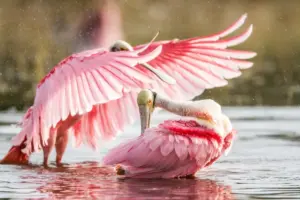
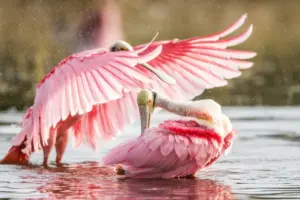
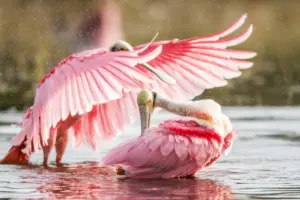
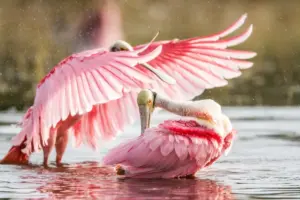
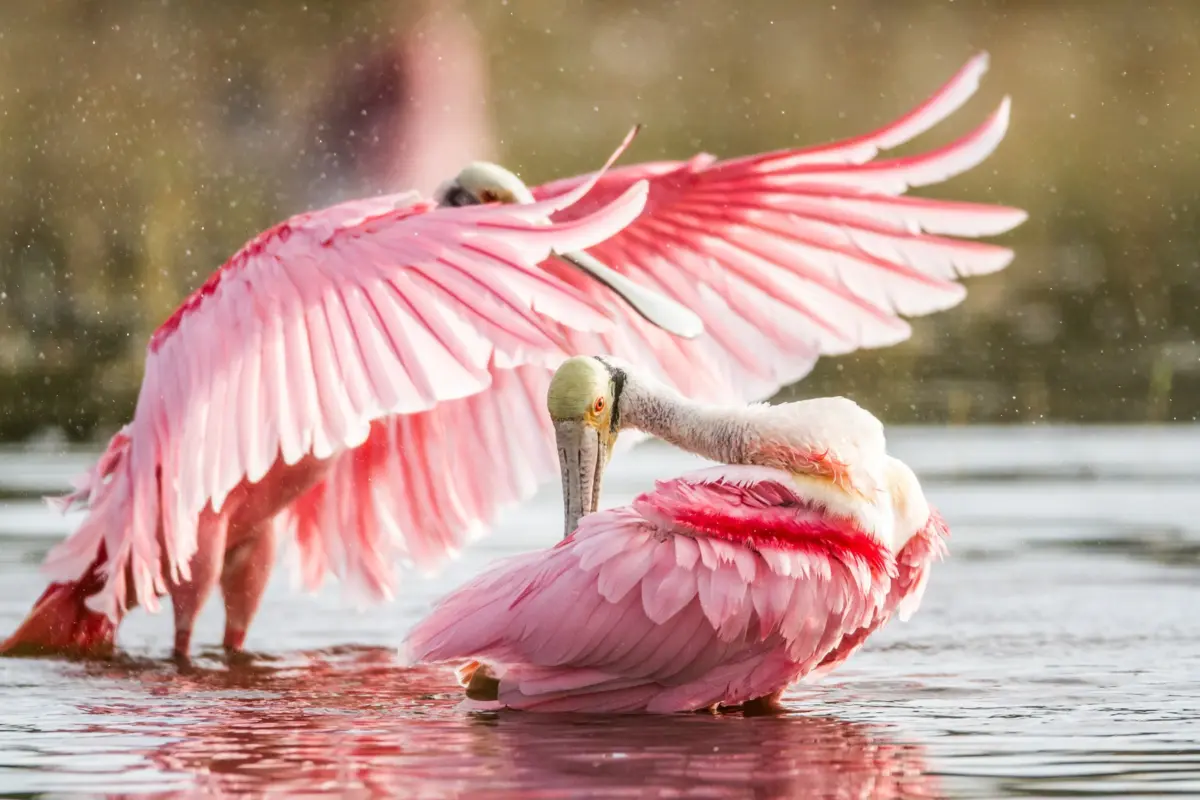
- The Roseate Spoonbill (Platalea ajaja): While sharing a superficial silhouette with the flamingo from a distance, the Roseate Spoonbill is far more established on the continent, maintaining healthy, year-round populations across the Gulf Coast and southern Florida. Easily distinguished by its greenish head, white neck, and iconic, spatula-shaped bill lined with sensitive nerve endings, the spoonbill sweeps its bill through coastal shallows and estuaries to detect small fish and crustaceans. Recent data indicates that the species is steadily expanding its range northward.
The Dazzling West: Hummingbirds of the Pacific and Mountain States
Three hummingbird species found in western North America display breathtaking pink or magenta iridescence, primarily on the crown and gorget (throat feathers):
- Anna’s Hummingbird (Calypte anna): Unlike most hummingbird species, the male Anna’s features iridescent pink feathers extending across both its crown and gorget, catching the light like an electric spark. A year-round resident along the Pacific Coast and southern Arizona, it has adapted exceptionally well to suburban gardens and feeders.
- Calliope Hummingbird (Selasphorus calliope): Recognized as the smallest breeding bird in North America, the male Calliope sports a patchy, flared gorget ranging from pink to deep magenta. Its summer breeding grounds span Northern California, the Intermountain West, and the Pacific Northwest.
- Broad-tailed Hummingbird (Selasphorus platycercus): A staple of high-elevation mountain meadows and forests throughout the West, males display a rose-pink gorget accompanied by a distinctive, metallic buzzing sound produced by their wings during flight.
The Finches: Genomic Coloration and Nomadic Wanderings
North America’s pink-toned finches—ranging from common backyard visitors to high-altitude specialists—derive their striking coloration from carotenoid processing rooted in their genetics:
- Purple Finch (Haemorhous purpureus): Sporting plumage that ranges from deep maroon to soft pink, this species breeds extensively in Canada’s boreal forests and winters across the eastern United States. They are a frequent fixture at backyard feeders, particularly during high-activity irruption years.
- Cassin’s Finch (Haemorhous cassinii): A nomadic forager favoring high-elevation coniferous forests in the West, the male Cassin’s features a soft pink breast and face topped with a bright red, spiky crown.
- The Rosy-Finches (Black, Brown-capped, and Gray-crowned): These high-altitude specialists represent the "holy grail" for dedicated birders. The Black Rosy-Finch pairs black, brown, and gray body plumage with bold pink highlights on its wings and belly, residing in the highest elevations of the Great Basin. The Brown-capped Rosy-Finch is restricted to the highest peaks of the Rocky Mountains from Wyoming to New Mexico. Meanwhile, the Gray-crowned Rosy-Finch nests from western Alaska down to California, wintering across the Intermountain West.
Supporting Context & Metrics: The Science of Pink Plumes
The expression of pink and red pigmentation in birds is governed by two fundamentally different biological mechanisms: dietary acquisition and structural physics.
The Carotenoid Connection
For wading birds like the American Flamingo and the Roseate Spoonbill, pigmentation is entirely extrinsic. These birds do not synthesize pink pigments internally. Instead, their vibrant coloration is the direct result of a specialized food web. Flamingos and spoonbills consume algae-eating organisms—including brine shrimp, crabs, crayfish, and small aquatic fish—that are rich in carotenoids (natural red, orange, and yellow pigments).
When digested, these organic compounds are deposited into the growing feathers. Consequently, the depth and vibrancy of a flamingo or spoonbill’s pink plumage serve as a direct biological indicator of its nutritional health and foraging success. A stressed or undernourished bird will display significantly faded, washed-out pink tones.
Structural Iridescence in Hummingbirds
In contrast, the electric pink crowns and gorgets of Anna’s, Calliope, and Broad-tailed hummingbirds contain no pink pigment at all. Their brilliant flashes are the result of structural coloration. Microscopic, air-filled platelet structures within the barbules of the throat feathers refract and reflect light in specific wavelengths. When viewed from an angle out of direct light, these feathers often appear dull brown or black; however, once the bird catches the light at the precise angle, these nanoscale structures act as miniature prisms, creating an intense, metallic pink iridescence.
Official Guidelines: Field Identification and Conservation Strategies
Wildlife authorities, including the National Audubon Society, emphasize the importance of precise geographic and seasonal tracking to locate and protect these specialized birds.
Geographic Hotspots for Field Observers
- Waders: To observe Roseate Spoonbills reliably, conservationists recommend visiting established Gulf Coast strongholds such as Florida’s J.N. "Ding" Darling National Wildlife Refuge or Texas’s Smith Oaks Rookery. For American Flamingos, wild vagrants are most frequently documented in the Everglades, Biscayne Bay, and the Florida Keys.
- Rosy-Finches: Because North America’s three rosy-finch species are restricted to harsh alpine environments, casual sightings are rare. Researchers advise consulting regional eBird tracking data. For intrepid birders seeking a unique milestone, Sandia Crest in New Mexico stands as the only location in the United States where all three rosy-finch species can be reliably observed gathering together during winter months.
Backyard Attraction Protocols
Homeowners outside of the immediate Gulf and southern coastal wetland zones are generally limited to attracting North America’s smaller pink species: hummingbirds and finches.
- For Hummingbirds: Standard nectar feeders filled with a strict 4-to-1 ratio of water to refined white sugar (avoiding artificial dyes or honey) will consistently draw Anna’s, Calliope, and Broad-tailed hummingbirds during their respective breeding and migration periods.
- For Finches: Providing high-energy black oil sunflower seeds and safflower seeds in platform or tube feeders is the most effective method for attracting Purple and Cassin’s finches to suburban yards.
Frequently Asked Questions (FAQ)
Q: What is the most common pink bird in North America?
A: While true pink pigmentation is scarce, the Broad-tailed Hummingbird and Anna’s Hummingbird are among the most widespread and commonly encountered species displaying intense pink gorgets across the western United States. Among seed-eating species, the Purple Finch is widely distributed across eastern and western forested ranges.
Q: Why do flamingos lose their color in captivity?
A: Captive flamingos fed standard diets devoid of natural carotenoid sources will gradually fade from deep pink to pale white or light gray as they molt. Modern zoological facilities counteract this by supplementing captive diets with specialized pigments, such as canthaxanthin or crushed krill, to mimic their wild intake.
Q: Where is the only place in the United States to see all three rosy-finch species?
A: Sandia Crest, located just east of Albuquerque, New Mexico, is renowned among ornithologists as the premier high-elevation feeding station where Black, Brown-capped, and Gray-crowned Rosy-Finches congregate in close proximity during the winter months.
Future Outlook: Climate Shifts and Range Expansions
Avian conservationists and ornithologists are closely monitoring how environmental changes will impact the distribution of North America’s pink-feathered species in the coming decades.
Recent observational data indicates that Roseate Spoonbills are gradually pushing their breeding ranges further northward along the Atlantic and Gulf coasts, adapting to shifting wetland conditions. Simultaneously, the increased frequency and intensity of Caribbean tropical storm systems are accelerating the introduction of wild American Flamingos into Florida’s coastal ecosystems, potentially laying the groundwork for a permanent, self-sustaining population shift.
Conversely, high-altitude specialists such as the Brown-capped and Black Rosy-Finches face mounting environmental pressures. As global temperatures rise, alpine timberlines creep upward, compressing the fragile, sub-alpine and tundra zones upon which these rare finches depend for nesting and foraging.
Long-term survival for these high-elevation endemics will rely heavily on continuous citizen-science initiatives—such as eBird tracking and Audubon-backed habitat conservation—ensuring that these remarkable flashes of pink remain a fixture of the North American wilderness for generations to come.