
Executive Overview
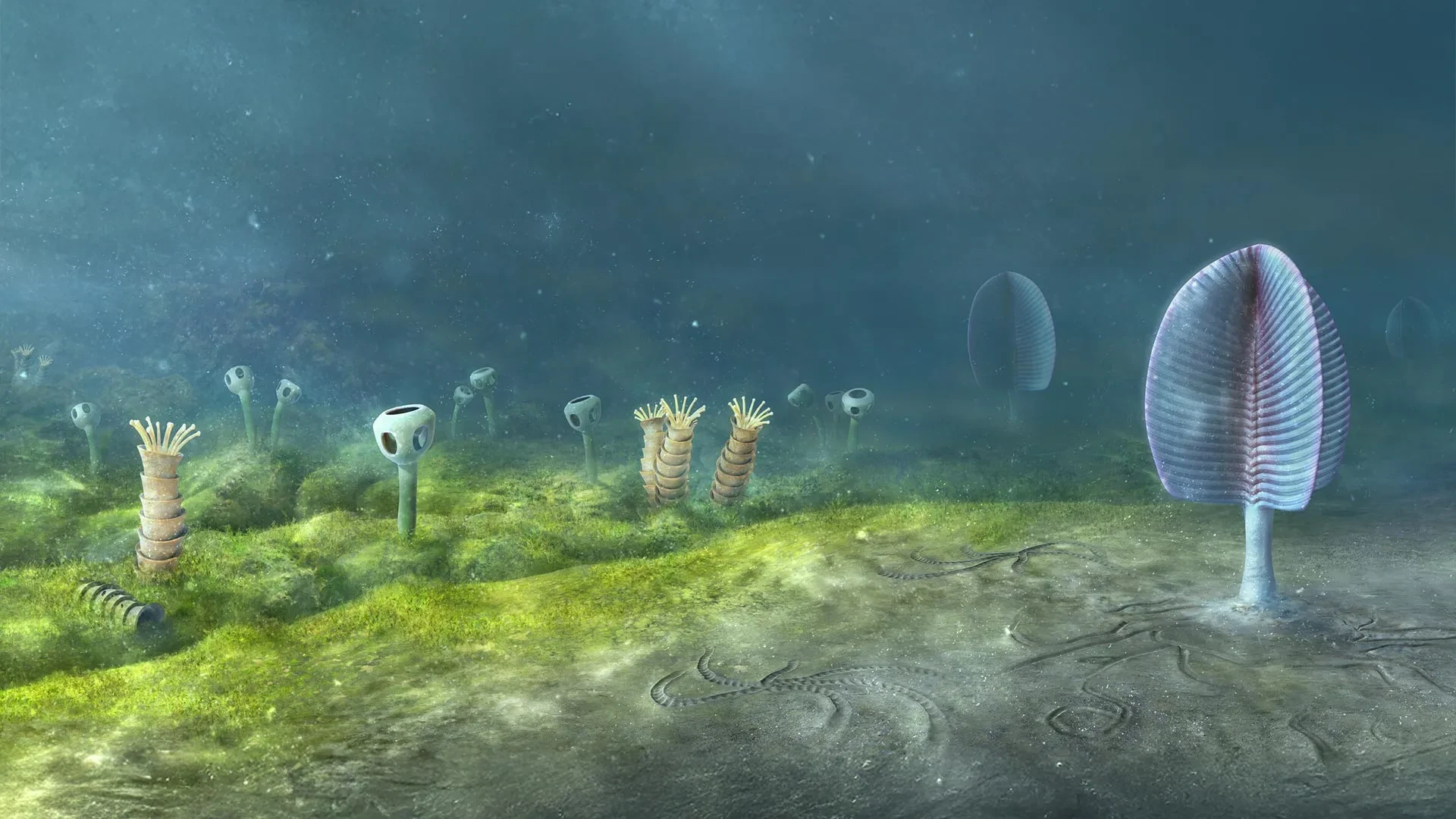
For decades, one of the most stubborn paradoxes in evolutionary biology has been the sudden, seemingly explosive appearance of complex animal life just prior to the Cambrian Period, roughly 539 to 487 million years ago. While Charles Darwin and generations of subsequent paleontologists noted the abruptness of this fossil emergence—often called the "Cambrian Explosion"—genetic and molecular clocks have long whispered a different story, suggesting that the lineage of multicellular animals (metazoans) must have roots extending far deeper into the geological past.
Now, a groundbreaking study led by researchers at the University of Oxford, published in Science Advances, fundamentally alters how scientists interpret the ancient fossil record. By challenging a foundational assumption used to date the dawn of animal life, the international research team has demonstrated that animals may have originated up to 200 million years earlier than previously indicated by baseline fossil constraints.
By analyzing exceptionally preserved microfossils from the Kheseen Biota in Mongolia, the researchers dismantled the long-held argument that the absence of animal fossils in older, exquisitely preserved deposits—such as China’s 590-million-year-old Weng’an Biota—proves that animals had not yet evolved. With this traditional constraint removed, updated molecular-clock analyses push the potential origin of animal life back to the Neoproterozoic Era, squarely between 800 and 700 million years ago.
This startling recalibration places the possible dawn of the animal kingdom before, or concurrently with, the catastrophic "Snowball Earth" ice ages of the Cryogenian Period. While definitive pre-Ediacaran body fossils remain elusive, this study provides a crucial methodological bridge, solving a major evolutionary puzzle and opening new avenues for exploring how life survived, adapted, and thrived during Earth’s most extreme climatic chapters.
Detailed Chronology
To understand the profound implications of the Oxford-led study, one must trace the timeline of Earth’s early biological and geological milestones, as well as the historical assumptions that have guided paleontological research for decades.
1. The Neoproterozoic Roots (850 – 700 Million Years Ago)
Before the new study, scientists used exceptionally preserved, pre-Ediacaran fossil deposits—such as the Svanbergfjellet Formation in Norway, the Bitter Springs Group in Australia, and the Chuar Group in Arizona, USA—to establish maximum possible ages for the origin of animal life. Because these deposits are rich in microfossils and theoretically capable of preserving fragile biological structures yet yielded no signs of animal life, researchers historically assumed that metazoans simply did not exist during this window (850 to 730 million years ago).
2. The Cryogenian "Snowball Earth" (Beginning ~720 Million Years Ago)
As the Neoproterozoic Era progressed into the Cryogenian Period, Earth experienced some of the most severe glaciations in its history. Sheets of glacial ice advanced from the poles toward the equator, creating conditions frequently referred to as "Snowball Earth." Traditionally, many scientists believed that such harsh environments would have choked off complex evolutionary progress. However, the new molecular-clock estimates place the emergence of early animals right on the doorstep of—or even within—this deep-freeze era, forcing paleobiologists to reconsider how early life endured global glaciation.
3. The Weng’an Biota Paradox (~590 Million Years Ago)
Fast-forwarding to the Ediacaran Period, scientists encountered the Weng’an Biota in South China, a roughly 590-million-year-old fossil deposit famous for preserving microscopic organisms in breathtaking, cellular-level detail. Because the Weng’an deposits are so remarkably preserved yet completely devoid of animal remains, paleobiologists formulated a core maxim: If animals had already existed at this time, an exceptionally preserved deposit like Weng’an would have captured them. Consequently, Weng’an was deployed as an unyielding chronological anchor, capping the maximum age of animal origins to the late Ediacaran.
4. The Kheseen Biota Test and the Breaking of the Paradigm
The cornerstone of the new Science Advances paper is the detailed examination of the Kheseen Biota in Mongolia—a fossil assemblage roughly 40 million years younger than Weng’an (dating to the late Ediacaran). An international team consisting of researchers from the University of Oxford, the University of California Berkeley, ETH Zürich, and Yale University analyzed more than 140 samples using advanced scanning electron microscopy.
They uncovered exquisitely preserved microfossils, including delicate acritarchs (spherical microscopic organisms adorned with spines and branching projections) and embryo-like fossils featuring distinct internal cells. Despite this jaw-dropping level of preservation, none of the Kheseen fossils could be definitively classified as an animal.
This discovery represents a watershed moment: scientists already know from independent global evidence (such as fossil sites in Namibia and South China) that animals definitely existed by the time the Kheseen Biota formed. Yet, those animals are missing from Kheseen. Therefore, the absence of animal fossils in a deposit—no matter how pristine its preservation—does not prove that animals were absent from the ecosystem. This single revelation shatters the logic that previously constrained the Weng’an Biota and upends the standard chronology of early evolution.
Supporting Context & Metrics
The methodology behind this paradigm shift relies on reconciling two distinct scientific approaches: the physical fossil record and molecular clock analysis.
The Molecular Clock Methodology
When physical body fossils are scarce or absent, evolutionary biologists turn to molecular clocks. This sophisticated technique measures the accumulation of genetic mutations over time in living descendants, comparing the DNA or protein sequences of modern species to estimate when they diverged from a common ancestor.
However, molecular clocks cannot operate in a vacuum; they must be calibrated using fixed points in time derived from the fossil record (known as "calibrations" or "constraints"). For years, when researchers inputted the younger Weng’an Biota or older pre-Ediacaran sites into their algorithms, the resulting timelines were heavily skewed by the assumption that animals could not predate those deposits.
Recalibrating the Timeline
By proving that the absence of fossils in exceptionally preserved sites is an unreliable proxy for absence of life, the research team removed the younger constraints. When they utilized older geological formations (dating from 850 to 730 million years ago) as the absolute boundaries for calibration, the molecular clock equations recalculated the origin of the animal kingdom.
- Previous Consensus Timeline: Animal origins heavily anchored within the Ediacaran Period, just tens of millions of years before the Cambrian explosion.
- New Recalibrated Timeline: Animal origins pushed backward by approximately 200 million years, placing the emergence of the first metazoans between 800 and 700 million years ago.
Why Did Early Animals Hide?
If animals existed hundreds of millions of years before they showed up prominently in the fossil record, why were they so elusive? The answer lies in taphonomy—the study of how organisms decay and become fossilized.
- Soft-Bodied Anatomy: The earliest animals were microscopic, soft-bodied creatures lacking hard mineralized parts like shells, spicules, or bones. Without skeletal frameworks, their chances of withstanding decay and fossilization were vanishingly small.
- Ecological Niches: Early animal communities may have inhabited marine environments or localized micro-niches that were chemically unsuited for fossilization, or far removed from the sedimentary settings that typically preserve ancient life.
- Chemical Biomarkers: This missing history is partially corroborated by organic molecules found in ancient rocks. Known as chemical fossils or biomarkers, these molecular traces (such as specific lipid compounds) point to the presence of sponge-like organisms living at least 650 million years ago—tens of millions of years before macroscopic animal fossils appear.
Official Statements
The study’s authors and leading researchers have emphasized the transformative nature of these findings for the broader scientific community.
Senior author Associate Professor Ross Anderson of the Oxford University Museum of Natural History highlighted how the Mongolian data dismantled long-standing dogmas in paleontology:
"The Kheseen Biota breaks the argument that the exceptional microfossils of Weng’an mean we would have seen animal fossils in the assemblage had they existed at the time. The Kheseen microfossils are just as well-preserved, yet animals continue to be absent—despite the fact we know at that point they existed."
Professor Anderson added that this realization forces scientists to rethink depositional environments and preservation biases:
"This suggests animals may have occupied environments different from those represented in the Kheseen deposits, or that the chemical conditions responsible for fossilization there were not suitable for preserving animal remains."
Regarding the future direction of the field, Professor Anderson noted:
"Until that evidence becomes available, the precise birth date of the animal kingdom remains uncertain."
First author Orin Lole Durbin, a PhD student at Virginia Tech who initiated the work as an undergraduate at the University of Oxford, discussed the nuance and caution required when interpreting the new timelines:
"Pre-Ediacaran animal body fossils still elude us, and this analysis does not prove that animals existed 800 million years ago. However, our new fossil evidence from Mongolia undermines one of the main arguments for restricting animal origins to the Ediacaran interval. Meanwhile, our molecular-clock analyses show how much further back their evolutionary history could extend."
Future Outlook
As the dust settles on this radical reappraisal of the fossil record, paleobiologists, geochemists, and evolutionary geneticists are charting a new course for research into Earth’s infancy.
1. Broadening the Search Parameters
Future paleontological expeditions will need to look beyond traditional "exceptionally preserved" fossil beds. Researchers must scour a wider array of global locations, diverse sedimentary environments, and varied diagenetic (chemical alteration) conditions. By studying deposits that were previously written off due to an absence of obvious macrofossils, scientists may uncover micro-anatomical remnants of Earth’s earliest fauna.
2. Synthesizing Multidisciplinary Lines of Evidence
The hunt for the first animals can no longer rely solely on body fossils. The path forward requires a holistic, integrated framework that combines:
- Trace Fossils: Looking for subtle burrows, trackways, or bioturbation patterns left by early mobile organisms.
- Biomarkers: Refining organic geochemistry techniques to extract and verify ancient lipid and protein signatures from deep Neoproterozoic rock layers.
- Advanced Microscopy: Expanding the use of high-resolution scanning electron microscopy (SEM) and micro-CT scanning on microfossil assemblages worldwide.
3. Re-evaluating Environmental Drivers
Pushing the origin of animals back into the Cryogenian period breathes new life into debates surrounding "Snowball Earth." Rather than viewing global glaciations purely as extinction-level bottlenecks, scientists must now investigate whether these extreme climatic shifts acted as evolutionary catalysts—driving stress-induced adaptations, metabolic innovations, and the initial diversification of multicellular life.
Ultimately, while the exact birth date of the animal kingdom remains shrouded in the mists of deep geologic time, Oxford’s latest research has blown away the fog obscuring the timeline. By proving that absence of evidence is not evidence of absence in the microfossil record, science has taken a monumental step toward illuminating the hidden chapters of life on Earth.