
Executive Overview
Deep within the hyper-arid expanses of Peru’s northern coast, an archaeological team has unearthed a groundbreaking physical window into the pre-Inca world. Operating at the sprawling, wind-swept ruins of Castillo de Huarmey—a premier administrative and burial complex of the ancient Wari Empire—researchers have recovered the oldest definitively dated physical evidence of Peruvian hairless dogs in the region.
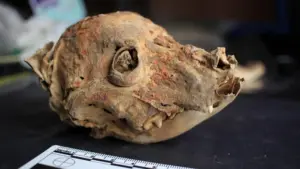
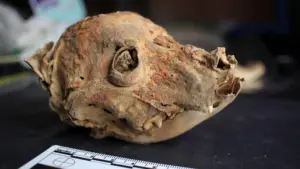
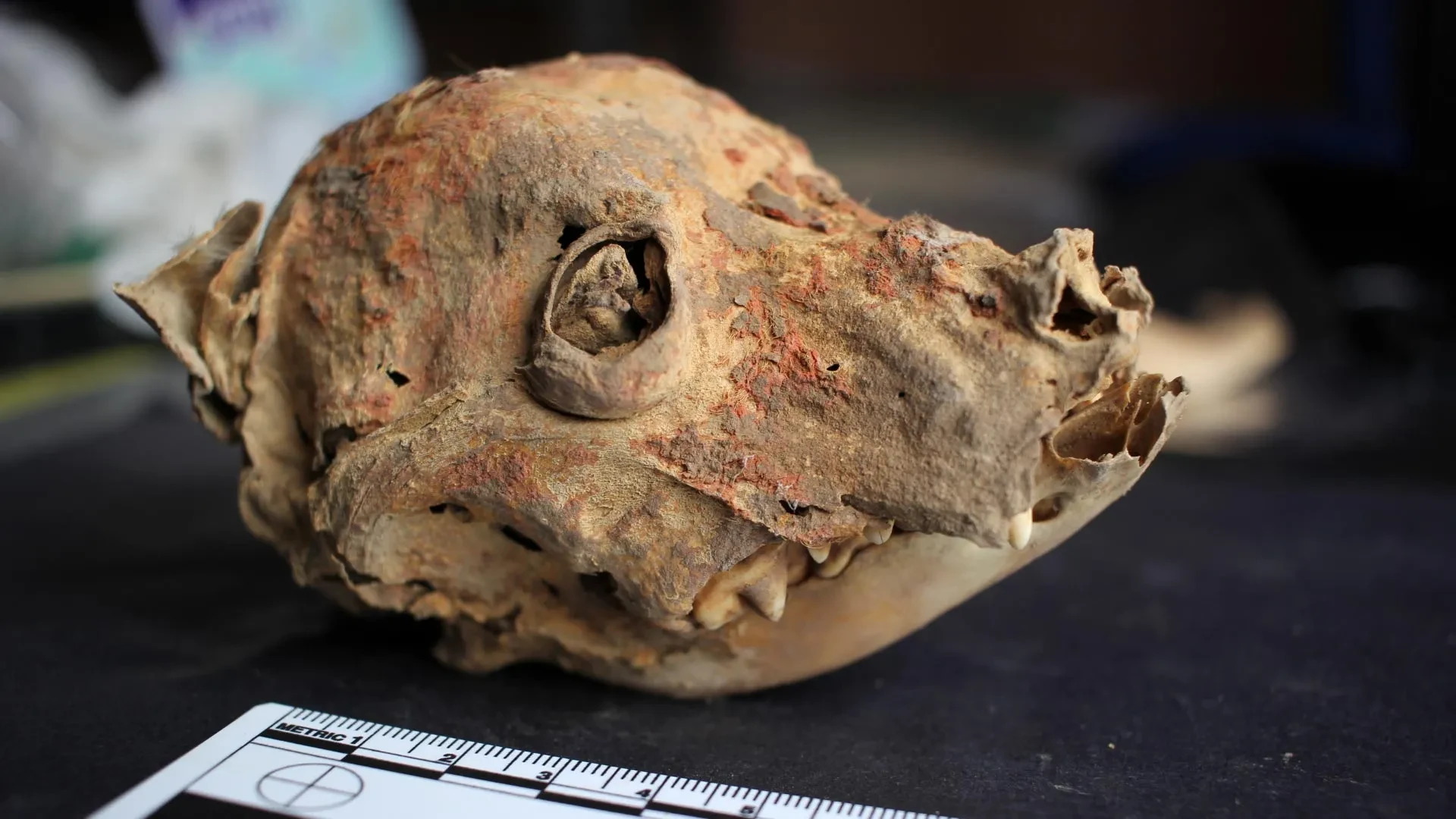
Dating back more than 1,200 years, this remarkable assemblage of naturally mummified remains, skeletal fragments, and chemical signatures shatters prior chronological timelines. Long before the rise of the Inca Empire, which is traditionally credited with cementing the cultural footprint of these distinct canines, the Wari people lived, worked, and occasionally buried these slender, pointed-eared animals with striking reverence.
The findings, recently published in the Journal of Anthropological Archaeology, offer an unprecedented look at human-animal interactions in ancient South America. Led by Weronika Tomczyk, a research associate at Dartmouth College, the international research team utilized advanced zooarchaeological techniques, radiocarbon dating, and stable isotope analysis. Their work reveals that these hairless dogs were not merely background elements of agrarian life; rather, they were subjects of complex social curation, sharing human-like diets of maize, receiving distinct burial treatments, and serving as silent witnesses to the complex socio-political hierarchy of the Wari civilization.
By untangling the genetic anomaly linking hairlessness directly to dental patterns—specifically, the lack of first premolars—the researchers solved a diagnostic puzzle that had long troubled Andean archaeology. The resulting study paints a nuanced picture of a sophisticated society whose relationships with animals mirrored the contradictions of the modern world, where a cherished companion to one faction could be viewed merely as an urban nuisance by the next.
Detailed Chronology
To fully understand the weight of the Castillo de Huarmey discoveries, one must trace both the historical timeline of the site and the chronological progression of modern archaeological investigations that brought these ancient dogs to light.
The Rise and Fall of the Wari Empire (600–1050 CE)
Centered in the Ayacucho highlands of south-central Peru, the Wari Empire represented one of the earliest true imperial powers in the ancient Andes, flourishing roughly four centuries before the Inca expansion. Spanning roughly 110 acres, Castillo de Huarmey served as a heavily fortified provincial administrative and ceremonial center strategically positioned approximately 190 miles north of modern-day Lima. Occupied continuously from approximately 600 to 1050 CE, the complex was designed to project imperial authority, coordinate regional trade routes, and manage elite craft production along the arid Pacific coast.
Modern Excavations and Catastrophes (1970–2025)
For centuries, the secrets of Castillo de Huarmey lay buried beneath layers of desert sand and stone architecture. However, the site’s modern history has been punctuated by both tragedy and triumph:
- 1970: A catastrophic earthquake struck the region, causing a portion of the Castillo de Huarmey complex to structurally collapse. This seismic event exposed subsurface burial chambers, inadvertently drawing the attention of illegal looters who subsequently disturbed large upper strata of the archaeological complex.
- 2010–2012: Systematic, authorized excavations began to reclaim the site. In 2012, an international team led by researchers from the University of Warsaw made history by uncovering the first completely undisturbed elite Wari tomb. This monumental discovery yielded the remains of 58 high-status women, six intentional human sacrifices, and approximately 1,300 luxury artifacts crafted from precious metals, textiles, and exotic feathers.
- 2022: Archaeologists unearthed additional elite burials immediately adjacent to the main ceremonial structures. These chambers contained the remains of master craftspeople interred alongside pristine gold, silver, and bronze metallurgical tools, illuminating the centralized economic power of the Wari state.
- 2010–2025: Across fifteen years of sustained fieldwork in the northern sector of the main ceremonial complex, researchers systematically cataloged extensive animal remains, including camelids (llamas and alpacas) and a substantial collection of canine bones. It was within these upper, occasionally mixed strata that the unusual dog mummies and fragmented skeletal remains were isolated, setting the stage for the groundbreaking 2025 analytical study.
Supporting Context & Metrics
The quantitative data underpinning the Castillo de Huarmey dog study provide staggering insights into the scale of the archaeological recovery and the scientific methodologies applied to decode it.
Quantitative Breakdown of the Archaeological Assemblage
- 190 Miles: The geographic distance north of Lima where the Castillo de Huarmey administrative center is situated.
- 110 Acres: The expansive total area covered by the ancient Wari urban, ceremonial, and burial complex.
- 600 to 1050 CE: The multi-century operational window of the Wari Empire at the site, predating the Inca Empire by roughly 400 years.
- 341: The total count of individual dog bone specimens recovered from the excavations.
- 19: The minimum number of individual dogs represented by the recovered skeletal fragments.
- 1,200+ Years: The radiocarbon-determined minimum age of the completely mummified male dog, establishing it as the oldest verified specimen of its kind recovered from the site.
Biological Identification: The Genetic-Dental Link
Identifying ancient dog remains is frequently hindered by skeletal fragmentation and post-depositional damage. However, the research team bypassed these obstacles by observing a specialized anatomical marker: congenital tooth agenesis.
Lead analyst Weronika Tomczyk observed that several of the recovered canine jaws were missing their first premolars and, in select instances, their last molars. Critically, microscopic examination of the tooth sockets confirmed that these teeth had never formed or erupted during the animals’ lifespans; they were not lost to trauma, periodontal disease, or old age.
Reviewing comparative biological literature, Tomczyk linked this dental anomaly to the specific genetic mutation responsible for canine hairlessness. In hairless dog breeds—such as the modern Peruvian Inca Orchid—the same developmental pathways that suppress fur growth also inhibit normal dental development. This genetic fingerprint provided definitive proof that the Castillo de Huarmey remains belonged specifically to Peruvian hairless dogs, rather than generalized pre-Hispanic curs or European introduction breeds.
Isotopic Analysis and Dietary Reconstruction
To reconstruct the life histories of these ancient animals, the researchers performed multi-element stable isotopic analyses on the dogs’ bones and teeth. By measuring isotopes of carbon, nitrogen, oxygen, and strontium, the scientific team gained high-resolution data regarding regional mobility and nutritional intake:
- Tooth Enamel: Because canine teeth calcify rapidly during early development, isotopic signatures locked within the enamel provided a snapshot of the animals’ diets as young puppies.
- Bone Collagen: Bone tissue undergoes continuous remodeling, reflecting the dietary inputs of roughly the final year of an animal’s life.
- Strontium Isotopes: By comparing the strontium ratios in the dogs’ bones with local geological baselines and the remains of contemporary humans and camelids, researchers tracked geographic origins, indicating whether the dogs were locally raised or brought to Castillo de Huarmey from distant provinces.
The isotopic results revealed that the hairless puppies consumed diets heavily reliant on maize (corn)—the primary agricultural staple of the pre-Hispanic Andes. Interestingly, the dietary profile of these puppies closely mirrored the consumption patterns of human children within the Wari settlement. As the dogs matured into adulthood, their isotopic signatures diversified, suggesting they transitioned from controlled, human-provided provisioning to scavenger-style feeding regimens or broader diets.
Official Statements
The implications of the Castillo de Huarmey excavations extend far beyond faunal cataloging, touching upon the deeply human dimensions of interspecies relationships in antiquity.
Discussing the inherent complexity of interpreting human-animal bonds through the archaeological record, lead author Weronika Tomczyk noted:
"Our findings indicate that humans and dogs coexisted at this Wari site, but reconstructing their bond is challenging, as past emotions are difficult to capture through archaeological methods. The goal of our study was to not only present data on Castillo de Huarmey’s dog burials, but also emphasize that people in the past had often contradictory relationships with the animals, just as they do today: a pet for one group of people could at the same time be considered a pest by their closest neighbors."
Elaborating on the unexpected genetic and dental markers that unlocked the identity of the mummies, Tomczyk explained:
"What I noticed is that some of the dog skeletons were missing teeth, and not that they lost them during their lifespan; some teeth, especially first premolars and sometimes last molars, had just never erupted. And then I found in the literature that the same gene which is responsible for hairlessness in dogs is responsible for a reduced number of teeth, indicating that these were Peruvian hairless dogs."
Addressing the domestic management and feeding behaviors of these ancient canines, Tomczyk added:
"We do not know if the dogs were intentionally fed maize or if perhaps, they were just eating leftovers or trash. Yet, the distinct dietary patterns of hairless puppies provide insights into what may have been organized breeding… While we will never know if any of the three dogs were pets or how people treated them, it is evident they received different treatment than other dogs."
The collaborative international team behind the research—featuring contributions from prominent scholars including Miłosz Giersz, Wiesław Więckowski, and Roberto Pimentel Nita of the University of Warsaw, alongside Claire Ebert of the University of Pittsburgh—emphasizes that these discoveries redefine our understanding of Wari domestic life. The dogs were integrated into elite spaces, with individual puppies and adults interred alongside high-status craftspeople and sacrificial tomb guardians, proving that their societal role transcended basic utility.
Future Outlook
The recovery and analysis of the Castillo de Huarmey dog mummies open thrilling new avenues for Andean zooarchaeology, genetics, and historical anthropology. As analytical techniques continue to advance, researchers anticipate several key developments in the ongoing study of pre-Hispanic fauna:
- Ancient DNA (aDNA) Extraction: While morphological and isotopic analyses have successfully linked the skeletal anomalies to hairlessness, future initiatives will target the preserved soft tissues of the mummified remains to extract mitochondrial and nuclear DNA. This genetic sequencing will map the phylogenetic lineage of the Wari hairless dogs and trace their evolutionary divergence from other New World canine populations.
- Broader Regional Comparisons: Archaeologists plan to cross-reference the isotopic and dietary data from Castillo de Huarmey with canine remains recovered from contemporary Wari administrative centers in the Andean highlands. This comparative framework will determine whether hairless dogs were bred exclusively in specific ecological zones—such as the warm coastal valleys—and traded inland as elite status symbols.
- Refining Funerary Typologies: The contextual discovery of dog remains interred alongside elite craftspeople ("Master Basketmakers") and sacrificial human guardians demands a re-evaluation of Wari mortuary programs. Future excavations will examine whether specific canine colors, ages, or physical traits were systematically selected for ritual sacrifices or companion burials.
- Preservation of Fragile Heritage: Given the ongoing vulnerability of desert archaeological sites to environmental erosion, seismic activity, and illegal looting, the successful stabilization and documentation of the Castillo de Huarmey mummies establishes a vital conservation protocol. Future non-destructive imaging technologies, such as high-resolution computed tomography (CT) scanning, will allow researchers to examine internal pathologies and skeletal structures without compromising the physical integrity of the mummified remains.
Ultimately, the ancient hairless dogs of Castillo de Huarmey bridge the vast temporal chasm between modern humanity and the ancient Wari Empire. They remind us that across millennia, the bond between humans and their canine companions has remained a complex, deeply emotional, and socially charged facet of civilization.