
Executive Overview
The global conservation community has long wrestled with a paradox inherent in species reintroduction programs: animals born or raised in captivity often struggle to adapt to the rigors of the wild, yet releasing fragile juveniles yields unacceptably high mortality rates. For apex predators, this challenge is further complicated by innate navigational prowess. Many species possess an extraordinary homing instinct, compelling them to abandon newly designated release sites and embark on perilous journeys back to their places of origin—frequently bringing them into lethal contact with human infrastructure, industry, or populated areas.
Now, groundbreaking research published in the journal Wildlife Research offers a vital breakthrough for one of the world’s most formidable aquatic predators. A recent study examining the post-release movements of saltwater crocodiles (Crocodylus porcinus) in Bangladesh indicates that individuals born or raised in captivity do not exhibit the compulsive drive to return to their breeding facilities. Instead, upon release into natural habitats, these captive-reared adults seamlessly transition into settled, localized movement patterns virtually indistinguishable from those of native wild populations.
This behavioral distinction represents a monumental paradigm shift for conservationists working to rescue critically depleted saltwater crocodile populations, particularly in regions where historical overexploitation has brought the species to the brink of ecological collapse. Traditionally, conservation initiatives have relied on releasing fragile hatchlings—infants plagued by abysmal survival rates that take decades to reach reproductive maturity. The new findings strongly suggest that utilizing older, subadult, and mature captive-bred crocodiles can bypass the vulnerabilities of infancy while bypassing the destructive homing behaviors that doom translocated wild adults.
Authored by an international team of researchers—including behavioral ecologist and Murdoch University Adjunct Associate Professor Ru Somaweera—and led by IUCN Bangladesh and the Bangladesh Forest Department with funding from the Deutsche Gesellschaft für Internationale Zusammenarbeit (GIZ), the study titled "What is home? Post-release movements of captive-reared and translocated mature saltwater crocodiles in Bangladesh" provides an empirical roadmap for future ecological restoration. As conservationists race against time to safeguard remaining biodiversity hotspots like the Sundarbans mangrove forest, this research opens a viable, scientifically backed pathway toward repopulating native waters with robust, resilient apex predators.
Detailed Chronology
To fully appreciate the significance of the recent findings regarding captive-reared crocodiles, it is necessary to examine both the chronological framework of the study itself and the historical backdrop that necessitated such urgent conservation intervention in South Asia.
Historical Context: The Collapse of Bangladesh’s Saltwater Crocodiles
Saltwater crocodiles, the largest living reptiles on Earth, once thrived extensively across the tropical and subtropical freshwater and brackish environments of South and Southeast Asia. However, the coastal and riverine ecosystems of Bangladesh bore witness to a devastating ecological collapse throughout the mid-20th century. Driven by an insatiable global demand for exotic leather, heavy commercial hide hunting decimated saltwater crocodile populations.
By the 1970s, the species had been pushed to the absolute precipice of local extinction. Although the government of Bangladesh formally extended legal protection to saltwater crocodiles in 1973, enacting strict anti-poaching measures, the species has failed to mount a measurable natural recovery in the decades since. Today, the vast majority of the country’s surviving saltwater crocodiles are restricted to a single stronghold: the Sundarbans mangrove forest, a sprawling, labyrinthine tidal wetland shared between Bangladesh and India. Even within this critical refuge, the population remains precariously small. The most recent comprehensive ecological surveys estimate that a mere 140 mature individuals survive in the region, leaving the population highly vulnerable to stochastic environmental events, genetic bottlenecking, and ongoing anthropogenic pressures.
The Genesis of the Study and Experimental Design
Recognizing that natural recovery was failing to salvage the Sundarbans population, conservationists sought to explore active reintroduction strategies. However, standard methodologies presented severe limitations. Releasing hatchlings yielded dismal survival statistics due to predation and starvation, while relocating wild-caught problem crocodiles often resulted in failed conservation outcomes due to the animals’ stubborn homing instincts.
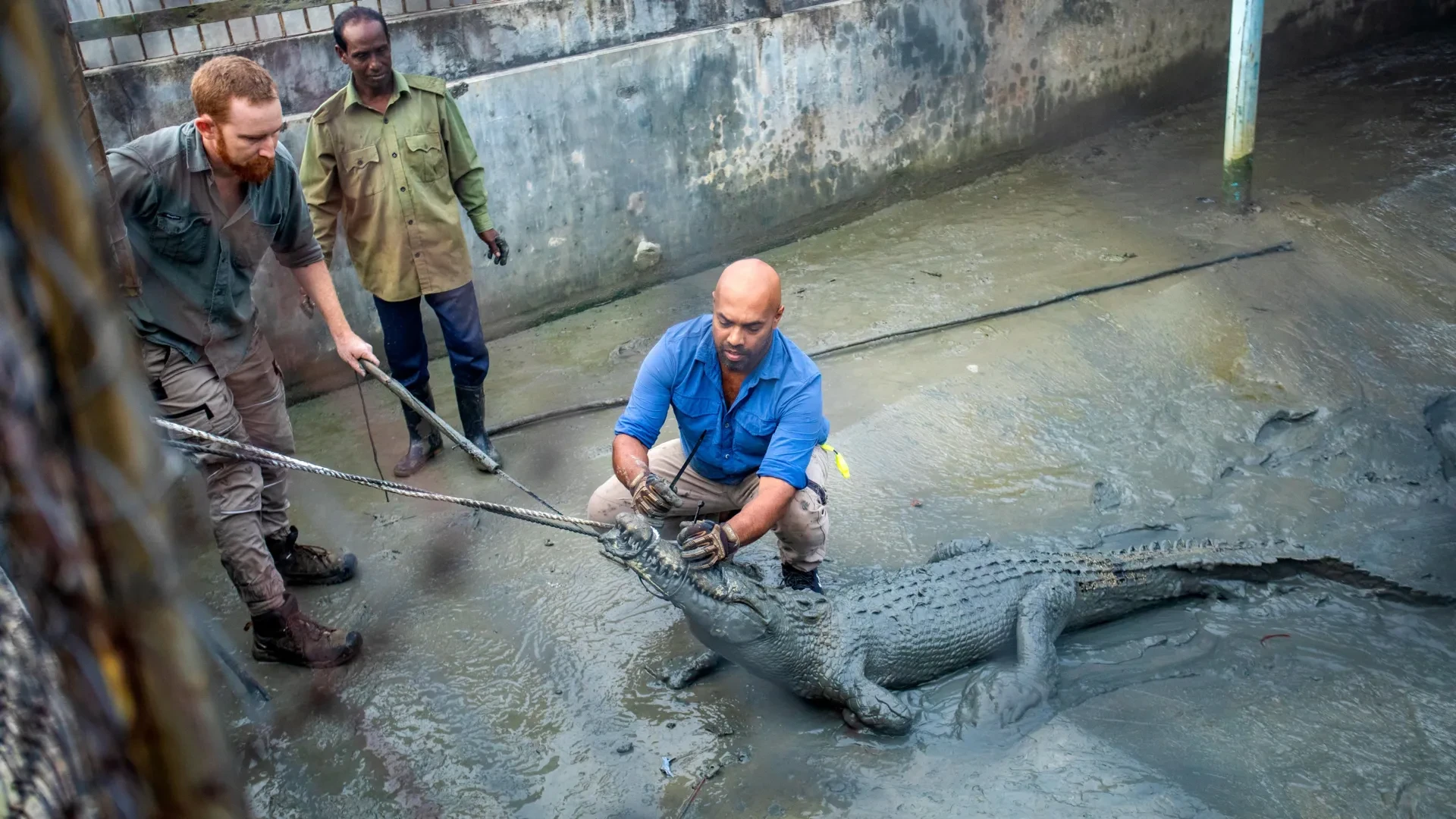
To determine whether older, captive-reared crocodiles could serve as a viable alternative for reintroduction, researchers devised a targeted tracking initiative in the Sundarbans. The experimental cohort comprised five mature saltwater crocodiles, each outfitted with advanced satellite tracking telemetry to monitor their real-time movements and geographic dispersion following release.
- The Captive-Reared Cohort: The study tracked three female saltwater crocodiles that had spent between 8 and 22 years of their lives housed within captive breeding and holding facilities.
- The Control & Comparison Cohorts: To establish a behavioral baseline, the researchers also tracked two wild crocodiles. One was a local wild individual captured and immediately released at the exact same site (serving as a localized wild control), while the second was "Jongra," a wild adult male that was captured and translocated a significant distance—approximately 132 kilometers—away from his original home range before being released.
Post-Release Tracking and Behavioral Observations
Following their strategic releases into the wild habitats of the Sundarbans, the animals were continuously monitored via satellite tracking arrays for several months. The data captured during this post-release monitoring phase revealed a striking dichotomy in behavioral adaptation:
- The Captive-Reared Adaptation: Contrary to long-held fears that captive animals would desperately attempt to retrace their steps to human enclosures, none of the three long-term captive females displayed any indication of homing behavior. Rather than wandering aimlessly or heading toward captivity, these crocodiles rapidly established small, well-defined home ranges. Their spatial movement patterns closely mirrored those of the local wild control crocodile, signaling a smooth, successful environmental integration.
- The Translocated Wild Reaction: In stark contrast, the translocated wild crocodile, Jongra, exhibited textbook manifestations of intense homing behavior. Displaced 132 kilometers from his native territory, Jongra immediately initiated purposeful, long-distance directional travel. Throughout the tracking period, his daily movement distances vastly exceeded those of any other tracked subject, encompassing massive geographic swathes. Notably, Jongra recorded single-day movement metrics exceeding 30 kilometers—a definitive biological indicator of an animal driven to navigate back to a familiar home territory.
Supporting Context & Metrics
Understanding the physiological, ecological, and behavioral complexities of crocodilian homing instincts requires examining broader zoological data and the specific metrics that shaped the Bangladesh study.
The Mechanics of Crocodilian Homing
Within the animal kingdom, spatial orientation and homing behaviors are critical evolutionary adaptations. From homing pigeons navigating magnetic fields to sea turtles returning to natal beaches, spatial memory underpins survival. However, crocodilians occupy a fascinating and unique niche within this behavioral spectrum. As apex ambush predators governing aquatic and semi-aquatic ecosystems, their cognitive mapping abilities are exceptionally acute.
Prior scientific literature has consistently demonstrated that crocodilians possess a formidable, highly refined homing instinct. When researchers or wildlife authorities have historically relocated nuisance or conflict crocodiles away from human settlements, these animals have repeatedly defied expectations by navigating back across vast expanses of unfamiliar terrain, river systems, and open water to return to their original capture sites. This ingrained navigational aptitude has historically crippled many institutional relocation and reintroduction programs. If an animal is determined to return home, translocation merely delays human-wildlife conflict or results in the animal’s exhaustion, starvation, or mortality during the journey.
Key Study Metrics and Demographic Breakdown
To contextualize the findings from the Sundarbans mangrove forest, consider the quantitative and qualitative parameters of the research cohort:
| Parameter / Metric | Data Point / Description |
|---|---|
| Study Location | Sundarbans Mangrove Forest, Bangladesh |
| Estimated Mature Population (Sundarbans) | ~140 individuals |
| Total Tracked Subjects | 5 mature saltwater crocodiles (Crocodylus porcinus) |
| Captive-Reared Cohort | 3 females (held in captivity for 8 to 22 years) |
| Wild Control Cohort | 1 local wild crocodile (captured and released in situ) |
| Translocated Wild Cohort | 1 wild adult male ("Jongra", translocated ~132 km) |
| Primary Tracking Methodology | Satellite telemetry (multi-month monitoring) |
| Key Captive Finding | Zero homing attempts; established localized home ranges |
| Key Translocated Finding | Intense directional travel; daily movements >30 km |
Ecological Significance of the Sundarbans
The Sundarbans represents the single largest contiguous mangrove forest on Earth, spanning an area of roughly 10,000 square kilometers across Bangladesh and India. Characterized by a complex network of tidal waterways, mudflats, and small islands of salt-tolerant mangrove forests, it is a dynamic and challenging environment. For saltwater crocodiles, which require brackish estuaries and tidal rivers to thrive, the Sundarbans is a sanctuary—yet one compromised by historical overharvesting, fragmentation, and persistent human pressures including illegal fishing and logging. Reintroducing apex predators into this delicate web requires absolute precision; introducing animals that cannot adapt or that wander into heavily populated fishing villages would spell disaster for both conservation goals and local human communities.
Official Statements
The implications of the Wildlife Research study have drawn widespread attention from leading ecologists, conservation organizations, and government agencies dedicated to wildlife management in South Asia.
Dr. Ru Somaweera, a prominent behavioral ecologist, Adjunct Associate Professor at Murdoch University, and lead voice in interpreting the study’s findings, emphasized the fundamental shift this research brings to conservation biology:
"Crocodilians, the largest predators in most tropical, subtropical freshwater and brackish environments, are a unique case when it comes to homing behavior," said Associate Professor Somaweera.
"Crocodiles are remarkably good at finding their way home, often returning to their original capture sites and limiting the success of relocation programs. What we still don’t fully understand, though, is how this behavior plays out in individuals that have been bred or kept in captivity for long periods before being released back into the wild."
Addressing the historical failures of reintroduction models and the risks of adult translocation, Somaweera detailed why the absence of homing instincts in captive-reared subjects changes the calculus of species recovery:
"If crocodiles who are bred and raised in captivity subsequently return to their enclosures or breeding facilities after being released, attempts to reintroduce them into the wild as part of conservation efforts will ultimately fail," he explained.
"The traditional approach has been to use hatchlings in reintroduction programs, but their survival rates are extremely low and they take a long time to reach reproductive maturity. Understanding whether larger, captive-bred crocodiles can be used instead represents an important knowledge gap."
Highlighting the stark contrast between the captive-reared females and the translocated wild male, Somaweera noted the seamless transition observed in the former group:
"According to the most encouraging result, the three captive-reared crocodiles showed no signs of attempting to return to the breeding facility where they had lived. Instead, they settled into small, well-defined areas and moved in much the same way as the local wild crocodile we tracked, which tells us they are possibly able to adapt to their new environment seamlessly."
Conversely, commenting on the grueling, direction-driven journey of the translocated wild crocodile, Jongra, Somaweera pointed out the inherent operational hazards of moving wild adults without specialized intervention:
"Unfortunately, the results weren’t as good for the wild crocodile Jongra, who was translocated about 132km from his home before being released. Although Jongra didn’t make it back to his original capture site during the study, his movements were very clearly going in that direction. He traveled far more each day than any other crocodile we tracked, covered an exceptionally large area, and even recorded single-day movements of more than 30 kilometers: all typical signs of homing behavior."
Summarizing the practical, applied takeaways for conservation practitioners worldwide, Somaweera concluded:
"These findings suggest that releasing subadult and adult captive-reared crocodiles can be a viable strategy to strengthen wild populations. For translocated crocodiles, it’s important there is careful release planning to manage their tendencies to return home."
The collaborative study was published in the academic journal Wildlife Research and represents a milestone cooperative effort. Funding was generously provided by the Deutsche Gesellschaft für Internationale Zusammenarbeit (GIZ), with operational leadership spearheaded by IUCN Bangladesh and the Bangladesh Forest Department, illustrating a unified framework between international development agencies, environmental NGOs, and state forestry regulators.
Future Outlook
As conservation biologists, government regulators, and wildlife managers digest the findings of the Sundarbans study, the horizon for crocodilian conservation is being redrawn. The empirical proof that captive-reared saltwater crocodiles can bypass debilitating homing urges and successfully integrate into wild ecosystems provides a powerful new tool in the fight against biodiversity loss.
Reshaping Reintroduction Protocols
For decades, conservation breeding programs faced a bottleneck. Facilities could successfully incubate eggs and rear healthy juvenile crocodiles, but the moment of release was fraught with uncertainty. Releasing hatchlings meant accepting devastatingly high natural mortality rates, as young reptiles fell prey to wading birds, large fish, and monitor lizards. Consequently, very few captive-raised individuals ever survived long enough to contribute to the breeding pool, severely limiting the demographic impact of captive-breeding initiatives.
By proving that subadult and mature captive-bred crocodiles can be safely released without attempting to migrate back to artificial enclosures, conservationists can now pivot toward releasing older, hardier animals. These mature individuals possess the physical size and predatory capability required to evade local predators, instantly bolstering the breeding-age demographic of critically depleted wild populations like the Sundarbans’ 140 remaining mature crocodiles.
Managing Wild Translocations and Human-Wildlife Conflict
While the news for captive-reared individuals is overwhelmingly positive, the study also issues a critical warning regarding the translocation of wild conflict crocodiles. Animals like Jongra—wild adults displaced by human encroachment or management interventions—cannot simply be trucked away and released elsewhere without anticipating severe homing-driven wandering behavior.
Future conservation management plans must incorporate advanced geospatial mapping and careful release site planning for wild translocations. When wild adults must be moved to mitigate human-wildlife conflict, forestry departments and wildlife agencies must establish natural barriers, utilize remote release zones, or implement long-term post-release monitoring to ensure that disoriented or homing-driven animals do not wander into heavily populated areas or exhaust themselves trying to cross hostile human-modified landscapes.
Broadening Application Across Other Vulnerable Species
The success of this methodology in Bangladesh opens avenues for parallel conservation initiatives across the globe. Other vulnerable or critically endangered crocodilian species—such as the Philippine crocodile (Crocodylus mindorensis), the Orinoco crocodile (Crocodylus intermedius), and the gharial (Gavialis gangeticus)—face similar threats of habitat fragmentation, poaching, and dwindling wild censuses. Understanding how captive-rearing history influences post-release spatial ecology across these distinct taxonomic groups will allow conservation managers to refine reintroduction protocols worldwide.
Ultimately, the study published in Wildlife Research bridges a critical gap between captive animal husbandry and field ecology. By demonstrating that time spent in captivity does not automatically hardwire a homing imperative into saltwater crocodiles, the research removes a psychological and biological barrier to species recovery. As conservationists look toward the future of the Sundarbans and other fragile estuarine habitats, the prospect of returning robust, captive-raised apex predators to their rightful waters offers a renewed beacon of hope for restoring the ecological balance of the natural world.