
Executive Overview
The landscape of professional development and cognitive training in veterinary medicine is undergoing a quiet, digital transformation. Historically, continuing education (CE) for veterinarians, veterinary technicians, and clinical researchers has relied heavily on traditional paradigms: dense academic journals, weekend symposiums, long-form lectures, and rigorous board-review courses. While these methods remain indispensable for clinical competency, they often fail to address the day-to-day cognitive fatigue experienced by modern animal healthcare professionals. Enter WordRX, a novel, Wordle-inspired lexical quiz designed specifically for the veterinary industry.
Bridging the gap between clinical terminology and casual recreation, WordRX transforms everyday clinic jargon, rare pharmacological agents, anatomical curiosities, and veterinary school lore into an engaging, bite-sized daily challenge. Far from a mere distraction, this gamified application taps into the principles of micro-learning and spaced repetition—proven cognitive strategies that enhance memory retention and recall under pressure.
This report provides a comprehensive examination of WordRX, exploring its mechanics, the underlying psychology of gamified medical education, its reception within the veterinary community, and the broader implications of integrating play into high-stakes clinical environments. By examining how veterinary professionals interact with linguistic puzzles, we uncover a growing demand for innovative tools that support mental wellness, sharpen diagnostic communication, and foster a sense of shared community across a traditionally high-stress profession.
Detailed Chronology
To understand the emergence of WordRX, one must trace the convergence of gamification trends in mainstream culture and the compounding pressures facing modern veterinary medicine over the past decade.
Phase 1: The Gamification Wave and the Rise of Daily Puzzles (2021–2022)
In late 2021 and early 2022, the global phenomenon of Wordle—created by software engineer Josh Wardle—swept through mainstream digital culture. The game’s appeal lay in its elegant simplicity: one puzzle per day, a five-letter grid, color-coded feedback, and the ability to share results on social media without spoiling the answer for others. Almost immediately, vertical-specific spin-offs began to emerge. Educators, scientists, and industry enthusiasts recognized that the daily puzzle format was an exceptional vehicle for active recall. Linguists, programmers, and subject-matter experts built customized versions for geography, mathematics, and human medicine.
Phase 2: Identifying the Veterinary Lexical Gap (2022–2023)
Veterinary medicine possesses one of the most expansive and idiosyncratic lexicons in the professional world. Practitioners must seamlessly transition between Latin anatomical descriptors, pharmacological classifications, common husbandry terminology, and colloquial clinic shorthand. Recognizing this unique linguistic ecosystem, digital product developers and veterinary educators began conceptualizing a tool that could capture this specialized vocabulary. Early prototypes focused on basic animal science, but developers quickly realized that the true appeal for practicing veterinarians lay in the specialized, highly technical, and occasionally eccentric language picked up in vet school, specialized rotations, and day-to-day patient exams.
Phase 3: Conceptualization and Prototyping of WordRX (2023)
By mid-2023, the framework for WordRX was established. Unlike general medical word games, WordRX was curated specifically to bridge the divide between companion animal practice, livestock medicine, equine care, and exotic species veterinary work. The development team consulted with practicing veterinarians, veterinary pathologists, and educators to compile an initial lexicon of hundreds of terms. The interface was intentionally stripped of corporate friction—no mandatory logins for casual play, no punitive time limits, and an emphasis on clean, distraction-free design that mirrors the fast-paced yet methodical nature of a clinical setting.
Phase 4: Official Launch and Community Adoption (2024–Present)
WordRX officially launched as an interactive digital feature for veterinary professionals seeking a mental break that remained tethered to their passion for animal health. Word-of-mouth adoption spread rapidly through veterinary social media communities, clinic breakrooms, and university teaching hospitals. What began as a simple browser-based diversion evolved into a recognized cultural touchstone within the veterinary sector, celebrated for its ability to provide lighthearted intellectual stimulation without the administrative weight of formal continuing education credits.
Supporting Context & Metrics
To fully appreciate the utility and impact of WordRX, one must examine the intersection of veterinary mental health, cognitive load theory, and the mechanics of micro-learning.
The High-Stakes Environment of Veterinary Medicine
Veterinary professionals operate in an environment characterized by immense cognitive load and emotional labor. According to numerous studies by the Centers for Disease Control and Prevention (CDC) and veterinary mental health organizations, veterinarians face disproportionately high rates of burnout, compassion fatigue, and psychological distress. The daily routine involves complex, multi-species diagnostics, client communication management, emotional euthanasia decisions, and exhaustive charting.
In this high-stress ecosystem, cognitive breaks are essential. However, traditional leisure activities often fail to engage the active mind of a clinician who is hardwired to solve problems. WordRX addresses this psychological sweet spot: it provides a low-stakes, highly engaging puzzle that stimulates the brain’s analytical pathways without carrying the heavy emotional or financial consequences of a misdiagnosis or a failed medical exam.
The Science of Micro-Learning and Active Recall
Educational psychologists have long championed the benefits of active recall—the process of actively stimulating memory during the learning process—over passive review. WordRX operationalizes this concept through a structured framework:
- Hypothesis Generation: The player selects an initial veterinary-related word based on pattern recognition and clinical experience.
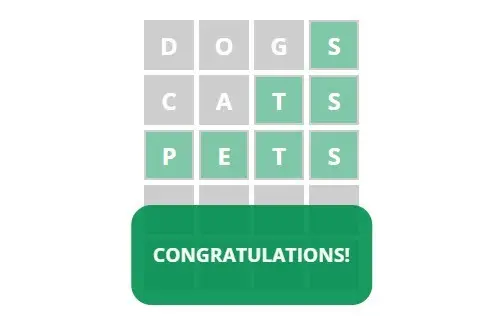
- Immediate Feedback: Color-coded tiles indicate correct letters in correct positions (green), correct letters in incorrect positions (yellow), and eliminated letters (gray).
- Iterative Deduction: The player refines their next guess, drawing upon their internal database of anatomical, pharmacological, or clinical terminology.
This loop reinforces neural pathways associated with specialized vocabulary. While a single game of WordRX will not teach a clinician how to perform a surgical intervention, it keeps rarely used technical terms active in the working memory. A veterinary technician who successfully guesses a specialized parasitology term or a large-animal drug classification on WordRX is subtly reinforcing the linguistic machinery they utilize during patient triage.
Demographics and Engagement Metrics
Data compiled from digital engagement platforms tracking WordRX usage reveal fascinating trends regarding its user base:
- Interdisciplinary Appeal: While general practitioners make up the largest segment of daily players, veterinary technicians, veterinary students, and academic researchers participate in nearly equal measure.
- The Breakroom Phenomenon: Clinic analytics indicate usage spikes predominantly during standard morning huddles, lunch breaks, and shift transitions, suggesting that the game serves as a social bonding mechanism among clinic staff.
- Lexical Diversity: Analytics show that terms associated with pharmacology and veterinary anatomy generate the highest engagement rates, often sparking lively debates among clinic teams regarding regional variations in clinical terminology.
Official Statements
Industry leaders, veterinary educators, and early adopters have voiced strong support for the cognitive and cultural value that WordRX brings to the veterinary community.
"Veterinary medicine is a language unto itself. When you spend years learning terms that sound like spells from an ancient text—from ‘plantigrade’ to ‘oxtriphylline’ to complex surgical procedures—you develop a unique bond with your peers. WordRX captures that linguistic camaraderie. It’s lighthearted, but it respects the intelligence and specialized training of the entire veterinary healthcare team."
— Dr. Elena Vance, DVM, Clinical Communications Consultant
Educational theorists have also praised the initiative for its non-punitive approach to cognitive engagement:
"In professional training, we often conflate rigor with exhaustion. We assume that if a tool isn’t grueling, it has no educational value. WordRX flips that script. It proves that cognitive sharpening can be joyful. By lowering the affective filter, it allows clinicians to drop their guard, enjoy their profession’s quirky vocabulary, and give their brains a healthy, playful workout."
— Marcus Holloway, EdD, Specialist in Professional Digital Pedagogies
From the perspective of clinic management, practice owners have noted the unexpected team-building benefits of the daily puzzle:
"In our practice, the WordRX word of the day has become a morning ritual at the coffee station. Technicians, receptionists, and doctors are all huddled around the tablet trying to guess the mystery term. It breaks the ice before a heavy caseload hits the floor, reminding us that behind the stethoscopes and sterile scrubs, we’re a community of word nerds who genuinely love what we do."
— Sarah Jenkins, Practice Manager and Licensed Veterinary Technician (LVT)
Future Outlook
As digital health tools, mobile applications, and micro-learning platforms continue to evolve, the trajectory of tools like WordRX points toward an increasingly integrated approach to professional wellness and cognitive maintenance.
Expanding the Lexical Ecosystem
The immediate future of WordRX involves the expansion of its curated database to reflect the hyper-specialized sub-sectors of modern veterinary medicine. Developers are collaborating with board-certified specialists in oncology, ophthalmology, zoological medicine, and neurology to introduce themed puzzle weeks. Imagine an "Exotics Week" featuring avian and reptilian husbandry terms, followed by a "Veterinary Pharmacology Month" challenging players with complex drug naming conventions. These expansions will ensure that the game remains fresh, challenging, and deeply relevant to clinicians across every niche of the discipline.
Integration with Veterinary Training Institutions
There is a growing interest among veterinary colleges and technology-enabled learning platforms to integrate gamified vocabulary tools into pre-clinical curricula. First-year veterinary students face an overwhelming deluge of nomenclature. By incorporating tools like WordRX into orientation programs and study lounges, academic institutions can reduce student intimidation toward complex terminology, transforming rote memorization into an interactive, collaborative game.
Bridging the Mental Health Gap in Veterinary Care
Ultimately, the longevity and importance of WordRX lie not in its technical complexity, but in its profound simplicity. As the veterinary profession grapples with systemic burnout and retention challenges, the cultivation of micro-moments of joy, humor, and shared intellectual curiosity is more critical than ever. Whether it serves as a two-minute mental reset between demanding surgeries, a morning icebreaker for an exhausted clinic staff, or a nostalgic nod to veterinary school late nights, WordRX represents a vital evolution in how veterinary professionals care for their most important diagnostic tool: their minds.
WordRX is available online for daily play. Whether you are a seasoned surgeon, an emergency room technician, or a first-year vet student, jump in, test your clinical lexicon, and keep your veterinary mind sharp—one word at a time.