
Executive Overview
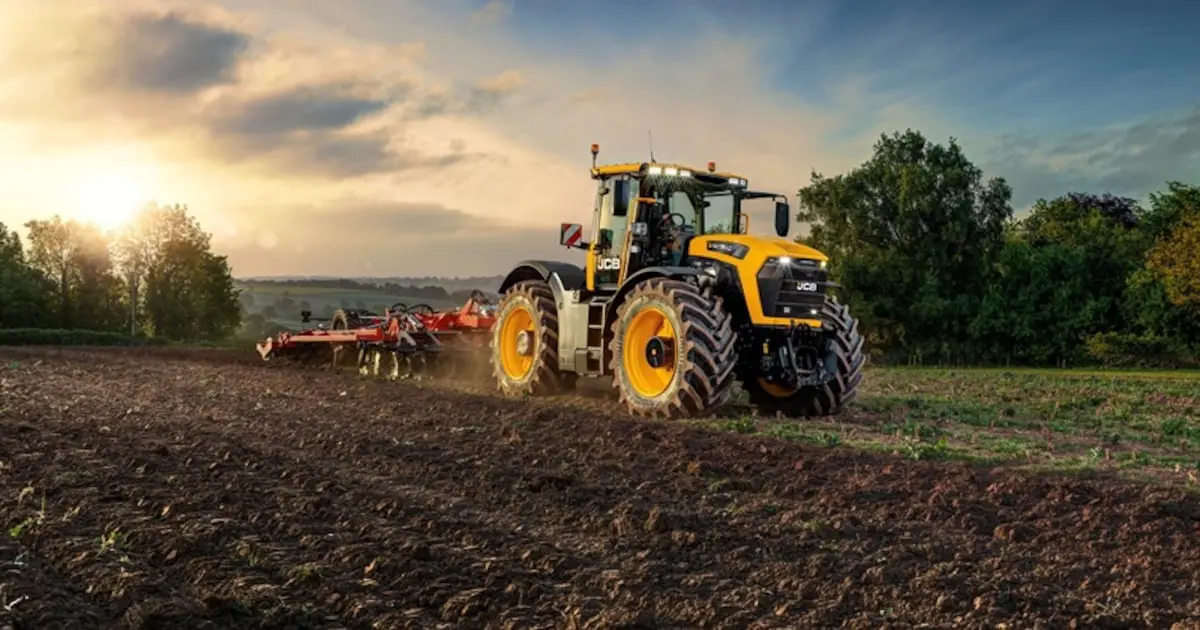
British original equipment manufacturer (OEM) JCB is officially preparing to launch its highly anticipated 335-horsepower Fastrac 6300 into the North American market, marking a significant milestone nearly a decade after the debut of the storied Series 8000. The commercial rollout will commence this fall through select agricultural equipment dealers across the United States and Canada, immediately following a high-profile, continent-spanning exhibition tour.
The Fastrac 6300 is scheduled to make its North American premiere at the prestigious Farm Progress Show in Boone, Iowa, running from September 1 to September 3, 2026. Following its debut in the U.S. Midwest, the tractor will immediately head north to make its Canadian debut at the Canadian Outdoor Farm Show from September 15 to September 17.
This regional introduction represents far more than a routine product launch; it is the physical embodiment of JCB’s aggressive, long-term strategic expansion into the North American agricultural sector. Engineered from the ground up to tackle the unique demands of large-scale North American farming—characterized by vast acreage, demanding soil conditions, and high-capacity implements—the Fastrac 6300 bridges the historical gap between heavy-duty field performance, high-speed transport capabilities, and versatile utility work.
Beneath its striking exterior and award-winning design lies a powerhouse of advanced agricultural engineering. Driven by an efficient FPT engine mated to a robust ZF transmission, the Fastrac 6300 integrates cutting-edge productivity solutions, including a revolutionary central tire inflation system, an upgraded hydraulic output tailored for modern planters, and comprehensive open-architecture precision farming compatibility.
Moreover, this product launch coincides with a monumental structural shift in JCB’s North American business operations. As the company prepares to flip its import-to-manufacturing ratio over the next two years through massive investments—including a state-of-the-art, million-square-foot facility in San Antonio, Texas—the Fastrac 6300 stands at the vanguard of a localized manufacturing renaissance for the global machinery giant.
Detailed Chronology: From European Debut to North American Rollout
The journey of the Fastrac 6300 from a closely guarded engineering project to a commercially available powerhouse is defined by steady, deliberate milestones that highlight its disruptive potential in the high-horsepower tractor segment.
September 24, 2025: The Global Reveal
JCB first pulled the wraps off the Fastrac 6300 on September 24, 2025, sending ripples of anticipation across the global agricultural machinery landscape. The unveiling shattered expectations of what a modern multi-purpose tractor could achieve, signaling that JCB was ready to challenge traditional conventional tractor paradigms with its signature blend of high-speed suspension, operator comfort, and heavy-duty utility. Industry analysts immediately noted the machine’s refined chassis architecture, which welcomed dedicated loader brackets—a feature historically missing or heavily compromised on high-horsepower tractors of this class.
November 2025: Agritechnica and International Acclaim
Following its initial introduction, the Fastrac 6300 made its physical public debut on the international trade show circuit at Agritechnica, the world’s leading trade fair for agricultural machinery, held in Hanover, Germany. The tractor captured the imaginations of international judges and agricultural experts alike, culminating in a prestigious win: the Sustainable Tractor of the Year award. This accolade validated JCB’s rigorous engineering focus on fuel efficiency, reduced soil compaction, and multi-functional versatility, proving that high productivity and environmental sustainability could successfully coexist in a 335-horsepower platform.
Spring 2026: Strengthening the North American Footprint
As the commercial launch drew closer, JCB actively reinforced its logistical and service infrastructure across North America to ensure seamless delivery and support for the upcoming tractor rollout. Earlier in 2026, WesPro JCB opened a sprawling, 14,000-square-foot facility in Norcross, near Atlanta, Georgia. This strategic opening was designed to drastically improve parts availability, elevate service response times, and fortify the regional sales strategy underpinning the brand’s broader expansion goals.
Fall 2026: The North American Roadshow and Market Arrival
The late-summer and early-fall window of 2026 marks the commercial realization of JCB’s North American ambitions. The tractor’s itinerary reads like a masterclass in agricultural marketing:
- September 1–3, 2026: Official North American premiere at the Farm Progress Show in Boone, Iowa.
- September 15–17, 2026: Canadian premiere at the Canadian Outdoor Farm Show.
- Fall 2026: Commercial availability opens across select, highly vetted North American agricultural dealerships, allowing commercial grain producers, livestock operations, and mixed-farming enterprises to take delivery of the long-awaited units.
Supporting Context & Metrics: Engineering Excellence and Precision Capabilities
To understand the immense market interest surrounding the Fastrac 6300, one must examine the specific engineering metrics and operational innovations that set it apart from conventional competitors in the 300-to-350-horsepower segment.
Powertrain and Hydraulic Muscle
At the heart of the Fastrac 6300 beats a high-performance FPT engine, paired seamlessly with a sophisticated ZF transmission. This pairing delivers a robust 335 horsepower, ensuring that the tractor has the torque reserve required to pull heavy tillage tools through challenging soil profiles without bogging down.
However, raw engine output is only part of the equation. Recognizing the specific operational requirements of North American farms—where massive, high-capacity planting implements are the norm—JCB’s engineers significantly boosted the tractor’s hydraulic capabilities. The Fastrac 6300 boasts an impressive hydraulic output of 106 gallons per minute (gpm). This massive flow rate ensures that modern, vacuum-assisted and hydraulic-drive planters receive uninterrupted, high-volume oil flow, preventing hydraulic starvation during critical spring planting windows where every hour counts.
Central Tire Inflation System (CTIS) and Soil Preservation
One of the most praised technological inclusions on the Fastrac 6300 is its optional Central Tire Inflation System (CTIS). Operating up to speeds of 25 miles per hour, this system allows the operator to adjust tire pressures dynamically from the cab while moving between field and road environments.
In agricultural operations, tire pressure management is directly tied to soil health and operational efficiency:
- In-Field Operations: Farmers can drop tire pressures to create a larger footprint (long contact patch), significantly reducing ground pressure, mitigating harmful subsoil compaction, and virtually eliminating wheel slip—the costly phenomenon where drive wheels spin idly without converting rotational motion into forward propulsion.
- Road Transport: Operators can rapidly reinflate tires to higher highway pressures, reducing rolling resistance, extending tire life, minimizing heat buildup, and ensuring safe, stable handling at transport speeds.
Sam Ullyott, agricultural product sales manager for JCB, noted that the combination of reduced wheel slip and optimized ground pressure translates directly into measurable improvements in fuel efficiency and crop yield preservation.
Versatility: From Tillage to Loader Work
Traditionally, farmers face a compromise: they either purchase a massive, rigid frame tractor capable of heavy field work that is entirely unsuited for tight farmyards or loader tasks, or they buy a utility tractor that lacks the muscle for primary tillage.
The Fastrac 6300 shatters this dichotomy. Through a redesigned, heavy-duty chassis that accommodates factory-available loader brackets, the machine transforms effortlessly. It can handle heavy plowing and planting by day, transition seamlessly to high-speed road transport between distant parcels, and pivot into barnyard duties—such as handling high-capacity material loaders or stacking heavy hay bales in constrained barn spaces—by evening.
Open-Architecture Precision Farming
Modern agriculture runs on data, and farmers are fiercely protective of their preferred precision ag ecosystems. Rather than locking customers into a proprietary software ecosystem, JCB designed the Fastrac 6300 with total flexibility in mind.
Through standard ISOBUS connections located at both the front and rear of the tractor, combined with JCB’s highly configurable Icon control system, the Fastrac features plug-and-play compatibility. Farmers can seamlessly bring their own established precision agricultural services and displays—whether that is John Deere’s GreenStar system, Trimble, or other independent GPS and guidance setups—and integrate them directly into the tractor’s operational interface without frustrating compatibility hurdles.
Official Statements and Industry Insights
The philosophy guiding the development and deployment of the Fastrac 6300 is rooted in a deep understanding of evolving farm economics and labor dynamics.
The "Do-It-All" Machine Concept
Expounding on the design ethos of the 335-horsepower platform, Sam Ullyott emphasized that the machine was conceived as a true multi-tool for the modern professional agriculturist.
"If you want an all-round machine that can do the heavy work in the field — do the higher speed road work — but also then do some loader work in smaller barns or stacking hay in barns, you’ve got a tractor that can do it all," Ullyott elaborated during discussions with agricultural media.
This philosophy directly addresses the economic pressures facing modern agricultural producers, who are continually looking to maximize machinery utilization rates while minimizing equipment fleet sizes, operator training overhead, and capital depreciation.
Transforming the North American Supply Chain
Beyond the specifications of the tractor itself, JCB is executing a quiet revolution in its supply chain strategy. While the company has maintained a proud operational footprint in North America stretching back to the 1960s, recent macroeconomic shifts and trade policies have accelerated a massive push toward localized manufacturing.
Highlighting the company’s multi-million-dollar investments—most notably the construction of a massive, one-square-million-foot manufacturing facility in San Antonio, Texas, slated to become fully operational later this year and employ up to 1,500 workers—Ullyott laid bare the company’s ambitious domestic sourcing targets:
"Currently in the U.S., we import about 80% of our product that we sell into the U.S. We build about 20% of it here. Our aim in the next two years is to flip that around and build 80% of it here on the ground with the workforce in the U.S. and only have to import the 20%, which is lower volume products."
This aggressive localization strategy promises North American dealers and end-users shorter lead times, greater inventory resilience, and localized engineering support that understands the realities of North American farming seasons.
Future Outlook: What the Fastrac 6300 Means for North American Agriculture
As the Fastrac 6300 embarks on its milestone roadshow from Boone, Iowa, to the Canadian agricultural heartlands, its market reception will serve as a bellwether for the future of high-horsepower utility tractors in North America.
The agricultural sector is currently navigating an era defined by labor shortages, tighter operating margins, stringent environmental regulations, and the constant demand for increased operational efficiency. By offering a platform that combines the heavy-draft capabilities of a traditional primary tillage tractor with the unmatched road transport speeds (often exceeding 35 mph depending on regional specifications), the soil-saving intelligence of a central tire inflation system, and the day-to-day utility of a loader tractor, JCB has positioned the Fastrac 6300 as a compelling alternative to status-quo machinery lineups.
Furthermore, JCB’s aggressive investment in domestic manufacturing infrastructure—exemplified by the San Antonio facility and the regional expansion of parts and service hubs like the Atlanta-area facility—signals to North American producers that the brand is deeply committed to long-term partnerships.
When the first commercial Fastrac 6300 units roll onto select dealer lots this fall, they will carry with them not only the legacy of Agritechnica’s Sustainable Tractor of the Year award, but also the weight of JCB’s bold vision for the future of mechanized agriculture. For commercial farmers seeking to optimize their machinery fleets, reduce transit downtime between distant fields, and protect precious topsoil from compaction, the Fastrac 6300 arrives not a moment too soon.