
Executive Overview
For centuries, philosophers, anthropologists, and evolutionary biologists have debated the fundamental nature of human mating systems. Are humans naturally inclined toward lifelong monogamy, or are we fundamentally wired for a more flexible, promiscuous approach to reproduction? Historically, scientists attempting to answer this question have relied on fragmented fossil records, modern ethnographic field studies, and comparative behavioral observations of our closest living evolutionary relatives, such as chimpanzees and gorillas.
However, a groundbreaking study published in the Proceedings of the Royal Society: Biological Sciences has upended conventional methodologies. Led by Dr. Mark Dyble, an evolutionary anthropologist in the Department of Archaeology at the University of Cambridge, the research introduces a novel computational model that measures reproductive exclusivity across a diverse range of mammal species, including humans. By examining the ratio of full siblings to half-siblings within populations—both historically and across contemporary cultures—Dyble’s team has established a quantitative "monogamy index."
The findings are startling. Contrary to the assumption that humans should align closely with the promiscuous mating patterns of our primate cousins, the data reveals that humans sit comfortably within a "premier league" of monogamy. Statistically, human mating exclusivity aligns far more closely with socially monogamous creatures like meerkats, beavers, and white-handed gibbons than it does with chimpanzees, macaques, or gorillas. This unexpected placement underscores a profound evolutionary shift: humans appear to have transitioned from ancestral, group-living promiscuity to a system dominated by long-term pair bonds—a rare behavioral leap in the mammalian world.
Detailed Chronology: How Science Unlocked the Secret of Human Sibling Ratios
To appreciate the significance of Dr. Dyble’s recent findings, it is necessary to examine the historical trajectory of how scientists have studied human and animal mating behaviors over the past several decades.
The Traditional Approach: Fossils and Fieldwork
For generations, researchers studying human evolution were severely constrained by the nature of their evidence. Anthropologists relied heavily on sexual dimorphism—differences in size and physical characteristics between males and females—found in fossil remains to infer historical mating systems. Alongside this, ethnographic fieldwork documenting contemporary hunter-gatherer and pre-industrial societies provided snapshots of marriage customs, family structures, and kinship systems.
However, these methods left massive blind spots. Fossil evidence offers little insight into actual reproductive success or day-to-day sexual behavior, while ethnographic data is often limited to modern or recent historical populations, failing to capture deep evolutionary timelines.
The Shift to Genetic Paternity Testing
In the late 20th and early 21st centuries, the advent of genetic profiling revolutionized the study of non-human animal behavior. By conducting DNA paternity tests on wild animal populations, field biologists could finally bypass guesswork. They discovered that many species traditionally assumed to be monogamous—such as certain songbirds—frequently engaged in extra-pair copulations, while others demonstrated strict genetic exclusivity. Yet, applying these genetic tools across diverse human cultures and deep evolutionary timeframes remained a significant methodological challenge.
The Sibling Ratio Breakthrough
Dr. Mark Dyble bypassed traditional roadblocks by shifting the unit of analysis from direct sexual observation to genetic relatedness within offspring cohorts. Recognizing that mating exclusivity directly dictates family structures, Dyble realized that the ratio of full siblings (sharing both mother and father) to half-siblings (sharing only one parent) within a population serves as an exceptionally reliable proxy for reproductive monogamy.
In species or societies with high levels of mating exclusivity, the vast majority of offspring within family units share both parents, driving up the full sibling ratio. Conversely, in polygamous or promiscuous mating systems, where individuals routinely mate with multiple partners, the proportion of half-siblings increases dramatically.
To operationalize this theory, Dyble developed an advanced computational model. This model synthesizes genetic sibling data sourced from modern genetic surveys and ancient DNA extracted from archaeological sites with extensive cross-cultural ethnographic datasets. The resulting metric allows researchers, for the first time, to directly compare the reproductive systems of vastly different species—from California deermice to humans—on a standardized scale.
Supporting Context & Metrics: The Mathematics of Monogamy
The implications of Dyble’s computational model are best understood by examining the specific numerical metrics generated by the study. By analyzing genetic evidence spanning thousands of years—including Bronze Age European burial grounds, Neolithic Anatolian settlements, and 94 diverse contemporary human societies (ranging from Tanzanian Hadza hunter-gatherers to Indonesian rice-farming Toraja communities)—the research established a comprehensive comparative ranking.
The Global Human Baseline
Across all analyzed populations, humans demonstrated an overall full sibling rate of 66%. This places our species firmly in the upper tier of the mammalian spectrum—ranking seventh out of the eleven primary species clusters closely examined in the research.
This statistical reality exists despite immense cultural variation. Anthropological records have long established that humans exhibit extraordinary diversity in marriage practices. Notably, historical ethnographic data indicates that roughly 85% of pre-industrial societies permitted some form of polygynous marriage, where a single man could take multiple wives. Yet, Dyble’s genetic modeling demonstrates that even when accounting for the outer bounds of human cultural diversity, our collective reproductive outcomes remain decidedly skewed toward long-term pair bonding.
How Humans Compare to the Mammalian Kingdom
When mapped against other mammals, the human 66% full sibling rate reveals fascinating evolutionary parallels:
- The Rodent and Carnivore Tiers: Beavers rank slightly higher than humans with a 73% full sibling rate, while meerkats sit just below us at 60%. Both species exhibit strong tendencies toward social monogamy combined with ecological flexibility. At the extreme top of the entire mammalian ranking is the California deermouse, which pairs for life and achieves a staggering 100% full sibling rate.
- The Primate Contrast: Within the primate order, humans are an extreme outlier. The white-handed gibbon is the species most similar to humans in the study, boasting a monogamy rate of 63.5%. The moustached tamarin—a small Amazonian monkey—reaches nearly 78%, but it stands as the sole non-human primate in the top tier. Conversely, our closest living genetic relatives fall to the bottom of the index: mountain gorillas display a full sibling rate of just 6%, while chimpanzees and dolphins hover near 4%. Macaque species score lower still, ranging from 2.3% in Japanese macaques down to a mere 1% in Rhesus macaques.
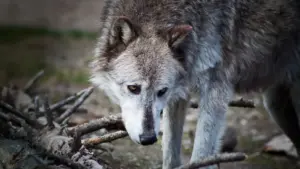
- The Canid Exception: Interestingly, certain canids mirror the evolutionary trajectory observed in humans. Grey wolves and red foxes enter the upper tier with full sibling rates near 46% and 45%, respectively, while African wild dogs rank second overall globally with an impressive 85% monogamy rating.
Defining Reproductive vs. Sexual Monogamy
A critical nuance highlighted by the Cambridge study is the distinction between reproductive monogamy and sexual behavior.
"This study measures reproductive monogamy rather than sexual behavior," Dr. Dyble emphasized. In the vast majority of mammalian species, mating and reproduction are inextricably linked. However, human societies have introduced powerful cultural, technological, and behavioral variables—ranging from modern birth control methods to complex social taboos—that effectively decouple sexual activity from reproduction. Consequently, humans maintain a flexible array of partnerships, including serial monogamy and stable polygamy, while still achieving high rates of shared parentage.
Official Statements and Expert Analysis
The publication of Dr. Dyble’s findings in the Proceedings of the Royal Society: Biological Sciences has sparked widespread discussion across the fields of evolutionary anthropology, behavioral ecology, and human evolutionary studies.
Articulating the core takeaway of the research, Dr. Dyble noted the existence of a distinct upper echelon in the animal kingdom:
"There is a premier league of monogamy, in which humans sit comfortably, while the vast majority of other mammals take a far more promiscuous approach to mating. The finding that human rates of full siblings overlap with the range seen in socially monogamous mammals lends further weight to the view that monogamy is the dominant mating pattern for our species."
Addressing the structural uniqueness of human societies compared to other monogamous mammals, Dyble pointed out an exceptional sociological paradox:
"Almost all other monogamous mammals either live in tight family units of just a breeding pair and their offspring, or in groups where only one female breeds. Whereas humans live in strong social groups in which multiple females have children."
This structural arrangement is exceedingly rare. In the broader animal kingdom, maintaining stable, mixed-sex, multi-adult groups that feature several exclusive pair bonds is documented in almost no other major mammalian clade, save for isolated examples like the Patagonian mara—a large, rabbit-like rodent that inhabits communal warrens structured around long-term couples.
Reflecting on the evolutionary path that brought humanity to this juncture, Dyble added context regarding our ancestral lineage:
"Based on the mating patterns of our closest living relatives, such as chimpanzees and gorillas, human monogamy probably evolved from non-monogamous group living, a transition that is highly unusual among mammals."
Independent evolutionary biologists not directly involved in the study have praised the research for offering a rigorous, quantitative framework that reconciles the apparent contradiction between human behavioral diversity and our underlying reproductive outcomes. By shifting the investigative lens from individual sexual encounters to population-wide sibling coefficients, the Cambridge study provides a mathematically sound bridge connecting anthropological observation with genetic reality.
Future Outlook: The Next Frontier in Evolutionary Anthropology
As the academic community digests the implications of Dr. Dyble’s computational model, the research opens several critical avenues for future inquiry within evolutionary anthropology and allied scientific disciplines.
Refining Ancient DNA Analysis
One of the most promising future applications of this methodology lies in the rapidly advancing field of ancient DNA (aDNA) extraction. As genetic sequencing techniques become increasingly sensitive and cost-effective, researchers can analyze larger, more complete genetic profiles from archaeological excavations across diverse geographic regions and historical eras. By applying Dyble’s sibling-ratio model to aDNA datasets spanning the Upper Paleolithic, the Neolithic transition, and the rise of early complex civilizations, scientists can track how human mating systems evolved in response to major socio-economic transformations, such as the invention of agriculture, the rise of sedentary urban centers, and the establishment of formal legal and religious marriage institutions.
Expanding Comparative Mammalian Models
Furthermore, behavioral ecologists plan to refine the computational model to account for finer-grained ecological pressures. Understanding precisely why certain species—such as African wild dogs, beavers, and humans—independently evolved high levels of reproductive exclusivity despite living in cooperative, multi-adult groups could yield vital insights into the universal adaptive pressures of cooperative breeding and resource sharing. For humans, high levels of paternal investment and cooperative child-rearing are widely believed to have been foundational to the development of complex language, culture, and cumulative technological innovation. Clarifying the chronology of when pair bonding became dominant in the human lineage will help anthropologists pinpoint when these uniquely human cognitive traits were unlocked.
Ultimately, this study bridges a long-standing divide between the humanities and the hard biological sciences. By demonstrating that humanity’s reproductive architecture mirrors the structured exclusivity of beavers and meerkats rather than the free-ranging promiscuity of our primate brethren, the research reframes our understanding of human nature. It suggests that our capacity for long-term commitment, cooperation, and pair bonding is not merely a cultural construct, but a deeply embedded evolutionary hallmark that has quietly guided our species’ global ascent.