
Executive Overview
For centuries, anthropologists, evolutionary biologists, and philosophers have grappled with a fundamental question: Is monogamy our species’ natural state? Traditionally, researchers relied on the fragmented clues of the fossil record, contemporary ethnographic fieldwork, and comparative anatomical observations to reconstruct the mating habits of early humans. While these methods offered valuable insights, they struggled to provide a concrete, quantifiable way to measure reproductive exclusivity across vastly different eras, cultures, and species.
A groundbreaking study led by Dr. Mark Dyble of the University of Cambridge’s Department of Archaeology changes this scientific landscape. Published in the Proceedings of the Royal Society: Biological Sciences, the research introduces an innovative computational model that uses a surprisingly simple proxy to measure monogamy: the ratio of full siblings to half-siblings within a population. By analyzing genetic data from ancient archaeological sites—ranging from European Bronze Age burial mounds to Neolithic Anatolian settlements—alongside modern ethnographic records from 94 distinct human societies, Dyble’s model offers a standardized, cross-species metric for reproductive exclusivity.
The findings challenge long-held assumptions about human evolution and place our species into an elite "premier league" of social monogamy. Surprisingly, human patterns of full-sibling ratios align more closely with creatures like beavers and meerkats than with our closest living primate relatives, such as chimpanzees and gorillas. With an overall full-sibling rate of 66%, humans rank seventh out of eleven major mammal groupings studied, firmly establishing long-term pair bonding as a dominant historical and biological trend. However, unlike almost all other socially monogamous mammals, humans achieve this exclusivity while living in large, complex, multi-adult groups where multiple women bear children—a rare and fascinating evolutionary anomaly.
Detailed Chronology: The Evolution of Mating Research and the New Cambridge Study
To fully appreciate the significance of Dr. Dyble’s recent findings, it is helpful to trace how scientists have historically studied human and animal mating systems, culminating in this new genetic approach.
The Traditional Era: Fossils, Ethnography, and Direct Observation
For decades, researchers studying non-human animals relied on painstaking, long-term observational field studies and, eventually, genetic paternity testing to map out reproductive behaviors. These methods revealed clear patterns in species like gibbons and wolves, which maintain stable pair bonds.
Meanwhile, scientists studying human evolution faced a different set of challenges. Lacking direct observational data for ancestral populations, anthropologists turned to the fossil record—analyzing skeletal dimorphism, pelvic structures, and teeth—as well as modern ethnographic observations. Anthropologists have long documented immense cultural variety in human marriage systems. Notably, historical ethnographic databases indicate that approximately 85% of pre-industrial societies permitted polygynous marriage, where a single man could take multiple wives simultaneously. This rich cultural diversity often fueled the centuries-old debate over whether humans are biologically predisposed to monogamy or if lifelong pairing is merely a cultural construct.
The Shift Toward Genetic Paternity and Sibling Balances
As ancient DNA extraction techniques improved over the late 20th and early 21st centuries, scientists gained the ability to peer directly into the genetic makeup of prehistoric populations. Rather than merely guessing at social structures based on burial goods or skeletal remains, researchers could reconstruct family trees from ancient DNA harvested from teeth and bones.
Dr. Dyble capitalized on this technological leap by stepping away from traditional direct-observation models. Instead of tracking who mates with whom—a metric easily skewed by cultural taboos, contraception, and clandestine behavior—Dyble focused strictly on reproductive outcomes: the sibling balance.
By analyzing the mathematical relationship between full siblings (sharing both parents) and half-siblings (sharing only one parent) across diverse populations, Dyble created a robust bridge connecting modern genetic datasets with ancient human history and wild animal populations. The resulting computational model effectively bypassed the noise of cultural marriage laws to measure the hard reality of genetic reproduction over millennia.
Supporting Context & Metrics: Decoding the Sibling Balance
At the heart of the Cambridge study is a straightforward biological principle: mating systems leave distinct genetic signatures in offspring.
The Mathematics of Sibling Ratios
In populations characterized by high levels of promiscuity or widespread polygamy—where individuals frequently take multiple concurrent mates—children are statistically much more likely to have different fathers or mothers, resulting in a high proportion of half-siblings. Conversely, in populations where mating is strictly exclusive and long-term (monogamy), pairs tend to reproduce repeatedly with one another, generating a high proportion of full siblings.
To quantify this, Dyble developed a computational model that links sibling data sourced from contemporary genetic studies with established reproductive strategies. While acknowledging that the model is a macroscopic tool rather than a mathematically absolute instrument, Dyble asserts that it provides the first tangible way to compare mating systems across wildly different branches of the tree of life over vast expanses of time.
Putting Humans on the Scale
When applied to human populations, the model yielded a surprising and definitive metric: humans exhibit an overall full-sibling rate of 66%. This places humanity seventh out of eleven broad mammal groups analyzed in the research.
To compile this human baseline, Dyble drew upon an impressive array of genetic and ethnographic data. He examined archaeological DNA from Bronze Age Europe and Neolithic Anatolia to capture historical baselines, blending these findings with data from 94 contemporary and historical human societies. This dataset spanned everything from the Hadza hunter-gatherers of Tanzania—who live in small, highly egalitarian foraging bands—to the rice-farming Toraja people of Indonesia, whose societal structures and property inheritance laws differ drastically.
"There is a huge amount of cross-cultural diversity in human mating and marriage practices," Dyble noted, "yet even the extremes of the spectrum still sit comfortably above what we see in most non-monogamous species."
Mammalian Comparisons: From Deermice to Dolphins
To contextualize the human score of 66%, the study evaluated a wide cross-section of the animal kingdom, revealing surprising bedfellows:
- The Extremes: At the absolute pinnacle of reproductive exclusivity is the California deermouse, which pairs for life and boasts a 100% full-sibling rate. At the opposite end sits Scotland’s Soay sheep, where ewes routinely mate with multiple rams, yielding a full-sibling rate of just 0.6%.
- Close Companions: Beavers edge slightly ahead of humans with a 73% full-sibling rate, while meerkats sit just behind us at 60%. Both species demonstrate a strong biological inclination toward pair bonding and cooperative rearing, balanced with occasional flexibility.
- Primate Relatives: Among non-human primates, the results highlight a stark evolutionary divergence. The white-handed gibbon matches human tendencies fairly closely with a 63.5% rate. The moustached tamarin—a small Amazonian monkey that typically births twins or triplets—reaches nearly 78%. However, all other primates plummet down the rankings: mountain gorillas score a meager 6%, chimpanzees register at 4% (matching dolphins), and macaque species drop even lower, ranging from 2.3% in Japanese macaques down to a sparse 1% in Rhesus macaques.
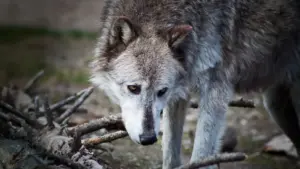
- Canids: Canid species also showed strong affinities for pair bonding; grey wolves and red foxes enter the upper tier with full-sibling rates around 46% and 45%, respectively, while African wild dogs rank second overall globally with an 85% monogamy rating.
Official Statements and Expert Analysis
The implications of Dr. Dyble’s findings extend far beyond simple categorization, offering fresh perspectives on human social evolution.
Dr. Mark Dyble emphasized the unique standing of humanity within the broader context of mammalian reproduction:
"There is a premier league of monogamy, in which humans sit comfortably, while the vast majority of other mammals take a far more promiscuous approach to mating. The finding that human rates of full siblings overlap with the range seen in socially monogamous mammals lends further weight to the view that monogamy is the dominant mating pattern for our species."
Addressing the evolutionary path that brought humans to this point, Dyble pointed out an unusual historical pivot:
"Based on the mating patterns of our closest living relatives, such as chimpanzees and gorillas, human monogamy probably evolved from non-monogamous group living, a transition that is highly unusual among mammals."
For most mammals, transitioning from a group-living, polygynous ancestral state to a monogamous pairing structure is exceptionally rare—a path shared by only a select few canid lineages, such as specific wolves and foxes that developed cooperative care strategies.
Furthermore, Dyble highlighted a crucial distinction between reproductive monogamy (the focus of his study) and sexual behavior:
"This study measures reproductive monogamy rather than sexual behavior. In most mammals, mating and reproduction are tightly linked. In humans, birth control methods and cultural practices break that link. Humans have a range of partnerships that create conditions for a mix of full and half-siblings with strong parental investment, from serial monogamy to stable polygamy."
Perhaps the most profound structural difference setting humans apart from other monogamous mammals lies in community architecture. Dyble observed:
"Almost all other monogamous mammals either live in tight family units of just a breeding pair and their offspring, or in groups where only one female breeds. Whereas humans live in strong social groups in which multiple females have children."
In the entire mammalian kingdom, the only other known creature that maintains stable, mixed-sex, multi-adult groups featuring several exclusive pair bonds is the Patagonian mara—a large, rabbit-like rodent native to Argentina that lives in communal warrens formed by lifelong couples.
Future Outlook: What the Sibling Metric Means for Anthropological Research
The introduction of sibling-balance computational modeling opens exciting new doors for evolutionary anthropologists and geneticists alike. As the extraction of ancient DNA becomes increasingly sophisticated, researchers will likely apply Dyble’s model to unmapped archaeological populations across the Americas, East Asia, and the Pacific. This will help determine whether the 66% full-sibling baseline is a universal human constant or whether certain ancient civilizations exhibited radically different reproductive structures.
Moreover, this research bridges a persistent historical gap between biology and culture. For years, debates over human monogamy bogged down in false dichotomies: scholars argued whether humans were "naturally" monogamous or polygamous based on modern Western standards versus isolated pre-industrial practices. By shifting the lens from subjective cultural marriage rites to objective genetic outcomes, science can now evaluate human pairing as a flexible, highly successful evolutionary strategy.
As humanity continues to navigate changing social structures, birth control technologies, and evolving definitions of family in the 21st century, understanding our evolutionary foundations provides essential context. Far from being a rigid cultural artifact, human monogamy emerges from this landmark study as a deeply rooted biological adaptation—one that allows us to balance the exclusivity of pair bonding with the complex, cooperative support of large, vibrant communities.