In a significant safety action spanning national pet retail networks and online marketplaces across North America, Wisconsin-based pet food manufacturer Fromm Family Foods has initiated a voluntary recall of nearly 6,000 cases of canned wet dog food. The Mequon-headquartered company issued the urgent product retrieval after discovering that select production lots may contain foreign metal particles, posing serious health and physical injury risks to domestic dogs.
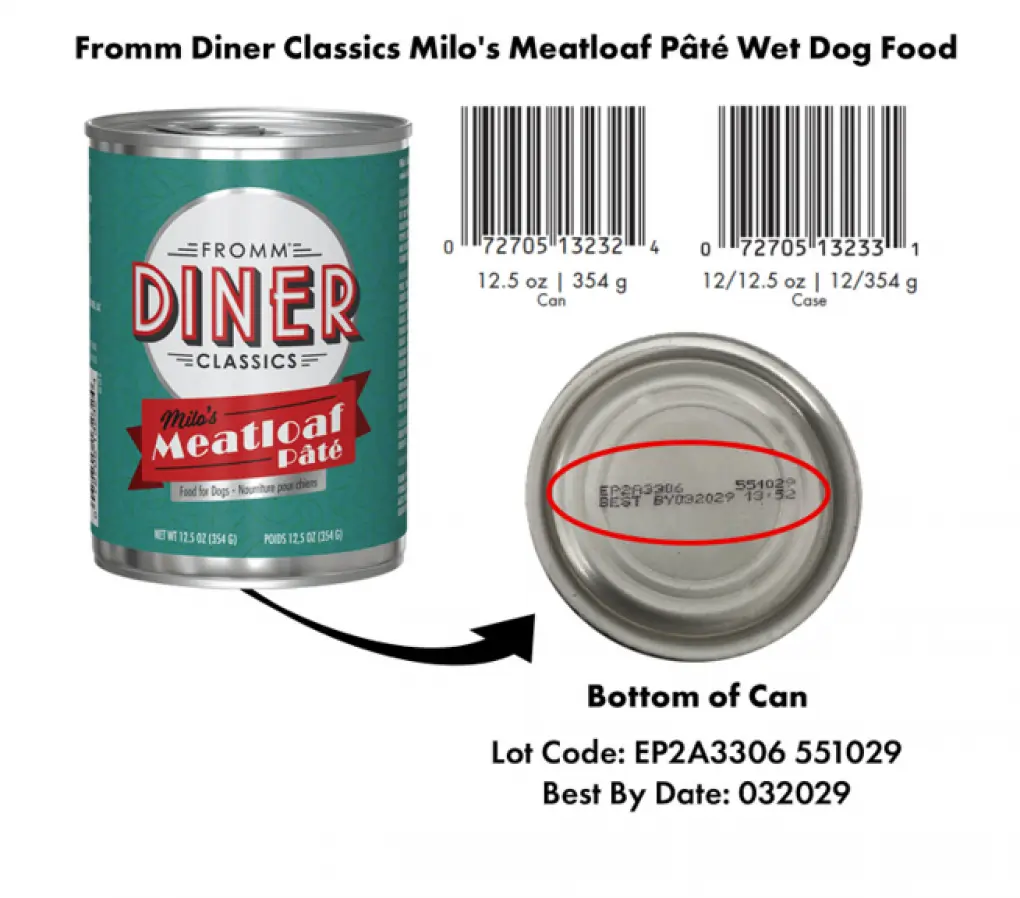
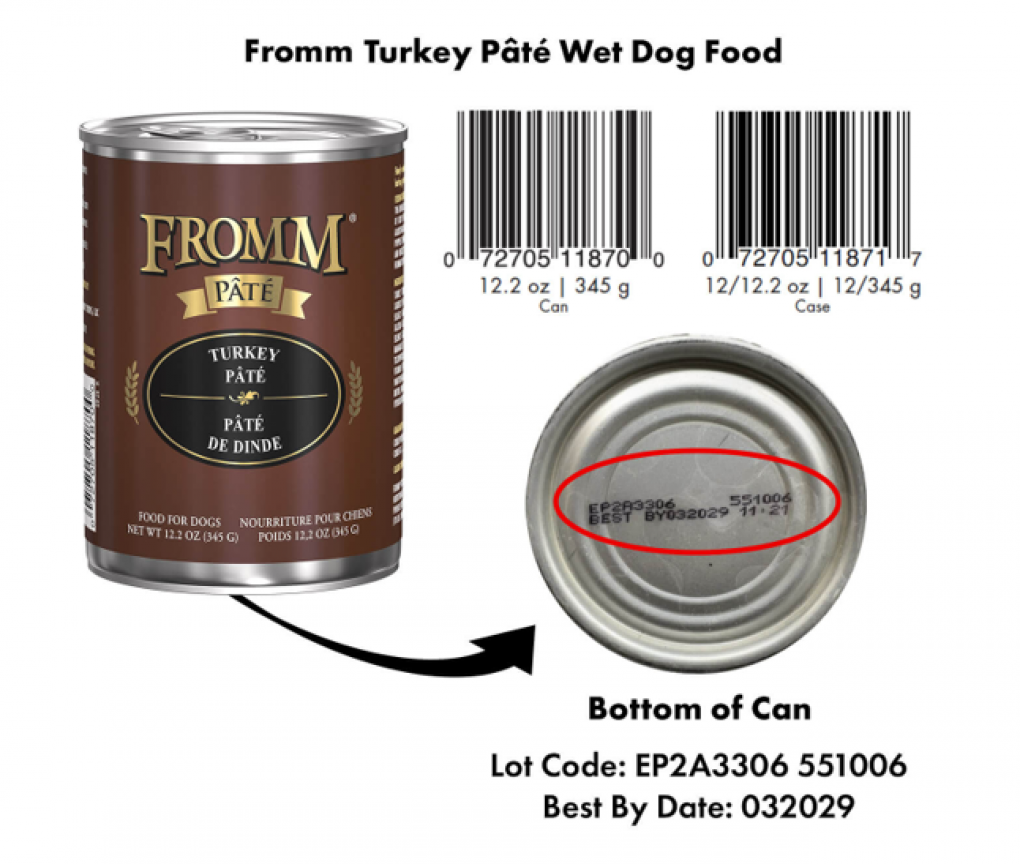
The recall specifically encompasses two distinct product lines: Fromm Turkey Pâté Wet Dog Food (3,852 cases) and Fromm Diner Classics Milo’s Meatloaf Pâté Wet Dog Food (1,973 cases). In total, 5,825 cases of canned dog food—distributed across both the United States and Canada—are affected by this advisory.
While no animal illnesses, lacerations, or injuries have been officially reported to date, the presence of metal fragments within commercial pet food represents a severe physical hazard. Depending on the size, geometry, and sharpness of the metallic debris, ingestion can lead to acute medical emergencies ranging from oral lacerations and choking to internal gastrointestinal perforation, partial blockages, or complete intestinal obstruction.
The recall is being conducted with the full knowledge and oversight of the U.S. Food and Drug Administration (FDA). Regulatory authorities, alongside Fromm Family Foods, are strongly urging pet owners, independent pet specialty stores, and e-commerce platforms to immediately audit their pantries and inventory, cease feeding or selling the affected lot codes, and return the products for a full refund.
The events leading to this widespread recall highlight the critical role of consumer feedback and post-market surveillance in modern food safety protocols.
1. Consumer Complaint Generation
The timeline began when Fromm Family Foods received direct inquiries and formal complaints from pet parents who identified foreign metallic material within freshly opened cans of wet pâté. Upon receiving these isolated consumer alerts, the company’s internal Quality Assurance (QA) and regulatory compliance teams immediately flagged the issue for urgent investigation.
2. Internal Technical Investigation & Root Cause Identification
Quality control specialists at Fromm’s Mequon manufacturing facility traced the affected products back to specific operational runs. Through internal batch auditing, mechanical inspection of processing lines, and inventory cross-referencing, technicians isolated the source of the contamination to a specific mechanical failure or processing error during the canning and sealing process. The root cause was identified as a localized processing glitch affecting specific automated filling lines operating during particular date codes.
3. Regulatory Engagement and Escalation
Following the definitive identification of the defect, Fromm Family Foods formally alerted the FDA’s Center for Veterinary Medicine (CVM). In coordination with federal regulatory officials, the company classified the hazard as a voluntary recall to mitigate potential health risks before widespread injury could occur.
4. Distribution Auditing and Public Notification
Once the exact lot numbers, Universal Product Codes (UPCs), and distribution logs were established, Fromm and the FDA published official press releases and notices. The company alerted its network of independent brick-and-mortar pet stores, regional distributors, and digital retail partners across the United States and Canada to purge affected stock from store shelves and fulfillment centers immediately.
To assist consumers and retailers in pinpointing impacted items, detailed product specifications have been released. No other Fromm Family Foods dry kibble, treats, or alternative canned formulas are involved in this recall action.
Affected Product Specifications
Product Name
Net Weight
UPC Code
Lot Code / Best By Date
Total Recalled Volume
Fromm Turkey Pâté Wet Dog Food
12.2 oz. per can
072705118700
Lot: EP2A3306 551006 Best By: 032029
3,852 Cases
Fromm Diner Classics Milo’s Meatloaf Pâté Wet Dog Food
12.5 oz. per can
072705132324
Lot: EP2A3306 551029 Best By: 032029
1,973 Cases
              HOW TO IDENTIFY RECALLED CANS
┌──────────────────────────────────────────────────────────┐
│  CAN BOTTOM PRINTING EXAMPLE:                            │
│                                                          │
│  [PRODUCT NAME]                                          │
│  UPC: 072705118700  OR  072705132324                     │
│                                                          │
│  LOT:  EP2A3306 551006  (Turkey Pâté)                    │
│  OR:   EP2A3306 551029  (Milo's Meatloaf)                │
│                                                          │
│  BEST BY: 032029                                         │
└──────────────────────────────────────────────────────────┘
Veterinary & Pathological Risk Factors
Foreign material contamination—specifically metallic debris—presents complex clinical risks in canine health. Unlike digestible matter or small inert soft material, metal objects pose both immediate physical hazards and secondary internal complications.
Veterinary experts emphasize several stages of potential canine injury:
Oral Cavity Lacerations: Sharp metallic pieces can cut the lips, gums, tongue, and soft palate during mastication, causing localized bleeding, inflammation, and secondary bacterial infections.
Esophageal and Airway Impairment: Jagged metal fragments create immediate choking risks or can become lodged in the esophagus, leading to severe discomfort, dysphagia (difficulty swallowing), and potential mucosal tears.
Gastrointestinal Damage: Once in the stomach, metal objects can irritate the gastric lining, causing acute gastritis, severe stomach discomfort, loss of appetite, and persistent vomiting.
Intestinal Obstruction and Perforation: As metal fragments progress into the small and large intestines, they can create partial or total blockages. Sharp fragments carry a high risk of puncturing the intestinal wall, a life-threatening medical emergency requiring immediate surgical intervention to prevent peritonitis and systemic sepsis.
Veterinarians advise pet owners whose dogs have consumed the recalled products to monitor them closely for clinical signs, including lethargy, abdominal tenderness or pain, loss of appetite, unexplained vomiting, or blood in the stool.
Official Statements and Corporate Mitigation Response
Fromm Family Foods addressed the incident by taking responsibility for the oversight and outlining immediate corrective measures designed to restore integrity to their manufacturing infrastructure.
Corporate Statement Highlights
In an official statement distributed through regulatory channels, Fromm Family Foods affirmed its commitment to safety and transparency:
"The recall was initiated after receiving complaints of metal contamination. We have identified the error, and in addition to our existing safety processes, we have put corrective actions in place to prevent this from happening again. There are no other Fromm products affected by this recall."
The company highlighted that its proactive response, undertaken alongside the FDA, reinforces its commitment to quality control standards built over decades of commercial pet food production.
Consumer Guidance and Refund Protocol
Fromm Family Foods has advised consumers who possess cans bearing the matching UPC and lot codes to discontinue feeding them to animals immediately. Consumers are instructed to dispose of the food safely or return unused cans to the original place of purchase for a complete refund.
                  CONSUMER ACTION PLAN
┌─────────────────────────────────────────────────────────┐
│ 1. CHECK CAN CODES                                      │
│    Match UPC and Lot Code on the bottom of the can.     │
├─────────────────────────────────────────────────────────┤
│ 2. CEASE FEEDING IMMEDIATELY                            │
│    Do not allow pets to consume affected food.          │
├─────────────────────────────────────────────────────────┤
│ 3. MONITOR YOUR PET                                     │
│    Watch for vomiting, lethargy, or loss of appetite.   │
├─────────────────────────────────────────────────────────┤
│ 4. CONTACT VETERINARIAN IF SYMPTOMS ARISE               │
│    Seek professional care for any clinical signs.       │
├─────────────────────────────────────────────────────────┤
│ 5. RETURN OR DISPOSE                                    │
│    Bring products to retailer for a full refund or      │
│    contact Fromm Customer Service.                      │
└─────────────────────────────────────────────────────────┘
For direct inquiries, consumer support, or guidance regarding batch identification, the company established dedicated communication channels:
Toll-Free Customer Service Line: 1-800-325-6331 (Operating Hours: Monday through Friday, 8:00 AM – 4:30 PM, Central Time)
Processing Technology and Physical Hazard Prevention
The occurrence of metal contamination in modern pet food processing underscores the technical challenges inherent in high-speed, automated canning operations. Wet pet food processing involves intensive grinding, blending, pumping, and thermal canning steps. Foreign object contamination typically stems from mechanical wear on conveyances, component fatigue in high-shear mixers, or issues within can-filling machinery.
To prevent future occurrences, industry best practices typically necessitate a multi-layered detection approach:
High-Intensity Magnetic Separators: Inline rare-earth magnets positioned along liquid and slurry transfer lines capture ferrous metal particles prior to thermal processing.
Post-Packaging X-Ray Inspection: Advanced X-ray inspection systems installed past the seam-closing stage scan filled and sealed cans, identifying non-ferrous metals, stainless steel fragments, or dense materials that traditional metal detectors might miss.
Comprehensive HARPC / Preventive Controls: Hazard Analysis and Risk-Based Preventive Controls protocols mandate regular calibration, routine audit intervals, and mechanical tear-downs of high-wear machinery components to eliminate potential points of mechanical failure.
Impact on Consumer Trust and Channel Management
For premium pet food manufacturers like Fromm Family Foods, maintaining a clean safety record is critical to brand loyalty. Independent pet retailers rely on high-tier brands to maintain strict quality standards. Fromm’s swift execution of a voluntary recall, coupled with its transparent public notice, aims to limit brand erosion and protect retail relationships.
As pet owners become increasingly focused on food safety, corporate transparency during product safety alerts remains essential. The successful containment of this recall relies on clear communication across retail partners, veterinary professionals, and dog owners to ensure all affected cans are removed from circulation.