
Date: August 11, 2026
Source: Alley Cat Action® 2026 Summer Newsletter / Special Dispatch
Executive Overview
In the wake of what meteorologists and long-term residents have confirmed as the most catastrophic flooding event to hit the island of Oahu in two decades, communities along Hawaiʻi’s scenic and rugged North Shore were left grappling with devastation. Amidst the swirling mud, displaced debris, and rising waters, human residents were not the only ones fighting for survival. Thousands of community cats, unhoused felines, and outdoor pets found themselves directly in the path of the relentless deluge.
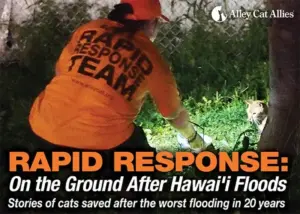
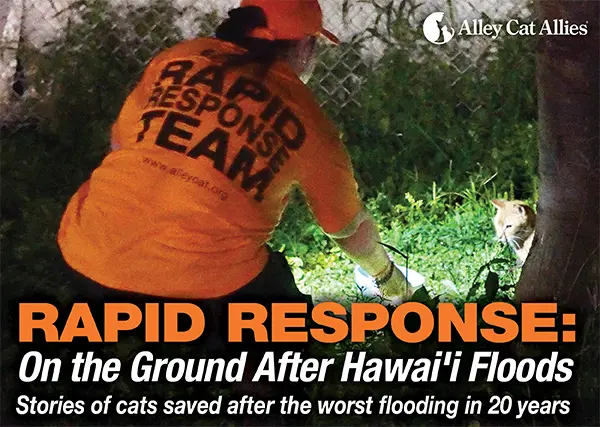
When infrastructure failed and traditional emergency services were stretched to their absolute limits addressing human displacement, the Alley Cat Allies Rapid Response Team mobilized with immediate, boots-on-the-ground intervention. Operating around the clock, the specialized animal rescue unit deployed directly into the hardest-hit zones. Their mission was clear: deliver life-sustaining provisions—food and clean drinking water—to stranded cats and their community caregivers, while simultaneously establishing a medical pipeline for injured felines.
This report details the operational timeline, the incredible stories of individual survivors like "Lieutenant Dan" and "Pumpkin," the broader implications of climate-related disasters on animal welfare networks, and essential disaster-preparedness frameworks designed to safeguard community cats when the next crisis strikes.
Detailed Chronology: The Oahu Deployment
The Storm and Immediate Aftermath
The rains began without mercy, swelling streams, overflowing drainage systems, and transforming quiet North Shore roads into churning rivers. Within hours, low-lying neighborhoods were submerged under feet of muddy water. As the storm finally broke and the waters began their agonizingly slow recede, the true scale of the ecological and domestic disaster became clear.
Alley Cat Allies’ Rapid Response Team hit the ground running within hours of the weather advisory lifting. Navigating treacherous debris fields, blocked roadways, and compromised bridges, the team established forward-operating supply stations throughout the North Shore.
For the first several days, the immediate priority was stabilization. Many outdoor feeding stations had been washed away, leaving surviving cats vulnerable to starvation, hypothermia, and waterborne pathogens. The Rapid Distribution Network enacted by Alley Cat Allies ensured that hundreds of pounds of high-calorie food and fresh water containers were systematically dropped off at known colony sites. Working alongside dedicated local caregivers—many of whom had lost their own homes and belongings in the floodwaters—the response team systematically scanned the disaster zones for animals in distress.
Establishing the Veterinary Pipeline
Providing sustenance was only the first phase of the operation. As floodwaters receded, the physical toll on the surviving feline population became glaringly apparent. Cats trapped in rising waters had suffered lacerations from submerged fencing, sharp urban debris, and panicked collisions with floating obstacles. Furthermore, exposure to contaminated floodwaters introduced severe risks of infection.
Recognizing that local veterinary clinics would be overwhelmed and that financial barriers might prevent caregivers from seeking immediate medical attention, Alley Cat Allies instituted an emergency funding protocol. The organization worked hand-in-hand with local veterinary practitioners, guaranteeing that 100% of the costs for emergency medical treatment, surgeries, pharmaceuticals, and post-operative care for flood-rescued cats would be covered directly by Alley Cat Allies. This removed any hesitation caregivers might have had in rushing injured animals to clinics, directly saving lives that otherwise would have been lost to untreated trauma and sepsis.
Survivor Profiles: Resilience on the North Shore
While statistical data provides a macro-level view of disaster relief, the true impact of the Rapid Response Team’s work is best understood through the individual lives saved during the Oahu deployment. Two standout cases from the summer of 2026 exemplify the physical trauma endured by these animals—and the triumphant restoration of health and safety made possible by coordinated rescue efforts.
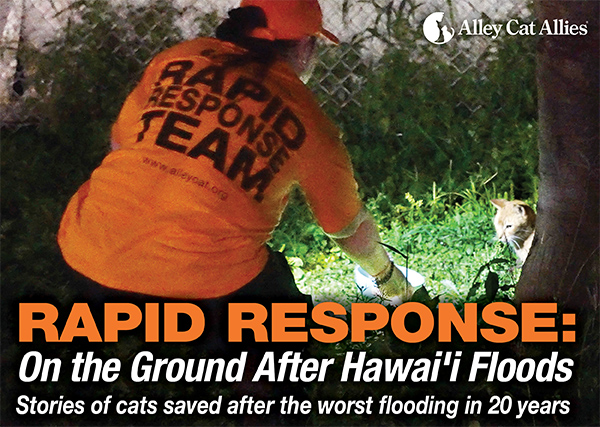
1. Lieutenant Dan: The Neighborhood Mascot
Seven-year-old Lieutenant Dan is far from an ordinary cat; he is a well-known, fiercely beloved fixture of his Oahu neighborhood. Having weathered the historic flooding, Lieutenant Dan emerged from the disaster zone battered but alive. However, the physical cost of his survival was severe: he sustained a deep, jagged laceration injury wrapped around the base of his tail, likely caused by sharp debris swept up by the torrential currents.
The moment one of his primary neighborhood caregivers caught sight of him limping through the aftermath, they recognized the severity of the wound and rushed him directly to a local veterinary clinic.
Because Alley Cat Allies had already established an emergency financial safety net with regional veterinary clinics, Lieutenant Dan’s caregiver experienced zero delay or financial friction in securing admission for the cat. Alley Cat Allies covered every dollar of his comprehensive wound treatment, pain management, and surgical repair.
The story of Lieutenant Dan boasts a heartwarming conclusion: his community was intensely eager and waiting to bring him back to his familiar territory. Once the little tuxedo cat was thoroughly stitched up, cleared of infection, and rendered completely pain-free, he was discharged back into the loving arms of the neighborhood that had raised him, proving that community cat networks are unbreakable even by natural disasters.
2. Pumpkin: The Reluctant Rescuer’s Find
Minutes after checking in on Lieutenant Dan’s progress at the veterinary clinic, the Alley Cat Allies team witnessed another dramatic chapter of the rescue mission unfold in real time. A local Oahu resident rushed through the clinic doors carrying a standard pet carrier, urgently seeking help for a frightened orange tabby cat.
When the cat—affectionately dubbed "Pumpkin"—tentatively poked her head out from behind the carrier door, the medical staff immediately spotted a severe, inflamed wound on her ear. Pumpkin had been discovered huddled in a heavily impacted zone that had only recently been cleared of standing floodwaters.
During her initial rescue, a bowl of fresh food had been placed before her, but Pumpkin had stubbornly refused to eat. Given the overwhelming psychological trauma of surviving a life-threatening flood, combined with the agonizing pain of her untreated ear wound, her total loss of appetite was medically unsurprising. She was in a state of acute shock.
Thanks to the immediate presence and backing of the Alley Cat Allies response team, the clinic was able to admit Pumpkin on the spot. She received prompt surgical and medical intervention for her ear, followed by dedicated foster placement. In a safe, quiet foster home, Pumpkin’s stress levels steadily declined, her appetite returned tenfold, and she healed completely. Today, this resilient orange tabby is transitioning toward adoption into a permanent, loving forever home—a complete trajectory shift made possible by rapid emergency intervention.
Supporting Context & Metrics: The Anatomy of Animal Disaster Response
Natural disasters in the Pacific—intensified by shifting global climate patterns—pose unprecedented threats to unowned and community-managed cat populations. Unlike indoor pets, outdoor and community cats face immediate exposure to environmental hazards, yet they are frequently overlooked in standard municipal disaster management plans.
The Vulnerability Index for Community Cats
When evaluating flood zones, animal welfare organizations must account for several compounding risk factors:
- Submersion and Trapped Spaces: Cats seeking high ground frequently become trapped in attics, crawlspaces, cars, or trees as water levels rise rapidly.
- Vector Pathogens: Floodwaters carry agricultural runoff, chemical pollutants, raw sewage, and heavy bacteria, turning minor scratches into life-threatening infections upon contact.
- Displacement and Colony Fragmentation: High-velocity water currents routinely scatter established cat colonies, separating bonded pairs and driving surviving animals miles away from their familiar feeding grounds and human caretakers.
The intervention of dedicated rapid response units bridges the gap between chaos and organized recovery. By underwriting veterinary care and supplying immediate nutritional relief, organizations like Alley Cat Allies prevent localized disasters from evolving into mass mortality events for community wildlife and outdoor cats.
Official Statements and Industry Insights
Animal welfare experts continue to advocate for the systemic integration of animal rescue protocols into state and local emergency management frameworks.
"When a disaster of this magnitude strikes, every minute counts," noted a field coordinator for the Alley Cat Allies Rapid Response Team during the Oahu deployment. "Animals like Lieutenant Dan and Pumpkin prove that resilience is inherent in these cats, but they rely entirely on our willingness to show up when human infrastructure is overwhelmed. Our mission isn’t just to feed them for a few days; it is to ensure that no community cat falls through the cracks of disaster recovery."
Veterinary partners on the ground in Oahu similarly emphasized the critical nature of external financial and logistical backing. Without pre-arranged emergency grants and medical underwriting, local clinics—themselves often recovering from storm damages—would face impossible choices regarding resource allocation for unowned or community-managed animals.
Future Outlook: The Best Way to Stay Safe During Disasters is Preparation
While rapid response deployments save countless lives after catastrophe strikes, animal welfare advocates universally agree that preparedness remains the ultimate line of defense.
Disaster planning must extend beyond human households to encompass outdoor colonies, barn cats, and neighborhood pets. Caregivers and community members are strongly urged to proactively map out safety plans well in advance of hurricane seasons, heavy monsoon periods, or flash-flood warnings.
Essential Disaster Preparedness Guidelines for Cat Caregivers:
- Establish Safe Zones: Identify high-ground locations within or near your neighborhood where outdoor feeding stations can be temporarily relocated if low-lying areas flood.
- Stockpile Emergency Supplies: Maintain a dedicated emergency kit containing at least one week’s supply of dry and canned cat food, bottled water, portable bowls, heavy-duty carriers, and basic first-aid items.
- Secure Identification & Medical Records: Keep digital or laminated copies of vaccination records, medical histories, and photographs of outdoor cats and colony members in waterproof containers.
- Develop a Communication Network: Form a neighborhood buddy system. Ensure multiple people have keys, carrier access, and agreed-upon roles for checking on specific feeding stations immediately following a severe weather event.
To access comprehensive, downloadable disaster-preparedness resources, emergency checklists, and strategic guides tailored specifically for cats and caregivers, visit alleycat.org/Disaster.
To read the full collection of stories, investigative reports, and updates featured in the Alley Cat Action® 2026 Summer Newsletter, visit the official Alley Cat Allies Summer 2026 Newsletter Archive.