
Executive Overview
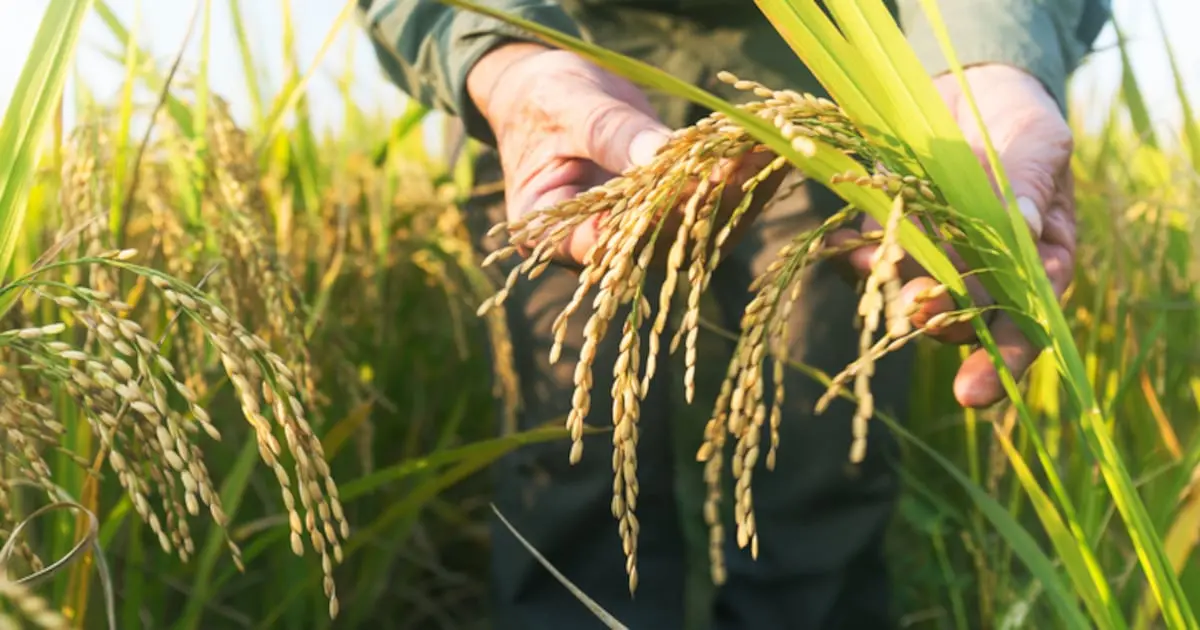
Vietnam stands firmly as one of the world’s preeminent rice-exporting powerhouses, consistently supplying millions of metric tons of grain to international markets and helping underpin global food security. Yet, despite this massive physical footprint, the nation’s agricultural sector faces a persistent, defining paradox: the immense volume of rice leaving Vietnamese ports rarely translates into lasting brand recognition or consumer loyalty abroad.
In a recent, highly anticipated commentary published by the Vietnam Rice Industry Association (VIETRISA), veteran policymaker Le Minh Hoan laid bare this vulnerability. He challenged the long-held industry assumption that high export tonnażes equate to global market success. Pointing to a disconnect between geographic reach and psychological presence, Le argued that Vietnamese rice has traveled far across oceans, but has failed to travel equally far into the minds and preferences of global consumers.
This comprehensive report examines the structural shifts required to transform Vietnam’s rice sector from a volume-driven commodity supplier into a value-driven, differentiated brand. Drawing on insights from industry leaders, economic analyses of global supply chains, and evolving consumer trends toward sustainability, we explore how traceability, farmer empowerment, and low-emission production standards can redefine Vietnam’s agricultural future.
Detailed Chronology: The Evolution of Vietnam’s Rice Sector
To understand the urgency of Le Minh Hoan’s recent statements, it is vital to trace the historical trajectory of Vietnam’s rice economy over the past several decades.
1. From Food Security to Export Dominance (Late 20th Century)
Following the implementation of the Đổi Mới (economic renovation) reforms in the late 1980s, Vietnam transitioned rapidly from a food-deficient nation plagued by chronic shortages into one of the world’s leading agricultural exporters. Land reforms, private farming incentives, and state-backed investments in irrigation—particularly in the fertile Mekong Delta—unleashed the immense productivity of Vietnamese farmers. For decades, the national mandate was clear and singular: maximize output, ensure domestic food security, and maximize export volume to generate foreign exchange.
2. The Volume Trap and Commodity Vulnerability (2000s–2010s)
By the turn of the 21st century, Vietnam had firmly cemented its position in the global top three rice exporters, competing fiercely with Thailand and India. However, this success was built primarily on a low-cost, high-volume commodity model. Vietnamese rice was frequently sold in bulk to international traders, who would repackage, brand, and market the grain under private labels in destination countries. Consequently, Vietnamese farmers and enterprises captured only a fraction of the final retail value, remaining vulnerable to global price fluctuations, supply gluts, and intensifying competition from emerging producers.
3. The Green Pivot and Sustainability Pressures (2020s)
As climate change began to severely threaten Southeast Asia’s agricultural heartlands, the limitations of traditional, input-heavy rice cultivation became impossible to ignore. Rising sea levels, saltwater intrusion in the Mekong Delta, and shifting weather patterns forced a reevaluation of farming practices.
- August 2026: Vietnam intensified its international outreach, seeking financial and technical backing to accelerate its ambitious "One Million Hectares of Low-Emission Rice" program.
- Concurrently, the domestic industry recognized that environmental sustainability was no longer optional. Global importers—particularly in discerning markets like the European Union, Japan, and North America—began demanding stringent eco-certifications, lower carbon footprints, and verifiable agricultural standards.
4. The Branding Awakening (Present Day)
The commentary issued by VIETRISA and Le Minh Hoan marks a critical turning point in this evolution. Moving beyond discussions of crop yields and port shipments, industry leaders are now confronting the qualitative dimensions of trade. The central question has shifted from "How many tons can we export?" to "How do we make the world remember what we grow?"
Supporting Context & Metrics: The Economics of Brand Equity
To grasp the financial imperative behind Le’s warnings, one must analyze the stark contrast between commodity trading and brand-driven commerce in the global agricultural landscape.
The Value-Capture Deficit
Commodity rice is traded on spot markets where differentiation is minimal, and price is the primary competitive lever. In this environment, Vietnamese exporters often find themselves squeezed by production costs on one end and downward price pressures from global buyers on the other.
By contrast, consumer-facing brands that successfully communicate unique selling propositions—such as distinctive aroma, superior grain elongation, regional heritage, or verified eco-friendly production—command significant price premiums. For instance, branded specialty rices in Western and East Asian supermarkets routinely sell at retail prices double or triple those of bulk-imported white rice. By failing to establish strong brand equity, Vietnam has inadvertently left billions of dollars of potential value on the table, enriching foreign intermediaries rather than its own farming communities.
The Rise of the Conscious Consumer
Global food consumption patterns have undergone a seismic shift over the past decade. Modern consumers, particularly in high-income markets, are increasingly scrutinizing the origins of their food. They want to know:
- Where was this grain cultivated?
- What chemicals were applied during its growth?
- What was the carbon footprint associated with its production and transport?
- Were the farmers compensated fairly?
Without a cohesive, trustworthy national brand narrative, Vietnamese rice struggles to answer these questions credibly in the minds of everyday shoppers. As Le Minh Hoan succinctly observed: "Being present in a market does not necessarily mean being present in people’s minds. Travelling far does not necessarily mean being remembered."
Official Statements: Deconstructing the VIETRISA Commentary
The commentary published by the Vietnam Rice Industry Association serves as a manifesto for the modernization of the country’s agricultural sector. Below, we examine the core tenets of Le Minh Hoan’s strategic vision.
1. Defining the Brand Through Differentiation
Le emphasized that branding is not merely an exercise in self-praise or aggressive marketing campaigns; it is an act of strategic definition.
"A brand is not about telling people you are good. It is about helping them understand what makes you different. To be remembered, you must choose what you want to be remembered for."
For Vietnam, this requires identifying specific market niches where its diverse rice varieties—ranging from fragrant sticky rices to specialized long-grain varieties—can outperform competitors. It demands moving away from a homogenized "Vietnamese rice" label toward a tiered portfolio of regionally certified, high-quality offerings.
2. Traceability as the "Passport" of Trust
In an era plagued by food fraud, supply chain opacity, and greenwashing concerns, trust is the ultimate currency. Le argued that rice must possess a metaphorical "passport" that travels with every grain.
"Traceability is no longer a decorative QR code on packaging; it is the data infrastructure of trust."
This digital infrastructure allows consumers, regulators, and importers to instantly verify a product’s provenance, inspecting data points from the specific plot of land where the seed was planted to the milling and packaging facilities that processed it. Implementing such a system requires robust digital integration across the entire supply chain, connecting smallholder farmers directly to global logistics networks.
3. Elevating Farmers from Suppliers to Co-Creators
Perhaps the most profound philosophical shift advocated in the commentary is the reimagining of the smallholder farmer’s role in the agricultural economy. Traditionally viewed merely as manual laborers or raw material suppliers, farmers must now be integrated into the branding narrative.
"If farmers understand what end consumers care about and what they are willing to pay more for, they will view their fields differently."
When farmers maintain detailed records of their adherence to low-emission protocols, reduced agrochemical usage, and sustainable water management, they are not merely completing bureaucratic checklists. They are actively generating the data assets that underpin the product’s value proposition.
"All this becomes part of a promise made to consumers. In that context, farmers cease to be merely suppliers of raw materials and become co-creators of the brand."
Future Outlook: The Road Ahead for Vietnamese Agriculture
As Vietnam looks toward the horizon, the strategic roadmap laid out by VIETRISA points toward a profound transformation of the nation’s rural economy. To realize this vision, several critical milestones must be achieved over the coming decade.
Institutional and Technological Modernization
The transition from volume to value requires heavy investment in agricultural technology (AgTech) and digital infrastructure. Scaling up initiatives like the one-million-hectare low-emission rice program will necessitate:
- Advanced Farm-Level Digitalization: Equipping farming cooperatives with digital tools to record inputs, monitor soil health, and measure greenhouse gas emissions accurately.
- Integrated Supply Chain Logistics: Upgrading storage, milling, and transport infrastructure to preserve grain quality and prevent post-harvest losses, ensuring that premium rice reaches international markets in pristine condition.
- Rigorous Certification Frameworks: Partnering with international accreditation bodies to ensure that Vietnamese eco-labels and origin certifications are universally recognized and trusted by foreign customs authorities and retailers.
Cultural and Strategic Alignment
Beyond technology, the transformation requires a cultural shift among agricultural stakeholders. Exporters must pivot from chasing short-term volume quotas to building long-term, relationship-based partnerships with international retail giants and food service providers.
Policymakers, meanwhile, must continue to foster an enabling environment that incentivizes sustainable practices, rewards quality over quantity, and protects the intellectual property of regional agricultural brands.
Conclusion: A Lasting Legacy
Vietnam’s agricultural journey has been one of historic resilience and remarkable productivity. Having conquered the challenge of feeding its population and emerging as a titan of global trade, the nation now faces its next great frontier: the conquest of consumer consciousness.
As Le Minh Hoan reflected in his closing remarks:
"Yesterday, we asked how to produce more. Then we asked how to export more. Today, we must ask how to create more value. Tomorrow, perhaps, we must ask how the world can remember Vietnamese rice through an image we are proud of."
By embracing rigorous traceability, empowering farmers as brand co-creators, and committing unflinchingly to sustainability and differentiation, Vietnam has the opportunity to transform its rice harvest not just into a global commodity, but into an enduring symbol of quality, trust, and national pride.