
Along the dynamic, sun-bleached fringes of our coastlines, an invisible yet high-stakes drama unfolds each spring and summer. Shorebirds and seabirds return to ancestral nesting grounds to complete a vital biological imperative: reproducing and raising the next generation. As shorebird biologist Abby McKay observes, these avian parents navigate a remarkable and increasingly complicated set of natural challenges. For millennia, species such as Least Terns, Black Skimmers, American Oystercatchers, and Wilson’s Plovers have evolved an impressive suite of behavioral adaptations to counter volatile weather systems, predatory animals, fluctuating tides, and other inherent coastal hazards. These evolutionary traits have long allowed shorebirds to persist in an inherently precarious environment where survival is never guaranteed.
However, the coastal landscape is undergoing a profound transformation. The relentless press of human development, urbanization, and recreational expansion has introduced an unprecedented matrix of artificial pressures to an already demanding ecosystem. Suitable, undisturbed nesting habitat is rapidly shrinking, becoming increasingly limited and fragmented. Consequently, birds are forced to share space with a bustling human world, raising their families on crowded public beaches, adjacent to high-rise hotels, on residential beachfronts, and even on gravel rooftops high above the ground. Amidst this concrete and commotion, they must continuously evade domestic pets, vehicular traffic, heavy beach recreation, and opportunistic urban predators alongside the natural threats they evolved to withstand.
Fortunately, unlike the unpredictable fury of a tropical storm or the shifting dynamics of tidal patterns, many of these human-caused challenges are entirely within our collective control. The successful fledging of a chick no longer relies solely on the tenacity of avian parents; instead, it hinges on a much broader, interconnected network of human actors working in concert. As McKay emphasizes, when birds and people are forced to share the same crowded landscape, it truly takes a village to raise a shorebird chick. This in-depth report explores the anatomy of modern coastal conservation, examining the multifaceted roles played by scientists, citizens, industry professionals, and policymakers as they unite to secure a future for our most vulnerable coastal inhabitants.
Detailed Chronology: A Season on the Front Lines
To understand the mechanics of shorebird conservation, one must trace the arc of a nesting season from its tentative beginnings in the early spring to the final, triumphant flights of late summer. The journey is marked by distinct phases, each requiring specialized intervention and vigilance from a diverse coalition of wildlife stewards.
Phase I: Arrival and Territory Establishment (March – April)
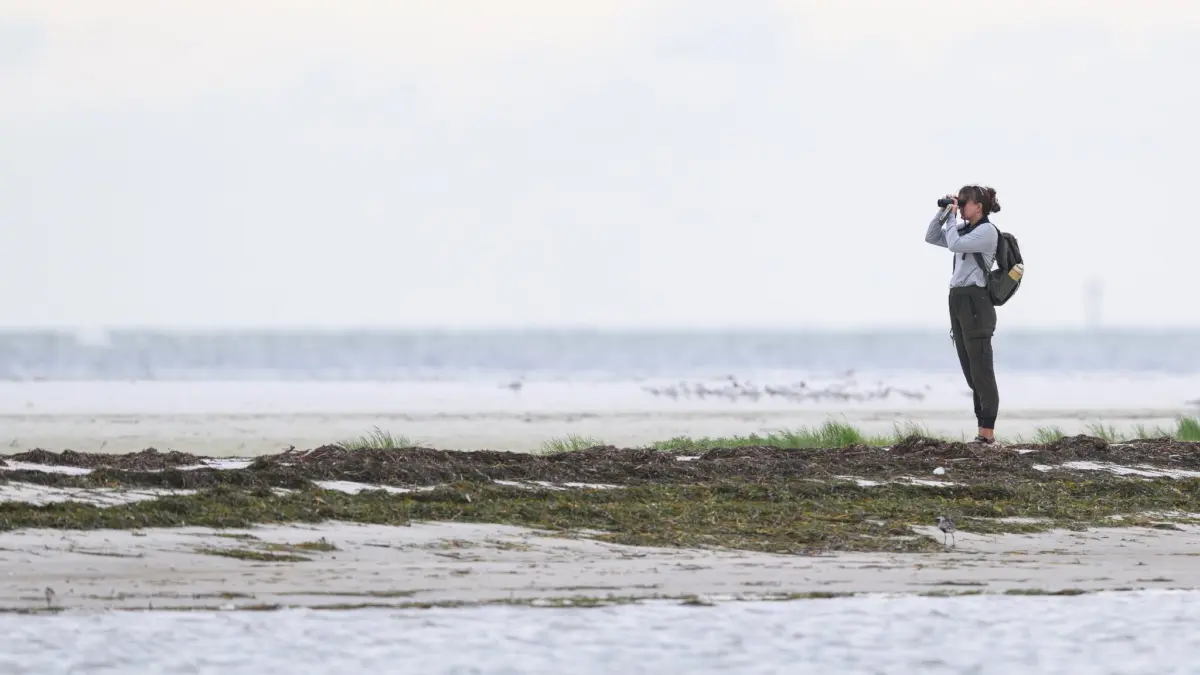
As lengthening daylight signals the turn of the seasons, migratory shorebirds and seabirds return to coastal nesting grounds. This period is characterized by intense territorial establishment and courtship. Least Terns begin forming dense colonies, aggressively defending their chosen scraps of sand against potential intruders. Concurrently, biologists and park rangers deploy across the coastline to survey historical nesting sites.
During this initial phase, the biologist’s primary objective is baseline data collection. Operating from a respectful distance to avoid causing undue stress, researchers record behavioral cues and vocalizations that indicate whether a pair has claimed a territory, initiated a scrape in the sand, or begun laying eggs. This early monitoring is foundational; it provides the empirical data required to identify emergent problems—such as heavy erosion or early human encroachment—and allows management teams to make informed decisions that give the birds the best possible head start.
Simultaneously, volunteers and park rangers mobilize to establish physical boundaries. Working in tandem with wildlife agencies, they erect protective fencing and educational signage around sensitive nesting zones before the heavier waves of spring and summer tourism arrive.
Phase II: Incubation and the Hatching Window (May – June)
By late spring, the landscape is dotted with well-camouflaged nests containing fragile, speckled eggs. Incubation requires continuous, unwavering attention from parents who must balance their own physiological needs with the constant thermal regulation of their clutch. It is during this vulnerable window that human activity poses the greatest risk. An unattended nest exposed to the blazing midday sun for even a short duration can result in total embryonic mortality.
As chicks begin to pip and hatch, the behavioral tempo accelerates dramatically. Black Skimmers shuttle tirelessly back and forth to feed their hungry hatchlings, while Wilson’s Plovers lead their newly emerged chicks on arduous daily foraging treks across miles of mudflats and shell rakes.
This is the phase of maximum vigilance. Property managers and homeowners living adjacent to nesting sites step into vital conservation roles. By stocking lobby literature, such as "How To Be A Shorebird Hero" guides, and briefing resort guests, property managers actively transform tourists into educated conservationists. Meanwhile, beachfront homeowners establish buffer zones on private property, keeping domestic pets securely indoors and encouraging neighboring residents to extend the same courtesy to the avian families sharing their neighborhoods.
Phase III: Rearing, Foraging, and Flight (July – August)
The final weeks of the nesting season are defined by high-intensity parental care and adolescent growth. American Oystercatchers patiently mentor their flightless chicks, teaching them the intricate physical mechanics of opening stubborn bivalves. Concurrently, field biologists and an army of dedicated volunteers track the rapid development of the chicks, logging their growth rates, photographing plumage changes, and resighting banded individuals to evaluate overall population health.
It is also during this mid-summer peak that unexpected encounters often occur outside of traditional natural habitats. Contractors performing structural maintenance on commercial or residential buildings may suddenly discover an American Oystercatcher or tern nest perched upon a gravel rooftop. Rather than proceeding with work that could jeopardize the clutch, these professionals frequently halt nonessential operations, notifying wildlife authorities and eagerly tracking the chicks’ progress until they achieve their maiden flights.
By late August, the surviving chicks have fledged, acquiring the wing strength and foraging proficiency required for independence. The seasonal rush subsides, leaving field staff and community partners to analyze their demographic data, evaluate nesting success metrics, and prepare the landscape for the inevitable cycle to come.
Supporting Context & Metrics: The Human-Wildlife Interface
To fully appreciate the scope of modern shorebird management, one must examine the socio-ecological dynamics shaping the modern coastline. The intertidal zone—comprising sandy beaches, shell rakes, mudflats, and salt marshes—is among the most heavily utilized and contested real estate on the planet.
The Habitat Squeeze
Coastal ecosystems are naturally ephemeral, shaped by wind, waves, and longshore drift. However, extensive coastal armoring (seawalls, jetties, and groins) has disrupted natural sediment transport, preventing beaches from migrating inland as sea levels rise. This phenomenon, known in conservation circles as "coastal squeeze," compresses the available intertidal zone.
| Habitat Type | Primary Natural Function | Modern Anthropogenic Pressures |
|---|---|---|
| Sandy Beaches | Nesting, roosting, and resting for terns, plovers, and skimmers | Heavy vehicular traffic, intensive recreation, artificial lighting, beach cleaning machinery |
| Shell Rakes | Camouflaged nesting substrates for American Oystercatchers | Foot traffic, off-road vehicles, residential shoreline hardening |
| Mudflats & Salt Marshes | High-nutrient foraging zones for migrating and rearing chicks | Industrial runoff, waterfront development, wake erosion from watercraft |
As natural areas shrink, shorebirds are increasingly pushed into marginal, high-conflict environments. The proximity of dense urban developments introduces subsidized predators—such as raccoons, foxes, domestic cats, and unleashed dogs—whose population densities far exceed natural ecological carrying capacities. According to field observations from coastal monitoring programs, unchecked mammalian predation accounts for a significant percentage of total nest failures annually, underscoring the vital importance of pet management and trash containment.
The Economic and Cultural Dimensions of Conservation
Conserving shorebirds is not merely an ecological exercise; it is an exercise in community engagement and economic coexistence. Coastal tourism is a multi-billion-dollar industry, and beachgoers naturally seek out the same sun-drenched shorelines that shorebirds require for survival.
Data compiled by wildlife agencies indicate that proactive public education yields exponentially higher compliance rates than punitive enforcement alone. When park rangers and local volunteers engage beachgoers in meaningful conversations about wildlife ecology, voluntary leash laws and buffer-zone compliance rise significantly. This collaborative approach proves that ecological preservation and human recreation are not mutually exclusive; rather, they can coexist successfully when communities are empowered with knowledge.
Official Statements and Stakeholder Perspectives
The success of contemporary shorebird conservation relies on a diverse coalition of professionals and community members. Below are perspectives from the key stakeholders who form the foundation of this coastal community network.
"Many of the challenges that shorebirds face are predictable, and they have evolved an impressive suite of behaviors that helps them respond to predators, storms, tides, and other hazards inherent to life on the coast. These adaptations have allowed shorebirds and seabirds to persist in an environment where survival has never been guaranteed. But the landscape is changing, and the pressures created by human development are adding new challenges to an already demanding environment."
— Abby McKay, Shorebird Biologist
McKay’s assessment highlights the core dilemma of modern conservation: while evolutionary resilience remains strong, the velocity of anthropogenic change threatens to outpace the adaptive capacity of coastal avian species.
Complementing the work of field scientists, park rangers play an indispensable frontline role in translating environmental policy into daily practice on public lands. A veteran park ranger notes:
"We are tasked with managing landscapes that must serve both wildlife and millions of annual visitors. A posted sign is just a piece of metal until a ranger uses it as an opening for a meaningful conservation conversation. When people understand why a section of beach is cordoned off, their entire perspective shifts from frustration to stewardship."
In the private sector, property managers and contractors demonstrate how commercial interests can successfully align with environmental protection. A coastal resort property manager explains the operational philosophy behind guest education:
"Guests come to our resort to connect with nature. By placing our ‘How To Be A Shorebird Hero’ materials right at the front desk, we empower our visitors to become active participants in protecting local wildlife. When our guests realize they can help a Least Tern family thrive just by giving them a little extra space, they take immense pride in that stewardship."
Similarly, contractors working on coastal infrastructure have increasingly embraced adaptive scheduling. As one commercial contractor recounted after discovering an oystercatcher nest on a client’s rooftop:
"Finding a nesting pair in the middle of a construction zone was unexpected, but it completely changed our team’s mindset. We coordinated immediately with local biologists, delayed nonessential rooftop work, and watched those chicks grow from fluffy hatchlings to confident flyers. It was easily the most rewarding part of our construction season."
Finally, wildlife agencies provide the regulatory backbone and technical expertise necessary to sustain these multi-tiered efforts. State and federal wildlife officers enforce protective laws, manage regional threat-mitigation strategies, and ensure that field staff are adequately resourced to monitor nesting colonies through peak holiday weekends and severe weather events alike.
Future Outlook: Sustaining the Village
Looking toward the horizon, the long-term outlook for coastal shorebirds depends entirely on the continued expansion and institutionalization of collaborative conservation networks. As climate change accelerates sea-level rise and intensifies coastal storm frequencies, the physical margins of our beaches will continue to contract, elevating the baseline pressures on nesting populations.
To confront these compounding challenges, conservation organizations and wildlife agencies are pivoting toward proactive, forward-looking management strategies:
- Enhanced Habitat Restoration: Investing heavily in the creation of artificial nesting islands, the replenishment of eroded beaches with compatible sediment, and the restoration of degraded shell rakes to provide secure alternative habitats.
- Community-Based Science Programs: Expanding volunteer recruitment and training pipelines, ensuring that grassroots observers are equipped with standardized monitoring protocols and digital data-collection tools to track regional demographic trends accurately.
- Smart Urban Planning: Integrating shorebird habitat considerations directly into municipal zoning codes and coastal development ordinances, thereby reducing light pollution, minimizing domestic predator access, and mandating seasonal buffers for high-density nesting zones.
- Sustainable Funding Mechanisms: Strengthening public-private partnerships to secure long-term financial resources for field equipment, public outreach campaigns, and professional biological staffing.
Ultimately, the survival of shorebirds in a human-dominated landscape serves as a litmus test for our broader relationship with the natural world. These resilient avian species ask very little of us: a fraction of open sand, a brief pause from disturbance, and the simple courtesy of shared space.
As Abby McKay reflects at the conclusion of each demanding nesting season, the experience leaves observers in profound awe—not only of the birds’ tenacious will to survive, but of the extraordinary willingness of everyday people to become part of their story. When communities unite across professional, commercial, and personal divides to safeguard the vulnerable, it becomes undeniably clear: it truly takes a village to raise a shorebird chick.