
Executive Overview
Dublin’s public transportation network presents a patchwork of regulations for animal lovers, making urban mobility with a canine companion a nuanced exercise in planning. Whether you are a resident navigating the daily commute or a visitor eager to explore the Irish capital with your four-legged best friend, understanding the specific rules of Dublin’s transit ecosystem is essential.
In short, the city operates on a sliding scale of pet-friendliness. Small dogs—particularly those capable of traveling comfortably in a carrier or on their owner’s lap—enjoy relatively smooth access across the coastal DART system, commuter rails, and intercity trains, while retaining a fighting chance on the city’s extensive bus network. Conversely, larger dogs face significant logistical hurdles, additional fees, and restricted accommodations. Meanwhile, the city’s light rail system maintains a strict zero-tolerance policy for pets.
Navigating this terrain requires more than just showing up at a platform or bus stop. Operators maintain vastly different philosophies regarding animal travel, ranging from strict exclusions to driver-discretionary boardings. This investigative report breaks down the official policies, unwritten rules, and practical realities of traveling with dogs across Dublin Bus, LUAS, Irish Rail (DART and Intercity), and Bus Éireann.
Detailed Chronology: Investigating the Transit Landscape
To uncover the true state of pet travel in Dublin, a direct inquiry into the policies of major transit operators reveals a landscape where official documentation often leaves vital questions unanswered.
July 24, 2016: Uncovering the Dublin Bus Discretionary Policy
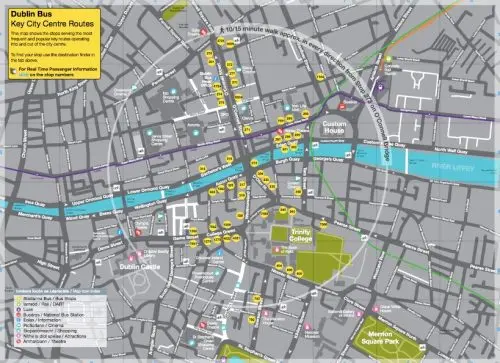
Dublin Bus commands a sprawling network of routes weaving through the core of the city and its sprawling suburbs. Yet, a review of the official corporate website yields a conspicuous silence regarding the transport of companion animals. To clarify this ambiguity, a formal inquiry was submitted to customer relations.
The response received on July 24, 2016, illuminated a decentralized reality: "All guide dogs and assistance dogs are permitted on all of Dublin Bus services however it is up to the discretion of the driver to decide whether any other dog is allowed to board the bus."
This policy shifts the burden of access directly onto the individual traveler’s presentation and the immediate mood or judgment of the operating driver. Pragmatically, travelers can deduce several unwritten tiers of acceptability:
- The Carrier Class: A small dog secured inside an enclosed, unobtrusive pet carrier is typically viewed as luggage, making it a near-guaranteed "shoo-in" for boarding.
- The Lap Class: A small dog held securely in its owner’s arms on a leash will likely pass muster with most drivers, provided the animal is well-behaved and clean.
- The Wild Card: Larger, leashed dogs are subject to a high-stakes gamble. If a bus is crowded, or if a driver is having a strict day, entry can be flatly denied, leaving commuters stranded mid-journey.
August 4, 2016: Decoding Irish Rail’s Dual-Tiered Rules
Irish Rail (Iarnród Éireann) manages the coastal DART (Dublin Area Rapid Transit) lines, regional commuter routes, and heavy intercity trains. While the intercity pet policy is explicitly outlined on their web portal, the application of these rules to the DART and suburban commuter networks remained murky.
Following a direct inquiry to clarify whether local rail networks mirrored intercity regulations, an official response was delivered on August 4, 2016. The confirmation established a distinct dual-tiered system:
"Small dogs can be carried free of charge in the passenger compartment of services provided they travel on the owner’s lap. Guide dogs and Assistance dogs are permitted to travel on all Iarnród Éireann services without restriction. Accompanied dogs, other than those described above, can only be conveyed on Intercity services in a Guards Van (non-passenger compartment) if available (e.g. Dublin/Cork and Dublin/Belfast services only). Charges will apply."
This clarification highlights the deep divide between traveling with a toy breed versus a working- or large-breed dog. While a small terrier resting on a lap rides entirely free of charge, a Golden Retriever cannot enter the passenger cabin on intercity lines at all, forcing owners to rely on specialized luggage or guards’ vans—amenities that are entirely absent on DART and commuter configurations.
Supporting Context & Metrics: Analyzing the Operators
A deeper examination of Dublin’s four primary transit pillars reveals how structural design, operational scale, and corporate heritage dictate their respective stances on animal passengers.
1. Dublin Bus: The Urban Lifeline
Operating hundreds of double-decker and single-decker vehicles, Dublin Bus is the lifeblood of urban mobility. Because vehicles frequently reach capacity during peak commuting hours, the reliance on driver discretion acts as a vital crowd-control mechanism. A driver cannot safely permit a large, shedding, or agitated dog to block aisles or emergency exits on a packed vehicle. Consequently, the lack of a formalized pet charter forces a system of self-regulation among pet owners, who must gauge vehicle congestion before attempting to board.
2. LUAS: The Light Rail Exclusion
The LUAS system operates two primary lines—the Red Line and the Green Line—which cross the city and serve millions of passengers annually. Despite ongoing infrastructure projects designed to integrate the network more fully, the system’s animal bylaws remain entirely rigid.
The official LUAS etiquette and passenger guidelines state plainly: "No animals are allowed on board with the exception of guide dogs."
For owners of companion dogs, this represents a severe connectivity bottleneck. A commuter traveling across the city center cannot utilize the tram network if accompanied by a pet, forcing them to seek alternate bus routes or walk longer distances in adverse weather conditions.
3. Irish Rail, DART, and Commuter Services: The Coastal Corridor
Stretching from Howth and Malahide in the north down to Greystones in the south, the DART line offers some of the most scenic urban commuting views in Europe. Integrated with broader commuter rail networks, Irish Rail handles high-volume traffic daily.
The network’s leniency toward small pets makes it an attractive option for pet owners living along the coast. However, the requirement that small dogs must remain strictly on the owner’s lap—rather than occupying an adjacent seat or sitting on the floor—can become physically taxing on longer commuter journeys. Furthermore, the complete unavailability of guards’ vans on DART and local commuter trains means that large dogs are effectively banned from these services altogether, as they cannot legally ride in passenger areas and cannot be stowed elsewhere.
4. Bus Éireann: The Intercity Paradox
Bus Éireann provides crucial connective links between Dublin and the rest of Ireland. Curiously, despite sharing an iconic hound dog logo with international transit counterparts like the United States’ Greyhound lines, the branding is entirely misleading. Bus Éireann explicitly clarifies that its canine branding does not translate to pet hospitality; pet dogs are barred from boarding its fleet, reserving cabin access exclusively for accredited assistance animals.
Official Statements and Policy Summaries
To assist travelers in quickly assessing their options, the verified operational stances of Dublin’s transit authorities are summarized below:
| Transit Operator | Mode | Small Dogs / Carriers | Large Dogs | Assistance & Guide Dogs |
|---|---|---|---|---|
| Dublin Bus | Bus Network | Driver Discretion (Likely permitted if contained/carried) | Driver Discretion (High risk of denial) | Permitted unconditionally |
| LUAS | Light Rail / Tram | Strictly Prohibited | Strictly Prohibited | Permitted unconditionally |
| Irish Rail (DART/Commuter) | Coastal & Regional Train | Permitted free of charge (Must remain on lap) | Prohibited (No guards’ van available) | Permitted unconditionally |
| Irish Rail (Intercity) | Long-Distance Train | Permitted free of charge (Must remain on lap) | Permitted in Guards’ Van (Routes permitting, charges apply) | Permitted unconditionally |
| Bus Éireann | Intercity Bus | Strictly Prohibited | Strictly Prohibited | Permitted unconditionally |
Future Outlook: Toward a More Pet-Inclusive Dublin?
As Dublin continues to grow as a modern, cosmopolitan European tech and cultural hub, urban planning conversations increasingly center around livability, sustainability, and pet ownership demographics. In many European capitals—such as Berlin, Vienna, and Paris—dogs are treated as standard urban commuters, permitted on subways, trams, and buses provided they are leashed, muzzled where necessary, or ticketed.
Dublin currently lags behind these continental standards. The reliance on arbitrary driver discretion on buses, the absolute ban across the LUAS tram network, and the impracticality of transporting large dogs on rail lines highlight a transport infrastructure built for humans exclusively.
However, pressure from urban advocacy groups and a surging pet-ownership population post-pandemic are prompting gradual reassessments. While sweeping reforms to the LUAS or Irish Rail networks have not been officially scheduled, the ongoing expansion of transport infrastructure offers a natural window for policy modernization. Until broader reforms take hold, Dublin commuters must continue to rely on carriers, lap-sized dogs, and a heavy dose of patience when navigating the city’s rails and roads with their canine companions.