
Executive Overview
Air travel with domestic pets has historically been characterized by strict, often inflexible constraints. Major commercial airlines maintain rigid dimensional limits for in-cabin pet carriers, generally designed to accommodate small animals weighing under 10 pounds and standing no taller than 10 to 12 inches at the shoulder. For owners of slightly larger animals—such as Miniature Poodles, terriers, and medium-sized mixed breeds—navigating these regulations often feels like attempting an impossible puzzle.
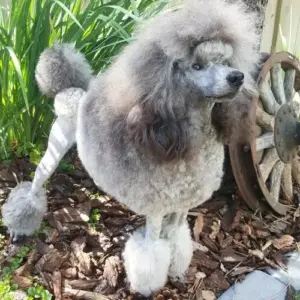
However, a growing subculture of resourceful pet owners is challenging these limitations through careful preparation, clever equipment modifications, and strategic contingency planning. This report examines a recent, highly successful domestic travel case study involving Calvin, a 17-pound Miniature Poodle standing 16 to 16.5 inches tall at the shoulder. Accompanied by his owner, Amy, Calvin successfully completed a multi-leg journey traversing the United States on major commercial carriers—Delta Air Lines and Southwest Airlines—using an Extra-Large (XL) SturdiBag.
By employing a brilliant modular adaptation—swapping the internal structural floorboards and pads of the XL carrier with those of a smaller, backup Large carrier—Amy managed to compress the operational footprint of the bag without sacrificing comfort for her pet. This investigation explores the logistical realities of flying with an oversized cabin pet, breaks down the step-by-step chronology of Amy and Calvin’s cross-country itinerary, evaluates airline policies and aircraft space constraints, and provides critical metrics for pet owners looking to replicate this success.
Detailed Chronology: A Multi-Leg Transcontinental Journey
The journey undertaken by Amy and Calvin serves as an instructive masterclass in managing multi-segment air travel with a larger-than-average canine companion. The itinerary spanned from Providence, Rhode Island, to Las Vegas, Nevada, via Atlanta, Georgia, with a return trip complicated by airline scheduling disruptions that tested the resilience of both traveler and pet.
Phase 1: Departure from Providence to Atlanta (Delta Air Lines)
The trip commenced at Rhode Island T. F. Green International Airport (PVD). Prior to departure, Amy implemented a proven pre-travel protocol: Calvin was subjected to an extensive morning exercise session to expend excess energy, and his breakfast was withheld to minimize the risk of motion sickness or digestive accidents mid-flight, though high-value treats were permitted during the journey.
Booking the reservation with Delta Air Lines proceeded with surprising ease. Eschewing the common pitfalls reported by many travelers who face aggressive scrutiny or conflicting information from airline telephone agents, Amy approached the reservation transparently. She informed the representative that she would be traveling with a larger-than-average small dog housed within a soft-sided, flexible carrier. The reservation agent confirmed that as long as the carrier could be compressed ("smooshed") to fit the dimensional parameters of the under-seat space, the arrangement would comply with policy.
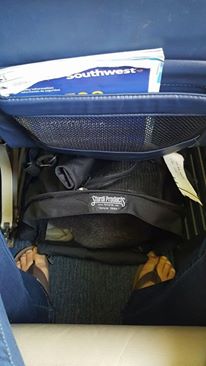
The first flight leg utilized a Delta McDonnell Douglas MD-88 aircraft. Seated temporarily in a middle seat, Amy encountered the most mechanically challenging part of the journey: maneuvering the XL SturdiBag into the tight gap between the passenger seatback and the structural framework beneath the seat in front of her. Once the bag was successfully positioned between the seats, however, it settled securely into place without further obstruction.
Phase 2: The Atlanta Stopover and Second Leg to Las Vegas
During the layover at Hartsfield-Jackson Atlanta International Airport (ATL), Amy elected to clear security to provide Calvin with an outdoor relief break. While designated animal relief areas were not readily located within her immediate transit zone, Calvin successfully utilized natural landscaping features.
The second leg of the outbound journey, operating from Atlanta to Las Vegas, was conducted aboard a Boeing 737-700 aircraft. Like the first, this flight proceeded smoothly, with the XL SturdiBag fitting comfortably underneath the aircraft seat and Calvin remaining calm throughout the descent into Harry Reid International Airport.
Phase 3: Exploring the American Southwest
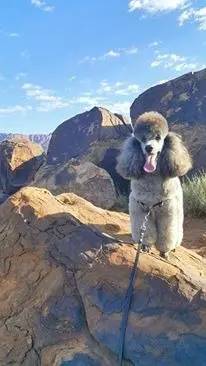
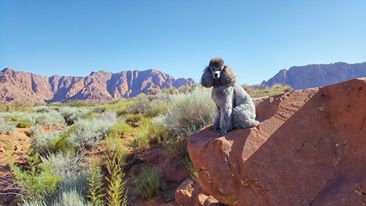
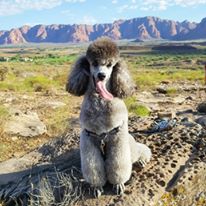
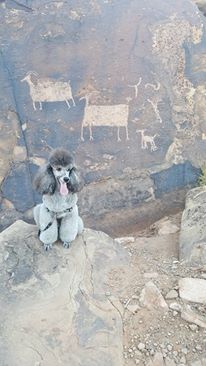
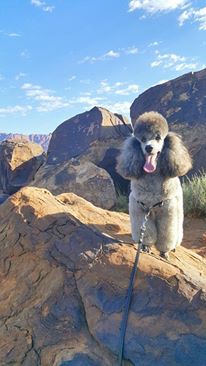
Upon arrival in Nevada, Calvin and Amy traveled to the picturesque landscapes of southwestern Utah, spending time near Snow Canyon State Park. The environment provided a stark contrast to the sterile indoor confines of airports and aircraft cabins, allowing the dog to exercise freely across desert trails, sandstone formations, and scenic overlooks.
Phase 4: The Return Journey via Southwest Airlines
The return trip introduced an unexpected logistical hurdle: technical computer system failures at Delta Air Lines resulted in significant flight delays. Unwilling to risk prolonged stress for Calvin in a crowded terminal, Amy made the decisive executive choice to forfeit her original booking and purchase a new ticket home via Southwest Airlines.
Boarding with Southwest proved efficient, though marked by minor procedural checks. A gate agent briefly stopped the pair during the boarding process to verify that a proper in-cabin pet fee ticket had been issued and attached to Calvin’s carrier. Because Southwest utilizes an open-seating policy, Amy secured a middle seat for the first leg aboard a Boeing 737-700. Despite the middle-seat configuration, the XL SturdiBag slid smoothly into the under-seat storage area, offering ample interior volume for Calvin to adjust his posture.
The connecting route routed them through Chicago Midway International Airport (MDW). Here, Amy again exited security to access the airport’s designated pet relief facilities. The outdoor relief area at Midway—consisting of a fenced, concrete enclosure surrounded by adjacent patches of grass and trees—provided a functional space for Calvin to relieve himself before re-clearing security with notable efficiency.
The final leg of the journey returned Amy and Calvin safely to Providence. Notably, this final transit benefited from Providence’s modern infrastructure, which includes a newly established indoor pet relief facility, smoothing the final moments of the expedition.
Supporting Context & Metrics: Analyzing the Equipment and Canine Biometrics
The technical success of this journey hinges on a nuanced understanding of pet carrier engineering, animal ergonomics, and aircraft seat geometries.
The SturdiBag Engineering Hack
The standard extra-large SturdiBag measures approximately 20 inches in length, which technically exceeds the rigid under-seat dimensional limits enforced by many domestic carriers (which typically hover around 17 to 18 inches in maximum length). Placing a standard XL bag uncompressed into an aircraft space risks rejection by gate personnel.
To overcome this, Amy engineered a brilliant structural modification:
- The Component Swap: Amy replaced the rigid floorboard insert and the accompanying soft interior plush pad of the XL SturdiBag with the corresponding parts from a standard Large SturdiBag, which she kept folded inside her standard carry-on luggage as a backup.
- Dimensional Impact: By substituting the floor components, the rigid length footprint of the XL carrier was effectively compressed from 20 inches down to approximately 18 inches. This subtle reduction allowed the bag to easily flex and conform to the variable under-seat dimensions of both MD-88 and Boeing 737 cabin configurations.
- The Contingency Plan: Carrying the components of the Large bag served a dual purpose. Not only did it shorten the XL bag for seamless boarding, but if airline gate agents had aggressively challenged the dimensions of the XL carrier, Amy possessed the physical ability to transfer Calvin into the smaller Large SturdiBag on the spot.
Canine Biometrics vs. Breed Standards
Calvin’s physical measurements offer critical data for pet owners evaluating their own animals’ travel eligibility:
- Weight: ~17 pounds (exceeding the standard 10–12 lb informal comfort threshold often cited for in-cabin pets).
- Shoulder Height: 16 to 16.5 inches (approximately 4 to 4.5 inches taller than the optimal 12-inch maximum shoulder height specified for standard large-sized carriers).
- Morphological Advantage: As Amy astutely recognized, a dog’s linear height does not unilaterally dictate its ability to travel in a soft carrier. Much of Calvin’s height was concentrated in his long legs rather than a bulky torso. When resting inside a confined space, Miniature Poodles naturally curl into a compact, nested posture, occupying significantly less volume than their standing height implies.
Official Guidelines and Carrier Policies Analyzed
Navigating airline pet policies requires rigorous pre-planning. A comparative analysis of the carrier policies encountered during Amy’s journey reveals key operational insights:
| Airline | Reservation Protocol | Under-Seat Flexibility | Pet Relief Infrastructure | Gate Agent Scrutiny |
|---|---|---|---|---|
| Delta Air Lines | Transparent disclosure via phone; agent emphasized flexibility ("smooshability"). | Moderate; MD-88 middle seats presented tight entry clearance, but adequate resting space. | Variable; relied on outdoor natural landscaping during Atlanta layover. | Low; personnel did not challenge the carrier dimensions during boarding. |
| Southwest Airlines | Standard ticketing process; digital/in-person fee verification required. | High; Boeing 737-700 cabins offered generous under-seat clearances. | Standardized; Chicago Midway offers a secure, concrete-and-grass outdoor relief yard. | Moderate; gate agent actively verified pet documentation prior to boarding. |
Key Takeaways for Airline Compliance:
- Honesty and Clarity: When booking over the phone or via customer service chats, explicitly state that you are using a soft-sided, flexible carrier. Emphasize that the material is malleable and engineered to conform to space limitations.
- The "Backup Bag" Strategy: Always travel with a smaller, collapsible backup carrier or modular components in your primary carry-on. This mitigates the financial and emotional risk of being denied boarding at the gate.
- Know Your Aircraft: Modern single-aisle aircraft like the Boeing 737 series often provide more predictable under-seat clearance than older regional jets or specialized seating configurations (such as bulkheads or emergency exit rows, which strictly prohibit under-seat storage).
Future Outlook: The Evolution of Pet Air Travel
As pet ownership rates continue to rise globally—accelerated significantly by demographic shifts in household pet integration over the past decade—commercial aviation is facing mounting pressure to modernize its animal transport accommodations.
The experiences of travelers like Amy and Calvin highlight a persistent gap in the aviation market: the lack of standardized, humane options for medium-sized dogs (weighing between 15 and 25 pounds) who are too large for standard cabin carriers yet face documented welfare risks when transported in the cargo hold. While major carriers maintain rigid safety and liability policies that restrict cabin animals to under-seat stowage, innovative passenger adaptations suggest that a middle ground is possible.
Recommendations for Future Travelers:
- Invest in Modular Equipment: Soft-sided carriers with interchangeable or flexible structural elements offer superior adaptability compared to rigid plastic crates.
- Prioritize Airport Familiarization: Research terminal layouts in advance to identify post-security pet relief stations, minimizing stress during tight connections.
- Train for Confinement: Acclimate larger dogs to enclosed, darkened soft carriers weeks prior to departure to ensure they remain calm during taxi, takeoff, and landing turbulence.
Ultimately, while traveling with a pet exceeding traditional weight limits requires meticulous preparation, technical ingenuity, and a resilient backup plan, successful journeys like Calvin’s prove that the skies remain navigable for resourceful pet owners and their four-legged companions.