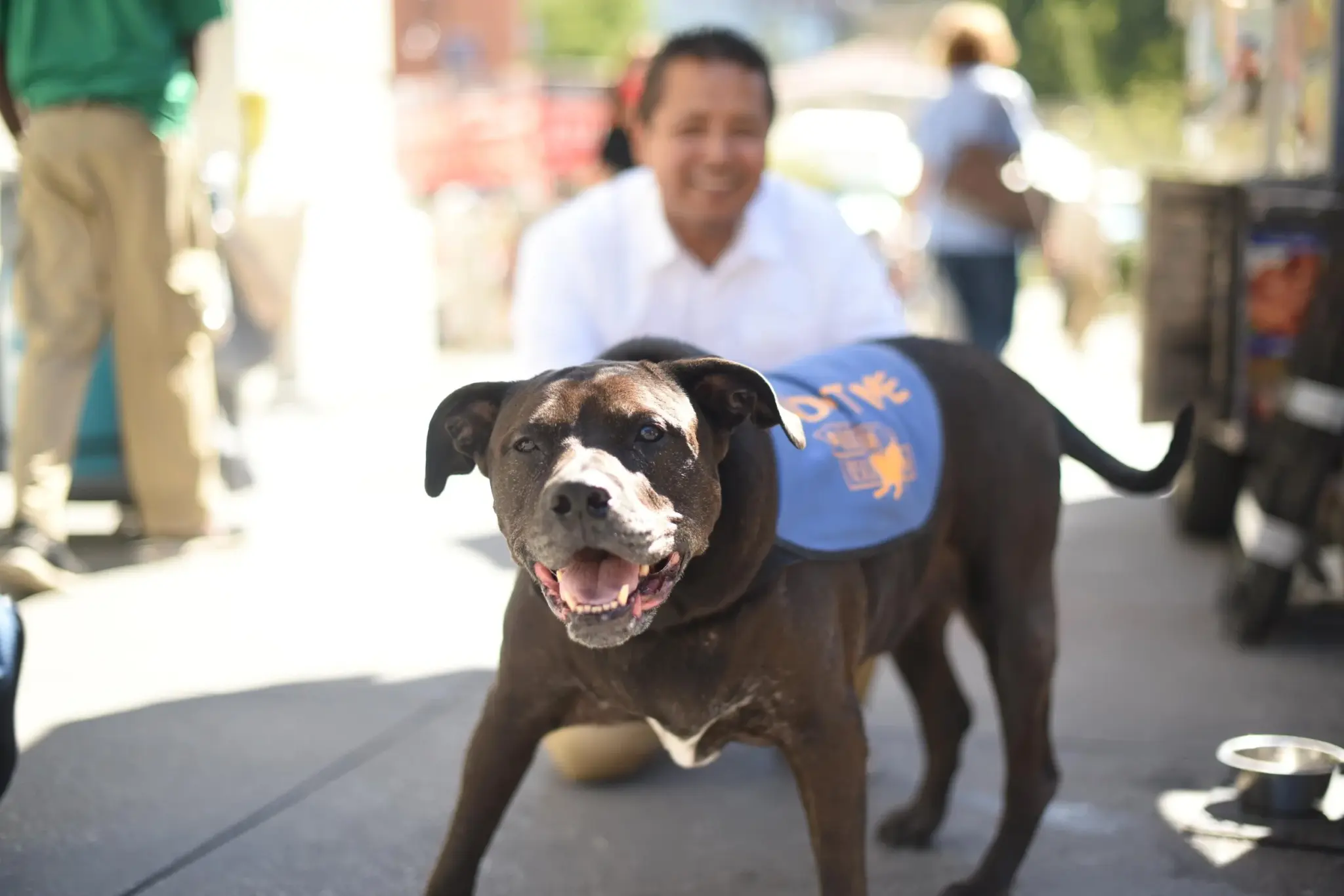

Executive Overview
In an era dominated by rapid-fire algorithms and short-form video content, viral moments are often ephemeral, fleetingly capturing the public’s attention before dissolving into the digital ether. However, every so often, a digital narrative emerges that transcends mere entertainment, touching upon profound themes of empathy, patience, and transformation. This is the story of Tiki, a rescue dog whose remarkable 13-day journey from deep-seated fear to unconditional trust became a cultural touchstone across social media.
Documented meticulously by longtime Muddy Paws Rescue foster volunteer Isabel Klee—known to millions on TikTok as @simonsits—Tiki’s chronicle captivated audiences globally. Culminating in a prominent feature by BuzzFeed, the series struck a chord so resonant that it drew the attention of high-profile animal advocates, including television personality and philanthropist Kylie Kelce. Beyond the heartwarming metrics of views and likes, Tiki’s story serves as a masterclass in canine rehabilitation, shedding critical light on the realities of shelter life, the transformative power of trauma-informed fostering, and the evolving ways animal rescue organizations leverage digital media to save lives.
This investigative feature explores the anatomy of Tiki’s viral transformation, examining the psychological hurdles faced by fearful shelter dogs, the day-by-day progression of trust-building, and the broader implications of animal welfare advocacy in the digital age.
Detailed Chronology: The 13-Day Journey from Isolation to Acceptance
When animals enter the shelter system from unknown or neglectful backgrounds, they frequently arrive carrying invisible emotional scars. For Tiki, the transition from an overwhelming shelter environment to the controlled, compassionate sanctuary of Isabel Klee’s foster home was initially met not with tail-wags and excitement, but with profound terror. Below is an examination of the pivotal milestones that defined Tiki’s 13-day breakthrough.

Days 1 through 3: The Architecture of Safe Isolation
Upon first arriving at her temporary foster home, Tiki exhibited classic symptoms of canine shutdown—a psychological defense mechanism where an animal becomes entirely overwhelmed by new stimuli, freezing in place or retreating inward.
- Establishing Boundaries: Klee’s immediate priority was not to force affection, but to establish a low-pressure environment. In trauma-informed fostering, the golden rule is "decompression without demand." Tiki was provided with a quiet, designated safe zone where she could observe her new surroundings without the pressure of direct human interaction.
- The Power of Passive Presence: During these initial 48 hours, Klee spent hours simply existing in the same room as Tiki, reading aloud in a calm voice to acclimate the dog to human presence and vocal tones. Small offerings of high-value treats were left at a distance, allowing Tiki to make the voluntary choice to approach.
Days 4 through 7: Micro-Steps and Cautious Curiosities
By the fourth day, the veil of absolute terror began to lift, replaced by a hyper-vigilant curiosity.
- First Voluntary Engagements: TikTok documentation captured the fragile moment Tiki took her first steps out of her designated safe corner to investigate Klee’s shoes—a significant milestone indicating that the dog was beginning to associate human scents with safety rather than threat.
- Leash and Threshold Training: Exposing a fearful dog to the outdoors requires immense restraint. Klee utilized threshold training, allowing Tiki to peer out open doors at her own pace before ever attempting a full neighborhood walk. Each micro-step was rewarded with positive reinforcement, laying the groundwork for emotional regulation.
Days 8 through 11: The Melting of the Guard
As the second week commenced, the physiological stress markers in Tiki’s body—such as whale eyes, tucked tails, and rigid posture—began to dissipate visibly.
- Seeking Physical Proximity: Around Day 9, Tiki initiated her first physical contact, resting her chin tentatively on Klee’s knee. For millions of viewers watching the TikTok series, this singular frame represented an emotional watershed moment.
- Play and Relaxation: By Day 11, Tiki engaged in her first play-bow—an innate canine posture signaling an invitation to interact. The dog who had once cowered in the darkest corner of the room was now displaying joyful, uninhibited bodily expressions.
Days 12 and 13: Full Integration and the Viral Awakening
The culmination of the 13-day experiment proved that patience, when paired with professional behavioral understanding, can accelerate healing.

- The Breakthrough: By Day 13, Tiki was sleeping at the foot of her foster parent’s bed, accepting belly rubs, and navigating urban environments with newfound confidence.
- Digital Resonance: The compiled documentation of these 13 days was uploaded to TikTok, where the algorithm quickly propelled the content to millions of screens worldwide. The narrative arc—from absolute despair to unbridled joy—struck an emotional nerve across demographics, culminating in mainstream coverage by BuzzFeed and personal engagement from prominent public figures like Kylie Kelce.
Supporting Context & Metrics: The Crisis of Shelter Animals and Digital Advocacy
Tiki’s story did not happen in a vacuum; it unfolded against the backdrop of an unprecedented crisis within the North American animal rescue system. Understanding the significance of Klee’s work requires analyzing the structural challenges modern shelters face and how digital media has become an essential tool for survival.
The Overcrowding Crisis in Urban Rescues
Organizations like Muddy Paws Rescue operate on the front lines of urban animal welfare, frequently taking in dogs from high-kill shelters or overcrowded municipal systems where resources are stretched to their absolute limits. According to recent shelter data compiled across major metropolitan areas:
- Shelter intake rates have steadily outpaced adoption rates over the past 36 months.
- Fearful, shut-down dogs like Tiki are historically at the highest risk of euthanasia or prolonged kennel deterioration because they fail to "sell themselves" to casual adopters walking down shelter aisles.
- Foster homes serve as the primary bottleneck for rescue operations. Without individuals like Isabel Klee willing to absorb the initial emotional and labor-intensive shock of rehabilitating a traumatized animal, shelters simply lack the physical footprint to house them.
The Rise of Trauma-Informed Fostering on Social Media
Platforms like TikTok have fundamentally shifted how rescue organizations market adoptable pets. Traditional static pet profiles listing age, weight, and presumed breed are increasingly being supplemented—and often outperformed—by narrative-driven video content.
- Transparency over Perfection: Modern audiences resonate with authenticity. By documenting the setbacks alongside the triumphs—the growls, the hesitations, and the messy realities of rehabilitation—foster parents demystify the rescue process.
- Algorithmic Empathy: Short-form video algorithms prioritize completion rates and emotional engagement. Content that chronicles a multi-day transformation inherently hooks viewers, turning passive scrollers into active advocates, donors, and, ultimately, adopters.
Official Statements and Industry Perspective
The resonance of Tiki’s viral journey has prompted conversations among animal behaviorists, rescue directors, and digital content creators regarding the future of animal placement.

"Tiki’s transformation reminds us that what looks like an ‘unfriendly’ or ‘aggressive’ dog in a shelter kennel is almost always a terrified animal crying out for safety," noted a senior behavior coordinator at Muddy Paws Rescue. "When fosters like Isabel commit to the unglamorous, patient work of decompression, they don’t just change one dog’s life—they provide a blueprint for how our entire society can better understand trauma in animals."
Industry analysts point out that viral moments of this scale generate tangible economic and logistical benefits for non-profit rescues:
- Surge in Foster Applications: High-profile TikTok success stories routinely drive spikes in local foster applications, directly expanding organizational capacity.
- Increased Donation Inflows: Digital visibility translates to direct financial support, enabling rescues to cover costly veterinary interventions, specialized behavioral training, and medical rehabilitation.
- Educational Impact: Millions of viewers gain exposure to positive reinforcement training methodologies, drastically reducing the prevalence of outdated, dominance-based correction techniques among pet owners.
Future Outlook: The Evolution of Rescue and the Path Ahead
As Tiki transitions from her temporary foster arrangement toward her permanent, happily-ever-after home, her legacy within the digital and rescue communities will endure. The success of the @simonsits TikTok series signals a permanent shift in how animal welfare organizations will operate in the digital decade ahead.
Moving forward, forward-thinking rescues are investing heavily in digital literacy for their volunteer bases, training fosters not only in animal husbandry but also in content creation. By empowering everyday volunteers to act as storytellers, the rescue community can continually bypass traditional media gatekeepers, bringing the urgent plight of shelter animals directly into the pockets of millions of daily smartphone users.

Tiki may have only taken 13 days to cross the chasm from fear to trust, but the ripples of her journey will continue to inspire empathy, encourage foster participation, and save countless lives across the animal rescue landscape for years to come.