
Executive Overview
In the rugged, sun-drenched volcanic terrain of the Canary Islands, a microscopic evolutionary revolution has quietly unfolded over the span of a few million years. Researchers have discovered that the endemic spider Dysdera tilosensis has accomplished a biological feat previously thought nearly impossible for complex animal species: it has cleaved its genome size by almost 50% while successfully colonizing and adapting to an isolated island ecosystem.
Published in the esteemed journal Molecular Biology and Evolution, this landmark study presents the first documented instance of an animal species drastically reducing its genomic footprint during the colonization of oceanic islands. Traditionally, evolutionary biology operated under the well-established "island rule" regarding genomes, which posited that species crossing vast expanses of ocean to populate remote islands would inevitably accumulate larger, more repetitive genomes due to relaxed natural selection, genetic drift, and the notorious "founder effect."
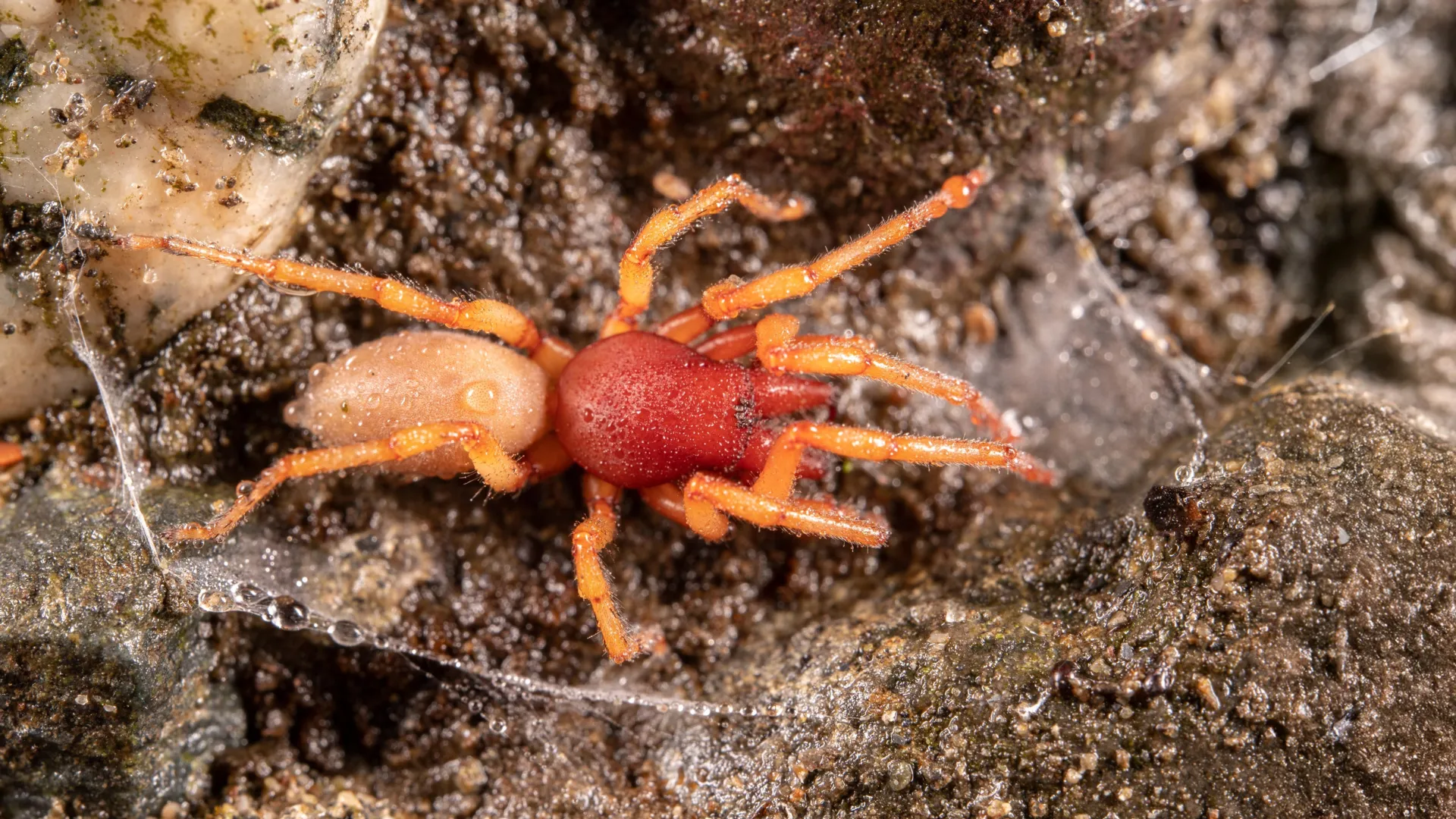
Dysdera tilosensis has shattered this long-held assumption. When compared to its mainland counterpart, Dysdera catalonica—a continental relative inhabiting Catalonia and southern France—the island spider boasts a remarkably compact, streamlined genome. Yet, paradoxically, this minimalist genetic architecture is accompanied by a higher level of genetic diversity than is found in its mainland relatives.
This startling discovery not only challenges foundational paradigms in evolutionary genomics but also injects fresh data into one of biology’s most enduring and contentious mysteries: the mechanisms driving the expansion and contraction of an organism’s total genetic blueprint. Led by a collaborative team from the University of Barcelona’s Faculty of Biology, the Biodiversity Research Institute (IRBio), the University of La Laguna, the Spanish National Research Council (CSIC), and the University of Neuchâtel in Switzerland, this research transforms our understanding of how life adapts, condenses, and thrives under isolated conditions.
Detailed Chronology of the Discovery
The uncovering of this evolutionary marvel spans years of meticulous fieldwork, advanced genetic sequencing, and interdisciplinary collaboration across several European academic institutions.
Phase One: The Canary Islands as a Natural Laboratory
For evolutionary biologists, the Canary Islands represent a priceless natural laboratory. Formed by volcanic activity millions of years ago, these islands emerged as sterile, isolated landmasses ripe for colonization by flora and fauna carried by wind, ocean currents, or migratory birds. Among the most successful colonizers of this archipelago are spiders of the genus Dysdera.
Since the emergence of the islands, nearly 50 endemic Dysdera species have evolved in absolute isolation. This remarkable adaptive radiation accounts for roughly 14% of all known species within the genus worldwide. Recognizing the unique evolutionary pressures acting upon these island populations, a team of researchers spearheaded by Professor Julio Rozas and Dr. Sara Guirao set out to investigate how the genomic architecture of these spiders shifted following their migration from continental Europe.
Phase Two: High-Resolution Genomic Sequencing
To trace the evolutionary trajectory of Dysdera tilosensis, the research team—led by doctoral student and first author Vadim Pisarenco—deployed cutting-edge DNA sequencing technologies. They generated high-quality reference genomes for comparative analysis, placing the island-dwelling D. tilosensis (native to Gran Canaria) side-by-side with its closest mainland relative, D. catalonica.
The initial results stunned the laboratory. Genetic profiling revealed a stark contrast in genome sizes. While D. catalonica carried a hefty genome measuring 3.3 billion base pairs (3.3 Gb)—the individual chemical letters encoding its hereditary instructions—D. tilosensis possessed a genome nearly half that size, measuring a mere 1.7 Gb.
Furthermore, chromosome counts varied notably between the two species. Genomic sequencing demonstrated that the mainland D. catalonica possesses a haploid chromosome number consisting of four autosomes plus one X chromosome. In contrast, the island-dwelling D. tilosensis exhibits six autosomes alongside a single X chromosome. Such structural shifts highlighted a profound chromosomal reorganization accompanying the overall reduction in DNA volume.
Phase Three: Unraveling the Evolutionary Timeline
To determine whether this dramatic reduction occurred rapidly upon arrival or was a lingering ancestral trait, the researchers conducted phylogenetic analyses combined with flow cytometry measurements.
Their findings indicated that the most recent common ancestor of both species possessed a large genome, estimated at approximately 3 Gb. This crucial piece of data confirmed that the massive downsizing event was not an inherited trait from a streamlined ancestor, but rather a radical evolutionary reduction that took place directly during or immediately following the colonization of the Canary Islands.
By mapping these genetic shifts against the geological timeline of the archipelago, the team confirmed that over a relatively compressed evolutionary timeframe of a few million years, Dysdera tilosensis successfully jettisoned nearly half of its genetic material.
Supporting Context & Metrics: Challenging the Genomic Status Quo
To fully grasp the magnitude of the Dysdera tilosensis discovery, one must examine the broader landscape of genome size evolution across the tree of life.
The Enigma of Genome Size (C-value Paradox)
For decades, scientists have grappled with the "C-value paradox"—the observation that the amount of DNA in a haploid cell does not correlate neatly with the morphological complexity or evolutionary "advancement" of an organism. For instance, some amoebas and salamanders possess genomes significantly larger and more laden with non-coding DNA than that of human beings.
Genomes are largely composed of two types of sequences: functional genes that code for proteins, and repetitive DNA elements, such as transposons (jumping genes) and retroelements. In many eukaryotic lineages, genomes swell over time as these repetitive elements proliferate unchecked.
The Island Rule and Founder Effects
In island biogeography, populations are typically established by a small number of founding individuals—a phenomenon known as the founder effect. According to classical evolutionary theory, this bottleneck leads to a drastic reduction in the effective population size and a subsequent weakening of purifying natural selection.
Without robust natural selection to weed out redundant, burdensome, or "junk" DNA, theory dictates that genomes on islands should accumulate repetitive elements, expanding in size over time. This trend is frequently documented in island plant populations, where polyploidy (possessing multiple sets of chromosomes) and genome expansion are relatively common responses to isolated environments.
The Inverted Reality of Dysdera
Dysdera tilosensis turns this theoretical framework completely upside down. Rather than ballooning with repetitive DNA, the island spider’s genome shrank by nearly 50%, resulting in a highly compact, streamlined genetic blueprint.
Even more counterintuitive is the retention of high genetic diversity. Typically, the founder effect and prolonged isolation on small islands deplete genetic variation, leaving populations vulnerable to environmental shocks and inbreeding depression. Yet, Dysdera tilosensis exhibits greater genetic diversity than its widespread mainland counterpart, Dysdera catalonica.
According to Vadim Pisarenco, this combination points toward non-adaptive mechanisms driven by population dynamics:
"We observed the opposite of what classical theory predicts: island species have smaller, more compact genomes with greater genetic diversity. This pattern suggests that populations in the Canary Islands remained relatively numerous and stable for a long time, making it possible to maintain a strong selective pressure and, as a consequence, eliminate unnecessary DNA."
Official Statements and Expert Perspectives
The research team behind this groundbreaking study has emphasized the fundamental shift this discovery brings to molecular biology and evolutionary theory.
Professor Julio Rozas: Documenting a Rare Phenomenon
Professor Julio Rozas, director of the Evolutionary Genomics and Bioinformatics research group at the University of Barcelona and a board member of Bioinformatics Barcelona (BIB), highlighted the novelty and precision of the findings:
"The species Dysdera catalonica has a genome of 3.3 billion base pairs, which is almost double that of the species Dysdera tilosensis. Interestingly, despite having a smaller genome, the species from the Canary Islands shows greater genetic diversity."
"The genome downsizing of the spider Dysdera tilosensis, associated with the colonization process of the Canary Island, is one of the first documented cases of drastic genome downsizing using high-quality reference genomes. This phenomenon is now being described for the first time in detail for phylogenetically closely related animal species."
Professor Sara Guirao: Ruling Out Ecological Explanations
Addressing the potential drivers behind the size discrepancy, Professor Sara Guirao pointed out the close ecological and behavioral similarities between the two spider species, which effectively rule out standard environmental adaptations as the primary cause:
"In such evolutionarily similar species, which share similar habitats and diet, differences in genome size cannot easily be attributed to ecological or behavioural factors. Phylogenetic analysis, combined with flow cytometry measurements, reveals that the common ancestor had a large genome (about 3 Gb). This indicates that the drastic genome reduction occurred during or after the arrival on the islands."
"While the appearance of polyploid species with multiple chromosome endowments is common in plants, such sharp reductions in genome size over a relatively short period of time are much rarer in animals."
Re-evaluating the Mechanisms of Genome Evolution
The study’s authors conclude that the variation in genome size observed across these spider lineages is governed primarily by the ongoing battle between the accumulation of repetitive DNA and its systematic removal by natural selection. Rather than representing a direct, targeted adaptation to the volcanic climate of the Canary Islands, the streamlined genome of Dysdera tilosensis is the product of sustained, efficient purifying selection operating within stable island micro-populations that managed to avoid catastrophic genetic bottlenecks.
Future Outlook: Opening New Frontiers in Genomics
The publication of this study in Molecular Biology and Evolution marks the beginning, rather than the end, of a new chapter in genomic research. By demonstrating that animal genomes can undergo rapid, massive downsizing under specific island conditions, the research opens several critical avenues for future scientific inquiry.
1. Broadening Taxonomic Surveys
A primary objective for the research community will be determining whether the genome downsizing observed in Dysdera tilosensis is an isolated evolutionary anomaly or part of a broader, unrecognized pattern among island-endemic invertebrates. Researchers plan to sequence the genomes of other endemic Dysdera species across the Canary Archipelago—nearly 50 in total—to establish whether genome reduction scales with time of isolation, island area, or population density.
2. Dissecting the Mechanistic Basis of DNA Loss
Understanding how an organism successfully deletes half its genome without compromising vital physiological functions remains a monumental challenge. Future studies will utilize advanced transcriptomic and functional genomic assays to identify which specific sequences—such as transposable elements, introns, or intergenic spacers—were purged during the evolution of D. tilosensis. Pinpointing the enzymatic or regulatory pathways responsible for this large-scale DNA deletion could offer biomedical researchers new insights into genome stability and cellular efficiency.
3. Re-examining Island Biogeography Models
Theoretical frameworks in ecology and evolutionary biology will need to be revised to accommodate the empirical realities revealed by the Dysdera spider model. Current mathematical models predicting genomic evolution in island settings must now integrate the possibility of rapid genome contraction, accounting for how stable population sizes can sustain high purifying selection pressure even in geographically restricted habitats.
Ultimately, the humble spider of the Canary Islands has delivered a profound lesson to the scientific community: evolution is far more flexible, inventive, and unpredictable than our textbooks have assumed. As high-resolution genomics continues to unlock the hidden histories written in the DNA of isolated species, Dysdera tilosensis stands as a testament to the power of nature to streamline, adapt, and surprise against all theoretical odds.