
Executive Overview
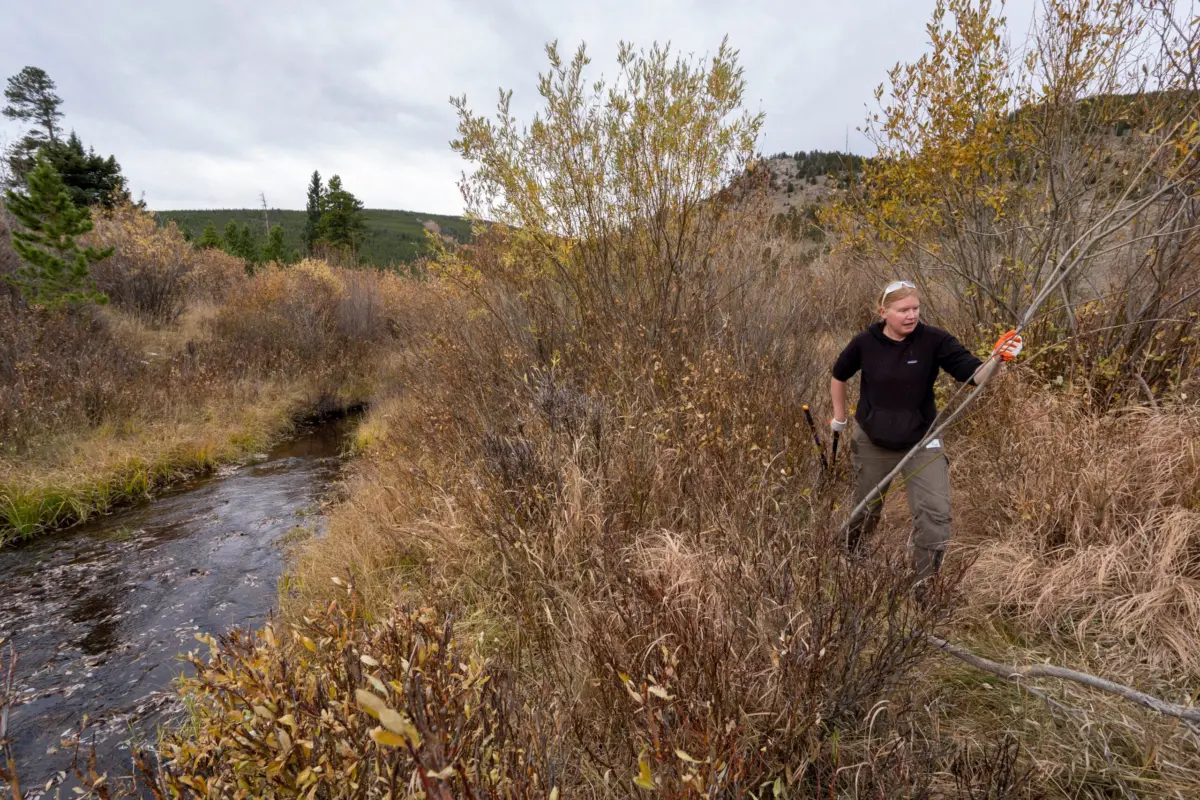
Across the American West and the rugged terrain of the Rocky Mountain region, a quiet revolution in conservation is taking place. Communities, grassroots coalitions, and environmental advocates are increasingly turning away from traditional, heavy-handed civil engineering projects in favor of nature-based solutions. By working with the natural architecture of rivers and streams—often utilizing low-tech, process-based restoration (LTPBR) techniques—environmental stewards are successfully bringing degraded watersheds back to life. These methods not only revitalize local hydrology and mitigate the devastating impacts of catastrophic wildfires, but they also restore vital riparian corridors relied upon by countless species of migratory birds and wildlife.
However, translating ecological vision into on-the-ground reality has historically been bottlenecked by a single, formidable obstacle: secure, long-term funding.
Recognizing this systemic hurdle, the U.S. Bureau of Reclamation has stepped forward with an unprecedented infusion of capital through its flagship WaterSMART programs. Collectively distributing $85 million across multiple funding cycles stretching through 2028, these federal grants represent a generational opportunity for conservationists. Two specific pathways—the Enhancing Water Resources Projects (EWRP) program and the Cooperative Watershed Management Program (CWMP)—are uniquely tailored to support everything from comprehensive watershed-scale planning and rigorous scientific monitoring to large-scale infrastructure upgrades and stream restoration.
Yet, navigating the labyrinthine application processes of federal agencies can easily overwhelm small, grassroots watershed groups, which often operate on shoestring budgets and rely heavily on volunteer labor. To bridge this critical capability gap, two of the nation’s preeminent environmental organizations—Audubon and The Nature Conservancy (TNC)—recently joined forces to host a specialized webinar. Designed to demystify federal grant acquisition, the collaborative event provided local watershed stakeholders with actionable strategies, detailed program comparisons, and masterclasses in writing competitive proposals. This report examines the mechanics of these federal funding opportunities, details the strategic guidance provided by Audubon and TNC, and explores the broader implications for watershed health across the American West.
Detailed Chronology: The Evolution of Federal WaterSMART Support and the Audubon-TNC Intervention
The Policy Landscape and the Birth of WaterSMART Funding
The origin of the current funding surge can be traced back to the Bureau of Reclamation’s ongoing evolution under the WaterSMART (Sustain and Manage America’s Resources for Tomorrow) framework. Established to leverage federal leadership and resources in collaboration with state, local, and tribal entities, WaterSMART has long served as a vital vehicle for water conservation and infrastructure management.
Historically, however, a significant portion of federal water infrastructure funding favored large-scale, hard-engineering irrigation and municipal water projects. Over the past decade, advocacy from conservation coalitions successfully shifted institutional priorities, prompting the Bureau of Reclamation to open its funding windows to nature-based solutions, watershed health initiatives, and collaborative community groups.
The announcement of the EWRP and CWMP funding cycles marked a watershed moment. With $85 million earmarked specifically for these intertwined priorities through 2028, the Bureau of Reclamation established a multi-year runway that allows conservation groups to plan, design, and execute projects with financial predictability that was previously unheard of.
The Grassroots Bottleneck
Despite the availability of $85 million, a systemic challenge immediately emerged. Federal grants of this magnitude come with rigorous administrative overhead, complex compliance requirements, and specific project maturity thresholds.
Large municipalities and well-funded water districts possess dedicated grant-writing staff capable of navigating these federal hurdles. In contrast, local watershed groups—often operating as grassroots nonprofits or volunteer-driven associations—frequently lack the institutional capacity to apply. Without targeted guidance, there was a profound risk that these millions of federal dollars would bypass the very community-level organizations best positioned to implement low-tech, boots-on-the-ground conservation.
The Audubon and The Nature Conservancy Collaboration
To ensure that local watershed groups were not left behind, Audubon and The Nature Conservancy leveraged their combined policy expertise and regional footprints to intervene. Recognizing that successful federal grant applications require precise matching of project maturity to the correct funding vehicle, the two organizations developed an educational initiative aimed at translating federal bureaucratic jargon into a clear, step-by-step roadmap for local conservation leaders.
Culminating in a comprehensive webinar event—complete with downloadable presentation slides, step-by-step decision frameworks, and direct links to the Bureau of Reclamation’s data portals—the collaboration provided an invaluable service to the conservation community. The initiative broke down the structural differences between EWRP, CWMP, and Applied Science grants, offering local stakeholders a strategic blueprint designed to maximize win rates in upcoming federal funding cycles.
Supporting Context & Metrics: Unpacking the Grant Programs and Strategic Financial Matching
Understanding the mechanics of the WaterSMART funding ecosystem is essential for any organization seeking to secure a portion of the $85 million pool. Audubon and The Nature Conservancy’s joint initiative emphasized that success depends entirely on aligning a project’s current developmental stage with the exact parameters of the targeted federal grant.
1. Enhancing Water Resources Projects (EWRP)
The EWRP program is the heavyweight champion of the WaterSMART portfolio when it comes to funding large-scale implementation.
- Financial Scope: Designed for substantial, multi-component initiatives, EWRP grants typically range from $1 million to $3 million per project.
- Eligible Activities: These funds support comprehensive watershed health projects that combine stream restoration with infrastructure upgrades, wildfire risk reduction, and post-fire recovery. Smaller stream restoration projects valued between $500,000 and $1 million can also remain highly competitive if they demonstrate a clear nexus to water delivery, supply, or natural-based infrastructure solutions.
- The Maturity Requirement: A critical takeaway emphasized during the Audubon-TNC webinar is that EWRP projects are expected to have a high degree of pre-development work completed. Specifically, applicant organizations must have at least 60% of their project design finalized before submitting an EWRP proposal. This ensures that federal dollars flow rapidly into active construction and implementation rather than getting bogged down in early-stage feasibility studies.
2. Cooperative Watershed Management Program (CWMP)
While EWRP funds major construction and large-scale restoration, the CWMP is tailor-made for capacity building, coalition formation, and early-stage planning.
- Target Audience: Much of the CWMP funding is exclusively reserved for existing watershed groups, making it an invaluable, non-competitive funding stream for grassroots organizations that might otherwise be crowded out by municipal applicants. Furthermore, the program supports the development of entirely new watershed groups, fostering community-led conservation from the ground up.
- Strategic Utility: CWMP grants are the ideal vehicle for funding early project designs, bringing a project from conception to the 60% completion threshold required for a subsequent 2027 EWRP proposal. Additionally, CWMP can fund vital watershed planning initiatives—such as the creation of Wildfire Ready Watershed plans—which also unlock secondary funding opportunities, such as grants from the Colorado Water Conservation Board (CWCB).
3. Applied Science Grants
For research-driven organizations, academic partners, or non-profit entities that do not fit the traditional definition of a watershed group, the WaterSMART Applied Science program offers a crucial alternative.
- Focus Areas: These grants fund advanced modeling, hydrological forecasting, and data-driven analytical work.
- Restoration Integration: While focused on science, these grants can also fund specific elements of project design and establish comprehensive baseline monitoring protocols, ensuring that subsequent restoration efforts are guided by rigorous empirical data.
| Grant Program | Typical Funding Range | Primary Focus & Eligible Activities | Key Prerequisites & Strategic Value |
|---|---|---|---|
| EWRP | $1 million – $3 million (Smaller projects: $500k – $1M) | Large, multi-component watershed health; stream restoration, wildfire mitigation, infrastructure upgrades. | At least 60% project design must be complete; ideal for active implementation. |
| CWMP | Variable (Exclusive to watershed groups) | Project design, coalition building, watershed planning, new group development. | Perfect stepping stone to fund design work ahead of a 2027 EWRP proposal. |
| Applied Science | Variable | Hydrological modeling, forecasting, data analytics, baseline monitoring. | Ideal for research institutions, non-watershed NGOs, and data-gathering initiatives. |
Official Statements and Expert Insights
The collaboration between Audubon and The Nature Conservancy highlights a growing recognition among major conservation NGOs that local capacity building is just as important as high-level lobbying and direct habitat acquisition.
While specific individual quotes from the webinar hosts emphasize the technical hurdles of federal grants, the collective institutional message delivered during the virtual sessions was clear and resonant. Conservation leaders noted that the historic convergence of federal funding and nature-based restoration science creates a "once-in-a-generation window" to heal damaged river systems.
Representatives from both organizations stressed that low-tech, process-based stream restoration (LTPBR)—which often involves building beaver-dam analogs or utilizing natural woody debris to reconnect streams with their floodplains—is exponentially more cost-effective than traditional concrete engineering. However, because LTPBR relies on mimicking natural processes rather than building rigid structures, communicating its ecological value to federal reviewers requires precise proposal framing.
During the webinar, technical experts walked participants through the anatomy of a winning proposal, advising local groups to emphasize measurable ecological metrics—such as enhanced groundwater recharge, reduced downstream peak flows, and expanded breeding habitats for riparian bird species. By framing local creek restoration within the broader context of regional climate resilience and wildfire recovery, grassroots groups can dramatically elevate their competitiveness in front of Bureau of Reclamation reviewers.
Future Outlook: Building a Resilient Western Watershed Network Through 2028
As the Bureau of Reclamation rolls out multiple funding rounds through 2028, the roadmap provided by Audubon and The Nature Conservancy arrives at a critical juncture. The American West faces intensifying pressures from prolonged drought, shifting precipitation patterns, and increasingly severe wildfire seasons. In this high-stakes environment, healthy watersheds serve as Earth’s natural sponge, buffering communities against floods while maintaining baseflows during dry summer months.
The long-term success of the $85 million WaterSMART investment will ultimately be measured not just by the number of dollars spent, but by the durability of the coalitions formed along the way. By utilizing CWMP grants now to build institutional capacity, finalize project designs, and draft Wildfire Ready Watershed plans, grassroots groups are positioning themselves to capture massive EWRP implementation awards in the coming years.
For local conservationists, watershed coalitions, and regional planners, the path forward is illuminated. Comprehensive resources—including the complete webinar recording, downloadable presentation slides, and direct access to the Bureau of Reclamation’s WaterSMART Data Portal—remain available to the public. By harnessing these tools, local stewards can transform federal appropriations into lasting, living landscapes that secure water supplies and safeguard wildlife for generations to come.
Key Resources & External Links
- Webinar Presentation Materials: Download Presentation Slides (PDF)
- Federal Data Hubs: WaterSMART Program Data Portal
- Program Portals: