
Executive Overview
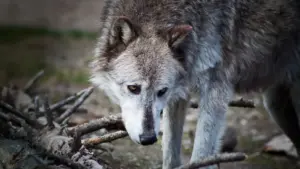
A dangerous, highly adaptable parasite has quietly established a foothold along the contiguous United States West Coast, signaling a concerning expansion of a public health threat previously confined to distant regions. Researchers from the University of Washington (UW) have detected Echinococcus multilocularis—a diminutive yet lethal tapeworm—in local coyotes within the densely populated Puget Sound region. Published in the journal PLOS Neglected Tropical Diseases, this landmark study marks the first documented instance of the parasite in a wild host along the American West Coast.
The findings reveal a startlingly high prevalence: roughly 37% of the 100 coyotes surveyed in the region carried the parasite. While wild canids generally exhibit natural tolerance to the adult worms without showing signs of clinical illness, the implications for domestic animals and human populations are severe. When transmitted to accidental hosts, such as humans and domestic dogs, E. multilocularis causes alveolar echinococcosis, a debilitating and potentially fatal condition characterized by the formation of slow-growing, cancer-like cysts in the liver and other major organs.
Long recognized as an endemic public health crisis across vast stretches of Europe and Asia, E. multilocularis was historically considered a medical rarity in North America, restricted primarily to remote Alaskan islands. Over the past fifteen years, however, the parasite has steadily marched southward and eastward, invading ecosystems across the Canadian provinces and the American Midwest. The arrival of a virulent, European-origin strain in Washington state underscores a shifting ecological landscape—one where climate change, wildlife adaptation, and global animal movement are accelerating the spread of zoonotic pathogens.
Detailed Chronology of the Spread
To understand the gravity of the Puget Sound discovery, scientists must look back at how E. multilocularis transitioned from a regional anomaly to a continental invader. The historical timeline of this parasite reveals a shifting epidemiology driven by distinct genetic strains.
- Mid-20th Century and Earlier: For decades, the presence of E. multilocularis in North America was strictly limited to a tundra-adapted strain found in arctic and sub-arctic regions, including remote islands in northwestern Alaska. Scientists have long debated the origins of these early populations, with some historical theories pointing toward red foxes imported for hunting purposes nearly a century ago.
- The 2010s (The Continental Shift): Approximately 15 years ago, veterinarians and public health officials noted an abrupt and alarming shift. Infections began appearing with increasing frequency in domestic dogs and humans throughout various Canadian provinces and the U.S. Midwest. Genetic sequencing later confirmed a crucial detail: these modern infections were not driven by the native tundra variant, but rather by a much more infectious strain of European origin.
- 2023–Present (The Westward Expansion): Documented canine cases began popping up with greater regularity across the Pacific Northwest, with at least seven canine infections recorded in Washington, Oregon, and Idaho since 2023—five of which were localized within Washington alone.
- The Present Study (Puget Sound Milestone): Culminating in the recent UW research, scientists surveyed 100 coyotes across the Puget Sound region. The discovery that over one-third of the sampled population carried the parasite confirmed that the European strain had successfully bridged the gap into West Coast wildlife ecosystems, establishing a self-sustaining transmission cycle.
Supporting Context & Metrics: The Life Cycle and Public Health Burden
The tenacity of E. multilocularis lies in its sophisticated, multi-host life cycle, which seamlessly bridges wild predator populations with urban-adjacent ecosystems.
The Parasitic Life Cycle
- Definitive Hosts (Canids): Coyotes, foxes, and domestic dogs serve as the primary definitive hosts. Inside their intestinal tracts, adult tapeworms can thrive by the thousands without causing acute distress to the animal. These worms constantly shed microscopic eggs that are expelled into the environment via feces.
- Intermediate Hosts (Rodents): Small mammals—primarily field mice, voles, and other rodents—forage in areas contaminated with infected canid feces. Upon ingesting the microscopic tapeworm eggs, the rodents become intermediate hosts. The parasite larvae migrate to the liver, where they develop into destructive cysts that weaken or ultimately kill the rodent.
- Completion of the Cycle: Coyotes and other predatory canids consume the infected rodents, ingesting the larval cysts. These larvae mature into adult tapeworms inside the canid’s gut, completing the cycle.
- Accidental Hosts (Humans and Dogs): Humans and domestic dogs occupy a perilous role as accidental hosts. Humans contract the disease by inadvertently swallowing tapeworm eggs, often via contaminated food, unwashed wild vegetation, or through contact with soil or animal feces.
Global Burden and Medical Severity
The World Health Organization (WHO) classifies alveolar echinococcosis among the top 20 neglected tropical diseases, and it ranks globally as the third most significant food-borne illness. When humans are infected, the disease mimics hepatic malignancy. The parasite forms infiltrative, tumor-like cysts that can metastasize to the lungs, brain, and other tissues if left unchecked.
Compounding the danger is the disease’s exceptionally long incubation period. Symptoms of alveolar echinococcosis often remain dormant for five to 15 years post-exposure. By the time clinical manifestations—such as abdominal pain, weight loss, and jaundice—prompt medical evaluation, the infection is frequently in an advanced, highly challenging stage.
Official Statements and Expert Analysis
The scientific community has responded to the Puget Sound discovery with a mixture of professional concern and an urgent call for public vigilance. Researchers emphasize that while the high prevalence in coyotes is striking, the immediate risk to human populations on the West Coast remains low, provided basic hygiene and pet management protocols are observed.
Lead author Yasmine Hentati, who recently earned her doctorate in environmental and forest science from the University of Washington, highlighted the unexpected magnitude of the findings:
"This parasite is concerning because it has been spreading across North America. There have been numerous cases of dogs getting sick, and a handful of people have also picked up the tapeworm," Hentati stated. "The fact that we found it here in one-third of our coyotes was surprising, because it wasn’t found anywhere in the Pacific Northwest until earlier this year."
Addressing why the parasite is so heavily concentrated in wild coyotes compared to domestic pets, Hentati explained:
"The reason that it’s so high in coyotes is because they are regularly eating raw rodents, and that is the primary way for them to get infected. Most domestic dogs are not eating the raw livers of wild rodents."
Co-author Guilherme Verocai, an associate professor and director of the Parasitology Diagnostic Laboratory at the Texas A&M University College of Veterinary Medicine and Biomedical Sciences, outlined practical steps pet owners can take to mitigate risks:
"To minimize the risk of dogs getting infected with E. multilocularis, owners should not let them prey on rodents or scavenge their carcasses," Verocai advised.
Verocai further recommended stringent, routine veterinary care, which includes regular parasite testing and the consistent administration of preventative medications targeting worms and ticks.
Summarizing the core message for the public, Hentati concluded:
"The main takeaway is that Echinococcus multilocularis is here, it’s pretty prevalent in the local coyote population, and people should be aware of potential risks."
Note: The foundational research team also included lab manager Ellie Reese, doctoral graduate Samantha Kreling, Professor Laura Prugh, and Associate Professor Chelsea Wood from the University of Washington; Claire Curran of the College of William and Mary; Erika Miller of Sound Data Management; Dakeishla M. Díaz-Morales of DePaul University; and Christopher J. Schell of UC Berkeley. The study was made possible through financial backing from the National Science Foundation and the University of Washington Hall Conservation Genetics Fund.
Future Outlook and Mitigation Strategies
The identification of E. multilocularis in West Coast wildlife highlights a critical need for expanded surveillance, veterinary education, and proactive public health planning. As urban sprawl continues to blur the boundaries between human communities and wildlife habitats, encounters between domestic pets, urban-adapted coyotes, and parasite-bearing rodents are bound to increase.
Research and Monitoring Priorities
Moving forward, epidemiologists and wildlife biologists intend to expand surveillance programs across neighboring states and counties to map the exact geographic boundaries of the European strain. Genetic tracking will continue to play a pivotal role, allowing scientists to monitor whether the parasite is hybridizing with native strains or mutating into even more aggressive forms.
Furthermore, veterinary diagnostic laboratories are urging practitioners to remain vigilant for atypical liver conditions in domestic canines, particularly in regions where the tapeworm has newly emerged. Early detection in dogs not only saves animal lives but also serves as an important sentinel indicator for human health risks within the same communities.
Public Health Recommendations
Public health authorities stress that panic is unwarranted, but complacency could lead to avoidable infections. To safeguard both human and animal health in the Pacific Northwest and surrounding areas, experts recommend the following preventive measures:
- Pet Management: Keep domestic dogs on leashes during walks to prevent them from hunting, killing, or consuming wild rodents. Utilize veterinarian-approved preventative treatments regularly.
- Hand Hygiene: Thoroughly wash hands after gardening, handling soil, or interacting with domestic animals, particularly in areas frequented by wildlife.
- Food Safety: Wash all wild-harvested berries, greens, and vegetables thoroughly before consumption, as ground-foraging animals may have contaminated produce.
- Policy and Border Controls: Re-evaluate and tighten biosecurity protocols concerning the movement and importation of domestic and captive canids across North American borders to prevent the introduction of foreign parasite strains.
As Echinococcus multilocularis cements its status as a permanent fixture of the North American ecosystem, heightened awareness and proactive ecological monitoring will remain humanity’s best defense against this silent invader.