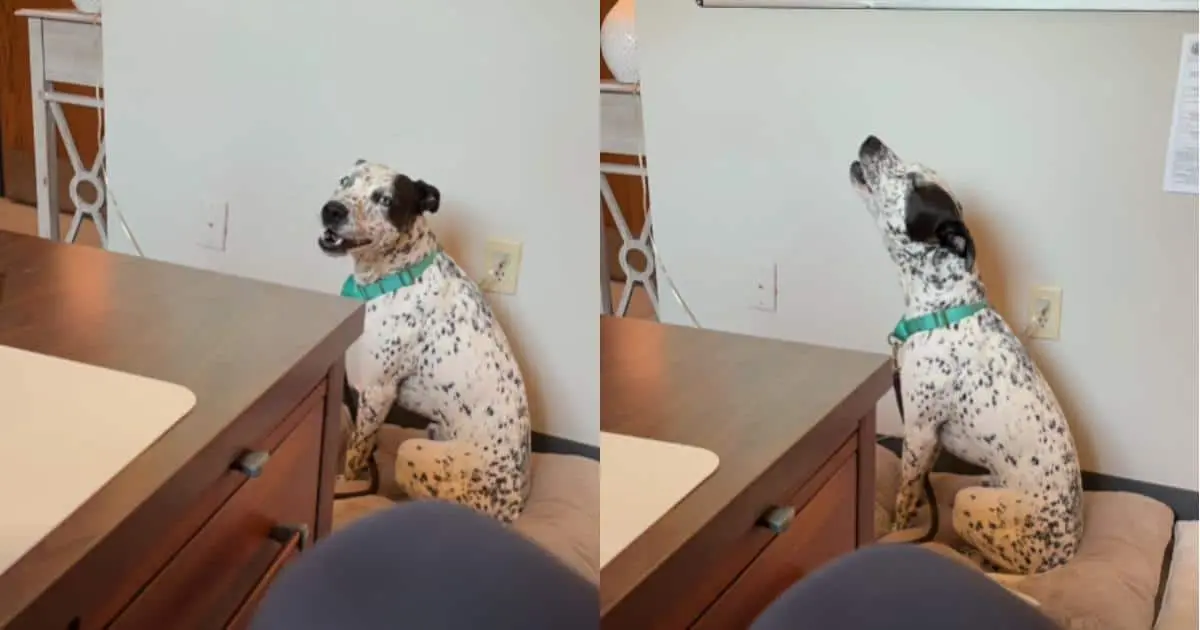
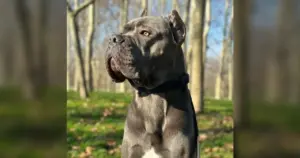
In late August, a single, mournful sound echoing through the administrative offices of the Humane Society of Greater Kansas City (HSGKC) ignited a massive digital search across the United States. Ranger, a stray dog found wandering the streets of Overland Park, Kansas, had spent only a few days in the shelter before his profound distress became impossible for staff to ignore. Overwhelmed by the sensory overload of the kennel environment, Ranger was brought into the shelter’s executive offices for a temporary reprieve. There, instead of settling, he lifted his head and let loose a series of long, sorrowful howls—a moment captured on video that quickly garnered over one million views.
Ranger’s viral heartbreak has exposed a critical vulnerability in animal welfare systems: the persistent challenge of unidentified lost pets. Found without a microchip or collar, Ranger represents a class of "ghost pets" whose owners may be actively searching for them, yet remain entirely disconnected due to a lack of permanent identification.
This investigative report details the timeline of Ranger’s arrival, analyzes the physiological and psychological impacts of shelter-induced stress on domestic dogs, examines the metrics of his viral campaign, and explores the systemic importance of microchipping as a public safety and animal welfare priority.
Detailed Chronology: From Overland Park to National Spotlight
The trajectory of Ranger’s case highlights how quickly a local stray intake can transform into a national interest story when digital networks are leveraged effectively.
[August 28] Found near W. 117th St & Lucille St, Overland Park, KS -> Intake at HSGKC (No Microchip)
       │
[August 29-31] Escalating shelter-induced stress; behavioral deterioration observed
       │
[September 1] Removed from kennel to CEO's office for decompression -> Mournful howling recorded
       │
[September 2] Video uploaded to Facebook -> Exceeds 1M views & 15,000 shares in under 24 hours
       │
[Present] Ongoing national search for owners; localized outreach in Greater Kansas City area
The Discovery and Intake
On Friday, August 28, animal control personnel retrieved a male dog, later named Ranger, near the intersection of West 117th Street and Lucille Street in Overland Park, Kansas. The residential area, characterized by suburban developments and high-traffic corridors, offered no immediate clues regarding his origin.
Upon intake at the Humane Society of Greater Kansas City, standard identification protocols were initiated:
Physical Assessment: Ranger was noted to be in relatively good physical condition, suggesting he had not been on the streets for an extended duration.
Microchip Scanning: Staff scanned Ranger using a universal radio-frequency identification (RFID) scanner. The scan returned negative, confirming the absence of an implanted microchip.
Collar/ID Check: Ranger was found without a collar, tags, or any external indicators of ownership.
Without these foundational pieces of data, Ranger was classified as a stray, and the mandatory holding period began.
The Onset of Shelter-Induced Stress
Within 48 hours of his arrival, Ranger’s behavioral metrics began to decline. The shelter environment—characterized by high ambient noise levels, unfamiliar olfactory stimuli, and confined spaces—induced acute stress. Staff documented symptoms of severe anxiety, including pacing, hypervigilance, and a refusal to settle within his designated kennel.
Recognizing that prolonged exposure to these stressors could lead to profound psychological deterioration, shelter caregivers opted for an intervention known as an "office break."
The Decompression Intervention and the Howl
On the morning of his transition to the administrative wing, Ranger was escorted into the quiet environment of the shelter CEO’s office. The objective of this practice is to lower a dog’s cortisol levels by removing them from the auditory and visual triggers of the main kennel blocks.
While the change of scenery provided minor relief, Ranger’s internal distress remained high. Sitting near the center of the office, Ranger lifted his head and began to emit a series of rhythmic, low-frequency howls. Observers noted that the vocalization differed fundamentally from the high-pitched, reactive barking common in shelters; it was a sustained, mournful sound indicative of separation anxiety and distress. Realizing the emotional weight of the moment, staff captured the event on video, recognizing it as a powerful tool to locate his missing family.
Supporting Context & Metrics
The rapid dissemination of Ranger’s video underscores the power of emotional resonance in digital advocacy, but it also sheds light on the broader, quantifiable realities of shelter operations.
The Physics of the "Office Break": Mitigating Cortisol in Shelter Canines
Shelter-induced stress is not merely a behavioral concern; it is a physiological crisis. Research in canine welfare indicates that when a dog enters a shelter, their hypothalamic-pituitary-adrenal (HPA) axis is highly activated, leading to a spike in cortisol (the primary stress hormone).
Physiological Marker
Normal Range (Home)
Acute Shelter Stress (First 72 Hours)
Post-Decompression (Office Break)
Cortisol Levels
Baseline (Low to Moderate)
Elevated (Up to 3-4x baseline)
Gradual reduction to near-baseline
Heart Rate (BPM)
60 – 140 BPM
160 – 200+ BPM (Hypervigilant)
80 – 120 BPM (Stabilizing)
Respiratory Rate
10 – 35 breaths/min
Elevated/Panting (Non-thermal)
Return to resting respiratory rate
Office breaks and temporary removal from kennels act as critical harm-reduction strategies. By providing a low-stimulus environment, shelters can prevent dogs from reaching a state of learned helplessness or developing reactive behaviors that render them unadoptable.
The video of Ranger’s howling was published on the Humane Society of Greater Kansas City’s social media platforms, primarily Facebook. The response was immediate and exponential:
Total Views: Exceeded 1,000,000 within 24 hours of posting.
Shares: Over 15,000 individual shares across multiple regional and national lost-and-found networks.
Media Amplification: Major regional news outlets, including KCTV, picked up the story, broadcasting Ranger’s image to hundreds of thousands of households in the Kansas City metropolitan area.
This digital footprint has significantly amplified the probability of a reunion, transforming a localized stray search into a highly coordinated, crowd-sourced investigation.
The Microchip Deficit: A Systemic Analysis
Ranger’s inability to communicate his home address highlights a persistent bottleneck in animal control: the low rate of microchipping among domestic pets.
The Math Behind the Chip
According to national shelter data, the return-to-owner (RTO) rate for stray dogs is heavily influenced by the presence of a microchip.
Stray Dogs Entering Shelters:
 ├── Without Microchip: ~21.9% Return-to-Owner Rate
 └── With Microchip:    ~52.2% Return-to-Owner Rate (Over 2.3x higher)
For unchipped dogs like Ranger, the burden of proof and the logistical hurdles of finding their owner fall entirely on manual labor: social media posting, physical flyers, and word-of-mouth. Conversely, a microchipped animal can often be reunited with its owner within hours of intake, bypassing the stressful shelter system entirely.
Addressing the Financial and Logistical Barriers
The Humane Society of Greater Kansas City has utilized Ranger’s viral moment to advocate for proactive pet identification. To lower barriers to access, the shelter offers microchipping services for a nominal fee of $32. This includes the physical implantation of the chip—a bioglass capsule roughly the size of a grain of rice containing an electromagnetic transponder—and initial registry assistance.
However, veterinary experts emphasize that implantation is only the first step. A microchip is useless if the owner fails to register their current contact details with the corresponding database. Address changes, phone number disconnections, and ownership transfers frequently render chips unreadable or lead to dead ends for shelter staff.
Official Statements & Narrative Analysis
Representatives from the Humane Society of Greater Kansas City have expressed both hope and concern regarding Ranger’s situation, highlighting the emotional toll that unidentified strays take on shelter personnel.
"We obviously can’t know exactly what he’s thinking, but everything about him makes us feel like there is someone out there he is desperately missing. It helped a little [bringing him to the office]… but this guy is still so, so sad."
— Official Statement, Humane Society of Greater Kansas City
Narrative Analysis of Canine Grief
Canine behaviorists note that Ranger’s howling behavior is a classic vocalization of separation distress, often seen in dogs that have transitioned abruptly from a stable domestic environment to complete isolation. Unlike feral or chronically neglected dogs, who may exhibit fearful or shut-down behaviors, dogs that have experienced close human bonding are more likely to actively vocalize their distress, searching for the missing members of their social group.
This specific behavioral profile supports the shelter’s hypothesis: Ranger is likely not a long-term stray, but a lost pet whose family may be unaware of where to look, or perhaps lacks the digital literacy to find him online.
Future Outlook & Call to Action
As Ranger remains under the care of the Humane Society of Greater Kansas City, the search for his family continues with high urgency.
Immediate Action Plan
Targeted Geofencing: Local advocates are focusing physical flyering and localized social media advertisements within a five-mile radius of West 117th Street and Lucille Street in Overland Park.
Cross-Platform Matching: Volunteers are systematically cross-referencing Ranger’s physical characteristics with "Lost Dog" listings on platforms such as Nextdoor, Craigslist, PawBoost, and local Facebook Lost & Found groups.
Veterinary Outreach: Local veterinary clinics in Overland Park have been alerted to Ranger’s description, in case he was previously treated as a patient in the area.
Systemic Takeaways for Pet Owners
Ranger’s story serves as an urgent reminder of the fragility of pet security. Animal welfare organizations urge pet owners to take three immediate steps to ensure their animals do not face a similar fate:
Verify Microchip Registration: Contact your microchip manufacturer or use the American Animal Hospital Association (AAHA) Universal Pet Microchip Lookup tool to ensure your contact information is up to date.
Utilize Double Identification: Pair a microchip with a physical collar containing an engraved tag. While collars can break or slip off, they provide the fastest path to a reunion.
Support Local Shelters: Engage with community lost-and-found networks. Pages run by organizations like the HSGKC rely heavily on community shares to bridge the gap when technology fails.
Until his owner comes forward, Ranger’s mournful howl remains a poignant symbol of the thousands of lost animals waiting in shelters nationwide. His voice, carried by over a million people across the digital landscape, continues to search for the one familiar face that can bring his howling to an end.
If you have any information regarding Ranger, or if you recognize him, please contact the Humane Society of Greater Kansas City immediately.