
Executive Overview
As pet owners increasingly seek out adventurous, outdoor lifestyles to share with their four-legged companions, water sports have emerged as a premier summer activity. Once restricted to hiking trails and camping grounds, the modern adventure dog is now taking to the waves, navigating lakes, rivers, and coastal marinas alongside their human counterparts. Kayaking and Stand-Up Paddleboarding (SUP) offer unparalleled opportunities for bonding, exercise, and exploration during the sweltering summer months.
However, transitioning a land-loving canine into a confident water adventurer requires careful planning, strict safety protocols, and an understanding of animal behavior. While some dogs take to the water with innate enthusiasm, others experience significant anxiety when confronted with the instability of open watercraft.
This comprehensive guide explores the nuances of introducing dogs to paddle sports, drawing firsthand insights from experienced canine handlers, safety experts, and outdoor enthusiasts. By examining proper equipment selection—such as specialized Personal Flotation Devices (PFDs)—vessel stability, training methodologies, and environmental hazards, this report provides pet owners with an authoritative roadmap for safe and enjoyable aquatic excursions.
Detailed Chronology: From Shelter Rescue to Water Enthusiast
The journey of canine water sports is rarely a straightforward leap; rather, it is a gradual progression of trust, desensitization, and positive reinforcement. A prime example of this evolutionary process can be observed in the outdoor adventures of Robin, an 18-pound, two-and-a-half-year-old Basenji mix adopted from a local shelter in Los Angeles.
Despite hailing from a desert climate where natural bodies of water are scarce, Robin’s journey into paddle sports highlights the adaptability of shelter dogs when paired with proactive handlers.
Phase 1: Land-Based Exploration and Basic Obedience
Before ever setting paw on a watercraft, adventure dogs like Robin establish a foundation of outdoor resilience through hiking and camping. Crucially, handlers emphasize that a successful transition to water sports relies heavily on fundamental obedience—specifically, a reliable "stay" command. On a narrow kayak or a shifting paddleboard, sudden, unannounced movements by an excited dog can easily destabilize the vessel, resulting in an unexpected capsize.
Phase 2: Introduction to Kayaking (The Stability Stage)
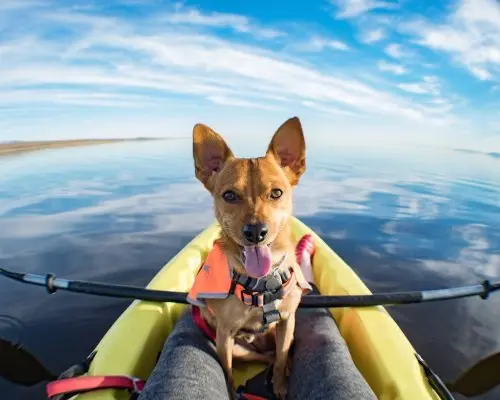
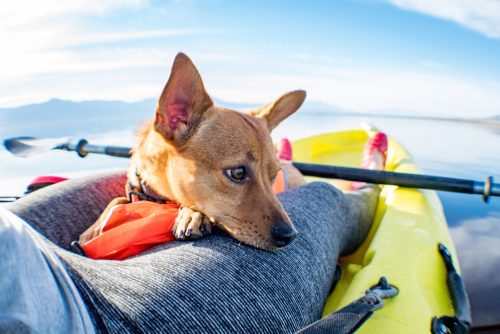
For novice handlers and cautious dogs, kayaking serves as the ideal entry point into paddle sports. Sit-on-top kayaks, widely available at recreational rental hubs, offer high stability and expansive foot wells that comfortably accommodate small-to-medium-sized dogs.
During early excursions, handlers often utilize tactical adjustments to ease canine anxiety. For instance, placing a gear bag or a non-slip mat in the prow of the kayak provides dogs with a secure traction surface and an elevated vantage point. As confidence grows, dogs naturally learn to shift between the handler’s lap and the bow depending on the vessel’s speed and water conditions.
Phase 3: Transition to Stand-Up Paddleboarding (SUP)
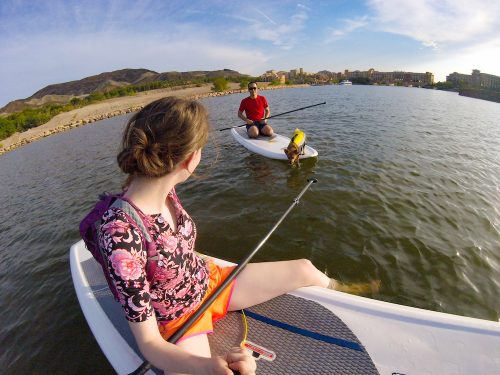
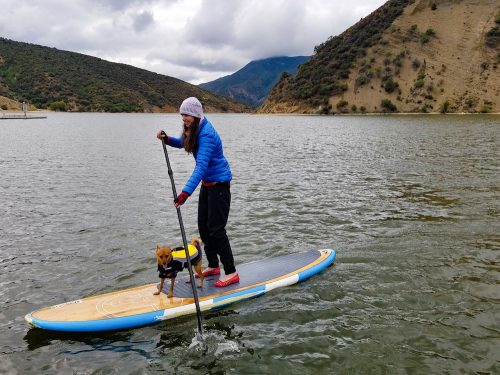
Once a dog is comfortable with the rocking motion of a watercraft, handlers often progress to Stand-Up Paddleboarding. SUP boards offer a vast deck space, making them exceptionally appealing for larger breeds. However, the expansive surface area introduces new challenges, particularly regarding paw traction. Slick fiberglass or epoxy boards can cause dogs to slip, inducing panic. Experienced handlers mitigate this by positioning nervous dogs toward the rear of the board, which not only improves traction control but also enhances the paddler’s maneuverability.
Phase 4: Water Confidence and Free Swimming
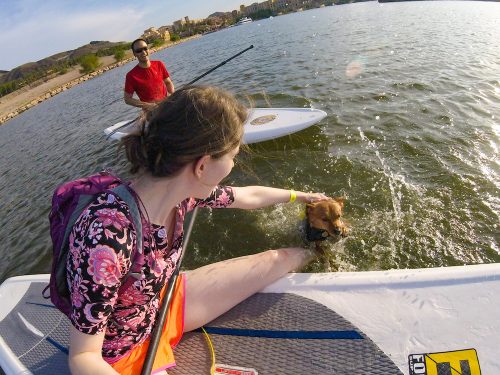
The ultimate milestone in canine paddle sports is the transformation of the dog from a passive passenger into an active, confident swimmer. While many dogs are not natural water enthusiasts initially, repeated, stress-free exposure builds immense confidence. Advanced adventure dogs eventually learn to view the water not as a hazard, but as an extension of the playground—frequently demonstrating this by voluntarily plunging into open water to swim between companion boards.
Supporting Context & Metrics: Safety, Gear, and Environmental Hazards
Entering the realm of canine paddle sports demands rigorous risk management. Water safety authorities and experienced handlers emphasize that preparation extends far beyond simply renting a kayak and pushing off from the shore.
The Anatomy of Canine PFDs (Personal Flotation Devices)
A common misconception is that all dogs can swim indefinitely without assistance. While most canines possess a rudimentary swimming reflex, treading water is an exhausting, unnatural exercise for them. When panicked in open water, dogs often engage in frantic vertical paddling, which causes them to sink rapidly.
- Fit and Design: A proper canine life jacket must fit snugly without riding up. Ill-fitting PFDs can shift upward during a panic response, trapping the dog’s front paws and rendering the device a hindrance rather than a safety aid.
- Handle Integration: High-quality PFDs—such as those manufactured by Alcott or Ruffwear—feature robust, integrated grab handles on the back. These handles are engineered strictly for lifting a dog out of the water or stabilizing them on the board, never for forcing an unwilling animal into the vessel.
- Neoprene Panels: Advanced models incorporate flexible neoprene belly panels to distribute weight evenly and maximize comfort when hoisting the dog back onto the watercraft.
The Leash Dilemma: To Tether or Not to Tether?
One of the most critical safety debates in canine paddle sports revolves around the use of leashes. While pet owners naturally want to secure their animals, tethering a dog to a human or a watercraft introduces severe hazards:
- Entanglement Risks: In the event of a capsize, a submerged leash can wrap tightly around a dog’s neck or limbs.
- Boat Trapping: A tethered dog trapped underneath an overturned kayak or paddleboard faces immediate drowning risks.
Expert consensus strongly advises against tethering dogs to kayaks or boards. In a capsize scenario, a properly fitted PFD keeps the dog afloat, and their natural instinct is to swim directly toward their handler or the vessel, eliminating the need for a physical tether. If a waist leash is utilized by the handler for psychological reassurance, it should be clipped exclusively to the dog’s PFD—never to a standard collar—and kept sufficiently slack to prevent entanglement.
Environmental and Biological Hazards
Open-water environments harbor hidden dangers that every paddler must monitor:
- Toxic Algae Blooms (Cyanobacteria): Freshwater lakes and slow-moving rivers can develop toxic blue-green algae blooms, particularly during hot summer months. Because dogs often drink from the water they play in, ingestion can be rapidly fatal. Canine fatalities are frequently the primary indicator of a toxic bloom in a given body of water.
- Parasites and Bacteria: Stagnant or slow-moving fresh water frequently contains pathogens such as Giardia and Leptospirosis. Handlers must always pack fresh, potable drinking water and a portable travel bowl to discourage dogs from drinking lake or river water.
Official Guidelines and Expert Insights
To maintain a standard of authoritative safety, outdoor recreation coalitions and veteran animal handlers advocate for a balanced, empathy-driven approach to introducing pets to water sports.
The Human-First Safety Rule
"You should wear a life jacket your first time paddling with the pup, until you know how he’ll react to the trip. If you fall in, your first priority will be getting to your flailing dog, not snagging a PFD as it floats away, and if your panicking dog climbs you, treading water is much more difficult." — Outdoor Canine Safety Coalition
This directive underscores the unpredictability of aquatic environments. Handlers must prioritize their own buoyancy and readiness before managing a distressed animal in open water.
Gradual Desensitization vs. Forced Immersion
Animal behaviorists stress that positive association is the cornerstone of successful adventure training. Forcing a terrified dog onto a rocking watercraft breaks trust and can induce long-term water phobia.
- Shoreline Familiarization: Allow the dog to inspect the kayak or paddleboard while it rests securely on dry land. Reward calm behavior with high-value treats and praise.
- Targeted Swimming Retraining: If a dog displays an inclination to swim, handlers should train the animal to swim directly toward the human handler rather than the nearest edge of the board. Because dogs cannot easily haul their own wet weight back onto a slippery kayak or SUP unassisted, direct contact with the handler ensures a secure, controlled re-boarding process.
Future Outlook: The Growing Trend of Canine Adventure Tourism
As the pet industry continues to integrate deeply with the outdoor recreation sector, the future of canine-inclusive water sports is poised for significant expansion. Marina operators, eco-tourism outfitters, and gear manufacturers are taking notice of the surging demographic of pet-owning adventurers.
Industry Innovations on the Horizon
- Dedicated Canine Watercraft Accessories: Manufacturers are currently developing specialized, non-slip deck pads retrofitted explicitly for popular kayak models, eliminating the need for makeshift DIY traction solutions.
- Pet-Friendly Rental Infrastructure: Waterfront rental businesses in major recreational hubs across California, the Pacific Northwest, and the Great Lakes are beginning to offer bundled packages that include human watercraft rentals alongside certified canine PFDs of varying sizes.
- Advanced Veterinary Water Safety Protocols: Veterinary networks are increasing public outreach campaigns regarding seasonal water pathogens, educating the public on early detection of toxic algae and water-borne parasites before peak summer paddling seasons commence.
Conclusion
Kayaking and paddleboarding with a dog offer an extraordinary avenue for forging deeper bonds while enjoying the splendor of nature. However, as the experiences of adventurous handlers and their canine companions demonstrate, success is inextricably linked to preparation, safety equipment, and mutual respect for boundaries. By prioritizing the comfort and security of the animal above all else, pet owners can transform a daunting aquatic experiment into a lifelong passion for both human and hound.