
Executive Overview
In the global race to curb greenhouse gas (GHG) emissions and stave off the worst impacts of climate change, policymakers and scientists often fixate on heavy industry, transportation, and power generation. Yet, hovering quietly above pastures and feedlots worldwide is an agricultural footprint that is massive, persistent, and notoriously difficult to track. Methane—a potent greenhouse gas with a global warming potential significantly higher than carbon dioxide over a 20-year timescale—emanates in staggering quantities from the global livestock sector.
For years, the agtech sector has operated under a restrictive industry idiom: "You can’t manage what you can’t measure." Historically, measuring enteric methane emissions from cattle has relied on crude estimates, stationary gas-analyzing chambers, or expensive, invasive research trials that are impossible to scale across commercial herds.
Enter ZELP, a pioneering UK-based agtech firm founded in 2017. Positioned at the intersection of climate science and animal husbandry, ZELP has spent years developing hardware designed to bridge the gap between high-level macro calculations and granular, individual-animal data. On August 26, the company officially unveiled its flagship innovation: ZELP Sense.
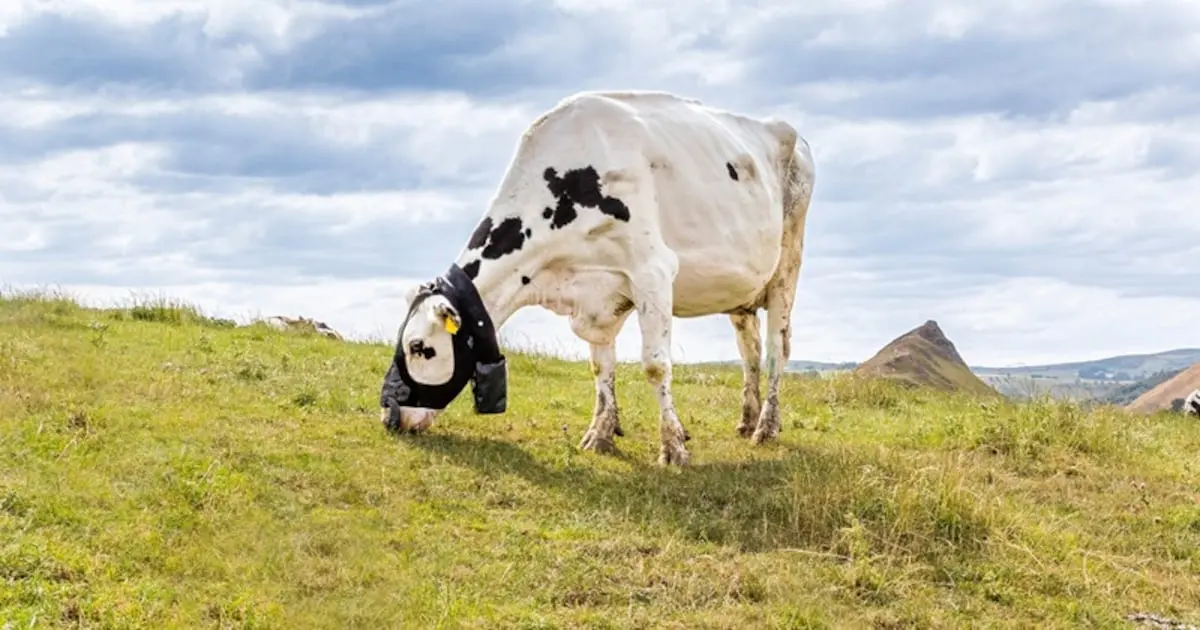
Described by ZELP CEO Francisco Norris as a low-cost, highly practical wearable device built for continuous, real-world monitoring, ZELP Sense clips near a cow’s nostril to track both methane and carbon dioxide emissions in real time. Backed by institutional grant funding—including vital support from the Global Methane Hub’s $200 million Enteric Fermentation R&D Accelerator—the device is poised for a major international rollout across Australia, the European Union, New Zealand, North America, and the United Kingdom.
This article explores the launch of ZELP Sense, the immense scale of the agricultural emissions challenge, the mechanics behind the technology, and what this development signals for the future of sustainable farming, corporate accountability, and global climate mitigation.
Detailed Chronology: From Concept to Commercialization
To understand the weight of ZELP’s recent announcement, it is necessary to trace the trajectory of the company from its founding to its current commercial standing.
2017–2020: The Inception of Livestock Climate Tech
When ZELP (Zero Emissions Livestock Project) was founded in the United Kingdom in 2017, the intersection of agriculture and climate technology was still in its infancy. While academic institutions had spent decades quantifying enteric fermentation—the digestive process by which ruminant animals like cows, sheep, and goats produce methane—practical applications for farmers were virtually nonexistent. The early years for ZELP involved intensive research and development, focusing on the biology of ruminant respiration and how to capture or measure gases expelled via exhalation and eructation (belching) without compromising animal welfare or farm operations.
The Shift Toward Measurement Infrastructure
As the climate crisis accelerated, international pressure mounted on the agricultural sector to adopt net-zero targets. However, early attempts to develop mitigation tools—such as methane-inhibiting feed additives—faced a foundational bottleneck: farmers, researchers, and supply chain partners lacked a reliable way to verify if these interventions were actually working on a day-to-day basis in commercial herds.
Recognizing that mitigation and measurement must go hand in hand, ZELP pivoted part of its engineering focus toward diagnostic hardware. The company realized that before the industry could successfully neutralize methane, it needed to establish a baseline of precise, individual-animal data.
August 26: The Global Reveal of ZELP Sense
The culmination of years of iterative engineering, field testing, and grant-backed research occurred on August 26, when ZELP officially unveiled ZELP Sense.
Rather than relying on laboratory settings or remote sensing technologies that can only estimate herd-level averages, ZELP Sense was engineered for the real world. Placed securely near a cow’s nostril, the wearable device continuously measures methane and carbon dioxide emissions at the source. Furthermore, the device incorporates a sophisticated beta feature capable of providing dry matter intake (DMI) estimations—a critical metric for assessing feed efficiency and metabolic health.
Data captured by the wearable hardware is transmitted in near real-time to ZELP Insight, a proprietary software platform. Through this dashboard, farmers, researchers, and corporate stakeholders can monitor, analyze, and track emissions profiles on an individual-animal basis.
Pre-Orders and Manufacturing Scale-Up
The market reception to the August 26 announcement underscored a pent-up industry demand for practical emissions tracking. According to Francisco Norris, ZELP Sense has already secured a robust slate of pre-orders from diverse industry players, including feed additive manufacturers, animal health companies, and large corporate agricultural entities.
Looking forward, ZELP is gearing up to manufacture thousands of units in its initial production phase. The company has purposefully designed its supply chain and manufacturing architecture with high elasticity, ensuring it has the capacity to scale quickly as it introduces the technology to new global markets.
Supporting Context & Metrics: The Scale of Agricultural Methane
To contextualize the commercial significance of ZELP Sense, one must examine the staggering scale of the global methane problem and the unique biological challenges posed by ruminant livestock.
The Global Methane Budget
According to data compiled by the Food and Agriculture Organization of the United Nations (FAO), approximately 600 million tonnes of methane are emitted into Earth’s atmosphere every year. Roughly 60% of these total emissions originate from human activities, spanning fossil fuel extraction, waste management, and agriculture.
Within the anthropogenic emissions category, agriculture accounts for nearly half of the total volume. Enteric fermentation—the natural digestive process occurring in the four-chambered stomachs of ruminants—represents the single largest source of agricultural methane.
Why Methane Matters in Climate Policy
Methane ($CH_4$) occupies a unique and urgent role in climate science. While carbon dioxide ($CO_2$) remains in the atmosphere for centuries, driving long-term warming, methane has a much shorter atmospheric lifespan—roughly 12 years. However, its immediate global warming potential (GWP) is staggering: over a 20-year timeframe, methane traps heat in the atmosphere roughly 80 times more effectively than carbon dioxide.
This dynamic presents both a challenge and an opportunity. Because methane decays relatively quickly, sharp reductions in agricultural methane emissions can yield near-term cooling effects, buying humanity crucial time to transition away from fossil fuels and implement broader decarbonization strategies.
The Financial and Institutional Backing
Developing hardware rugged enough to withstand livestock environments—mud, dust, extreme weather, and herd interactions—requires substantial capital and specialized engineering. ZELP’s development of ZELP Sense received a critical financial boost through grant funding from the Global Methane Hub’s $200 million Enteric Fermentation R&D Accelerator.
This multi-million-dollar accelerator was established to identify, vet, and scale high-impact solutions capable of slashing enteric methane emissions. By securing backing from this elite coalition, ZELP validated the scientific rigor and commercial viability of its technology, paving the way for institutional trust and wider market adoption.
Official Statements and Industry Insights
The philosophy driving ZELP’s innovations is rooted in practicality, scalability, and transparency. In statements provided to AgNavigator, CEO Francisco Norris elaborated on the core principles guiding the company’s trajectory.
The Mantra of Measurement
"When it comes to reducing greenhouse gas (GHG) emissions like methane, data is everything," Norris emphasized, invoking the classic industry axiom: "You can’t manage what you can’t measure."
For decades, the livestock industry has struggled with data scarcity. Farmers have been pressured to reduce their carbon footprints without possessing the diagnostic tools necessary to understand how specific management practices, feed changes, or breeding strategies impact individual animals. ZELP Sense is designed to eliminate this guesswork.
Technical Specifications and Real-World Utility
Describing the mechanics of the newly unveiled hardware, Norris noted that ZELP Sense is "a low cost, very practical device for continuously measuring methane and carbon dioxide emissions from individual cows in real-world settings."
By positioning the device near the nostril, ZELP ensures that the vast majority of exhaled and eructated gases are captured accurately, regardless of whether the animal is grazing on an open pasture or housed in a commercial dairy barn. The inclusion of the beta dry matter intake feature further elevates the device’s utility, tying respiratory emissions directly to nutritional intake and metabolic efficiency.
Once captured, the telemetry data flows seamlessly into the ZELP Insight platform. "This data is sent in near real-time to ZELP Insight, where farmers can track methane emissions of individual cows," Norris explained. This capability transforms passive livestock management into a data-driven science, allowing producers to identify high-emitting animals, optimize feeding regimens, and verify sustainability claims with empirical proof.
Future Outlook: Mitigation, Commercialization, and Scalability
As ZELP transitions from product launch to widespread deployment, the company’s strategic roadmap for the coming years points toward deeper industry integration and active mitigation technology.
Regional Rollout and Target Markets
The initial commercial deployment of ZELP Sense spans some of the world’s most prominent agricultural regions:
- Australia
- The European Union
- New Zealand
- North America
- The United Kingdom
These regions are currently at the forefront of agricultural climate policy, facing tightening regulatory pressures, carbon-pricing schemes, and evolving consumer demands for sustainable dairy and beef products. By targeting these markets first, ZELP is positioning its technology where the regulatory and commercial incentives for emissions reduction are highest.
Near-Term Objectives (The Next 12 Months)
According to Norris, ZELP’s operational focus over the next year will center on three core pillars:
- Fulfilling Demand: Supporting the diverse wave of pre-orders from corporate partners, agricultural researchers, government bodies, and GHG mitigators.
- Capital Expansion: Pursuing a future equity raise designed to accelerate broader commercial deployment, expand manufacturing capabilities, and fund ongoing research and development.
- Advancing Mitigation Technology: Continuing rigorous development on ZELP Mitigate—a companion wearable device engineered not just to measure, but actively mitigate methane emissions at the source.
The Long-Term Vision for Livestock Supply Chains
Ultimately, ZELP envisions a paradigm shift in how the agricultural sector approaches environmental stewardship. Rather than viewing emissions tracking as a burdensome regulatory compliance chore, the company wants to make measurement a routine, value-adding part of everyday farming.
"The ideal scenario for us in the longer term is that methane measurement becomes a much more practical, a much more scalable and routine type of activity across the livestock industry," Norris concluded. "And that this continues to help, in an ever-increasing way, mitigation efforts and productivity improvements across this supply chain."
If ZELP successfully executes its vision, the future of livestock farming may look fundamentally different. By turning every cow into a data point, the agricultural industry can finally move past generalized estimates, proving that sustainability and high productivity can go hand in hand on the road to a net-zero future.