The ongoing military conflict in Ukraine has devastated human lives, shattered critical infrastructure, and displaced millions of citizens. Yet, behind the widely reported geopolitical and humanitarian crises lies a silent, parallel tragedy: the catastrophic abandonment and displacement of domestic animals. Among the estimated hundreds of thousands of companion animals left to navigate active war zones is a small, mixed-breed dog now known as Vtsilila—the Ukrainian word for "Survivor."
Vtsilila’s story is a microcosm of the complex survival mechanisms developed by abandoned animals in high-conflict areas. Deprived of human care, regular sustenance, and shelter, she adapted by targeting local agricultural resources, specifically scavenging eggs from rural homesteads. While this instinctual behavior kept her alive, it inevitably sparked human-animal conflict in a region already strained by severe resource scarcity. Her subsequent rescue by a dedicated animal welfare activist named Krystina, followed by her international relocation and adoption in the Czech Republic, highlights both the extreme vulnerability of domestic animals in war zones and the vital, collaborative efforts of international rescue networks.
This investigative report examines Vtsilila’s journey, analyzes the broader systemic challenges of animal welfare in active conflict zones, and explores the metrics, logistics, and future outlook of cross-border animal rescue operations in Eastern Europe.
Phase 1: Abandonment and the Mechanics of Survival
The precise origins of Vtsilila remain obscured by the chaos of war. It is unclear whether she was separated from a fleeing family during the initial waves of evacuation or if she was born into a feral existence on the streets. Rescuers first identified her in a semi-rural sector of Ukraine, where she exhibited classic signs of acute prolonged stress, malnutrition, and hyper-vigilance.
To survive, Vtsilila relied on highly adaptive foraging behaviors. In rural Ukrainian communities, backyard poultry farming is a common means of securing food. Vtsilila identified local chicken coops as a reliable source of protein. By stealthily extracting eggs without destroying the coops or attacking the livestock directly, she managed to maintain a baseline level of caloric intake. This behavior, while resourceful, indicated a high level of cognitive problem-solving driven by extreme hunger.
Phase 2: The Escalation of Human-Animal Conflict
In a stable economic environment, a stray dog stealing eggs might be viewed as a minor nuisance. However, in war-torn Ukraine, where supply chains are disrupted and local populations face extreme inflation and food insecurity, every egg represents a critical survival resource for human families.
As Vtsilila’s egg-raiding activities became more frequent, local farmers and residents grew increasingly frustrated. The resource scarcity transformed the small dog from a sympathetic stray into a direct threat to household subsistence. Threats of retaliatory violence escalated, placing Vtsilila in immediate physical danger. Her survival mechanism had become her primary liability.
Phase 3: The Rescue Intervention
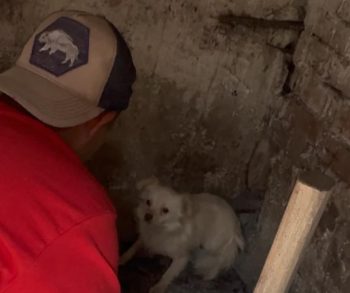
Recognizing the imminent threat to the dog’s life, local animal advocates alerted Krystina, an experienced animal rescuer operating within Ukraine’s volatile regions. Krystina and her tactical rescue team initiated a localized capture-and-stabilize operation.
Securing a highly traumatized, hyper-vigilant stray in an active conflict zone presents significant logistical hurdles, including:
Navigating unpredictable shelling and air raid sirens.
Managing the animal’s fear-induced aggression or flight response.
Mitigating the risk of zoonotic diseases or untreated injuries under field conditions.
Using humane traps and patience, Krystina’s team successfully secured the dog. Upon extraction, she was officially named "Vtsilila" to honor her resilience.
Phase 4: Cross-Border Evacuation and Integration
Following her rescue, Vtsilila was placed in a temporary holding facility where she underwent veterinary triage, vaccinations, and behavioral assessments. The primary objective of Krystina’s network was to transition the dog out of Ukraine to alleviate the burden on the country’s overwhelmed shelter system.
Through an international coalition of animal welfare organizations, a permanent adoptive home was secured in the Czech Republic. The relocation required navigating complex cross-border veterinary protocols, including securing international pet passports, microchipping, rabies titer testing, and transit clearance through European Union entry points.
Phase 5: Rehabilitation in the Czech Republic
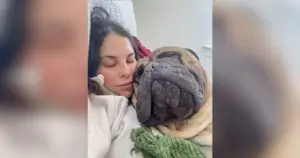
Upon arriving at her adoptive home in the Czech Republic, Vtsilila transitioned from a state of constant survival to one of domestic security. Under the care of her new family, she was introduced to a structured routine, high-quality nutrition, and a canine companion who aided in her social rehabilitation.
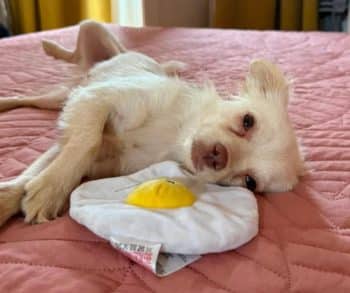
In a symbolic gesture acknowledging her past struggles, her adoptive family provided her with a plush, stuffed egg toy. This toy served a therapeutic purpose, redirecting her historical fixation on eggs into a safe, non-destructive play behavior.
Supporting Context & Metrics
The scale of the animal crisis in Ukraine is unprecedented in modern European history. To understand the significance of Vtsilila’s rescue, it is necessary to examine the macro-level data surrounding displaced companion animals and the strain on regional infrastructure.
The Scale of Displacement
According to reports from international animal welfare organizations such as the International Fund for Animal Welfare (IFAW) and Four Paws:
Estimated Stray Population: Since February 2022, the population of homeless dogs and cats in Ukraine has surged by an estimated 30% to 50% in heavily impacted eastern and southern oblasts.
Shelter Capacity: Prior to the conflict, Ukrainian shelters were already operating near maximum capacity. Post-invasion, shelters have reported occupancy rates exceeding 150% to 200%, forcing reliance on temporary foster networks and international evacuation corridors.
Resource Depletion: The cost of veterinary supplies, pet food, and fuel for rescue vehicles within Ukraine has increased by over 40%, making localized rescue efforts highly dependent on foreign donations.
Impact on Rural Micro-Economics
To contextualize the hostility Vtsilila faced from locals, one must look at the agricultural impact of the war:
Small-scale poultry farming accounts for a vital portion of rural Ukrainian food security.
With feed prices rising and distribution networks compromised, backyard chickens are critical assets. The loss of eggs directly impacts a family’s daily nutritional intake, explaining the low tolerance for predatory or scavenging strays.
Official Statements
The complexities of operating animal rescue missions during wartime are best described by those on the front lines of the crisis.
Krystina, the lead rescuer who facilitated Vtsilila’s extraction, emphasized the ethical imperative of saving these animals:
"We cannot talk about humane values if we ignore the most vulnerable victims of this war. Dogs like Vtsilila do not understand geopolitics; they only understand hunger, fear, and cold. When we rescued her, she was terrified of human touch because humans had become a source of danger to her. Watching her transform from a desperate scavenger into a beloved pet is the ultimate validation of our work."
A representative from the Czech animal welfare group that coordinated her international transit commented on the logistical hurdles of wartime evacuations:
"The legal and veterinary frameworks of the European Union are designed for peacetime. Moving traumatized animals across borders during an active conflict requires immense diplomatic coordination, rapid veterinary screening, and robust funding. Vtsilila’s successful relocation is a testament to what can be achieved when international communities unite to support Ukrainian rescuers."
Her adoptive family in the Czech Republic shared an update on her psychological recovery:
"When Vtsilila first arrived, she was hyper-focused on food security. She would watch us cook with intense anxiety, fearing that food would disappear. Over time, she realized she no longer had to fight to survive. The stuffed egg toy we gave her has become her favorite security blanket. It’s a gentle reminder of where she came from, and a symbol that she never has to steal to live again."
Future Outlook
The resolution of Vtsilila’s case is a rare success story in an ongoing regional crisis. The future of animal welfare in Ukraine remains precarious, requiring long-term systemic strategies to prevent ecological and humanitarian complications.
┌────────────────────────────────────────────────────────┐
│            FUTURE ANIMAL WELFARE STRATEGY              │
├───────────────────────────┬────────────────────────────┤
│ 1. Mobile Sterilization   │ Curbing stray population   │
│    Campaigns              │ growth at the source.      │
├───────────────────────────┼────────────────────────────┤
│ 2. Veterinary Corridor    │ Standardizing EU transit   │
│    Standardization        │ for rapid evacuations.     │
├───────────────────────────┼────────────────────────────┤
│ 3. Local Community        │ Distributing pet food to   │
│    Support Programs       │ reduce human-animal strife.│
└───────────────────────────┴────────────────────────────┘
1. Large-Scale Sterilization and Vaccination Campaigns
Without intervention, the population of stray animals in Ukraine will continue to grow exponentially. International NGOs are increasingly shifting focus from individual rescues to mass Trap-Neuter-Return-Vaccinate (TNRV) programs. These initiatives are critical to preventing outbreaks of rabies and other zoonotic diseases that threaten both animal and human populations.
2. Strengthening International Evacuation Corridors
Streamlining the regulatory pathways for animal transport between Ukraine and neighboring EU countries (Poland, Slovakia, Hungary, and Romania) is vital. Standardizing veterinary protocols during crises ensures that future rescues can be processed humanely and efficiently without compromising biosecurity.
3. Supporting Local Communities to Mitigate Conflict
To prevent situations like the one Vtsilila faced—where hungry animals clash with desperate locals—aid organizations must integrate pet food and veterinary care into broader humanitarian aid packages. Providing rural families with dog and cat food reduces the likelihood of strays preying on livestock or stealing agricultural products, thereby fostering peaceful co-existence during times of extreme stress.
Vtsilila’s journey from a targeted scavenger in a war zone to a cherished companion in the Czech Republic illustrates the profound impact of targeted intervention. While she represents just one life saved, her story serves as a blueprint for the compassion, coordination, and resilience required to protect the silent victims of human conflict.