

iHeartDogs is reader-supported. When you buy via links on our site, we may earn an affiliate commission at no extra cost to you.
Executive Overview
For modern pet owners, the tension between canine freedom and safety is a source of persistent anxiety. Letting a dog roam, play, and exercise in a private yard is vital for their physical and mental well-being. However, the threat of escape—whether by digging under, jumping over, or squeezing through a traditional physical barrier—remains a constant worry. For many homeowners, standard fencing is either structurally impractical, financially prohibitive, or barred by strict Homeowners Association (HOA) regulations.
In response to these challenges, the electronic pet containment industry has experienced significant growth. Among the market-leading solutions is the PetSafe YardMax Rechargeable Dog Fence. Unlike traditional in-ground systems that can significantly reduce a dog’s usable play area, the YardMax system is designed to maximize yard space while maintaining a secure perimeter.

This investigative review examines the PetSafe YardMax system. We analyze its technical specifications, installation processes, consumer performance metrics, and safety standards to help pet owners determine if this high-tech containment system is a reliable and humane solution for their homes.
Detailed Chronology: System Architecture, Installation, and Conditioning
To understand the efficacy of the PetSafe YardMax, we must analyze its mechanical operations, the chronology of its physical installation, and the critical canine training phase required for successful containment.
[Transmitter] ---> (Radio Signal) ---> [Buried Boundary Wire]
                                                |
                                        (Invisible Barrier)
                                                |
[Dog Approaches Boundary] ---> [Receiver Collar Warns (Tone/Vibration)] ---> [Static Correction (If Ignored)]
Technical System Architecture
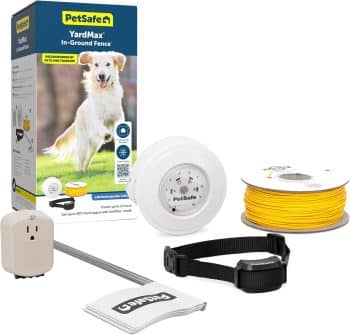
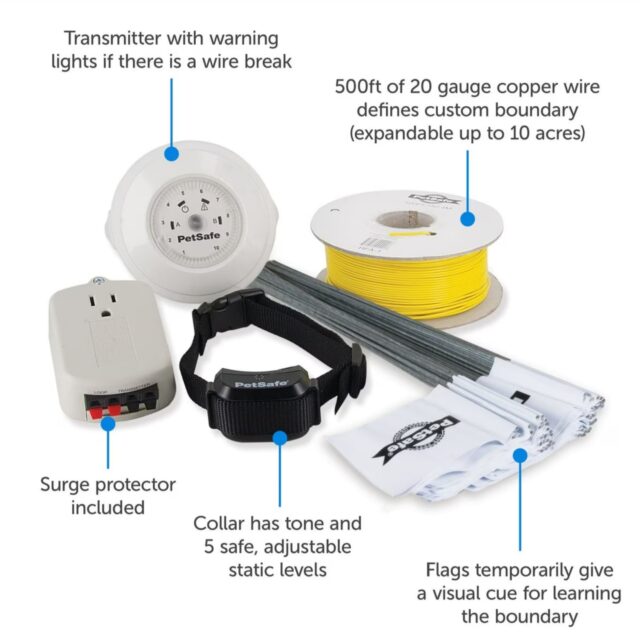
The PetSafe YardMax operates via a closed-loop Radio Frequency (RF) network. The system consists of a wall-mounted transmitter, a spool of insulated copper boundary wire, and a specialized rechargeable receiver collar.

Standard in-ground fences issue a warning zone up to several feet before the buried wire, which can restrict a dog’s movement in smaller yards. The YardMax system, however, uses proprietary technology that delivers the warning and correction right at the wire. This "YardMax Mode" can increase a dog’s usable yard space by up to 30%, making it highly effective for properties with limited acreage.
Step-by-Step Installation Chronology
Deploying the PetSafe YardMax is a multi-stage project that requires careful planning and physical labor:
- Design and Mapping (Day 1): The homeowner must map out the boundary loop, accounting for driveways, pathways, and utility lines. The layout must form a continuous, unbroken loop of wire back to the transmitter.
- Trenching and Wire Placement (Days 2–3): A shallow trench (approximately 1 to 3 inches deep) is dug along the planned perimeter. The boundary wire is laid in the trench. For driveways or concrete paths, a circular saw with a masonry blade is often required to cut a expansion joint where the wire can be safely tucked and sealed.
- System Connection and Testing (Day 3): The wire ends are connected to the indoor transmitter. The system is powered on, and the loop is tested using the receiver collar to verify that the radio signal is consistent across the entire boundary.
- Wire Burial and Property Marking (Day 3): The trench is backfilled, and white training flags are placed at regular intervals along the boundary line. These flags serve as a visual aid for the dog during the initial training phase.
The Conditioning Protocol
An electronic fence is only as effective as the training that accompanies it. PetSafe outlines a highly structured, 14-day training protocol based on classical conditioning:
- Days 1–4 (Visual Awareness): The dog is walked on a leash near the boundary flags. When the collar emits a warning tone, the owner gently guides the dog back into the safe zone and rewards them with treats.
- Days 5–8 (Introduction to Correction): The collar’s static correction is activated at its lowest effective level. The dog learns that ignoring the warning tone results in a mild, harmless static sensation.
- Days 9–14 (Distraction Training): High-value distractions (such as family members or toys placed outside the boundary) are introduced to test the dog’s boundary respect under supervision.
- Day 15 and Beyond (Unleashed Freedom): Once the dog consistently turns back at the warning tone, they are allowed off-leash supervised play, with the boundary flags gradually removed over several weeks.
Supporting Context & Metrics
Buyer’s Guide: Key Performance Indicators for Pet Fencing
Before investing in any electronic containment system, buyers should evaluate several critical metrics:
- Property Acreage and Topography: Standard kits typically include enough wire for 1/3 of an acre. Buyers must verify if the transmitter can support expansion (the YardMax can scale up to 10 acres with additional wire and heavier gauge options).
- Dog Breed, Size, and Temperament: A stubborn, high-drive breed (like a Siberian Husky or Boxer) requires a system with adjustable correction levels, whereas a sensitive breed may only need tone or vibration warnings.
- Collar Power Dynamics: Systems utilizing proprietary, disposable batteries incur ongoing maintenance costs. Rechargeable lithium-ion collars offer long-term savings and more reliable performance.
- Waterproof Ratings: Dogs that swim or play in wet grass require a receiver collar with a high waterproof rating (such as IPX7) to prevent internal circuitry failure.
PetSafe YardMax Product Specifications
| Technical Feature | Specification Detail |
|---|---|
| Max Coverage Area | Up to 10 Acres (with additional wire and flags purchased separately) |
| Included Wire | 500 feet of 20-gauge boundary wire (suitable for up to 1/3 acre) |
| Collar Battery Type | Rechargeable Lithium-Ion (fully charges in 2–3 hours) |
| Collar Battery Life | Up to 3 weeks per charge (depending on boundary challenges) |
| Waterproof Rating | Submersible up to 5 feet (waterproof design) |
| Correction Levels | 5 levels of adjustable static correction, plus tone-only/vibration-only modes |
| Safety Timeout | Automatic correction shutoff after 15 seconds |
| Dog Compatibility | For dogs 5 lbs and up, with neck sizes ranging from 6 to 28 inches |
Consumer Sentiment and Market Performance
On major e-commerce platforms like Amazon, Chewy, and Petco, the PetSafe YardMax maintains a strong consumer rating of 4.4 out of 5 stars across more than 1,000 verified reviews.
Consumer Satisfaction Ratings by Feature:
=========================================
Waterproof Durability:  [★★★★★] 4.7/5
Battery Longevity:      [★★★★☆] 4.5/5
Containment Efficacy:   [★★★★☆] 4.4/5
Ease of Installation:   [★★★☆☆] 3.2/5
An analysis of customer feedback reveals distinct trends:
The Pros
- Maximization of Yard Space: Reviewers with small suburban lots consistently praise the "YardMax Mode" for allowing their dogs to use the entire yard right up to the property line.
- Rechargeable Battery Savings: Users highlight the convenience of the quick-charge collar, noting that a single 2-hour charge reliably lasts up to three weeks, eliminating the need for expensive proprietary batteries.
- Reliable Waterproofing: Pet owners with pools, ponds, or high-rainfall properties report that the collar’s waterproof seal prevents moisture damage.
- Infinite Expandability: The ability to add an unlimited number of collars to a single transmitter makes the system highly cost-effective for multi-dog households.
The Cons
- Labor-Intensive Installation: The primary source of negative reviews centers on the physical effort required to bury the wire. Many users recommend renting a lawn trencher or hiring a local contractor to simplify the process.
- Upfront Price Point: The YardMax is priced higher than entry-level PetSafe units. However, consumers note that the advanced features, rechargeable battery, and increased yard space justify the initial investment.
Official Statements, Safety Analyses & Consumer Advocacy
Veterinary Behaviorists on Electronic Containment
Veterinary professionals emphasize that electronic fencing should be viewed as a training tool rather than a standalone physical barrier.
"When implemented alongside positive reinforcement training, electronic containment systems can safely keep dogs within their property lines," states Dr. Ellen Vance, a veterinary behaviorist. "The key is the warning tone. A well-trained dog rarely experiences the static correction because they learn to turn back as soon as they hear the acoustic warning. The system relies on classical conditioning, not punishment."
Manufacturer Guidelines on Safety and Care
PetSafe emphasizes the importance of proper collar fit and usage to prevent skin irritation. According to the manufacturer’s safety manual:

- Limit Wear Time: The receiver collar should not be worn for more than 12 consecutive hours per day. Prolonged contact can lead to pressure necrosis, a condition often mistaken for burns but actually caused by constant pressure on the skin.
- Regular Cleaning: The dog’s neck and the collar’s contact points should be washed weekly with a damp cloth to prevent bacterial buildup.
- Safety Timeout Feature: To protect the dog from prolonged stress, the YardMax receiver collar is equipped with an automatic safety shutoff. If a dog becomes trapped near the boundary wire, the static correction automatically stops after 15 seconds.
Future Outlook: The Evolution of Pet Containment
As pet care technology advances, the containment market is shifting toward smarter, more integrated systems. While traditional in-ground systems like the PetSafe YardMax remain popular, they are increasingly compared to newer GPS-guided wireless fences.
Comparison of Containment Technologies:
======================================================================
Technology      | Boundary Accuracy | Setup Effort | Signal Reliability
----------------------------------------------------------------------
In-Ground RF    | Centimeter-Perfect| High (Bury)  | 100% (No Drift)
GPS/Satellite   | Variable (3-10ft) | Low (App)    | Subject to Weather
The Shift Toward GPS Boundaries
Modern wireless pet fences use GPS/GNSS satellite networks to map virtual boundaries via mobile apps, eliminating the need to bury physical wires. Systems like the Halo Collar and SpotOn GPS Fence allow owners to create complex boundaries over vast areas with a few taps on a smartphone.
Why RF Systems Remain the Gold Standard
Despite the convenience of GPS technology, buried wire systems like the PetSafe YardMax remain the most reliable choice for suburban properties for several reasons:

- Centimeter-Perfect Precision: GPS boundaries are prone to "signal drift" caused by cloud cover, heavy tree canopies, or proximity to metal roofs. This drift can shift the boundary line by 3 to 10 feet, potentially correcting a dog inside their own home. Buried wire systems offer consistent, physical precision.
- No Monthly Subscription Fees: Many high-end GPS fences require ongoing cellular subscriptions to maintain real-time tracking and boundary updates. The PetSafe YardMax operates entirely offline with no recurring monthly costs.
- Power Grid Independence: RF transmitters can be easily paired with uninterruptible power supplies (UPS) to keep the boundary active during electrical outages, ensuring continuous security.
For homeowners seeking a dependable, drift-free boundary that maximizes play space, the PetSafe YardMax Rechargeable Dog Fence remains a top-tier, cost-effective, and highly reliable choice.
For more information on selecting the right boundary system for your home, read our comprehensive guide on the 10 Best Invisible Dog Fences.