
Executive Overview
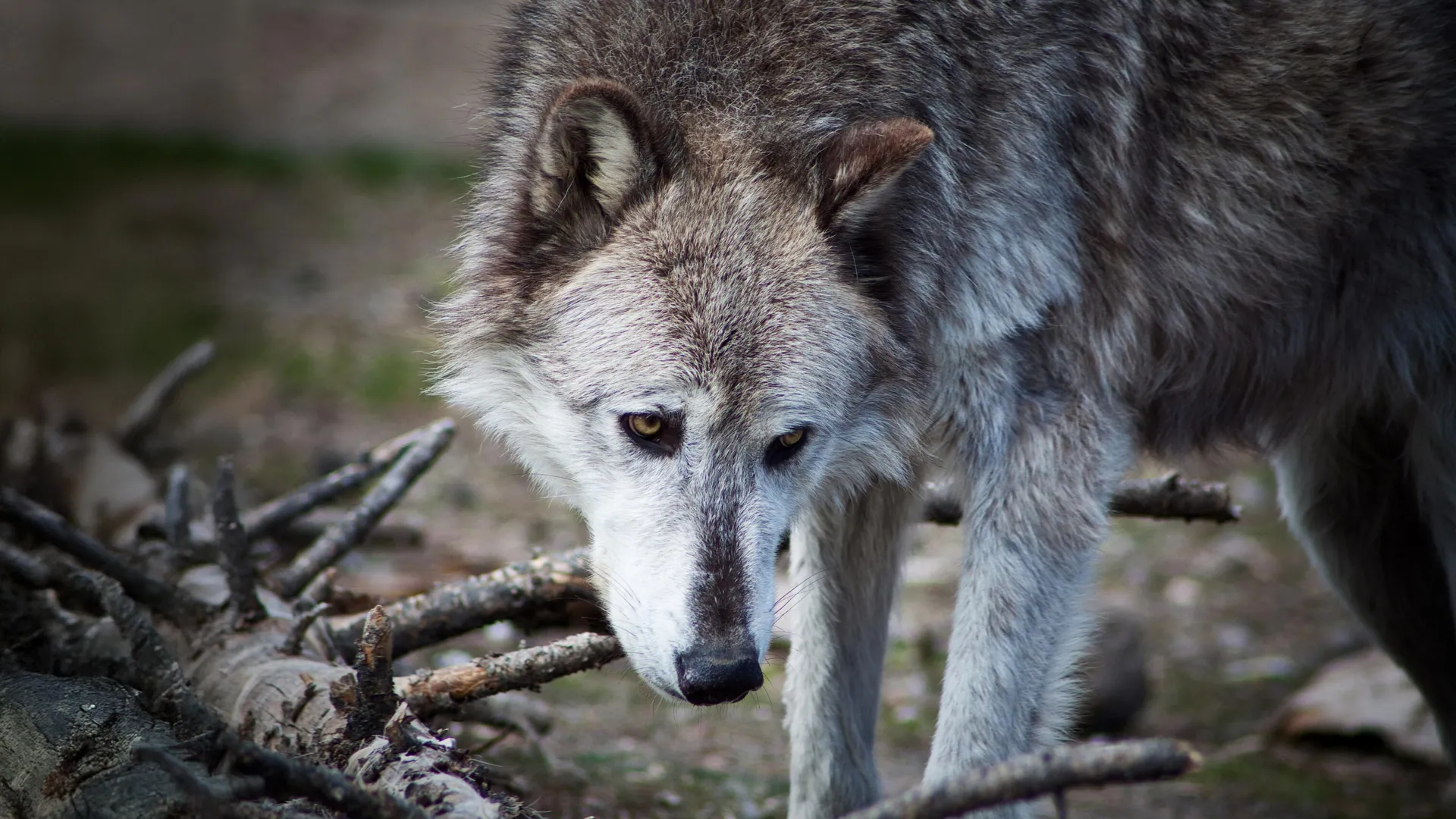
For nearly three decades, the reintroduction of gray wolves (Canis lupus) to Yellowstone National Park has been heralded as one of modern conservation’s greatest triumphs. Beyond the sheer ecological milestone of returning an apex predator to its native landscape, the story captured the public imagination through a powerful narrative: the trophic cascade.
According to this widely accepted paradigm, the return of wolves suppressed and redistributed elk populations, which in turn relieved heavy browsing pressure on riparian vegetation like willows, aspens, and cottonwoods. This vegetative recovery supposedly stabilized riverbanks, brought back beavers, songbirds, and fish, and fundamentally re-engineered the park’s geography. It became a textbook example—literally taught in classrooms across the globe—of how a single keystone species could single-handedly heal an entire degraded ecosystem.
Now, a rigorous new peer-reviewed study threatens to upend this legendary narrative. Published as a formal critique in the journal Global Ecology and Conservation, researchers from Utah State University and Colorado State University argue that the foundational claims of a massive, park-wide ecological restoration driven entirely by wolves are built on flawed mathematics, circular reasoning, and methodological oversights.
Led by Dr. Daniel MacNulty, a wildlife ecologist at Utah State University, and co-authored by Dr. David Cooper, an emeritus senior research scientist at Colorado State University, the re-analysis demonstrates that the oft-cited, dramatic metrics of recovery—such as a staggering 1,500% increase in willow growth—are statistical artifacts rather than objective reflections of biological reality.
This deep-dive investigation explores the anatomy of the new scientific critique, the mechanics of the statistical errors uncovered in previous models, the broader context of complex predator-prey dynamics, and what this paradigm shift means for the future of wildlife management and ecological science.
Detailed Chronology: From the 1995 Reintroduction to the 2025 Scientific Reckoning
To understand the weight of the current controversy, it is essential to trace the historical timeline of Yellowstone’s wolf management and the academic discourse that followed.
- January 1995: Amid intense public debate and decades of absence, the first group of Canadian gray wolves is captured and released into Yellowstone National Park. The primary federal objective is to establish a self-sustaining population to fulfill the mandates of the Endangered Species Act.
- Late 1990s – Early 2000s: Ecologists and wildlife biologists immediately begin monitoring the cascading effects of the carnivores. Early observational studies note that elk behavior changes dramatically; instead of lingering unprotected in open valleys where they are vulnerable to wolf packs, elk move more frequently to higher, timbered terrain ("the ecology of fear").
- Mid-2000s: Seminal papers begin to circulate in high-profile journals, suggesting that willow and aspen stands in specific northern range locations are beginning to rebound. The phrase "trophic cascade" enters mainstream environmental lexicon, popularized by documentaries, books, and viral media pieces that claim wolves literally changed the course of Yellowstone’s rivers.
- The 20-Year Dataset (2000s–2020s): Researchers, including teams associated with Colorado State University (such as Hobbs et al.), conduct exhaustive, multi-decade field experiments and empirical data collections to quantify the actual changes in plant communities across the park. Interestingly, these field-based researchers consistently report only weak or highly localized cascade effects.
- 2025: A high-profile paper led by Ripple et al. is published, reaffirming and expanding upon the grand narrative of the wolf-driven trophic cascade, asserting unprecedented, park-wide ecosystem transformations, including a reported 1,500% surge in willow crown volume.
- Late 2025 / Present: In direct response to the Ripple et al. paper, Dr. Daniel MacNulty and Dr. David Cooper publish their formal comment in Global Ecology and Conservation. By systematically deconstructing the statistical methodologies of the 2025 paper, they ignite a fierce academic debate over how ecological data is analyzed, interpreted, and communicated to the public.
Supporting Context & Metrics: Deconstructing the 1,500% Willow Growth Claim
At the very heart of the new critique lies a meticulous examination of how scientists measure ecological recovery. When tracking plant growth over vast landscapes, direct measurement of every single shrub’s volume is physically impossible. Instead, scientists rely on proxy measurements—such as plant height—and feed those metrics into regression models to estimate total biomass or crown volume.
However, the new study reveals a fatal flaw in how these models were constructed in the contested 2025 research.
The Anatomy of Circular Reasoning
The original paper by Ripple et al. reported an eye-popping statistic: a 1,500% increase in willow crown volume following the return of wolves. According to MacNulty and his colleagues, this figure was derived using a mathematical shortcut that invalidated the result from its inception.
"Because height was used both to compute and to predict volume, the relationship is circular—mathematically guaranteed to look strong even if no biological change occurred," Dr. MacNulty explained.
In statistical modeling, circular reasoning occurs when the variable you are trying to explain is mathematically entangled with the variable you are using to explain it. By using plant height to calculate crown volume and subsequently using height as a predictor to demonstrate historical change, the model created a self-fulfilling prophecy. The statistical method artificially inflated the apparent strength of the connection, making a modest or non-existent biological shift look like an explosive environmental renaissance.
Sampling Bias and Spatial Variability
Beyond the mathematical circularity, the Utah State and Colorado State researchers identified acute issues regarding sampling bias and site selection.
When scientists selectively sample areas that visually appear to have recovered—such as fenced-in streamside corridors or localized pockets with ideal hydrological conditions—they risk extrapolating those localized anomalies across the entire park ecosystem.
Dr. David Cooper elaborated on the physical realities of plant biology in arid and semi-arid western landscapes: "Once these problems are accounted for, there is no evidence that predator recovery caused a large or system-wide increase in willow growth. The data instead support a more modest and spatially variable response influenced by hydrology, browsing, and local site conditions."
In plain terms, a willow tree does not grow simply because a wolf is howling in the distance. Its survival and proliferation depend heavily on:
- Hydrology: Access to a high, stable water table, seasonal snowmelt, and active beaver dams that retain water.
- Local Browsing Pressure: Whether elk, moose, or bison happen to frequent that specific micro-habitat.
- Geomorphology: The steepness of the stream banks, soil composition, and historical flood patterns.
When these environmental variables are controlled for, the overwhelming influence of wolves as the sole master key to vegetative revival begins to dissolve into a much more complex, messy ecological reality.
Official Statements & Academic Discourse
The publication of this critique has sent ripples through the wildlife ecology community, forcing scientists, conservationists, and journalists to re-examine how ecological narratives are constructed and defended.
Despite the sharp scientific disagreement, the authors of the new critique are eager to clarify that their work is not an anti-wolf polemic, nor is it an attempt to diminish the undeniable ecological value of apex predators.
"Our goal is to clarify the evidence, not downplay the role of predators," Dr. Daniel MacNulty emphasized during an interview regarding the study. "Predator effects in Yellowstone are real but context-dependent—and strong claims require strong evidence."
The friction between different factions of Yellowstone researchers largely stems from methodological discrepancies. For instance, the findings brought forward by MacNulty and Cooper help explain a long-standing puzzle: why independent research teams analyzing the exact same park landscapes were arriving at diametrically opposed conclusions.
While Ripple et al. (2025) championed the narrative of a dominant, system-wide trophic cascade, field-based researchers like Hobbs et al. (2024)—who spent two decades conducting granular, boots-on-the-ground field experiments—consistently reported weak and highly localized cascade effects.
By identifying the mathematical anomalies in the macro-models, MacNulty’s team has effectively bridged the gap, showing that the dramatic macro-narrative was an artifact of statistical overreach, whereas the modest, nuanced findings of long-term field researchers represent the true, complex state of the park.
Future Outlook: Re-evaluating Conservation Science in the 21st Century
The implications of this study extend far beyond the borders of Yellowstone National Park. As conservation biology faces mounting pressure to deliver clear, actionable, and politically persuasive narratives to the public and policymakers, the temptation to simplify complex ecological dynamics has never been greater.
1. The Danger of "Charismatic Science"
The Yellowstone wolf story became a global conservation brand. It was utilized to justify predator reintroductions across North America, Europe, and Asia. However, the new critique serves as a cautionary tale about the dangers of "charismatic science"—where a compelling, easily digestible storyline threatens to eclipse methodological rigor and empirical nuance.
2. A Shift Toward Multifactorial Ecology
Future wildlife management strategies must move away from single-species silver bullets. Ecosystems are not linear machines operated by master switches; they are hyper-complex, non-linear networks governed by climate change, hydrological shifts, human encroachment, disease, and multi-species interactions. Understanding how willows grow in Yellowstone requires looking at water tables and climate patterns just as closely as tracking wolf pack territories.
3. Raising the Bar for Statistical Transparency
In an era of big data and sophisticated modeling software, the potential for inadvertent circular reasoning and sampling bias is high. The scientific community will likely respond to this study with a renewed commitment to open-source code sharing, rigorous cross-validation, and independent replication of ecological models before they are broadcast to the mainstream media as settled fact.
Conclusion
Yellowstone National Park remains one of the most thoroughly studied natural laboratories on Earth. The return of the gray wolf remains a monumental achievement in wildlife conservation—restoring a missing piece of the native fauna, enriching the acoustic and behavioral landscape of the wilderness, and restoring ecological processes that had been absent for nearly a century.
Yet, as science advances, so too must our understanding of truth. The myth that wolves single-handedly performed ecological alchemy, greening valleys overnight through a miraculous trophic cascade, is giving way to a more sophisticated, scientifically grounded reality. Predators matter deeply, but nature, in all its chaotic brilliance, is always far more complicated than any single story can capture.