
Executive Overview
The modern pet owner faces a paradox of choice and accountability when it comes to canine automotive safety. While the commercial market is flooded with elevated dog beds, plush travel mats, and stylish carriers, rigorous empirical testing reveals a startling divide between aesthetic appeal and crash survivability. For years, conscientious pet parents relied on anecdotal comfort and manufacturer marketing claims, only to discover through independent safety evaluations—most notably those conducted by the Center for Pet Safety (CPS)—that popular containment systems could fail catastrophically under the G-forces of a vehicular collision.
This investigative review chronicles one pet owner’s exhaustive, multi-year journey to secure a safe, spacious, and well-ventilated vehicular restraint system for Chloe, a 15-pound mixed-breed dog. After the unsettling failure of the PetEgo Pet Tube in crash testing, and subsequent research highlighting the restrictive sizing limitations of top-tier CPS-certified carriers, the search shifted toward an alternative solution gaining traction within the canine travel community: the AirPupSaver.
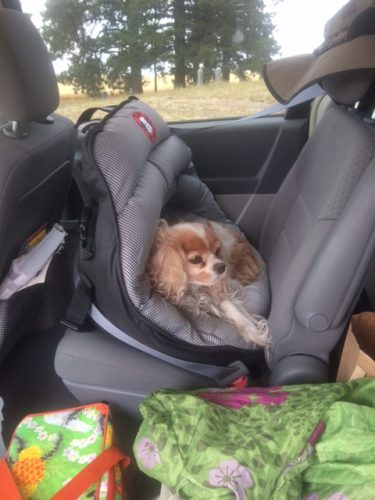
Operating on a unique architectural principle resembling a padded baseball mitt with inflatable air chambers, the AirPupSaver is designed to catch a projected pet during rapid deceleration. Following a rigorous, month-long real-world evaluation involving both the AirPupSaver 25 (for dogs up to 25 pounds) and the AirPupSaver 45 (for dogs up to 45 pounds)—tested across diverse driving environments including urban errand runs and extended cross-country road trips—this review provides an authoritative breakdown of the product’s safety mechanics, installation hurdles, ergonomic realities, and long-term viability.
Ultimately, while the AirPupSaver demands patience during setup and introduces certain daily operational quirks, it emerges as a robust, thoughtfully engineered alternative for pet owners navigating the difficult gap between high-safety-rated carriers that are too small and spacious beds that lack structural integrity.
Detailed Chronology: The Evolution of a Safety Search
The pursuit of vehicular safety for Chloe began with a fundamental mandate: find a car bed spacious enough to allow a small dog to sprawl naturally during transit, yet structurally sound enough to mitigate injury during a sudden stop or collision.
Phase One: The Pet Tube False Start
Years ago, the search seemingly concluded with the acquisition of the PetEgo Pet Tube. Visually appealing and marketed as a flexible, collapsible tunnel that offered ample room for a dog to stretch out, the Pet Tube was initially deemed an ideal solution. However, this confidence was shattered when the product was subjected to formal crash testing, where it failed miserably. The structural collapse under impact underscored a terrifying reality of the pet product market: many items designed for convenience offer zero protection during a high-speed impact.
Phase Two: Navigating the CPS Gold Standard
Following the Pet Tube failure, the investigation turned to empirical data, specifically referencing the Center for Pet Safety’s comprehensive carrier evaluation metrics. The 2015 CPS studies highlighted two standout performers: the Pet Ego Jet Set Forma Frame Carrier (featuring an ISOFIX-Latch Connection) and the Sleepypod Mobile Pet Bed (equipped with the PPRS Handilock system).
While these products earned high marks for crashworthiness, a critical spatial barrier emerged for dogs of Chloe’s stature (15 pounds):
- Pet Ego Jet Set Forma Frame: While undeniably well-constructed, the largest iteration measures 22 inches long, 10 inches wide, and 13 inches high. Although manufacturer guidelines suggest this accommodates a 22-pound dog, practical spatial analysis proves otherwise. Being narrower than standard travel bags like the large SturdiBag, it creates a claustrophobic environment unsuitable for pups over 15 pounds, particularly on extended road journeys. Furthermore, its sparse mesh paneling limits vital ventilation and outward visibility.
- Sleepypod Mobile Pet Bed: Universally praised as a magnificent piece of engineering with excellent airflow, even the largest option—the Sleepypod Medium—falls short. With external dimensions of 13 inches in height and a 17-inch round profile, usable internal space is reduced by 1 to 2 inches. This creates a snug, restrictive fit for a 15-pound dog. For pets weighing 10 pounds or less, the Sleepypod remains an unreserved recommendation; for larger small dogs, it lacks adequate sprawling room.
Phase Three: Embracing the AirPupSaver Alternative
Faced with a market where high-safety carriers were too diminutive and spacious alternatives were crash-test failures, guidance was sought from fellow travelers within the Dog Jaunt community. This led directly to the AirPupSaver—a product notably absent from the initial CPS line-up but backed by independent crash-test documentation provided by the manufacturer.
Driven by empirical curiosity and the desire to find a portable solution, both the AirPupSaver 25 (targeting dogs up to 25 pounds) and the AirPupSaver 45 (targeting dogs up to 45 pounds) were purchased and deployed for a rigorous month-long trial.
Supporting Context & Metrics: Design, Mechanics, and Sizing
To understand how the AirPupSaver functions, one must examine its unorthodox structural geometry. Unlike enclosed hard-sided crates or soft zip-up tunnels, the AirPupSaver is engineered around a "puffy baseball mitt" architectural concept.
Structural Mechanics and the Inflatable Advantage
The canine occupant rests within the "palm" of the mitt, securely anchored via a heavy-duty harness and tether system. In the event of a frontal collision or abrupt deceleration, the "fingers" of the mitt act as a dynamic, energy-absorbing buffer designed to catch the dog as momentum hurls them forward.
To achieve the necessary vertical rigidity and impact absorption, the bed combines dense initial padding with two or three integrated air chambers (depending on the specific model size) located within the finger section. These chambers are manually inflated using a complimentary air pump, creating a pressurized, cushy deceleration zone.
Comparative Sizing Analysis: APS-25 vs. APS-45
The month-long field trial evaluated both available sizing tiers to determine optimal spatial efficiency:
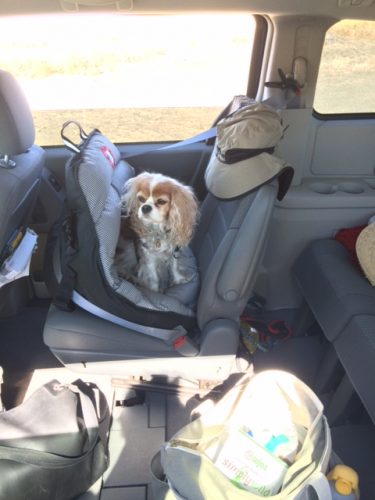
- AirPupSaver 25: Tailored for dogs up to 25 pounds, this model was installed primarily within a Chrysler Town & Country minivan. It relies exclusively on the vehicle’s standard seatbelt and lower LATCH anchors, bypassing the need for complex overhead tether straps. For a 15-pound dog like Chloe, the APS-25 provided optimal proportions, offering enough room to shift positions comfortably without wasting cabin space.
- AirPupSaver 45: Designed for dogs up to 45 pounds, this larger iteration was tested within a station wagon. While purchased with the faint hope that it might serve as a portable, packable travel bed, the APS-45 proved to be a beastly installation challenge. Despite its massive interior volume, Chloe naturally gravitated toward curling up rather than sprawling out, rendering the extra square footage redundant. Furthermore, the APS-45 introduces two additional overhead top-tether straps that stretch from the handle across the back of the passenger seat to a rear anchor point.
The Installation Labyrinth
Installing the AirPupSaver system is a non-trivial undertaking that demands patience, meticulous attention to detail, and physical dexterity. Manufacturer documentation—comprising a mix of printed guides and three digital instructional videos—fails to provide a singular, seamless narrative.
Key insights discovered during the hands-on installation process include:
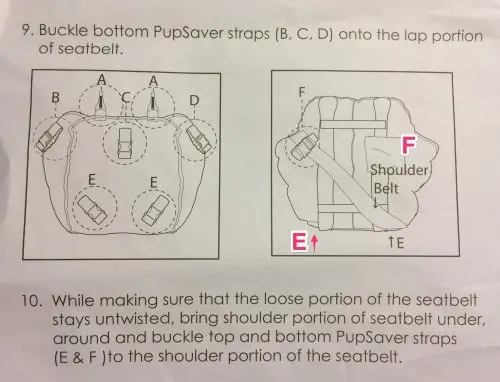
- Seatbelt Taming: The vehicle’s shoulder and lap belt must be harnessed tightly against the cabin wall using an included heavy-duty clamp. This engineering compromise provides the precise amount of structural play required by the safety system while preventing the belt from pulling the upper frame inward.
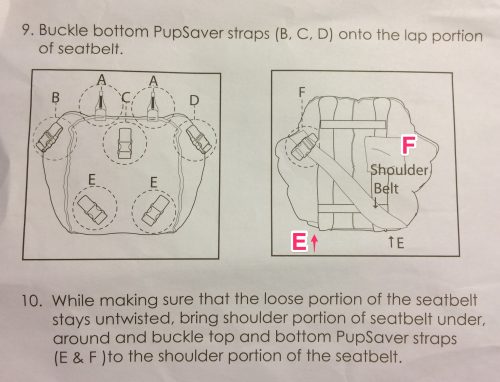
- Anchor Routing: The lower base secures via metal hooks (designated as clips A through D in official schematics) that latch directly onto the vehicle’s metal LATCH bars. Diagonal and lap portions of the seatbelt route through specific plastic shoulder guides (designated as clips E and F), which vary depending on whether the bed is installed on the driver or passenger side of the vehicle.
- The Permanence Factor: Due to the intricate web of anchors, clamps, and tethers, the AirPupSaver is explicitly not a product designed for casual relocation. Unlike the Pet Tube, which could be effortlessly unclipped and tossed into the cargo area or flattened like a pancake, the AirPupSaver commands a permanent residency in the back seat.
Official Observations & Field Performance
After four weeks of continuous deployment—encompassing high-speed highway cruising, winding country roads, and daily urban errands—both canine and human evaluators reached definitive conclusions regarding the product’s performance.
Ergonomics, Comfort, and Visibility
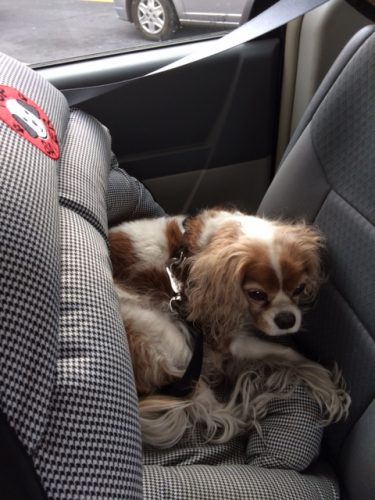
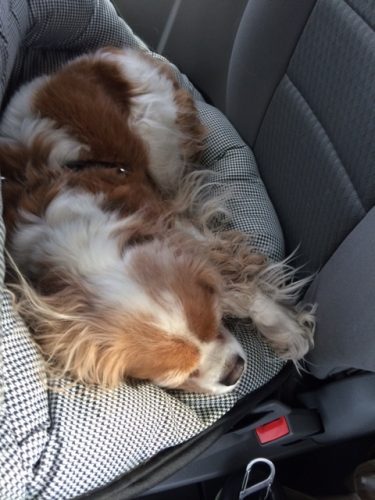
From an experiential standpoint, Chloe readily adapted to the AirPupSaver ecosystem. The open-air design completely eliminates the stifling ventilation issues inherent to zippered fabric tubes. Because the bed sits lower in terms of absolute enclosure while maintaining structural elevation via its inflated chambers, Chloe gained the ability to peer slightly out the windows—a vast psychological improvement over being trapped inside a dark, opaque tunnel.
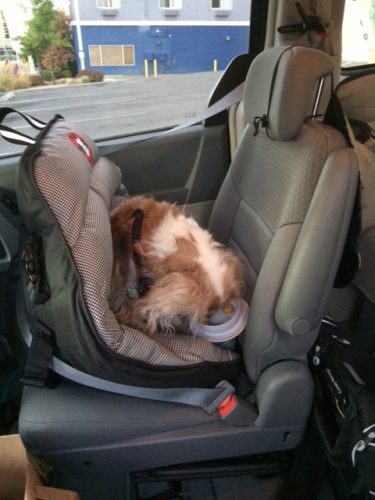
However, certain ergonomic compromises became apparent:
- The "Soft Taco" Phenomenon: Maintaining proper air pressure in the inflatable finger chambers is critical. If the chambers lose air pressure over time, the upper fingers of the mitt tend to fold downward over the dog like a soft taco—a visual and physical occurrence that proved unnerving to Chloe. Regular monitoring and periodic top-offs using an on-board air pump are mandatory maintenance tasks.
- Line-of-Sight Impediments: From the driver’s perspective, the elevated finger structure obstructs a direct line of sight to the dog unless the animal actively leans out around the lateral flanks of the bed.
- Loading Logistics: Securing a dog into the internal harness requires roughly 30 seconds of physical engagement. In densely populated urban environments (such as Seattle), leaning entirely across the rear seat while your lower half remains exposed street-side can feel insecure. To mitigate this, a safer operational workflow involves climbing entirely into the back seat alongside the dog during the harness-locking sequence.
Hardware and Accessory Nuances
Investigation into the included hardware revealed a few critical caveats for prospective buyers:
- Harness Sizing Discrepancies: The high-quality safety harness supplied with the kit runs exceptionally large. A 15-pound dog with dimensions comparable to a large house cat required an Extra-Small harness tightened to its absolute structural limit. Smaller canine breeds will require an aftermarket alternative.
- The Aftermarket Harness Mandate: Safety protocols dictate that a vehicular restraint system must utilize a heavy-duty harness featuring a rear attachment point positioned directly behind the shoulder blades. Standard collars, walking harnesses, or front-clip chest harnesses are strictly prohibited due to the risk of spinal and tracheal trauma during a crash. (Products such as the Solvit small safety harness serve as viable aftermarket substitutes).
- Kit Inconsistencies: Buyers must verify order inclusions carefully. While initial production batches frequently bundled the safety harness directly with the bed, later manufacturing runs may treat the harness as a separate purchase.
Future Outlook: The State of Canine Travel Safety
The evolution of pet travel safety products reflects a broader maturation within the pet care industry. As regulatory bodies like the Center for Pet Safety continue to push rigorous, objective crash-test standards into the public consciousness, consumer demand is shifting away from aesthetic convenience toward verifiable survivability.
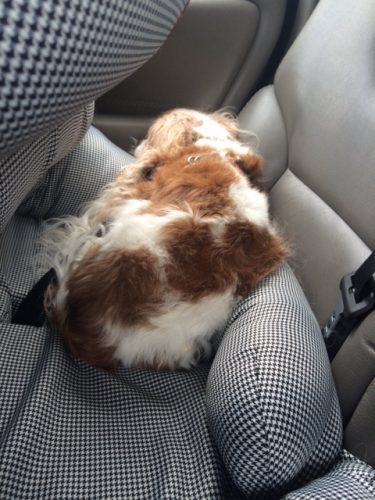
Products like the AirPupSaver represent a crucial transitional phase in this engineering timeline. They successfully bridge the gap between rigid, claustrophobic hard-shell crates and unsafe, unstructured plush beds. However, the friction points identified during extended testing—namely, complex installation procedures, permanent spatial dedication in the vehicle, and the meticulous maintenance required for pneumatic safety chambers—signal clear areas for future industry innovation.
Recommendations for Future Product Iterations
To achieve the gold standard in pet automotive safety, next-generation restraint systems must focus on:
- Simplified Quick-Release Latch Systems: Reducing the time and physical dexterity required to install and remove safety beds without compromising structural load-bearing limits.
- Integrated Pneumatic Monitoring: Implementing automated or simplified pressure-maintenance valves to prevent the deflation sag ("soft taco effect") currently managed manually by owners.
- Universal Harness Scaling: Refining included restraint harnesses to accurately fit smaller weight classes without forcing consumers to source aftermarket additions.
Final Verdict
For pet parents operating large-small dogs (in the 10 to 25-pound range) who have wrestled with the dilemma of inadequate safety ratings versus restrictive spatial dimensions, the AirPupSaver 25 stands out as a highly viable, thoughtfully designed solution. While the installation process requires patience and a temporary suspension of frustration, the ultimate reward—the profound peace of mind that comes from knowing your canine companion is securely protected against the unpredictable perils of the open road—makes the effort entirely worthwhile.