
Executive Overview
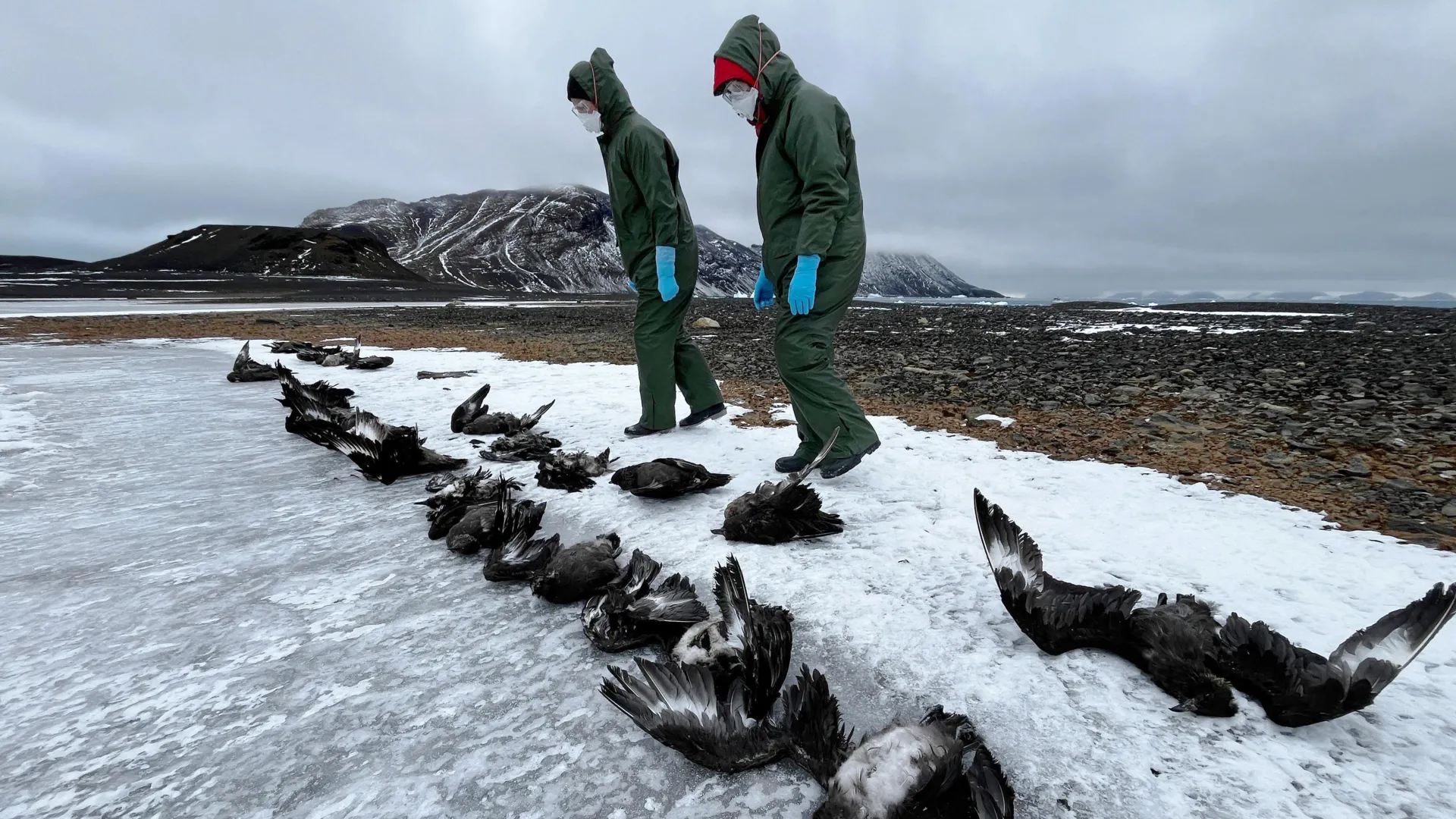
The pristine, isolated expanse of Antarctica—long considered a sanctuary insulated from many of the relentless pathogens plaguing the rest of the planet—has officially fallen victim to the global scourge of highly pathogenic avian influenza (HPAI). During the austral summers of 2023 and 2024, more than 50 skuas perished across the frozen continent, marking the first scientifically confirmed wildlife die-off directly attributed to the H5N1 virus in the region.
This grim milestone is the central finding of a landmark study spearheaded by a collaborative international team from Erasmus MC in the Netherlands and the University of California, Davis (UC Davis). Published recently in the prestigious journal Scientific Reports, the study details how researchers tracked, sampled, and diagnosed the fatal impact of the virus on native polar species.
While isolated cases of H5N1 had been tentatively identified in Antarctic wildlife earlier in 2024, this research provides the definitive epidemiological proof that the virus is actively killing native populations rather than simply passing through them. The findings expose a sobering vulnerability in the Antarctic ecosystem. Skuas—large, predatory, and scavenging seabirds closely related to gulls—are bearing the brunt of the initial wave, turning up dead in alarming numbers at sites like Beak Island.
The arrival of H5N1 in Antarctica is not merely an isolated ecological tragedy; it represents the final frontier of a global pandemic that has spent nearly three decades jumping species barriers, decimating domestic and wild animal populations across every continent except Oceania. As researchers sound the alarm, the scientific community is demanding urgent, coordinated surveillance to track the virus before it inflicts catastrophic damage on populations already under siege from climate change, overfishing, and expanding human activity.
Detailed Chronology: Unfolding the Antarctic Outbreak
The trajectory of H5N1 into the southernmost reaches of the globe was a disaster years in the making, but its lethal impact on Antarctic soil was documented step-by-step through a meticulous scientific expedition mounted in early 2024.
The Warning Signs (Early 2024)
The first ominous hints that avian influenza had breached the Antarctic barrier came in January and February 2024. During routine wildlife monitoring, field researchers detected the H5N1 virus in a lone kelp gull and two skuas found dead in the region. However, in the fast-paced and unpredictable early days of an emerging ecological crisis, detection is not synonymous with confirmation. Scientists knew the virus was present in the environment, but they could not yet prove that H5N1 was the direct physiological cause of death for these birds, or whether they had succumbed to other environmental pressures while merely carrying the pathogen asymptomatically.
The March 2024 Expedition
Recognizing the critical need for ground truth, an international research team launched the HPAI Australis Expedition in March 2024, traveling to the frozen continent immediately following the breeding season for skuas and penguins. Operating across 10 distinct sites spanning the South Shetland Islands, the northern Weddell Sea, and the Antarctic Peninsula, the scientists set out to investigate the health status of local fauna.
Equipped to handle high-containment biological threats, the team performed necropsies and harvested tissue and environmental samples from any sick or dead animals they encountered. Their sweep was comprehensive, examining iconic Antarctic species including gentoo penguins, Adélie penguins, and Antarctic fur seals. While these species showed no immediate evidence of H5N1 as their cause of death, the researchers quickly realized that another group of animals was in grave peril.
"As the expedition progressed, it became obvious quickly that skuas were a major victim," noted Dr. Ralph Vanstreels, a wildlife veterinarian with the UC Davis One Health Institute.
Pinpointing the Epicenter
The virus was ultimately confirmed in skuas across three specific locations: Hope Bay, Devil Island, and Beak Island. While Hope Bay and Devil Island recorded isolated cases, Beak Island revealed the full horror of the outbreak: a massive, concentrated die-off of south polar skuas.
Matteo Iervolino, a Ph.D. candidate at Erasmus MC in Rotterdam and the study’s first author, vividly recalled the grim reality on the ground at Beak Island. "We diagnosed high pathogenicity avian influenza as the cause of death for nearly all of the dead skuas we found at Beak Island," Iervolino stated. "There, I could really see with my eyes the impact this virus can have on these populations."
Supporting Context & Metrics: Skuas, Pathology, and Global Spread
To understand why skuas have become the primary vector and victim of this wave of avian flu, one must examine their unique behavioral ecology and the physiological devastation wrought by the H5N1 virus.
The Ecological Role of Skuas
Skuas are formidable seabirds, often described as the raptors of the polar world. Occupying a high trophic level, they are aggressive predators that hunt other birds and steal food from gulls and terns. Crucially, they are also scavengers. In the harsh Antarctic environment, skuas play an indispensable ecological role by cleaning up carcasses and consuming dead marine life.
However, this very behavior has sealed their fate. By feeding on the remains of infected marine mammals or migratory birds that carried the virus down from South America, skuas expose themselves to massive viral loads. Their scavenging habits transform them from ecosystem sanitation workers into unwitting distribution hubs, effectively supercharging the spread of H5N1 across the Antarctic landscape.
Pathological Impact: A Crisis in Animal Suffering
The strain of H5N1 currently circulating in the Antarctic does not merely cause respiratory distress; it is a neurotropic nightmare. The virus actively attacks the central nervous system, leading to profound neurological degeneration.
Field researchers described heartbreaking scenes of animal suffering. Infected skuas exhibit grotesque symptoms, including twisted necks (torticollis), erratic body stretching, and loss of motor coordination. Birds can be seen walking or swimming in endless, compulsive circles, crashing blindly into ice formations and rocks, or tumbling helplessly out of the sky mid-flight.
"It’s a crisis in animal suffering," Vanstreels emphasized, describing the agonizing neurological decline of the birds.
The Global Blueprint of H5N1
The current Antarctic crisis is the latest chapter in a terrifying global saga that began nearly three decades ago.
- 1996: H5N1 is first isolated on a domestic goose farm in Guangdong Province, Southeast China.
- Late 1990s–2010s: The virus circulates largely unchecked within intensive poultry farming systems, eventually spilling over into wild bird populations. It expands its geographic footprint across Europe, the Middle East, and Africa.
- 2021–2023: The panzepizootic accelerates, leaping across oceans to ravage wild bird and mammalian populations in North and South America. The same lineage of the virus responsible for the Antarctic skua deaths previously cut a devastating swath through elephant seal and sea lion colonies along the coast of Argentina.
- 2024: The virus breaches the Southern Ocean, establishing a foothold in Antarctica.
Today, the statistics surrounding H5N1 are staggering. Globally, the virus has been responsible for the deaths of more than 400 million poultry birds through culling and direct mortality. It has crossed species barriers to infect an unprecedented array of mammals, including dairy cows, mink, foxes, bears, otters, and marine mammals.
Furthermore, the virus poses a persistent, albeit currently low-level, threat to human health. Out of roughly 1,000 documented human cases worldwide, approximately 50% have been fatal, underscoring the pandemic potential of a pathogen that experts warn humanity failed to contain in its infancy.
Official Statements and Expert Analysis
The publication of the Erasmus MC and UC Davis study has prompted stark warnings from the scientific community regarding humanity’s complicity in the global spread of avian influenza and the urgent need for systemic reform in wildlife management and biosecurity.
Dr. Thijs Kuiken, a professor at Erasmus MC and the corresponding senior author of the study, did not mince words when discussing the historical failures that allowed the virus to reach this stage.
"We let the virus slip out through our fingers when it first emerged in the poultry industry," Kuiken said. "Once it got into wild bird populations, we lost the ability to control this virus. Now it’s established in wild bird populations in all the continental regions of the world except Oceania."
Kuiken’s assessment highlights a grim epidemiological reality: containment is no longer an option. The virus is now a permanent fixture of global wildlife ecology, meaning conservationists must shift their strategies from eradication to mitigation, resilience-building, and intensive monitoring.
Dr. Ralph Vanstreels expanded on the unique challenges of diagnosing and monitoring outbreaks in remote wilderness areas, emphasizing the importance of the research team’s methodology in distinguishing between animals that are merely exposed and those actively killed by the disease.
"We knew there were animals with the infection, but this is the first study to show they died of the viral infection," Vanstreels noted. "It’s an important distinction in the early days of an outbreak."
The researchers also stress that while natural ecological factors facilitated the spread of the virus to Antarctica, human activity cannot be absolved. Global climate change alters migratory corridors and ice patterns, while expanding maritime tourism, shipping, and scientific logistics increase the risk of anthropogenic introduction and localized transmission. Human agency, therefore, remains the primary tool available to limit further damage.
Future Outlook: The Urgent Need for Antarctic Surveillance
As the southern winter sets in and wildlife disperses, the scientific community is bracing for what the next austral summer might bring. The outlook for Antarctic biodiversity is fraught with uncertainty, compounded by systemic blind spots in our ecological data.
The Baseline Data Crisis
One of the most alarming revelations emerging from the study is the severe lack of up-to-date population metrics for Antarctic wildlife. For skuas, the scientific baseline is shockingly antiquated: the last comprehensive census of Antarctic skuas was conducted in the 1980s, at which time researchers estimated a population of roughly 800 breeding pairs.
Without contemporary census data, wildlife managers are flying blind. It is mathematically and ecologically impossible to accurately measure the true impact of losing 50 skuas—or potentially hundreds more uncounted deaths—when scientists do not know if the current total population is stable, recovering, or already in stealth decline due to climate pressures.
Compounding Pressures on Polar Ecosystems
Avian influenza does not strike in a vacuum. Antarctic and sub-Antarctic wildlife are already facing an unprecedented convergence of environmental stressors:
- Climate Change: Rapid warming of the Antarctic Peninsula is reducing sea ice habitats, altering krill availability, and disrupting breeding cycles.
- Growing Tourism: An exponential rise in human visitors and expedition vessels increases the risk of physical disturbance and accidental pathogen transfer.
- Invasive Species and Pollution: Microplastics, chemical pollutants, and non-native propagules continue to infiltrate the Southern Ocean food web.
- Overfishing: Industrial extraction of krill and finfish strains the lower trophic levels, leaving predator species with fewer nutritional buffers to fight off disease.
Recommendations for the Future
The study’s authors and international conservation bodies are issuing an urgent call to action for enhanced surveillance networks across the Antarctic Treaty area. Establishing rapid-response diagnostic protocols, funding regular population censuses, and enforcing stringent biosecurity measures for tourist vessels and research stations are no longer optional precautions—they are existential necessities.
As Dr. Kuiken warned regarding the imperative of ongoing observation:
"Everything points toward this virus spreading further. If nobody is watching, we won’t know what is happening."
The HPAI Australis Expedition—funded generously by the International Association of Antarctica Tour Operators (IAATO) and Ocean Expeditions, with support from the European Union, the Spanish Consejo Superior de Investigaciones Científicas (CSIC), and PTI Global Health—has provided a vital blueprint for how science can operate at the ends of the earth. However, unless the global community commits sustained financial and logistical resources to monitor the polar frontlines, the silent crisis unfolding among Antarctica’s skuas may well be the canary in the coal mine for a much wider ecological collapse.