
House-training a rescued dog is one of the most profoundly misunderstood challenges in domestic animal care. While public perception often frames house-soiling as a simple behavioral lapse or stubborn disobedience, animal behaviorists and rescue specialists recognize it as a deeply ingrained cognitive hurdle. Dogs rescued from severe neglect, puppy mills, or long-term confinement have not failed to learn house-training—rather, they have learned it too well under abnormal circumstances. For these animals, the concept of "home" is intrinsically linked to the act of elimination.
This comprehensive report examines the neurological, environmental, and behavioral realities of transitioning captive-reared and shelter dogs into conventional home environments. Drawing from decades of applied animal behavior science, field notes from rescue workers, and professional training guidelines, we explore why traditional house-training timelines frequently fail. Furthermore, this piece outlines an authoritative framework for rehabilitation, examining the roles of environmental management, positive reinforcement, substrate preferences, and physiological interventions like canine diapers. Finally, we step beyond the training yard to capture a glimpse of rural farm life—highlighting the daily rhythms of working dogs, seasonal livestock management, and the tranquil cadence of spring in the countryside.
Detailed Chronology: From Puppy Mill Silos to Domestic Harmony
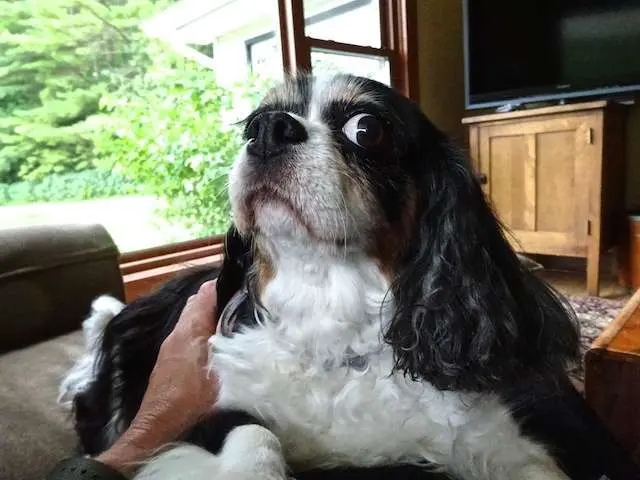
To understand the mechanics of retraining a dog with ingrained indoor-elimination habits, animal behaviorists frequently point to case studies of dogs rescued from exploitative commercial breeding operations. A prime historical illustration involves Tootsie, a Cavalier King Charles Spaniel rescued by the dedicated teams at Lucky Star Cavalier Rescue from a notoriously neglected facility in northern Wisconsin.
The Anatomy of Early Conditioning
Tootsie’s history reveals the complex psychological imprint of puppy mill environments. While the vast majority of captive dogs in the facility were forced to endure life in filth-laden, enclosed barns, Tootsie belonged to a subset housed on the cold, unforgiving concrete pad of an abandoned silo. Despite suffering from advanced medical neglect—including a mouth riddled with severe infections that ultimately required the extraction of 21 teeth, alongside ears chronically compromised by untreated inflammation—her micro-environment offered unique sensory inputs. Unlike the barn-dwellers trapped in total sensory deprivation, Tootsie could watch the arrival and departure of humans, inhale fresh outdoor air, and process diverse acoustic stimuli.
However, this architecture cemented a catastrophic cognitive association: her living area was her toilet. Tootsie’s baseline understanding of sanitation dictated that concrete equated to a latrine, and indoor living spaces naturally doubled as functional bathrooms.
The Rehabilitation Timeline
When Tootsie arrived at her permanent home, behavioral intervention began immediately. Standard domestic advice—such as taking a new dog outside once an hour—proved entirely inadequate for a dog whose historical conditioning ran so deep.
- The 15-Minute Protocol: Recognizing that standard intervals would lead to inevitable indoor accidents, behaviorists implemented an aggressive schedule, escorting Tootsie outside every ten to fifteen minutes during the initial adaptation phase.
- Targeted Reinforcement: Every successful outdoor elimination was immediately rewarded with high-value reinforcement (specifically, pieces of cooked chicken).
- Substrate Nuances: Dogs often categorize surfaces with absolute rigidity. Months after mastering outdoor elimination, Tootsie experienced a regression, choosing to urinate on the concrete patio rather than the adjacent gravel driveway. Handlers recognized this micro-shift immediately, reinstituting high-value reinforcement protocols strictly for gravel-use. Within a two-week window, the behavior was successfully corrected.
A parallel case study involves Skip, a dog imported from Ireland who had spent three and a half years living strictly outdoors before entering a permanent building for the first time. For dogs like Skip, verbal interrupters often lag behind physiological reality; the urine flow frequently begins before a human can fully articulate a corrective phrase like "Whoops!" In such complex scenarios, behavioral management requires dynamic tools beyond simple praise and treats.

Supporting Context & Metrics: The Human-Animal Bond and Training Frameworks
The implications of house-training failures extend far beyond minor domestic inconveniences. In rescue circles, chronic house-soiling remains one of the leading catalysts for behavioral surrender, driving wedges into human relationships and resulting in thousands of preventable shelter returns annually.
+-------------------------------------------------------------------+
|               THE HOUSE-TRAINING FAILURE CASCADE                  |
+-------------------------------------------------------------------+
|  1. Inadequate Initial Conditioning (Puppy Mill / Outdoor Life)  |
|         v                                                         |
|  2. Chronic Indoor Elimination / Substrate Misunderstanding     |
|         v                                                         |
|  3. Strain on Human-Animal Bond (Property Damage & Frustration)   |
|         v                                                         |
|  4. Risk of Behavioral Surrender / Shelter Re-entry               |
+-------------------------------------------------------------------+
The Cost to Relationships
Professional mediators and family counselors have documented countless households where tension over ruined oriental rugs, stained hardwood, or damaged furniture eroded marital and domestic harmony. When a companion animal repeatedly soils human living spaces, the emotional strain can transform affection into resentment. Addressing the root mechanics of house-training is, therefore, a vital act of animal welfare and human mental health preservation.
Core Protocols for Difficult Cases
Synthesizing decades of field experience, canine behavior experts recommend a systematic, multifaceted approach to rehabilitating dogs with ingrained indoor-elimination patterns:
- Active Supervision and Confinement:
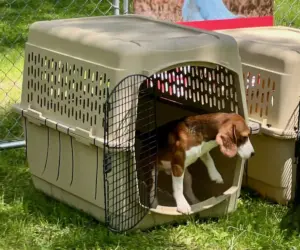
Unsupervised freedom is the primary enemy of successful house-training. When a dog cannot be actively monitored with undivided attention, physical management tools must be deployed. While traditional wire crates are widely utilized, many rescued dogs experience confinement anxiety if introduced too abruptly. Consequently, modern behaviorists advocate for gradual crate conditioning paired with alternative containment methods, such as exercise pens (X-pens) or gated-off, easily sanitized rooms. When outside of confinement, the dog must remain physically tethered via leash to the handler or kept under unyielding visual surveillance. - Substrate Consistency and "Seeding":
Dogs do not inherently generalize that grass equals a toilet just because humans prefer it. To a dog accustomed to concrete, gravel, or indoor flooring, grass can feel alien or unappealing. Handlers can accelerate learning by "seeding" a designated outdoor potty area—placing a small, urine-soaked cloth or feces in the target zone to provide an unmistakable olfactory beacon. Furthermore, handlers must choose a spot that remains accessible and navigable during inclement weather, severe cold, or the middle of the night. - Hyper-Frequent Outings:
Standard training manuals advising hourly outdoor trips are frequently insufficient for severe rescue cases. Intervals must be drastically compressed—sometimes every 10 to 15 minutes during waking hours in the earliest days—to engineer guaranteed opportunities for success. - Precision Reinforcement:
Rewards must be immediate and uniquely tailored to the individual animal’s preferences. While exuberant human praise can overwhelm or stress fragile rescues, high-value food rewards (such as specialized treats or lean meats) bridge the learning gap efficiently. The reinforcement must be delivered immediately upon completion of the act in the designated zone. - Managing Interruptions Without Punishment:
Punishment after the fact is scientifically proven to be ineffective and damages trust between dog and handler. If a dog initiates elimination indoors, an audible, non-punitive interrupter (such as a sharp "Whoops!") serves to halt the behavior momentarily, allowing the handler to swiftly carry a small dog or briskly guide a larger dog to the outdoor elimination zone. - Physiological Aids (Canine Diapers):
For male dogs or animals with rapid physiological release mechanisms, canine diapers offer an invaluable management tool. Beyond preventing immediate property damage, diapers can act as an indirect behavioral circuit-breaker, mitigating the self-reinforcing loop of indoor elimination while handlers establish consistent outdoor routines. - Elimination of Residual Olfactory Cues:
Dogs identify bathrooms primarily through scent rather than visual markers. Standard household cleaners are frequently inadequate at breaking down uric acid crystals. The use of specialized enzymatic cleaners or proven commercial urine deodorizers is non-negotiable to strip the environment of historic scent markers that invite repeat offenses.
Official Statements & Expert Perspectives
In evaluating advanced remediation strategies, professional trainers frequently reference specialized literature designed to bridge the gap between amateur troubleshooting and clinical animal behaviorism.
Dr. Patricia McConnell, a leading certified applied animal behaviorist, emphasizes the necessity of looking past conventional dog-training tropes when dealing with institutionalized neglect. In collaborative works with colleague Dr. Karen London—such as the concise training guide Way to Go!—the focus is continually shifted toward environmental control and proactive management rather than reactive discipline.
For professional trainers encountering extreme, intractable cases, comprehensive reference manuals such as Hard to House Train: Practical Solutions for Dog Trainers (published via Dogwise) serve as authoritative industry standards. These texts provide exhaustive case studies detailing complex rehabilitation strategies for dogs with profound institutional histories. However, behaviorists note a persistent gap in mainstream literature regarding dogs whose primary obstacle is not a lack of training, but rather the successful, albeit unwanted, training they received in abusive or neglectful commercial breeding facilities.
Reflecting on the psychological resilience of these animals, rescue advocates emphasize patience above all. As written in foundational behavioral guidelines:

"House-training problems are never trivial; they test the very bedrock of our relationships with our companions. Yet with absolute consistency, rigorous environmental management, and an understanding of how the canine mind categorizes its world, even the most deeply conditioned habits can be rewritten."
Future Outlook & Rural Field Notes
As the discourse surrounding animal rescue continues to evolve, veterinary behaviorists anticipate a greater emphasis on trauma-informed rehabilitation protocols within the shelter and rescue network. By educating foster homes and adoptive families on the specific neuroses tied to puppy mill and laboratory environments, the animal welfare community can drastically reduce the incidence of failed adoptions driven by house-soiling conflicts.
Meanwhile, far from the urban and suburban debates over carpets and crate sizes, life on the farm continues according to its own ancient, seasonal rhythm.
Spring on the Homestead
Following the passage of an erratic spring storm that swept through the countryside, leaving behind dramatic evening light and resilient early daffodils struggling against fluctuating temperatures, the daily work of agricultural management presses forward.
+-------------------------------------------------------------------+
|                   SPRING FARM OPERATIONS METRICS                  |
+-------------------------------------------------------------------+
|  • Livestock Status: Mixed flock grazing / active management      |
|  • Canine Working Capacity: Regulated by cardiac stamina (Skip)   |
|  • Seasonal Shedding Index: Continuous (year-round fur transfer)  |
|  • Visual Documentation: Silvertone monochromatic filter analysis |
+-------------------------------------------------------------------+
Working dogs remain central to this rural ecosystem, though time leaves its mark on even the most dedicated partners. Skip, despite managing a compromised heart that limits his physical stamina, continues to engage in short, joyful work sessions alongside fellow working dog Maggie. Because Skip maintains a year-round shedding cycle—described colloquially as resembling the task of "sweeping the beach"—grooming sessions function less like conventional brushing and more as a literal transfer of mammalian biomass from dog to handler.
Flock Dynamics and Reflection
A recent field session involving the farm’s sheep flock provided a vivid study in animal behavior under pastoral conditions. Observed through a monochromatic "Silvertone" photographic filter, the flock exhibited a fascinating diversity of focused responses:
- The Grazers: Animals that immediately returned to feeding, interpreting the cessation of movement as an end to the workday.
- The Vigilant: Sheep standing entirely motionless, locking their gaze on the handlers and working dogs, maintaining cautious operational awareness.
- The Strategists: Individuals oriented toward the western gate, calculating whether the movement would successfully trigger an early return to the barn for evening hay.
As the agricultural community transitions deeper into the agricultural calendar, the juxtaposition between the intricate, microscopic patience required to retrain a rescued puppy mill dog and the sweeping, broad strokes of rural farm life remains clear. Whether addressing the delicate architecture of canine house-training or managing livestock across changing seasonal light, success relies on the same fundamental pillars: attentive observation, unwavering consistency, and a profound respect for the behavioral history of every living creature in our care.