
Originally featured in the Alley Cat Action® 2026 Summer Newsletter. Read the full newsletter edition here.
Executive Overview
San Juan, Puerto Rico—A high-stakes battle for animal welfare and legal accountability is unfolding along the historic stone walls of Old San Juan. Alley Cat Allies, working in close collaboration with the local animal advocacy group Save A Gato, has mobilized an intensive, boots-on-the-ground campaign to protect the beloved community cats of the Paseo del Morro. This urgent intervention comes in the direct wake of a controversial federal court decision that greenlit a lethal removal plan by the U.S. National Park Service (NPS).
Rather than bowing to a policy of lethal eradication, animal rights defenders, local coalitions, and political leaders are fighting back on multiple fronts. Alley Cat Allies is aggressively pursuing legal avenues to challenge the court’s ruling, arguing that the decision relied on a profound and dangerous mischaracterization of Trap-Neuter-Return (TNR)—a methodology that, advocates emphasize, was never genuinely on trial. Furthermore, the legal challenge targets alleged violations of federal law by the NPS during the formulation of its eradication blueprint.
Simultaneously, the coalition is looking toward long-term systemic solutions. By partnering with key Puerto Rican figures, including Congressman Pablo José Hernández, Alley Cat Allies is funding expanded spay-and-neuter initiatives, institutionalizing widespread TNR programs, and spearheading humane education campaigns across the city. As public outcry intensifies, the message from San Juan is resoundingly clear: lethal removal is not only profoundly inhumane, but it is also entirely counterproductive to sustainable animal population management.
Detailed Chronology: The Escalating Conflict at Paseo del Morro
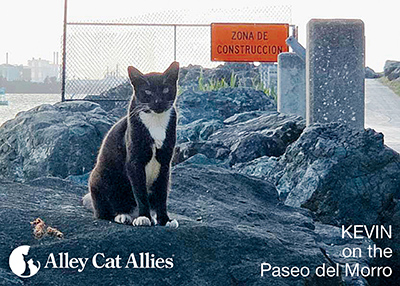
The historic Paseo del Morro—a scenic pedestrian promenade flanked by sweeping ocean views and centuries-old fortifications—has long served as a sanctuary not only for tourists and locals but also for a resilient colony of community cats. For years, these cats have been cared for by dedicated volunteers, primarily through the tireless efforts of Save A Gato, a prominent Puerto Rican feline welfare organization.
However, the fragile coexistence between the National Park Service and the local cat colonies reached a breaking point as the federal agency pushed forward with plans to remove the animals permanently. The overarching justification provided by federal authorities relied on standard wildlife and park management arguments, which local advocates immediately decried as out-of-touch with modern, science-based animal stewardship.
The Legal Battleground and Judicial Missteps
When the NPS formalized its lethal removal plan, animal advocates took the fight to the courts to secure an injunction. Unfortunately, a recent federal judge’s decision handed a temporary victory to the agency, paving the way for potential lethal actions against the Paseo del Morro cats.

Legal teams representing Alley Cat Allies and allied animal protection groups have analyzed the ruling and identified critical flaws. Foremost among these is what legal experts describe as a gross mischaracterization of Trap-Neuter-Return. In public statements and court filings, advocates have stressed that TNR—a globally recognized, humane, and scientifically proven method for stabilizing community cat populations—was fundamentally misunderstood and misrepresented within the judicial proceedings.
“TNR was never on trial,” legal advocates note, pointing out that the method itself is not the problem; rather, the administrative failure to properly apply, respect, or understand community-supported cat management is at the root of the crisis.
Compounding this judicial misstep are serious allegations regarding the procedural integrity of the NPS. Alley Cat Allies’ legal strategy highlights that the agency committed distinct violations of federal law while developing and approving its removal plan. By circumventing standard environmental and administrative safeguards, the NPS allegedly bypassed the rigorous public review processes required when federal actions drastically impact local ecosystems and communities.
Supporting Context & Metrics: The Science of TNR vs. Lethal Removal
To understand the gravity of the standoff in San Juan, one must examine the broader landscape of community cat management. For decades, outdated municipal and federal approaches relied on "catch-and-kill" policies. Decades of data compiled by animal behaviorists, veterinarians, and public health officials have proven these lethal methods to be ineffective.
The Vacuum Effect
When cats are removed from a specific territory—such as the expansive grounds surrounding the Paseo del Morro—a phenomenon known in wildlife management as the "vacuum effect" occurs. Nature abhors a vacuum; surviving cats from surrounding areas, or new unsterilized cats migrating into the newly vacant territory, will quickly move in to take advantage of available food sources and shelter. Without human intervention, these new populations rapidly reproduce, quickly returning the cat population to its original or even higher levels.
The Success of Trap-Neuter-Return (TNR)
Conversely, Trap-Neuter-Return disrupts this cycle permanently. Under a proper TNR protocol:
- Trapping: Humane box traps are used to safely capture community cats.
- Neutering: Cats are transported to licensed veterinarians to be spayed or neutered, vaccinated against rabies, and typically ear-tipped (the universal sign of a sterilized and vaccinated community cat) for quick visual identification.
- Return: Once recovered, the cats are returned to their original outdoor home—the Paseo del Morro—where they live out their lives naturally without contributing to population growth.
Over time, TNR stabilizes the colony size, eliminates nuisance behaviors associated with unspayed cats (such as mating yowling and roaming), and naturally reduces the overall population as attrition takes its course peacefully.
In San Juan, Save A Gato and Alley Cat Allies have demonstrated that TNR works. The presence of these cats has been sustainably managed through community goodwill and volunteer dedication, making the federal government’s pivot toward lethal removal an aggressive, unnecessary regression.
Official Statements and Political Alignment
The campaign to save the Paseo del Morro cats has transcended standard animal advocacy, drawing the attention and active participation of high-level government figures who recognize that the issue strikes at the heart of community values in Puerto Rico.
Congressman Pablo José Hernández Speaks Out
Among the most vocal political leaders opposing the National Park Service’s initiative is Congressman Pablo José Hernández. Representing the sentiments of his constituents, Congressman Hernández has emerged as a key ally in the push for a humane resolution.
“[The National Park Service] plan is both inhumane and counterproductive, and my constituents know it,” declared Congressman Hernández in a strong public address. “I urge NPS to commit to a period of public outreach and stakeholder consultation to reach a solution that puts people and animals first.”
The Congressman’s stance highlights a critical disconnect between federal agencies operating in Washington, D.C., and the local Puerto Rican community, which overwhelmingly views the cats as an integral, cherished part of the Paseo del Morro landscape. By calling for mandatory public outreach and stakeholder consultation, Hernández is demanding that federal entities respect local autonomy and the deep cultural bond between the residents of San Juan and their local wildlife.
Partnership in Action: Alley Cat Allies and Save A Gato
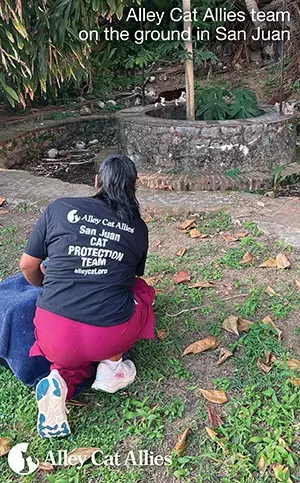
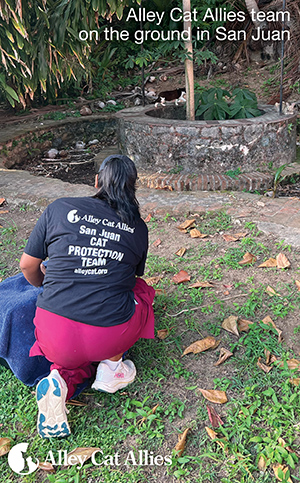
On the ground, the synergy between Alley Cat Allies and Save A Gato has created a robust operational shield for the cats. While national legal teams fight in courtrooms, field volunteers are actively feeding, monitoring, and providing medical care to the colonies.
Furthermore, financial resources provided by Alley Cat Allies are being funneled directly into expanding spay-and-neuter infrastructure across the island. These funds support high-volume surgeries, local veterinary partnerships, and comprehensive humane education campaigns designed to foster a culture of compassion and responsible pet stewardship among younger generations of Puerto Ricans.
Future Outlook: A Defining Moment for Animal Advocacy
As the legal battles proceed and public pressure mounts against the National Park Service, the situation at the Paseo del Morro stands as a watershed moment for animal protection in United States territories.
The outcome of this conflict will likely set a powerful legal and operational precedent. A victory for Alley Cat Allies and Save A Gato would validate the supremacy of science-based TNR over archaic, lethal government eradication schemes, sending a clear message to federal agencies nationwide that community cats have legal protections and community backing.
However, the fight is far from over. Maintaining the pressure requires continuous public engagement, legal vigilance, and sustained financial support for the frontline organizations doing the daily work in San Juan.
How Supporters Can Help
- Stay Informed: Read the full coverage and updates in the Alley Cat Action® 2026 Summer Newsletter via Alley Cat Allies’ official website.
- Amplify the Message: Share the plight of the Paseo del Morro cats on social media using campaign hashtags to demand that the NPS halt its lethal removal plans.
- Support Local Coalitions: Back organizations like Alley Cat Allies and Save A Gato as they fund critical spay/neuter operations, legal defense funds, and humane education initiatives.
The cats of the Paseo del Morro have weathered centuries of history along the stone bulwarks of San Juan. With a united coalition of national advocates, local volunteers, and courageous political leaders standing guard, there is profound hope that they will continue to find sanctuary under the Caribbean sun for years to come.