A growing divide between mainstream media product endorsements and regulatory realities has brought pet food nutritional guidance into the spotlight. A high-profile recommendation roundup published by Good Housekeeping, titled “8 Dog Food Brands Vets Actually Recommend,” has drawn sharp criticism from consumer advocacy organizations. The critique highlights significant factual inaccuracies, unverified health claims, and a fundamental failure to inform pet owners about critical safety and regulatory distinctions in animal feed.
The controversy centers on expert commentary provided by featured veterinarians, Dr. Alejandro Caos and Dr. Megan Conrad. Critics argue that their statements—ranging from assertions that standard dry kibble actively cleans teeth to unexamined praise of feed-grade commercial diets—reflect a broader systemic issue within veterinary guidance: a lack of transparency regarding pet food manufacturing standards, Association of American Feed Control Officials (AAFCO) definitions, and U.S. Food and Drug Administration (FDA) regulatory policies.
Susan Thixton, a prominent pet food consumer advocate and founder of TruthaboutPetFood.com and the Association for Truth in Pet Food, has formally challenged the publication. The dispute underscores an urgent need for media organizations and veterinary professionals to provide evidence-based, transparent, and legally accurate dietary information to the public.
Detailed Chronology
Phase 1: Publication of the Media Recommendation Guide
Good Housekeeping, a outlet with a 125-year history of consumer product evaluation, published a digital buyer’s guide showcasing veterinary-recommended dog food brands. The article relied on professional commentary from two consulting veterinarians: Dr. Alejandro Caos and Dr. Megan Conrad.
The guide designated Nutro Ultra Dry Dog Food as its top overall pick, featuring quotes from Dr. Caos asserting that the mechanical action of chewing kibble actively removes plaque and reduces tartar buildup. The article also highlighted Purina Pro Plan, recommended by Dr. Conrad as one of the market’s most "nutritionally balanced" options, alongside fresh-food subscription brand Ollie Pet Food, which was casually described as offering "homemade-looking dinners."
Phase 2: Advocacy Audit and Fact-Checking
Following the article’s release, consumer advocacy group TruthaboutPetFood.com performed a forensic review of the publication’s scientific and regulatory claims. The audit revealed multiple critical errors:
Unsubstantiated Dental Health Claims: The assertion that standard kibble reduces tartar was identified as scientifically inaccurate for the specific brand recommended.
Failure to Disclose Regulatory Classifications: The article failed to explain the fundamental distinction between "human-grade" food standards and standard "feed-grade" pet products.
Vague Nutritional Terminology: Terms such as "high-quality ingredients" and "nutritionally balanced" were used without objective metrics, definition, or supporting peer-reviewed evidence.
Phase 3: Formal Challenge and Editorial Notice
In response to the findings, Susan Thixton submitted a formal grievance to the editorial management of Good Housekeeping. The notice detailed how the published advice could mislead millions of pet owners regarding oral hygiene and food safety. The advocacy group emphasized that while the featured veterinarians are not inherently malicious actors, their statements mirror widespread information gaps within the clinical veterinary community concerning commercial pet food regulations and manufacturing practices.
Phase 4: Public Educational Campaign
Advocacy groups launched a public outreach campaign aimed at empowering consumers to critically evaluate veterinary dietary recommendations. Pet owners were encouraged to directly question clinical advice by requesting specific definitions of ingredient quality, verification of human-grade processing, and peer-reviewed scientific proof for commercial brand claims.
Supporting Context & Metrics
The Dental Kibble Myth vs. Veterinary Standards
One of the primary points of contention in the Good Housekeeping piece is the assertion that standard dry kibble promotes canine oral health through mechanical abrasion.
According to veterinary dental specialists and the Veterinary Oral Health Council (VOHC), standard kibble does not reduce plaque or tartar buildup. When a dog bites down on typical kibble, the piece shatters almost instantly upon contact with the tip of the tooth, offering negligible contact with the gumline where plaque accumulates.
For a pet food to legally or scientifically claim plaque and tartar reduction, it must undergo rigorous clinical testing and receive acceptance from the VOHC. Nutro Ultra Dry Dog Food does not possess VOHC certification for dental efficacy, making the expert claim technically incorrect and misleading to consumers seeking genuine preventive oral care for their pets.
The Feed-Grade vs. Human-Grade Regulatory Divide
The critique also focuses on the article’s treatment of food safety standards. While Good Housekeeping recommended one fresh-food brand—Ollie Pet Food—it characterized the product merely as "homemade-looking," completely ignoring the legal distinction between Human-Grade pet food and Feed-Grade pet feed.
+-----------------------------------------------------------------------------------+
|                   REGULATORY STANDARDS: HUMAN-GRADE VS. FEED-GRADE                |
+-------------------+----------------------------------+----------------------------+
| FEATURE           | HUMAN-GRADE PET FOOD             | FEED-GRADE PET FEED        |
+-------------------+----------------------------------+----------------------------+
| Facility Inspection| USDA Human Food Inspection      | State/FDA Feed Inspection  |
| Ingredient Safety | Suitable for Human Consumption   | Allowed 4D Animal Renderings|
| Transport & Storage| Human Food Chain Compliance     | Industrial Feed Logistics  |
| FDA Discretion    | Strictly Prohibited              | Permitted under Policy     |
+-------------------+----------------------------------+----------------------------+
Feed-Grade Realities and FDA Enforcement Discretion
Most commercial pet foods fall under the legal definition of "animal feed." Under this classification, ingredients are governed by AAFCO definitions and subject to FDA "enforcement discretion." Crucially, the FDA explicitly permits feed-grade manufacturers to utilize ingredients that would be illegal in human food processing:
"We do not believe that the use of diseased animals or animals that died otherwise than by slaughter to make animal food poses a safety concern and we intend to continue to exercise enforcement discretion." — U.S. Food and Drug Administration (FDA)
Feed-grade products may lawfully contain "4D" meats (derived from dead, dying, diseased, or disabled animals), rendered slaughterhouse byproducts, and ingredients processed in facilities not subject to human food hygiene standards. In contrast, Human-Grade pet food requires that every ingredient is fit for human consumption and that the finished product is manufactured, packaged, and held in full compliance with federal human food safety regulations (21 CFR Part 117).
By failing to explain this distinction, the publication masked significant differences in quality control, ingredient sourcing, and safety protocols among the recommended products.
Official Statements
Excerpts from Good Housekeeping & Featured Veterinarians
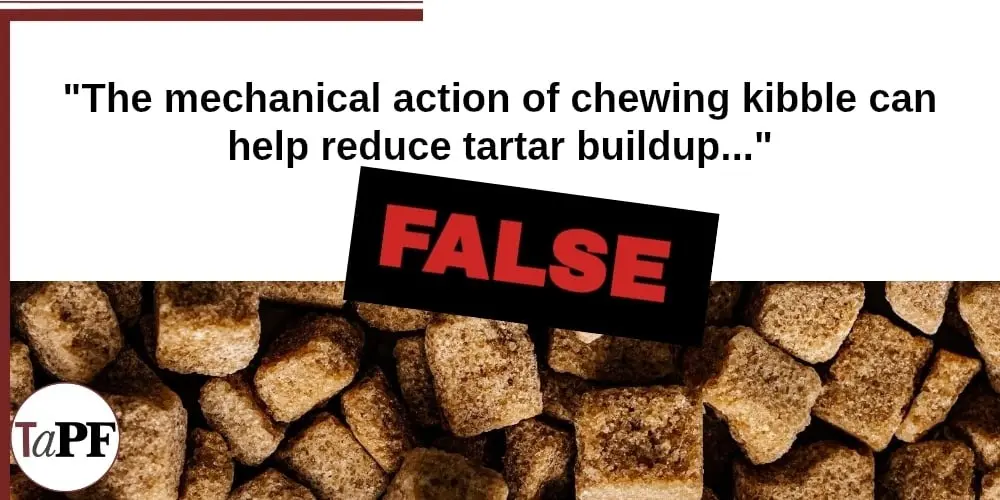
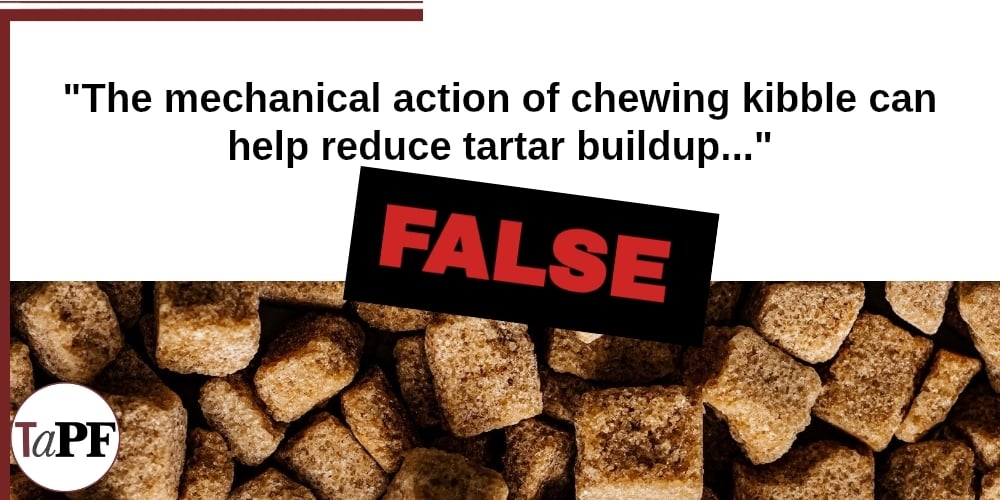
"The crunchy texture can help promote dental health. The mechanical action of chewing kibble can help reduce tartar buildup and maintain healthier teeth and gums, while the abrasive action of chewing can help scrape away plaque."
— Dr. Alejandro Caos, Consulting Veterinarian, endorsing Nutro Ultra Dry Dog Food
"Healthy dog food should provide balanced nutrition, use high-quality ingredients, promote proper digestion, and be suitable for your dog’s life stage and any unique dietary considerations."
— Dr. Alejandro Caos, on pet food selection principles
"Purina ProPlan is highly recommended… [it is] one of the most nutritionally balanced options on the market."
— Dr. Megan Conrad, Consulting Veterinarian
Critique from Consumer Advocacy
"Unfortunately, Dr. Caos’s statement is not true. Kibble/dry dog food does not reduce tartar buildup. A dog or cat chewing typical kibble does not scrape away plaque. There are some kibble pet foods that do meet veterinary standards to make the claim of tartar reduction, this dog food is not one of them."
— Susan Thixton, Pet Food Consumer Advocate, TruthaboutPetFood.com
"In all the pet foods Good Housekeeping recommended, only one is human grade (Ollie Pet Food). But Good Housekeeping and their veterinarians did not explain to pet owners the difference with this food than all the other brands recommended… they only stated the Ollie pet food was ‘homemade-looking dinners.’ Disappointing."
— Susan Thixton, on regulatory omissions
"For more than 125 years, Good Housekeeping has been evaluating products and advocating for consumers. In this case, Good Housekeeping and the veterinarians they consulted with dropped the ball… Their words do not make them bad veterinarians, it only shows they are not informed about pet food."
— Susan Thixton, representing the Association for Truth in Pet Food
Future Outlook
Shifting Expectations for Veterinary Education and Media Accountability
This debate highlights an urgent need for reform in how pet nutritional advice is curated, reviewed, and published. While clinical veterinarians undergo rigorous training in medicine, surgery, and diagnostics, standard veterinary curricula often allocate limited hours to commercial feed law, ingredient sourcing regulations, and industrial rendering practices. As a result, practitioners may rely on broad industry marketing narratives or general training concepts that do not reflect complex regulatory realities.
Moving forward, media outlets that leverage veterinary expertise to endorse products face growing demand for strict fact-checking protocols. Publishing generalized recommendations without explicit definitions or scientific citations risks eroding public trust and spreading health misapprehensions.
Recommended Action Plan for Consumers
To navigate commercial marketing claims, advocacy groups advise pet owners to actively engage their veterinarians with target, evidence-focused questions before adopting dietary recommendations:
Clarify Ingredient Definitions:When you describe a feed as using ‘high-quality ingredients,’ are those ingredients legally classified as Human-Grade or Feed-Grade?
Verify Dental Claims:Does this specific kibble hold a official Veterinary Oral Health Council (VOHC) seal for plaque and tartar reduction, or does it rely on general kibble texture?
Demand Comparative Metrics:What specific peer-reviewed scientific studies or clinical trials demonstrate that this brand is more ‘nutritionally balanced’ than alternative market options?
Evaluate Sourcing Safety:Does the manufacturer provide full supply chain transparency regarding whether ingredients are sourced from USDA-inspected slaughterhouses?
As regulatory bodies like AAFCO and the FDA continue to deliberate on pet food labeling guidelines and ingredient definitions, consumer advocacy organizations—such as the Association for Truth in Pet Food—remain essential stakeholders. By insisting on technical precision, scientific backing, and legal clarity from media outlets and health professionals alike, pet owners can make truly informed decisions regarding the health, safety, and longevity of their animals.