
Executive Overview
Against the sprawling, saline backdrop of Utah’s Great Salt Lake, a quiet ecological transformation is underway. At the National Audubon Society’s Gillmor Sanctuary, a concerted, large-scale habitat restoration initiative is breathing new life into degraded upland ecosystems. For years, the region’s native grasslands and shrublands—vital ecological keystones for numerous western wildlife species—faced mounting pressure from invasive species, habitat fragmentation, and historical land-use changes. Chief among these threats was the unchecked proliferation of tamarisk (saltcedar), an aggressive, non-native tree species that choked out native flora, drastically altered the hydrology of the area, and transformed open landscapes into dense, impassable thickets.
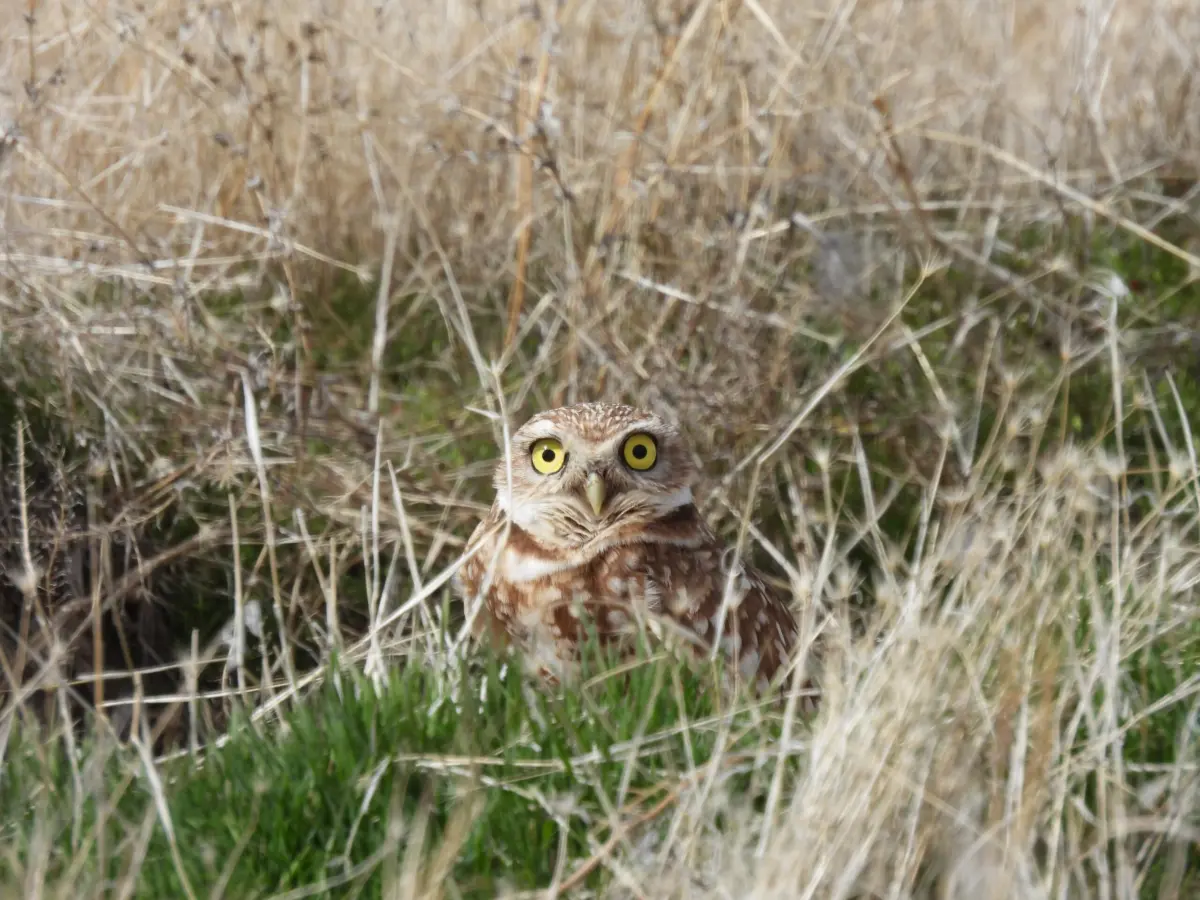
The consequences of this botanical invasion were swift and severe. Ground-dwelling species that depend on unobstructed vistas and sparse, low-growing vegetation were forced out. Among the most notable victims of this habitat shift was the Burrowing Owl (Athene cunicularia). Unlike most raptors that nest high in forest canopies or cliff faces, this charismatic, long-legged owl relies entirely on open, treeless terrain and abandoned underground burrows carved out by mammals like badgers, prairie dogs, and ground squirrels. As the tamarisk advanced, the open vistas vanished, the burrowing mammals retreated, and the owls disappeared.
Today, however, the narrative at Gillmor Sanctuary is one of resilience and renewal. Through aggressive landscape management, strategic partnerships, and targeted conservation funding, Audubon has successfully cleared over 1,000 acres of invasive tamarisk from the sanctuary’s uplands and adjacent properties. By removing these dense arboreal interlopers and reintroducing native grasses, shrubs, and forbs, conservationists have successfully unlocked the landscape’s historical ecological potential.
The results of this multi-year undertaking have exceeded initial expectations. Monitoring surveys conducted before, during, and after the restoration phases reveal a swift and encouraging ecological rebound. Burrowing Owls, along with other specialized grassland birds such as Long-billed Curlews, Willets, Horned Larks, and Savannah Sparrows, are returning to the sanctuary to breed, forage, and nest. Simultaneously, large and small mammals—including pronghorn and jackrabbits—are reclaiming territory they once lost. This comprehensive report explores the history of the Gillmor Sanctuary restoration, the mechanics of tamarisk eradication, the cascading ecological benefits for native fauna, and the collaborative roadmap guiding future conservation along the shores of the Great Salt Lake.
Detailed Chronology: From Degradation to Ecological Rebirth
To fully understand the significance of the current restoration success at Gillmor Sanctuary, one must trace the timeline of environmental degradation that necessitated such an aggressive intervention. The historical trajectory of the Great Salt Lake’s southern shores reflects a broader pattern seen across the American West, where human introduction of non-native species inadvertently triggered severe ecological imbalances.
The Roots of the Crisis: The Introduction of Tamarisk
The story of the tamarisk (Tamarix spp.) in North America is a classic cautionary tale of well-intentioned environmental engineering gone awry. Native to Eurasia and parts of Africa, tamarisk trees were intentionally imported to the United States during the 19th century. Conservation and agricultural planners prized the plant for its hardiness, deep root systems, and rapid growth rate, deploying it widely to stabilize riverbanks, prevent soil erosion, and serve as windbreaks.
However, lacking natural predators, diseases, or environmental checks in its new North American home, tamarisk quickly broke containment. The tree proved exceptionally adept at invading riparian corridors, wetlands, and upland areas characterized by high water tables—precisely the kinds of transition zones found throughout the Great Salt Lake basin.
As decades passed, tamarisk established dense monocultures. Each mature tamarisk tree can consume prodigious amounts of water, drastically lowering localized water tables and outcompeting native vegetation like cottonwoods, willows, and native bunchgrasses. Furthermore, tamarisk leaves secrete high levels of salt, which drop to the soil surface upon shedding. This saline litter creates a toxic microenvironment that inhibits the germination of native seeds, effectively locking the ecosystem into a degraded state.
At Gillmor Sanctuary, this botanical takeover radically altered the physical topography. Areas that historically featured low-lying shrubs, rabbitbrush, sagebrush, and sparse native grasses evolved into impenetrable forests of dense, woody tamarisk. For migratory and resident grassland species, this structural conversion was catastrophic.
The Decline of the Grassland Specialist
The Burrowing Owl serves as a biological indicator for the health of western grassland ecosystems. Historically abundant throughout the arid and semi-arid regions of North and South America, the species has experienced steep, sustained population contractions over the past century. Today, the Burrowing Owl is listed as endangered in Canada and is designated as a "Species of Greatest Conservation Need" across virtually every U.S. state within its native range.
The decline is multi-factorial, driven by widespread agricultural conversion, urban sprawl, direct human-wildlife conflict, rodent control programs, and, crucially, habitat degradation. When tamarisk invaded the uplands of Gillmor Sanctuary, it inflicted a triple blow upon the local Burrowing Owl population:
- Loss of Visibility: Burrowing Owls rely heavily on clear sightlines to scan for approaching avian and terrestrial predators. Dense tamarisk thickets blinded the owls to potential threats.
- Loss of Prey Base: The insect populations, small rodents, and reptiles that constitute the primary diet of the Burrowing Owl require native grassland vegetation to thrive. Monotypic tamarisk stands utterly collapsed this local food web.
- Loss of Excavators: The burrowing mammals—such as badgers and ground squirrels—that create the subterranean cavities essential for owl nesting cannot navigate or burrow effectively within dense tamarisk root mats. Consequently, these mammals abandoned the overgrown sanctuary lands.
The Audubon Intervention: Strategic Restoration Begins
Recognizing the escalating threats to the sanctuary’s biodiversity, the National Audubon Society formulated a comprehensive, science-driven habitat restoration strategy for Gillmor Sanctuary. The initiative aimed not merely at cosmetic vegetation management, but at a fundamental reset of the landscape’s ecological functions.
The phased intervention unfolded through a structured timeline:
- Phase I: Baseline Assessment and Mapping (Pre-Restoration): Conservation scientists deployed acoustic monitors, avian point-count surveys, and mammal tracking protocols to document the impoverished state of the uplands and establish rigorous metrics against which future success could be measured.
- Phase II: Mechanical and Chemical Tamarisk Eradication: Utilizing heavy machinery, specialized forestry mulchers, and targeted herbicide applications, field crews systematically dismantled over 1,000 acres of dense tamarisk across the sanctuary and contiguous private and public parcels. This monumental clearing effort opened up the canopy, exposed the soil to sunlight, and eliminated the high-volume water consumers draining the local hydrology.
- Phase III: Native Seeding and Revegetation: Recognizing that nature abhors a vacuum, conservationists immediately followed clearing operations with large-scale aerial and ground-based seeding of native grasses, forbs, and shrubs. Reintroducing species like bluebunch wheatgrass, Indian ricegrass, and diverse local shrubs re-established a resilient plant community capable of resisting secondary weed invasions.
- Phase IV: Post-Restoration Monitoring and Adaptive Management: Continuous biological surveys were implemented to track the response of target species. This adaptive management framework allowed Audubon ecologists to fine-tune ongoing restoration actions based on real-time empirical data.
Supporting Context & Metrics: Quantitative Impact of the Restoration
To evaluate the true efficacy of the Gillmor Sanctuary upland restoration, one must examine the hard metrics and ecological data gathered by conservation scientists. The transition from a choked, monocultural tamarisk forest to a thriving, biodiverse grassland can be mapped through several distinct environmental indicators.
Acreage and Landscape Scale
The sheer scale of the operation underscores its regional significance. To date, Audubon and its collaborative partners have successfully cleared and rehabilitated over 1,000 acres of contiguous uplands. This large-scale clearance is vital because many grassland species—particularly raptors and ungulates—require expansive, unfragmented territories to establish viable breeding populations. By consolidating restored acreage across property lines, the initiative effectively erased ecological islands, creating a continuous, functional wildlife corridor along the southern shores of the Great Salt Lake.
Avian Biodiversity Response
Avian monitoring surveys provide the most direct evidence of the restoration’s success. The return of native plant communities triggered a rapid, measurable influx of bird species:
- Burrowing Owls (Athene cunicularia): Following decades of localized absence, breeding pairs have returned to occupy the sanctuary uplands. The synergy between open vistas and newly installed or naturally returning burrows has provided a safe haven for rearing young.
- Shorebirds and Upland Waders: Species such as the Long-billed Curlew (Numenius americanus)—North America’s largest shorebird, which heavily utilizes adjacent dry grasslands for nesting—and the Willet (Tringa semipalmata) have been documented utilizing the restored uplands in significantly higher numbers.
- Grassland Songbirds: The acoustic and visual landscape of the sanctuary has been enriched by the resurgence of native passerines. Survey data indicate sharp population increases in Horned Larks (Eremophila alpestris) and Savannah Sparrows (Passer sandwichensis), both of which are sensitive indicators of native grassland health.
Mammalian Re-colonization
The ecological ripple effects extended far beyond the avian community. As the subterranean architecture of the soil healed and native forage re-emerged, medium and large mammals returned to the reopened landscape:
- Pronghorn (Antilocapra americana): North America’s fastest land mammal relies entirely on open terrain to spot predators and maintain high-speed escape routes. The removal of visual obstructions like tamarisk has restored vital foraging and transit corridors for local pronghorn herds.
- Black-tailed Jackrabbits (Lepus californicus): Serving both as crucial herbivores and as a primary prey base for apex predators and raptors, jackrabbit populations have rebounded dramatically within the cleared sectors, stabilizing the local trophic web.
Official Statements and Stakeholder Perspectives
The success of the Gillmor Sanctuary restoration project is a testament to the power of cross-sector collaboration. Achieving large-scale ecological healing in an ecologically sensitive, economically active region requires bridging diverse interests—from conservation non-profits to municipal agencies and private landowners.
The Conservationist Perspective
Speaking on the overarching philosophy of the sanctuary’s management, Audubon representatives emphasize that protecting avian species requires looking beyond single-species management to encompass entire landscape health.
"When we talk about saving a ground-dwelling raptor like the Burrowing Owl, we are fundamentally talking about saving an entire ecosystem," notes regional conservation leadership. "You cannot manage for the owl in isolation. You must restore the badgers that dig the burrows, the rodents that sustain them, the native grasses that shield them from predators, and the hydrological balance that sustains the plants. The transformation at Gillmor Sanctuary proves that when you dismantle the invasive barriers and restore the natural template, nature responds with astonishing speed."
Funding and Institutional Support
A project of this magnitude requires robust financial backing and logistical coordination. The National Audubon Society extended public gratitude to the foundational institutions that made the 1,000-acre milestone possible.
Special recognition was directed toward the National Fish and Wildlife Foundation (NFWF) for major financial contributions facilitated through the prestigious America the Beautiful Challenge Grant. Furthermore, the Browning Foundation was highlighted as a critical philanthropic partner whose sustained investment in western conservation underwrote the heavy labor and scientific monitoring phases of the initiative.
"This work is a collaborative triumph," project coordinators shared in a joint statement. "We extend our deepest gratitude to the dedicated organizations, field crews, and volunteers whose sweat equity on the ground made this massive undertaking a reality. Thanks to the visionary support of the National Fish and Wildlife Foundation’s America the Beautiful Challenge Grant and the Browning Foundation, we have secured a brighter ecological future for the Great Salt Lake."
Future Outlook: Expanding Horizons Across the Great Salt Lake Basin
While the achievements at Gillmor Sanctuary represent a monumental victory for conservation, Audubon ecologists and regional stakeholders view this milestone not as a finish line, but as a proof-of-concept for a much broader regional vision.
Landscape-Scale Collaboration
Tamarisk does not respect property boundaries. Despite the clearance of over 1,000 acres within and immediately adjacent to the sanctuary, extensive tracts of invasive tamarisk continue to blanket significant portions of the surrounding Great Salt Lake watershed. These remaining stands serve as a persistent seed bank, threatening to re-invade cleared areas if vigilance lapses.
Consequently, future efforts will pivot toward unprecedented landscape-level partnerships. Audubon is actively forging strategic alliances with a diverse coalition of stakeholders, including:
- Local Duck Clubs: Private hunting and conservation clubs that manage vast wetland and upland acreages around the lake.
- The Salt Lake City International Airport: Municipal aviation authorities managing buffer lands where wildlife management and hazard mitigation intersect.
- Agricultural Producers and Ranchers: Local landowners whose private working lands form vital ecological connections across the basin.
By aligning interests—reducing wildfire risks associated with dense tamarisk, improving water conservation, and enhancing grazing lands while simultaneously restoring wildlife habitat—these partnerships aim to scale up tamarisk eradication across the entire southern lake basin.
Innovative Habitat Enhancement: "New Digs" for Owls
Beyond vegetation management, Audubon is continually refining its approach to wildlife enhancement. As highlighted in ongoing sanctuary initiatives, habitat restoration is being paired with proactive, hands-on conservation engineering. This includes the installation of artificial nesting structures—affectionately dubbed "new digs" for the owls—designed to supplement natural burrows and accelerate population growth while the broader ecosystem continues its multi-year healing process.
A Beacon of Hope for the Arid West
As climate pressures, urban development, and invasive species continue to strain the ecological integrity of the American West, the work at Gillmor Sanctuary stands as a beacon of scientific optimism. By meticulously diagnosing environmental degradation, marshalling robust financial and community support, and executing targeted, science-based restoration, Audubon has demonstrated that damaged landscapes can be successfully reclaimed.
For the Burrowing Owl, the returning shorebirds, and the native ungulates sweeping across the newly opened plains, the Great Salt Lake uplands are once again a home—vibrant, resilient, and enduring.