
Executive Overview
To the human eye, a cardboard box is merely a disposable vehicle for e-commerce deliveries—a temporary vessel destined for the recycling bin. Yet, to the domestic cat (Felis catus), that same humble receptacle represents the pinnacle of luxury real estate: a sanctuary, an observation post, a hunting blind, and a thermal blanket all rolled into one.
Across living rooms worldwide, cat owners observe a universal ritual: an expensive, plush feline bed sits entirely ignored, while an Amazon shipping box barely large enough to contain a single paw becomes fiercely occupied within seconds of being emptied. While this behavior is often written off as an amusing quirk or a random eccentricities of our pets, feline behaviorists, animal welfare experts, and evolutionary biologists confirm that the obsession with cardboard is deeply rooted in science.
This in-depth investigative report examines the multifaceted psychology and biological drivers behind the feline-cardboard phenomenon. By analyzing the intersection of sensory processing, evolutionary instincts, thermodynamics, and behavioral enrichment, we decode why the discarded packaging often outperforms the actual purchase in the eyes of our feline companions.

Detailed Chronology: From the Delivery Doorstep to Feline Fortress
To understand the lifecycle of a cardboard box in a cat-friendly household, one must trace its journey from a logistical transport mechanism to a cherished piece of personal territory.
Phase 1: The Olfactory Arrival and Sensory Investigation
The phenomenon begins the moment a package crosses the threshold. Cats possess an olfactory system vastly superior to our own, equipped with roughly 200 million scent receptors (compared to a human’s 5 million) and a specialized vomeronasal organ (Jacobson’s organ) located in the roof of the mouth.
When a fresh box arrives, it carries a complex cocktail of unfamiliar scents accrued during manufacturing, warehousing, and transit. For a cat, this is the equivalent of reading the morning newspaper. The animal will meticulously sniff the corners, trace the seams, and rub its facial pheromone glands along the outer rims. This initial phase is an exercise in environmental reconnaissance and quality control.

Phase 2: Claiming and Pheromone Deposition
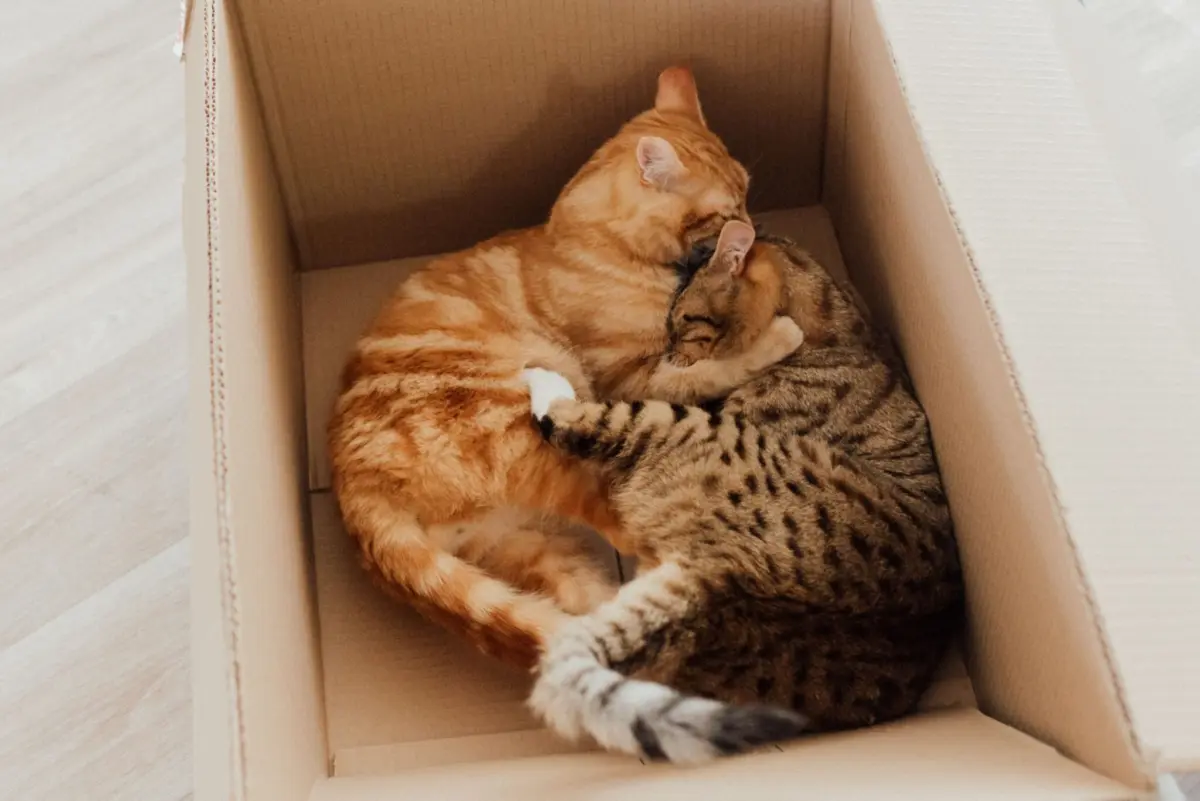
Once the box passes inspection, it undergoes a transformation from a foreign object into personal property. Through repetitive physical contact—rubbing cheeks, flanks, and paws against the corrugated walls—the cat deposits its unique chemical signature.
As the scent profile of the box shifts from industrial cardboard to familiar feline pheromones, a psychological shift occurs. The box ceases to be a novelty and becomes a secure, predictable extension of the cat’s territory.
Phase 3: Colonization and Multifunctional Utility
Within hours of its arrival, the box is fully integrated into the household ecosystem. Depending on the cat’s immediate needs, the container fluidly transitions between several functional states:

- The Thermal Refugium: Absorbing and retaining body heat, the box becomes a snug sleeping chamber during cooler daylight hours.
- The Strategic Vantage Point: Acting as a blind, it allows the cat to monitor household dynamics while maintaining a low profile.
- The Carnivoran Ambush Point: Serving as a temporary hunting blind, it transforms routine indoor play into simulated predatory stalking and pouncing exercises.
Supporting Context & Metrics: The Science of Seclusion
To unpack why cats find boxes so psychologically and physically gratifying, we must examine the intersection of ethology (the study of animal behavior) and environmental physics.
+-----------------------------------------------------------------+
|              PRIMARY DRIVERS OF THE FELINE BOX ATTRACTION       |
+-------------------+---------------------------------------------+
| Driver            | Biological / Behavioral Mechanism           |
+-------------------+---------------------------------------------+
| Security          | Enclosed walls minimize exposure vectors;   |
|                   | satisfies innate anti-predator instincts.   |
| Thermodynamics    | Corrugated cardboard acts as an insulator;  |
|                   | helps maintain high resting body temps.     |
| Predatory Play    | Provides an ideal blind for stalking,       |
|                   | hiding, and ambush-style pouncing.          |
| Stress Reduction  | Studies show rapid cortisol drops in        |
|                   | sheltered environments (e.g., Utrecht Univ).|
+-------------------+---------------------------------------------+
The Utrecht University Shelter Study on Stress Reduction
One of the most compelling pieces of scientific literature regarding this phenomenon comes from a study conducted at a Dutch animal shelter by Utrecht University researchers led by Claudia Vinke. The study evaluated stress levels among newly arrived shelter cats, splitting them into two groups: one provided with hiding boxes and one without.
The findings were statistically striking. Cats given cardboard boxes showed a significantly faster and more pronounced decrease in stress levels—measured using the Kessler and Turner cat stress score (CCS)—compared to cats without boxes. The boxed cats adapted to their new environments quicker, sought human interaction sooner, and displayed significantly lower baseline anxiety.

In the wild, cats are both predators and prey. While they sit atop the domestic food chain, their small stature leaves them vulnerable to larger carnivores. Enclosures like cardboard boxes offer a critical psychological safety net: solid walls on three or four sides mean fewer angles from which an unexpected threat can emerge.
Thermal Dynamics and the Ideal Resting Temperature
A cat’s thermoneutral zone—the temperature range in which they do not need to expend metabolic energy to maintain their core body temperature—is significantly higher than that of humans. While human room comfort typically hovers around 70°F to 72°F (21°C to 22°C), a domestic cat prefers ambient temperatures between 85°F and 90°F (29°C to 32°C).
This physiological reality explains why cats aggressively seek out sunbeams, laptops, heated blankets, and—crucially—cardboard boxes. Corrugated cardboard is an exceptional thermal insulator. The trapped air pockets within the fluted layers of the material prevent rapid heat loss, allowing a cat curled inside to conserve body heat far more efficiently than it would lying on an open hardwood floor or tile surface.
The Physics of the "Snug Fit"
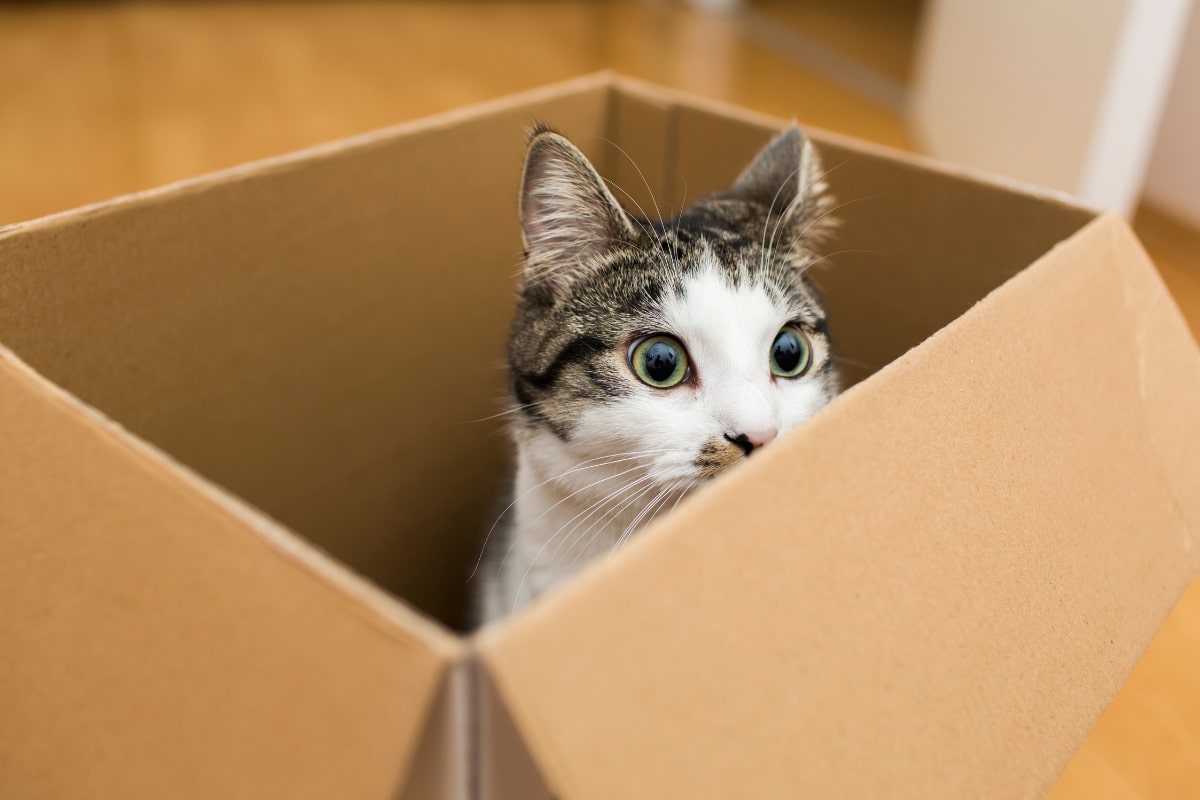
Cat owners are frequently amused by the physics-defying ability of felines to wedge themselves into boxes that appear far too small. Whether a cat resembles a liquid pouring into a tight container or dough expanding in a pan, this behavior satisfies a tactile sensory need known as proprioceptive feedback.
The tight walls of a small box exert gentle, consistent pressure against the cat’s skin and fur, stimulating deep pressure receptors. This sensory input mirrors the comforting physical contact experienced during nursing or huddling with littermates in kittenhood. It produces a calming neurological effect, reducing systemic anxiety and promoting deep, restorative sleep.
Expert Perspectives & Veterinary Insights
To gain a broader professional consensus, we consulted veterinary behaviorists and feline practitioners regarding the health implications of the cardboard obsession.

The Behavioral Perspective
"When we look at a cat in a box, we are looking at millions of years of evolutionary programming compressed into a household object," explains Dr. Elena Vance, a board-certified veterinary behaviorist. "Cats do not reason abstractly about furniture or human economics. They evaluate their environment purely through the lens of safety, temperature regulation, and predatory opportunity. A cardboard box happens to hit a bullseye across every single one of those evolutionary metrics."
The Dental and Dermatological Benefits
Beyond security and warmth, boxes serve a vital maintenance function. The fibrous, textured nature of corrugated cardboard provides an ideal surface for scratching. Scratching is not merely a method of sharpening claws; it is a complex behavioral ritual involving territorial marking (via scent glands in the paw pads), stretching the muscles of the shoulders and spine, and shedding dead claw sheaths.
Furthermore, many cats enjoy harmlessly sinking their teeth into the crisp edges of a box. While occasional nibbling is normal exploratory behavior, veterinarians issue a mild caveat: persistent ingestion of non-food items (known as pica) requires monitoring.

"While shredding cardboard is a wonderful mental and physical outlet, owners should ensure their cats aren’t actively consuming large quantities of the material, which can lead to gastrointestinal blockages," advises Dr. Marcus Thorne, a small animal practitioner. "Always remove staples, packing tape, and plastic straps before letting your cat inspect a new delivery."
Future Outlook: Environmental Enrichment in Modern Pet Care
As our understanding of animal psychology deepens, the humble cardboard box is transitioning from a household afterthought into a recognized tool for professional feline enrichment.
Modern cat-tree manufacturers and pet product designers have taken note of the feline-cardboard affinity, increasingly incorporating cardboard scratch pads, tunnels, and modular box systems into commercial enrichment toys. Animal shelters worldwide now mandate the inclusion of hiding spaces—frequently utilizing sturdy cardboard boxes—as a standard component of feline husbandry protocols to ensure psychological well-being during transitions.

Looking ahead, the relationship between cats and cardboard underscores a vital lesson in pet care: enrichment does not require expensive, high-tech gadgets. Often, the most biologically fulfilling environment for a domestic cat can be constructed from the very packaging society discards. As long as delivery services continue to drop parcels on our doorsteps, the cardboard box will remain an undisputed monarch in the kingdom of feline domestic happiness.