The public dog park has evolved from a simple municipal amenity into a complex socio-behavioral arena. As urbanization accelerates and pet ownership reaches historic highs—with over 65 million U.S. households now harboring at least one dog—these dedicated off-leash zones serve as critical hubs for canine physical conditioning and social enrichment. However, navigating these spaces successfully requires more than a simple open gate and a standard leash.
For the modern pet parent, optimizing a dog park excursion involves balancing two distinct but interconnected priorities: maximizing sensory and physical enrichment for the animal, and maintaining a rigorous standard of safety and public health etiquette. Utilizing specialized gear—ranging from high-visibility behavioral signaling accessories to sensory-stimulating bubble machines and structural fetch toys—can transform a standard outing into a highly constructive developmental experience. Yet, as veterinary behaviorists warn, the introduction of high-value resources (such as toys and treats) into a communal, off-leash environment introduces significant behavioral variables.
This investigative analysis examines the physics, behavioral psychology, and material science behind modern dog park gear. By analyzing a curated chronology of a high-enrichment park visit, examining industry metrics, and incorporating expert behavioral guidelines, we provide a definitive blueprint for the modern, responsible canine handler.
Detailed Chronology of a High-Enrichment Dog Park Excursion
To understand how specific gear influences canine behavior and park dynamics, we can trace a systematic, chronological timeline of a model park visit, from the initial arrival sequence to post-exercise recovery.
Phase I: Preparation and First Impressions (The Arrival Sequence)
The arrival sequence is the most critical phase for setting behavioral thresholds. Excitation levels spike as dogs approach the park fence, making secure physical control and clear identification paramount.
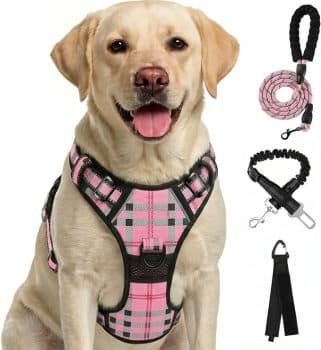
Plaid Dog Harness (Secure Control & Visual Styling): Before entering the double-gate system of a dog park, handlers must ensure secure, escape-proof restraint. A high-quality, multi-point harness distributes force across the dog’s chest and sternum rather than the sensitive trachea. This is especially vital when navigating the high-arousal transition zone outside the park gates, where leash pulling is most common. Periodic hardware inspections for webbing wear and buckle integrity are crucial safety protocols.
The Paws Smiley Face Dog Bandana (Behavioral Signaling): While often viewed purely as fashion, accessories in public spaces can serve as crucial visual indicators. A bright, highly visible bandana can signal to other handlers that a dog is social and approachable. Conversely, in modern canine behavior circles, color-coded bandanas (such as yellow for "needs space") are increasingly used to communicate behavioral boundaries before physical contact occurs.
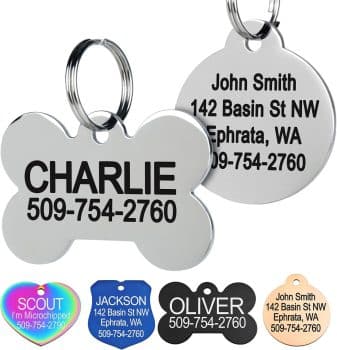
GoTags Personalized Pet ID Tag (Redundant Safety Systems): The transition through double-gated entry systems presents a high risk of accidental escape. Redundant identification—consisting of a durable, stainless steel engraved ID tag paired with an active, registered microchip—forms the baseline of responsible park preparation. Stainless steel tags resist the deep scratching and corrosion common during rough play, ensuring contact information remains legible under extreme conditions.
Phase II: Initiating High-Velocity Athletic Play (The Active Phase)
Once safely inside the off-leash area and acclimated to the environment, transitioning the dog’s energy into structured, high-velocity play helps prevent the development of hyper-arousal or target-seeking behaviors directed at other dogs.
Chuckit! Ball Launcher & Ultra Ball (Ergonomics and Durability): For high-drive retrieving breeds, standard fetch is insufficient. An ergonomic ball launcher leverages physics to extend the human arm’s throwing range by up to three times, allowing the dog to engage in full-sprint cardiovascular exertion. Critically, the launcher allows for hands-free pickup of saliva-covered balls, reducing the transmission of oral pathogens to the handler. The companion Ultra Ball, constructed of natural vulcanized rubber, offers superior bounce and durability compared to standard pressurized tennis balls, which can easily be punctured and present choking hazards.
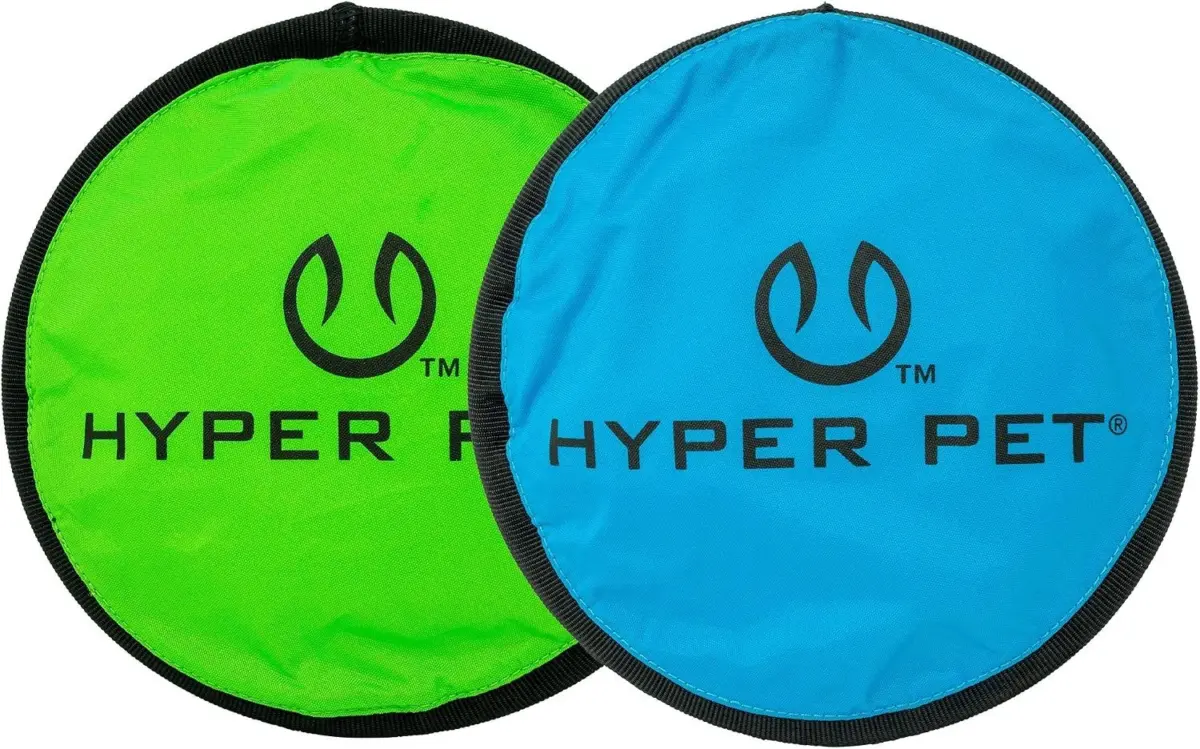
Hyper Pet Flippy Flopper Flying Disc (Aerodynamic Tracking): Unlike balls, which drop rapidly, soft nylon flying discs utilize aerodynamic lift to glide slowly through the air. This slower descent allows dogs to track, calculate, and catch the toy mid-air, stimulating cognitive spatial awareness. The soft-fabric construction prevents dental micro-trauma and oral lacerations that can occur with rigid plastic discs.
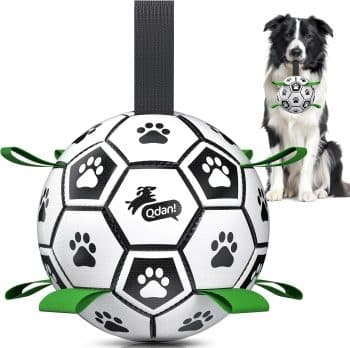
QDAN Dog Soccer Ball with Straps (Multi-Grab Interaction): Standard soccer balls are highly vulnerable to puncture from canine canine teeth and are difficult for dogs to carry, leading to jaw fatigue. A specialized dog soccer ball featuring heavy-duty nylon tabs sewn directly into the seams allows dogs to easily retrieve, carry, and shake the toy without compromising the ball’s structural bladder.
Phase III: Social Dynamics and Multi-Sensory Enrichment (Peak Social Hour)
As more dogs enter the park, individual play transitions into group dynamics. Managing resource distribution during this phase is critical to preventing territorial disputes.
[Single Toy Available] ──────► High Resource Scarcity ──► Potential Territorial Conflict
[32-Pack Tennis Balls] ─────► Low Resource Scarcity  ──► Harmonious Group Play
Fejapa Extra Large Dog Rope Toys (Structured Tug Dynamics): For compatible play partners, tug-of-war is an excellent outlet for natural predatory shaking instincts. An extra-large, multi-knot cotton rope provides sufficient length to keep dogs’ mouths safely separated during play. However, handlers must monitor these interactions closely; communal tugging can quickly escalate from play to competition if arousal levels cross a critical threshold.
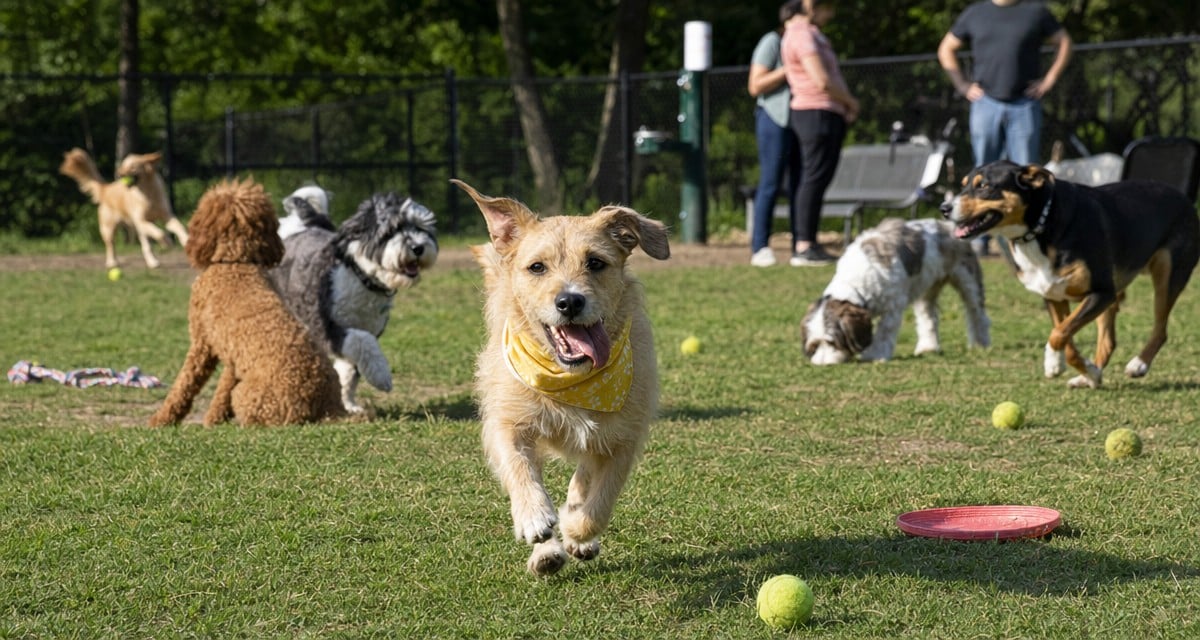
32-Pack Colorful Tennis Balls (Mitigating Resource Scarcity): One of the primary catalysts for dog park altercations is resource guarding. When only one ball is active in a park, its perceived value skyrockets. By introducing a massive, colorful 32-pack of tennis balls, handlers can effectively neutralize resource scarcity. With abundant targets available, the drive to guard an individual item drops significantly, allowing multiple dogs to retrieve simultaneously without conflict.
Bubbletastic Bacon Bubble Machine (Cognitive & Olfactory Stimulation): For dogs that are unmotivated by standard fetch, multi-sensory stimulation can provide excellent enrichment. A specialized bubble machine that produces non-toxic, allergen-free, bacon-scented bubbles engages both the visual and olfactory senses. As the bubbles float unpredictably through the air, dogs are encouraged to track, chase, and pop them, providing low-impact exercise that stimulates natural hunting behaviors.
Phase IV: Post-Exertion Recovery and Sanitation (The Wrap-Up)
As the excursion concludes, transitioning the dog back into a calm state while maintaining public hygiene ensures a positive end to the outing.
Three Dog Bakery Lick’n Crunch! Treats (Reinforcement & Calming): High-value, palatable treats are essential for reinforcing a reliable recall when it is time to leave the park. Offering a crunchy sandwich-style treat once the dog is safely back on-leash helps build a positive association with leaving the play area.
Brutus Brothcicles Frozen Dog Treats (Active Thermoregulation): Active play in warm weather raises a dog’s core body temperature rapidly. While fresh, cool water is mandatory, offering frozen broth treats (brothcicles) provides a dual benefit: active cooling of the oral cavity and blood vessels in the neck, and highly hydrating nutritional support packed with joint-supporting glucosamine and chondroitin.
Earth Rated Dog Poop Bags (Epidemiological Control): Public park sanitation is a matter of community health. Leftover canine waste is a primary vector for the transmission of zoonotic parasites (e.g., roundworms, hookworms) and viral pathogens (e.g., parvovirus, giardia). Utilizing thick, leak-proof, and reliably strong waste bags ensures that handlers can quickly and sanitarily clear the field, preserving the safety of the shared environment.
Supporting Context & Metrics
The growth of public dog parks and the accompanying gear market is backed by significant socioeconomic and veterinary data. Understanding these metrics highlights the importance of deliberate park management and gear selection.
Municipal Growth and Pet Industry Valuation
According to the Trust for Public Land, dog parks remain one of the fastest-growing segments of urban parks in the United States, experiencing a 40% increase in development over the past decade. This urban shift correlates with a massive surge in pet spending. The American Pet Products Association (APPA) reported that total U.S. pet industry expenditures reached $147 billion in 2023, with pet toys and accessories representing a multi-billion-dollar sub-market focused heavily on enrichment and safety.
Veterinary Safety and Incident Metrics
While dog parks offer immense benefits, they are not without risk. Veterinary emergency clinics report clear seasonal and behavioral trends:
Incident Category
Primary Catalyst
Key Preventative Gear / Action
Statistical Impact
Resource Guarding Conflict
Single high-value toy/treat in group setting
High-volume toy distribution (e.g., 32-pack balls)
Responsible for up to 35% of park altercations
Exertional Heatstroke
Prolonged play in >80°F temperatures without cooling
Fresh water, cooling vests, frozen broth treats
High mortality rate (up to 50%) if untreated
Tracheal Trauma
Pulling against standard collars during high arousal
Y-shaped ergonomic harness
Common in brachycephalic and toy breeds
Pathogen Transmission
Fecal contamination, shared stagnant water bowls
Individual water bottles, immediate waste bag use
Major vector for Giardia and Canine Infectious Respiratory Disease
Official Statements and Veterinary Consensus
To establish an authoritative framework for dog park safety, we look to the leading veterinary and behavior organizations worldwide.
On Resource Guarding and Communal Toys
The Association of Professional Dog Trainers (APDT) emphasizes that resource guarding is a natural, albeit challenging, canine behavior:
"Toys and high-value treats are primary triggers for defensive aggression. In a public, unregulated space like a dog park, the safest approach is to observe the surrounding dogs before introducing any toy. If any animal exhibits stiff body language, freezing over an object, or low growling, all toys should be immediately removed from the environment."
On Hydration and Heat Safety
The American Veterinary Medical Association (AVMA) provides strict warnings regarding active play and thermoregulation:
"Dogs do not sweat efficiently like humans; they rely almost entirely on panting to dissipate heat. When exercising in warm weather, handlers must provide clean, individualized water sources to prevent both dehydration and the transmission of infectious diseases from communal bowls. If a dog displays heavy, frantic panting, dark red gums, or lethargy, they must be moved to an air-conditioned space immediately."
On Vaccinations and Public Health
The American Animal Hospital Association (AAHA) guidelines stress that off-leash park socialization should only occur after a complete vaccine protocol:
"No dog should enter a public, high-traffic canine area without being fully vaccinated against core pathogens (Parvovirus, Distemper, Adenovirus, and Rabies) as well as non-core respiratory pathogens like Bordetella and Canine Influenza. Proper waste sanitation by handlers is the single most effective barrier against environmental parasite contamination."
Future Outlook: The Next Generation of Canine Social Spaces
As technology and urban design continue to merge, the future of canine socialization is shifting toward highly regulated, technologically integrated environments.
       [Traditional Municipal Park]
                     │ (Unregulated, high-risk, variable sanitation)
                     ▼
         [Smart Public Dog Parks]
                     │ (Automated gates, RFID tag verification, real-time tracking)
                     ▼
       [Private Canine Social Clubs]
                       (Membership-only, temperament testing, professional supervision)
1. Smart Dog Parks and RFID Integration
Municipalities are beginning to pilot "smart" dog parks that require digital registration. These parks utilize automated gate systems that only open when scanned with an RFID-enabled collar tag, verifying that the dog has up-to-date rabies vaccinations and licensing on file with the city. This drastically reduces the public health risks associated with unvaccinated animals.
2. The Rise of Private, Supervised Canine Social Clubs
Due to the unpredictable nature of public municipal parks, private, membership-only dog parks (often combined with pet-friendly cafes and workspaces) are surging in popularity. These facilities require behavioral temperament assessments before entry, feature professional "park rangers" to supervise play, and utilize veterinary-grade synthetic turf that is sanitized daily.
3. Advanced Materials Science in Pet Gear
The materials used in dog toys are undergoing a revolution. Traditional plastics are being phased out in favor of biodegradable, non-toxic, food-grade thermoplastic elastomers (TPE) that are highly puncture-resistant and float in water. Additionally, smart collars equipped with GPS and real-time biometrics (monitoring heart rate, respiratory rate, and internal temperature) are allowing handlers to track their dog’s exertion levels in real time, preventing physical exhaustion and heat injury before clinical signs appear.
Ultimately, whether utilizing cutting-edge biometric collars or simply carrying a reliable roll of biodegradable waste bags, the key to a successful dog park experience lies in the handler’s commitment to safety, continuous supervision, and behavioral awareness. By combining the right gear with proactive management, we can ensure that these vital community spaces remain safe, clean, and enriching for generations of dogs to come.