
Executive Overview
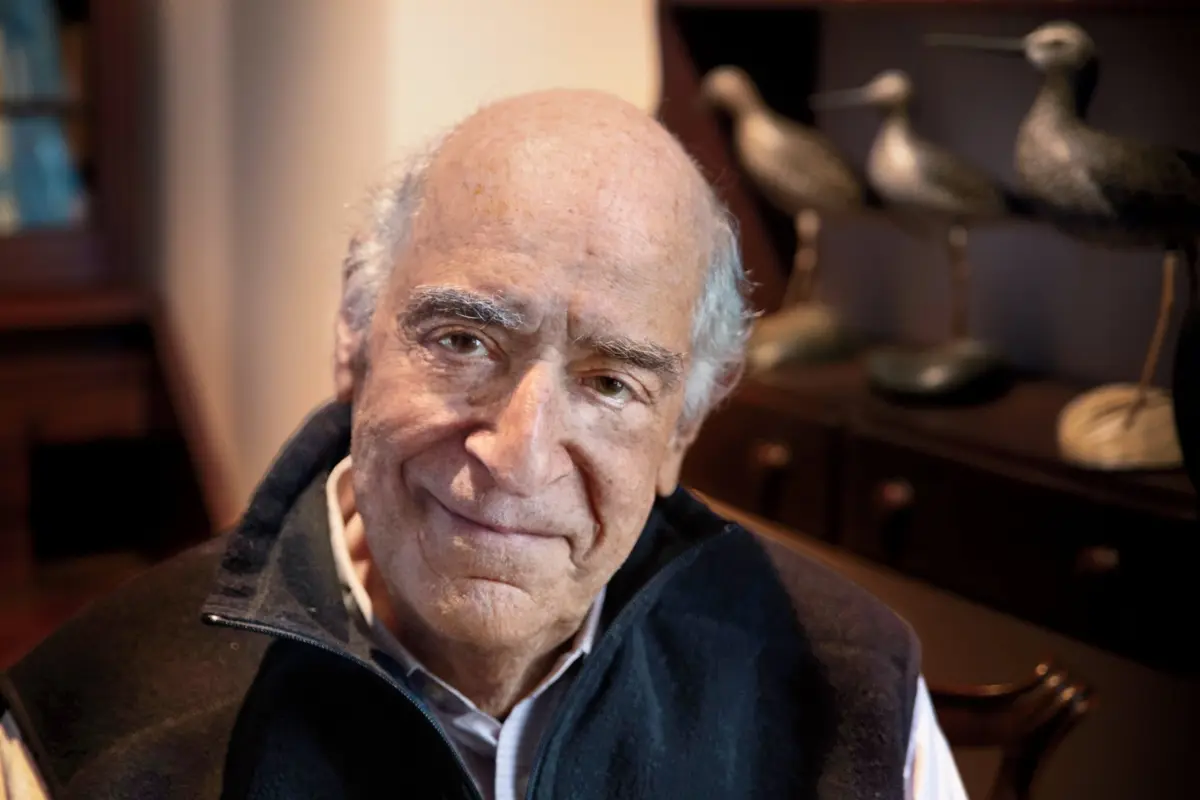
The landscape of modern avian conservation bears the indelible fingerprints of Joseph "Joe" Ellis. A towering figure in both the high-stakes world of corporate finance and the deeply personal realm of grassroots environmental stewardship, Ellis spent decades fundamentally reshaping the National Audubon Society. Following his passing earlier this year, colleagues, scientists, and environmentalists worldwide have paused to reflect on a remarkable legacy that bridged the gap between local passion and global ecological impact.
For nearly two decades, Ellis served as a long-standing board director for the National Audubon Society, leveraging his formidable intellect, financial acumen, and relentless curiosity to propel a historic American institution into the modern era of borderless conservation. Whether an amateur ornithologist tracks a Swainson’s Hawk across international boundaries using the cutting-edge Bird Migration Explorer, or a visitor walks the tranquil trails of the Sharon Audubon Center in Connecticut, they are experiencing the direct results of Ellis’s strategic vision.
Long before "hemispheric conservation" became a standard industry buzzword, Ellis recognized that migratory birds do not recognize political borders. He champion-built the intellectual and financial frameworks necessary to transition Audubon from a collection of localized, disconnected sanctuaries into an interconnected, international force spanning North, Central, and South America. His approach was a unique synthesis of Wall Street analytical rigor and a genuine, boyish wonder for the natural world—a combination that forever altered the trajectory of bird conservation in the Western Hemisphere.
Detailed Chronology: From Wall Street Dominance to Conservation Leadership
The Making of an Analytical Giant
To understand Joe Ellis’s impact on conservation, one must first examine the arena where he honed his strategic genius: Wall Street. For decades, Ellis was widely regarded as one of the most effective and influential analysts in the financial sector, anchoring his career at the premier investment banking firm Goldman Sachs.
In an industry defined by volatility, rapid shifts, and intense competition, Ellis stood out through sheer intellectual rigor and an uncanny knack for spotting emerging consumer and market trends long before they entered the mainstream consciousness. His analytical prowess did not go unnoticed. For an unprecedented 18 consecutive years, Institutional Investor magazine ranked Ellis as the top retail market analyst in the United States—a historic streak that cemented his reputation as a titan of financial forecasting.
Yet, beneath the high-pressure veneer of corporate boardrooms and multi-million-dollar market projections beat the heart of a passionate naturalist. While other executives utilized their leisure time for conventional pastimes, Ellis channeled his observation skills into the meticulous study of birds. The same razor-sharp analytical mind that deconstructed complex retail ecosystems was eagerly applied to understanding ecological patterns, avian behavior, and habitat degradation.
Expanding the Horizon: The Hemispheric Pivot
When Ellis brought his expertise to the board of the National Audubon Society, the organization was predominantly focused on domestic, localized conservation—protecting specific wetlands, forests, and sanctuaries within the United States. While this local excellence was vital, Ellis immediately identified a critical strategic blind spot.
Driven by his signature intellectual curiosity, Ellis would frequently pose fundamental questions to ornithologists and conservationists alike: "What happens to the Wood Thrushes after they leave my backyard, and are they taken care of wherever they go?"
For Ellis, this was not merely a rhetorical musing or a casual backyard observation; it was a glaring management problem that demanded a systematic, scalable solution. He recognized the ecological reality that protecting breeding grounds in New England was ultimately futile if migratory species faced unchecked habitat destruction, deforestation, or illegal hunting along their migration routes or wintering grounds in Canada, Mexico, Central America, or South America.
As a big-picture strategic thinker, Ellis became an early, vocal proponent of a radical institutional expansion. He argued passionately that Audubon needed to cast off its domestic constraints, build strategic partnerships across the Americas, and direct its scientific capabilities toward a truly hemispheric conservation model. His corporate background provided him with the blueprint: just as modern supply chains operated globally, modern conservation strategies had to match the geographic scale of the species they sought to protect.
Philanthropy Rooted in Trust and Transformation
Ellis approached philanthropy with the exact same disciplined, results-oriented methodology that defined his professional career at Goldman Sachs. He viewed charitable giving not as an emotional reaction to a poignant appeal, but as a strategic investment. Whenever he evaluated a potential funding opportunity, he asked a fundamental question: "What will this philanthropic investment actually accomplish for the birds?"
Believing firmly that bold conservation ideas deserved bold financial backing, Ellis frequently served as the catalyst for high-risk, high-reward initiatives. He was willing to step in early—long before an ambitious concept had proven its viability or secured widespread institutional buy-in—simply because he placed deep trust in the science and the integrity of the people behind it.
His foundational seed funding for the Migratory Bird Initiative and the groundbreaking Bird Migration Explorer did far more than simply launch two signature programs; it served as a proof-of-concept that transformed Audubon’s technological and scientific capabilities. By de-risking these innovative projects with his own capital, Ellis provided Audubon with the runway it needed to expand hemispherically, subsequently drawing in a diverse coalition of additional donors, foundations, and government partners who were inspired by the early momentum.
Supporting Context & Metrics: The Architecture of Modern Avian Science
To fully appreciate the magnitude of Joe Ellis’s contributions, one must examine the technological and scientific infrastructure he helped finance and champion. The modern conservation landscape requires unprecedented data resolution to track, model, and protect mobile species across thousands of miles.
The Migratory Bird Initiative & Bird Migration Explorer
Historically, tracking the perilous journeys of migratory birds was limited by fragmented data, disparate regional banding studies, and a lack of unified digital platforms. Conservationists knew birds were disappearing, but pinpointing the exact stressors along their flyways remained a monumental challenge.
Ellis’s early financial backing catalyzed the creation of the Migratory Bird Initiative (MBI), an ambitious scientific undertaking designed to synthesize decades of avian research, satellite telemetry, citizen science data (such as eBird), and climate modeling. The crown jewel of this initiative—and a direct beneficiary of Ellis’s forward-thinking philanthropy—is the Bird Migration Explorer.
The Explorer is a first-of-its-kind, interactive digital platform that allows researchers, policymakers, educators, and everyday bird enthusiasts to visualize the complete annual cycle of migratory species. Users can trace the exact flight paths, seasonal distributions, and critical stopover sites of hundreds of North American birds, including species championed by Ellis such as the Swainson’s Hawk and the Wood Thrush.
By illuminating the interconnected web of habitats required by migratory birds throughout their entire life cycles, the Explorer transformed abstract conservation theory into actionable, data-driven geography. Policymakers can now identify precisely which tracts of international forest or wetland are vital to the survival of a species breeding thousands of miles away—a realization that directly mirrors the core philosophy Joe Ellis championed on the Audubon board.
Grassroots Impact: The Sharon Audubon Center
Even as Ellis conceptualized hemispheric and international strategies, he never lost sight of his local roots. His commitment to conservation was deeply personal, anchored in the landscapes of Connecticut and New York where his love for birds first took root.
On his private property in western Connecticut, Ellis practiced what he preached. He meticulously managed his land to maximize biodiversity and support healthy bird populations, taking profound joy in loading friends into his golf cart to tour the restored habitats and observe the thriving avian life firsthand.
His sustained local philanthropy greatly strengthened the Sharon Audubon Center in Connecticut, ensuring that generations of children, families, and aspiring naturalists could experience the wonder of the outdoors. The educational programs he helped launch and the protected landscapes he cherished continue to function as vibrant community assets, carrying his spirit of local stewardship forward into the future.
Official Statements & Tributes
The passing of Joe Ellis elicited deep sorrow and profound gratitude from leaders across the environmental community, all of whom noted his unique combination of intellectual rigor, forceful personality, and compassionate heart.
Dr. Elizabeth Gray, Chief Executive Officer of the National Audubon Society, captured the essence of his transformative influence on the institution:
"Joe Ellis understood the power of ambitious ideas and the importance of bringing the right people together to make them possible. He pushed us to think expansively about our role and helped lay the foundation for the hemispheric organization we are today. Joe’s legacy will endure across Audubon, and he will be deeply missed."
Colleagues who worked alongside him on corporate and non-profit boards frequently highlighted his distinctive interpersonal style. Described universally as having a "big New York personality," Ellis was fiercely enthusiastic, insatiably curious, direct, and authoritative in every endeavor he pursued. Yet, those who knew him well noted that this formidable exterior was invariably tempered by deep kindness, emotional intelligence, and a genuine, abiding care for the people with whom he collaborated. Furthermore, friends fondly remember his sharp wit and his sincere appreciation for a well-told joke, which brought levity and warmth to even the most intense strategic planning sessions.
In recognition of his extraordinary local and regional contributions, Audubon Connecticut honored Ellis with its prestigious 2021 Environmental Leadership Award, cementing his status as a pillar of the New England conservation community.
Future Outlook: Sustaining the Vision in a Changing World
As the National Audubon Society looks toward the horizon, the blueprint laid down by Joe Ellis remains more relevant and urgent than ever. In an era defined by accelerating climate change, unprecedented biodiversity loss, and shifting geopolitical landscapes, the necessity for borderless, science-driven conservation is absolute.
The institutional pivot that Ellis engineered—moving away from isolated local efforts toward an integrated, hemispheric network—has positioned Audubon to tackle systemic environmental crises with unprecedented precision. The data infrastructure funded by his early philanthropic investments continues to evolve, incorporating machine learning, real-time satellite tracking, and expanding international partnerships that secure critical habitats from the Arctic tundra to the southern tips of South America.
Yet, perhaps the most enduring aspect of the "Ellis legacy" is the challenge he issued to contemporary philanthropy and strategic planning. By demonstrating that bold ideas deserve early, unhesitating financial backing, he established a standard of visionary giving that encourages modern donors to take calculated risks on transformative science.
Every time a conservationist saves a critical wetland stopover in Central America, every time a researcher models a changing flyway using the Bird Migration Explorer, and every time a child looks through a pair of binoculars at the Sharon Audubon Center, Joe Ellis’s vision lives on. He taught an iconic environmental organization how to think globally while staying true to the simple, profound joy of watching a bird take flight. Though he is gone, his flight path remains clearly marked—guiding Audubon into a resilient, hemispheric future.