
Executive Overview
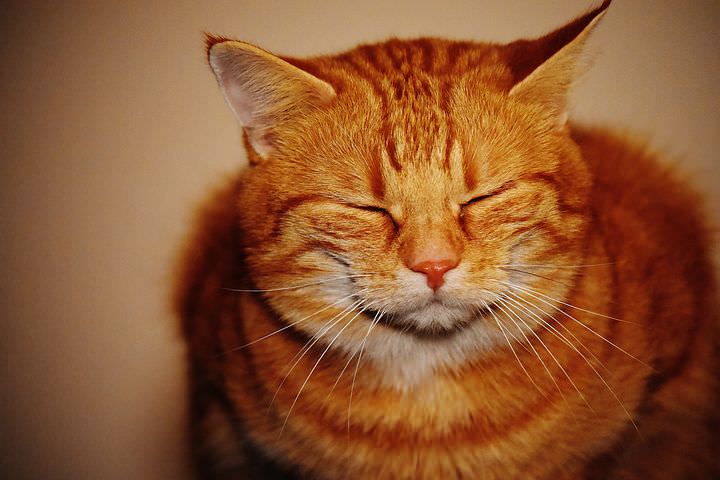
To millions of cat owners worldwide, the distinct "M" shape stamped onto a feline’s forehead is a familiar, endearing feature. Whether gazing at an American Shorthair lounging on a living room rug, a majestic Maine Coon pacing a hallway, or a sleek mixed-breed rescue cat peering from a windowsill, this prominent letter-like marking appears with astonishing regularity. While folklore and ancient legends attribute the symbol to mythical origins—such as the Prophet Muhammad’s blessing or the Virgin Mary’s touch—modern genetic science reveals a far more intricate reality.
The iconic forehead "M" is not a mystical sign, but rather the visible signature of ancient evolutionary history, governed by precise developmental biology and genetic signaling pathways. At its core, the marking is a product of the Agouti signaling pathway and a complex network of pigmentation genes that dictate how color is distributed along individual hair shafts. Far from being exclusive to explicitly striped felines, this genetic blueprint runs deep within the ancestral code of nearly Felis catus, manifesting even in solid-colored or non-tabby cats as a faint "ghost tabby" pattern under certain lighting conditions.
This comprehensive investigation explores the genetic mechanics, evolutionary timelines, variations across breeds, and scientific discoveries that explain why domestic cats wear this ubiquitous emblem. By examining foundational genetic studies—such as the landmark 2012 research by Kaelin et al. published in Science—we can decode the biological architecture behind one of nature’s most recognizable facial patterns.
Detailed Chronology: Unlocking the Genetics of Feline Coats
For decades, the precise genetic triggers responsible for the stunning diversity of feline coat patterns remained a mystery. While breeders and geneticists understood that certain traits were dominant or recessive, the underlying molecular switches that transformed a solid-colored coat into stripes, swirls, or spots were largely theoretical.
The Dawn of Genetic Mapping (Pre-2010)
Early feline genetics focused primarily on basic Mendelian inheritance. Researchers knew that the tabby pattern was dominant over solid coloration and that various modifiers could alter the intensity of the pigment. However, the exact chromosomal locations and biological mechanisms driving pattern formation—such as how pigment cells (melanocytes) organize themselves during embryonic development—were shrouded in speculation.
The Breakthrough Discovery (2012)
A major turning point in feline genetics arrived with a landmark study led by researchers Kaelin and Barsh, published in the journal Science in 2012 (and expanded upon in subsequent reviews in 2013). Scientists successfully identified the gene responsible for the classic versus mackerel tabby patterns, pinpointing a molecular player that regulates hair-shaft pigmentation and spatial patterning.
The study demonstrated that the tabby pattern is not merely a surface-level coloration, but a deeply ingrained developmental blueprint written into the cat’s DNA long before individual hairs even begin to grow. This gene network dictates the precise regions where melanin-producing cells switch pigment production on and off, creating alternating bands of light and dark color—a phenomenon known as agouti banding. The forehead "M" was identified as a stable anchor point of this genetic matrix, remaining remarkably consistent across diverse physiological and morphological variations.
Supporting Context & Metrics: The Anatomy of Tabby Patterns
To fully understand the forehead "M," one must examine the broader family of tabby patterns. The domestic cat (Felis catus) displays four primary coat variations, all of which incorporate the characteristic facial marking, albeit with varying degrees of visual contrast.
The Four Primary Tabby Patterns
| Tabby Pattern | Visual Description | Visibility of the "M" | Common Breeds |
|---|---|---|---|
| Mackerel | Narrow, parallel vertical stripes running down the body (often referred to as the "tiger" look). | Usually bold, high-contrast, and sharply defined. | Domestic Shorthairs, many mixed-breed rescues. |
| Classic / Blotched | Swirled, marbled, or bullseye-like patches creating a dramatic whorled effect. | Bold, often the clearest and most striking "M" on the spectrum. | American Shorthair, Maine Coon. |
| Spotted | Stripes that break apart into individual spots or rosettes across the flanks. | Moderate; can sometimes appear slightly faint depending on spotting modifiers. | Bengal, Ocicat, Egyptian Mau. |
| Ticked | Agouti banding along individual hairs with few or no distinct body stripes (exception made for facial markings). | Faint or entirely absent on the body, but the forehead "M" typically remains prominent. | Abyssinian, Singapura. |
| "Ghost Tabby" | No visible body pattern due to solid or non-tabby coloration (e.g., solid black). | Very faint; often visible only in kittens or under direct, bright sunlight. | Solid-colored kittens, black cats. |
The Mechanics of the "Ghost Tabby"
One of the most fascinating revelations of modern feline genetics is that the genetic instructions for a tabby coat are present in nearly all domestic cats. Even if a cat appears entirely jet-black, white, or cream-colored as an adult, the underlying tabby gene network remains part of its genetic background.
During kittenhood—when fur density and pigment distribution are still maturing—or when illuminated by direct sunlight (which exposes subtle differences in melanin density), these solid-colored cats often reveal a "ghost tabby" pattern, complete with a faint outline of the forehead "M." As the cat matures, other color-masking genes (such as those responsible for dense eumelanin production in black cats) suppress the visual expression of the stripes, yet the architectural blueprint remains intact beneath the surface.
Comparative Analysis: Why Are Cats Patterned?
While coat patterns are universal across the animal kingdom, researchers continue to debate the precise evolutionary pressures that shaped them. Theories regarding animal pigmentation vary wildly depending on the ecological niche of the species in question.
Zebras vs. Cats: Divergent Evolutionary Paths
For years, scientists studying zebra stripes hypothesized that the high-contrast black-and-white patterns serve primarily to deter biting flies, such as horseflies and tsetse flies, whose visual systems struggle to process striped motion. However, researchers emphasize that zebra research cannot be directly extrapolated to explain feline coloration.
Zebras are large, herbivorous grazing prey that live in open, sun-drenched environments where herd dynamics and motion confusion play critical roles in survival. Cats, by contrast, are solitary, stealthy ambush predators. Their evolutionary imperative is entirely different: effective camouflage.
The Predator’s Advantage
The tabby pattern—with its disruptive coloration—serves as an invaluable survival tool for a small carnivore. When resting in dappled sunlight, tall grass, or forest undergrowth, the stripes and swirls of a tabby coat break up the cat’s physical outline, rendering it nearly invisible to both potential prey and larger predators.
Feline ancestors have carried this foundational tabby pattern for nearly 10,000 years, tracing back to the African wildcat (Felis lybica), the primary progenitor of the modern domestic cat. The forehead "M," while visually striking to humans, aligns with the natural facial striping patterns of wild felids, which help disrupt the symmetry of the face and obscure the direction of the cat’s gaze when stalking prey.
Expert Perspectives & Scientific Evidence
To validate these genetic and evolutionary hypotheses, researchers rely on peer-reviewed investigations into mammalian developmental biology.
"The spatial organization of hair follicle pigmentation in domestic cats is governed by a conserved genetic network that establishes pattern formation well before pelage development. Variations in the Agouti signaling pathway account for the dramatic phenotypic plasticity observed across diverse feline breeds, while core facial markers like the cranial ‘M’ remain remarkably conserved evolutionary anchors."
— Kaelin & Barsh, Seminars in Cell & Developmental Biology (2013)
Geneticists point out that the forehead is a convergence zone for facial musculature and cranial bone structure. During embryonic development, pigment cells migrate along specific neural crest pathways. The intersection of these migration paths on the forehead naturally forms symmetrical configurations, which the tabby gene network amplifies into the distinct vertical and horizontal bars that readers recognize as the letter "M."
Furthermore, veterinary geneticists emphasize that the presence of the "M" is not tied to a single elite lineage. Because the tabby trait is a dominant genetic expression, it crosses all artificial boundaries of breed classification. Whether observing an elite champion Maine Coon or a domestic shorthair found in a suburban alleyway, the genetic machinery producing the marking operates through the exact same molecular pathways.
Frequently Asked Questions
Do all tabby cats have an "M" on their forehead?
Yes. Virtually all cats displaying one of the four recognized tabby patterns—mackerel, classic, spotted, or ticked—carry the distinctive M-shaped marking above their eyes. While the boldness, width, and contrast of the marking can vary based on secondary coat modifier genes, the structural presence of the "M" is a universal hallmark of the tabby classification.
Do all cats have an "M," even ones that aren’t tabby?
Not visibly to the naked eye under normal lighting, but the genetic blueprint for the tabby pattern exists in the DNA of nearly all domestic cats. This is why solid-colored cats (such as solid black, blue, or red individuals) frequently exhibit a "ghost tabby" pattern—including a faint outline of the forehead "M"—during their kittenhood or when viewed under bright, direct sunlight. As they mature into adulthood, other pigmentation genes typically mask these underlying patterns.
What specific cat breeds display the "M" marking?
The marking is not restricted to any single breed. Because it stems from the universal tabby gene network shared by domestic cats, it appears across a vast spectrum of pedigree and non-pedigree populations. Prominent examples include American Shorthairs, Maine Coons, Bengals, Abyssinians, Ocicats, and countless domestic mixed-breed cats.
Why is the marking shaped like an "M"?
While human imagination naturally anthropomorphizes natural geometries into familiar symbols like letters, the "M" shape is a byproduct of the natural intersection of facial striping patterns. These stripes follow the underlying muscular and structural contours of the feline skull during embryonic development, naturally creating a symmetrical, arched configuration above the eyes.
Future Outlook: The Next Frontier in Feline Genomics
As genetic sequencing technology continues to advance at an unprecedented pace, the study of feline coat coloration offers profound insights far beyond aesthetic appreciation. Researchers utilize cat coat genetics as a model for understanding broader mammalian developmental biology, including human skin and hair pigmentation disorders, cellular migration, and evolutionary adaptation.
Future research aims to map out the precise secondary modifier genes that dictate why certain cats develop high-contrast mackerel stripes while others exhibit soft, marbled classic patterns or muted ticked coats. By unlocking the remaining mysteries of the Agouti signaling pathway, scientists hope to gain a deeper understanding of how complex biological patterns form across the animal kingdom.
Until then, the ubiquitous "M" on our feline companions remains a daily reminder of the deep, ancient evolutionary heritage living right in our living rooms—a silent testament to thousands of years of natural history written in fur and DNA.