
Executive Overview
In the world of animal rescue, unexpected twists are a daily reality. For the dedicated staff at The Bitty Kitty Brigade in St. Paul, Minnesota, taking in a pregnant feline named Mama Butter Braid brought both heartwarming moments and profound medical challenges. While Mama Butter Braid successfully delivered a litter of sweet, pastry-themed kittens—Caramel Roll, Blueberry Cream Cheese, Strawberry Cream Cheese, and Bavarian Creme with Chocolate—one newborn faced a life-threatening hurdle from his very first breath.
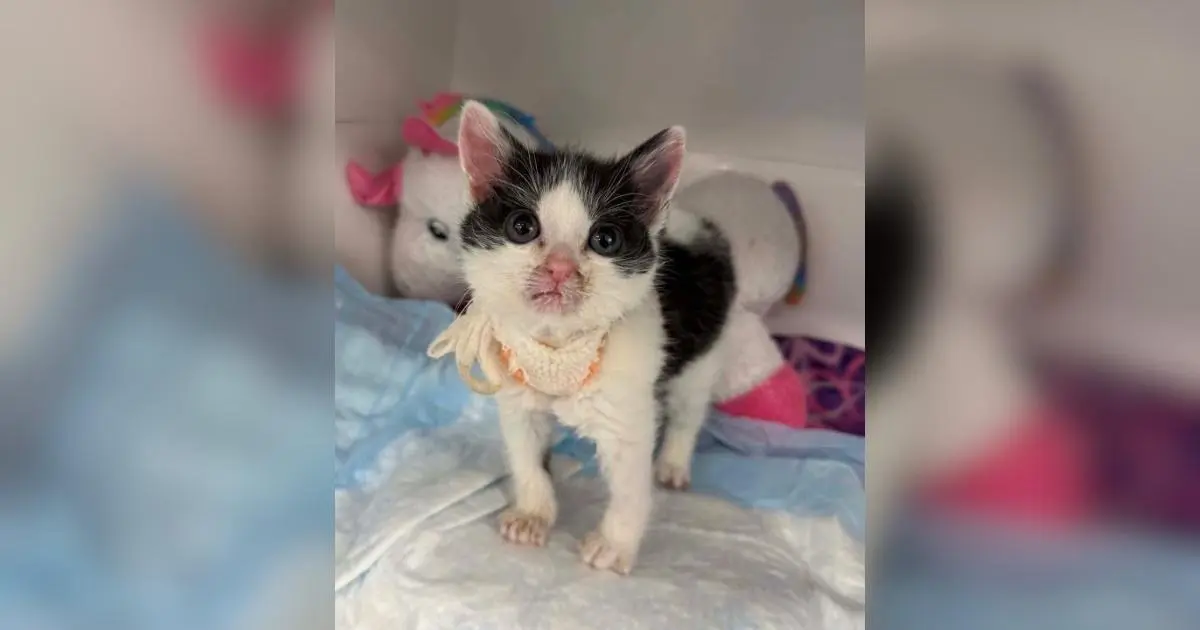
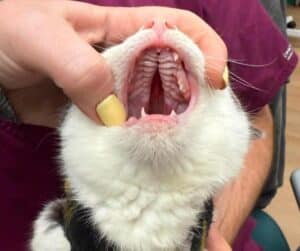
Bavarian Creme was born with a severe congenital cleft palate. This anatomical anomaly meant that standard, instinctual nursing at his mother’s side would not only be inefficient but perilously hazardous. Ingesting milk through an open palate can easily lead to aspiration pneumonia—a condition that claims the lives of countless fragile newborns before they even reach weaning age.
What followed was an extraordinary campaign of specialized veterinary intervention, round-the-clock foster care, and financial partnership from the Orphan Kitten Club. Through weeks of tube-feeding, careful nutritional monitoring, and a pivotal surgical intervention, Bavarian Creme transformed from a high-risk medical case into a thriving, playful kitten capable of eating independently. Though his medical journey is not yet complete, his story stands as a testament to the life-saving impact of modern pediatric feline medicine and the unwavering dedication of animal welfare professionals.
Detailed Chronology: From Rescue to Recovery
The Arrival of Mama Butter Braid and Her Sweet Litter
The story began when rescuers welcomed Mama Butter Braid into foster care. Knowing she had already lost one newborn prior to intake, her caregivers maintained a watchful eye, suspecting she might still be carrying additional kittens. Their intuition proved correct. Just days after settling into her secure, stress-free foster environment, Mama Butter Braid delivered four more healthy-looking kittens.
In honor of a concurrent fundraising campaign, the litter received an irresistibly charming array of dessert-inspired names:
- Caramel Roll
- Blueberry Cream Cheese
- Strawberry Cream Cheese
- Bavarian Creme with Chocolate
Mama Butter Braid immediately transitioned into her maternal role with vigor, demanding human attention, consuming high-calorie nourishment, and showering her litter with affection. However, as the kittens developed, it became glaringly obvious that Bavarian Creme with Chocolate was trailing behind his siblings in a very specific, worrisome way.
Closing the "Milk Bar": Separating Bavarian Creme for His Own Safety
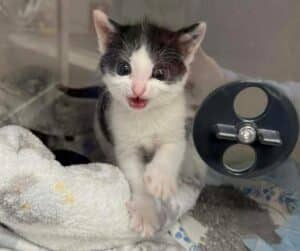
Within days, the Bitty Kitty Brigade recognized that Bavarian Creme could no longer remain at Mama Butter Braid’s "open milk bar." Because of the abnormal opening in the roof of his mouth, the tiny kitten lacked the vacuum pressure required to suckle. More dangerously, any milk he did manage to ingest threatened to slip into his nasal cavity and respiratory tract.
To protect him from aspiration pneumonia and malnutrition, rescuers made the difficult decision to separate Bavarian Creme from his mother and littermates. Yet, the little fighter was far from alone. Placed into specialized care, he shared his new foster space with another compatible kitten companion and a comforting stuffed elephant, ensuring he retained vital social enrichment while humans took over the complex task of his sustenance.
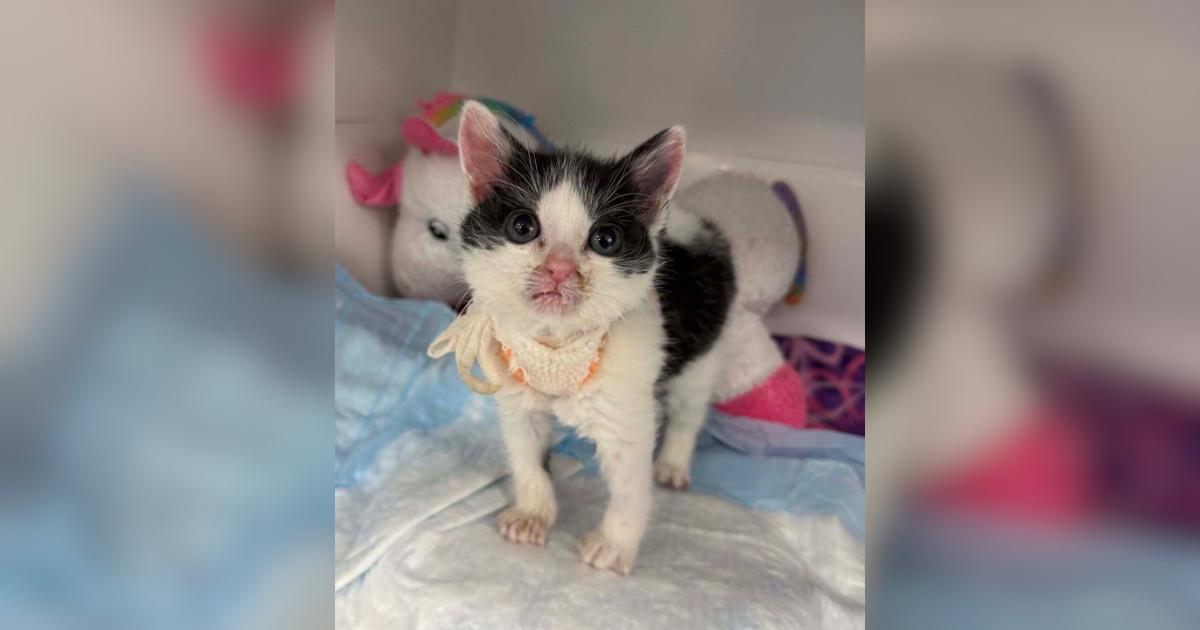
Instead of latching onto a bottle, Bavarian Creme required meticulous tube-feeding. For weeks, his caregivers utilized an esophagostomy tube to bypass his mouth entirely, delivering precisely measured nutrients directly to his digestive tract. Every single meal demanded sterile precision, unwavering patience, and constant observation.
The Turning Point: Surgical Repair and Grant Support
As weeks rolled by, Bavarian Creme steadily gained weight and built internal strength. In pediatric cleft palate cases, immediate surgical repair is rarely possible; patients must attain a specific size, weight, and physiological resilience to withstand complex reconstructive operations and general anesthesia.
Fortunately, the Orphan Kitten Club stepped forward to bridge the resource gap, providing a crucial medical grant to offset the steep costs of specialized veterinary care and surgical correction.
When Bavarian Creme finally reached his target milestone, he underwent the delicate procedure to repair his palate. Post-operative photographs shared by the rescue community revealed a stunning transformation, showcasing the meticulous work of veterinary surgeons. While this initial operation marked a massive victory, it was not the final chapter of his treatment plan; a subsequent follow-up surgery remains on the horizon to ensure long-term structural integrity.
Supporting Context & Metrics: Understanding Cleft Palate in Neonatal Kittens
What is a Congenital Cleft Palate?
A cleft palate is a congenital deformity that occurs during embryonic development when the tissues forming the hard and/or soft palate fail to fuse completely midline. This leaves an unsealed fissure connecting the oral cavity directly to the nasal passages.
In veterinary medicine, cleft palates are classified by their location and severity:
- Primary Palate Defects: Involve the lip and front of the maxilla (often referred to as a harelip).
- Secondary Palate Defects: Involve the hard and soft palate inside the mouth, separating the nasal and oral cavities.
The Physiological Dangers
For a newborn kitten, a cleft palate presents immediate, cascading physiological threats:
- Inability to Nurse: Because nursing relies entirely on generating negative intraoral pressure (a vacuum), a cleft palate makes suckling virtually impossible.
- Nutritional Deficit: Without specialized intervention, affected kittens rapidly starve, fading away within their first week of life.
- Aspiration Pneumonia: Liquid entering the nasal cavity easily spills over into the trachea and lungs. This introduces bacteria and fluid into the respiratory tract, frequently causing fatal infections.
The Mechanics of Intensive Pediatric Support
Managing a cleft kitten requires a sophisticated matrix of veterinary protocols:
- Tube Feeding: Utilizing specialized red rubber feeding tubes or esophagostomy tubes to deposit milk replacer safely into the esophagus or stomach.
- Frequent Weight Tracking: Weighing kittens multiple times daily on gram scales to ensure steady, healthy developmental growth.
- Humidified Environments & Respiratory Monitoring: Preventing upper respiratory complications through controlled ambient air quality and immediate intervention at the first sign of nasal discharge or labored breathing.
Official Statements and Rescue Perspectives
The journey of Bavarian Creme sheds light on the unseen, labor-intensive operations of modern animal rescue organizations. Organizations like the Bitty Kitty Brigade and the Orphan Kitten Club operate at the intersection of compassion and advanced veterinary science.
Reflecting on Bavarian Creme’s remarkable turnaround, the Orphan Kitten Club shared an encouraging update with their supporters:
"It’s almost as if he had never faced such a difficult start. Watching him play and grow now makes it easy to forget that something as basic as eating once required extensive help from the people caring for him."
Rescue advocates emphasize that Bavarian Creme’s story is emblematic of a broader mission. Medically fragile neonates often require investments of time, emotion, and financial resources that far exceed standard rescue parameters. Yet, organizations are increasingly proving that congenital anomalies are not automatic death sentences when met with early intervention, expert foster networks, and community-funded medical grants.
Future Outlook: A Bright and Independent Future
Today, Bavarian Creme with Chocolate is virtually indistinguishable from his pastry-themed siblings in spirit and energy. No longer bound to an esophagostomy tube, he eats solid and semi-solid foods completely independently, engaging in rough-and-tumble play, exploring his environment, and building the muscular foundation of a healthy adult cat.
What Lies Ahead?
- Secondary Medical Interventions: While his primary palate repair was a resounding success, veterinary teams are monitoring his growth to schedule any necessary secondary procedures as his skull continues to develop.
- Permanent Adoption Readiness: Once his final surgical milestones are cleared, Bavarian Creme will be positioned to graduate from specialized medical foster care into a permanent, loving adoptive home.
- Advocacy and Awareness: His journey serves as an educational beacon for prospective fosters and cat owners, demonstrating how far veterinary medicine has advanced in treating birth defects that were once considered fatal.
Ultimately, Bavarian Creme’s narrative is one of triumph against statistical odds. From a fragile newborn unable to draw milk from his mother to a resilient, independent explorer enjoying every bite of his food, this sweet-named kitten proves that with a dedicated community behind them, even the most vulnerable animals can find their path to a bright and thriving future.