
Executive Overview
In an era defined by intensifying climate volatility, prolonged megadroughts, and the escalating threat of catastrophic wildfires across the American West, the financial lifeline required to restore fragile aquatic ecosystems has historically been out of reach for many localized conservation champions. However, a major federal capital injection is shifting this paradigm. The U.S. Bureau of Reclamation has rolled out an expansive, multi-year funding mobilization through its signature WaterSMART portfolio, dedicating a combined $85 million to stream restoration, watershed planning, and climate resilience projects with recurring application cycles extending through 2028.
To bridge the gap between this monumental federal resource and the boots-on-the-ground practitioners who need it most, two heavyweight conservation giants—Audubon and The Nature Conservancy (TNC)—recently joined forces to host a comprehensive, highly targeted national webinar. Designed specifically for grassroots watershed groups, conservation districts, municipalities, and regional non-profits, the collaborative event demystified the labyrinthine federal grant application process. It provided actionable blueprints on how to successfully capture federal dollars for monitoring, advanced project design, and large-scale, process-based restoration initiatives.
At its core, this funding wave represents more than just structural engineering or hydrological repair; it is a critical investment in avian and wildlife habitat preservation. Across the Rockies and the broader arid West, migratory birds, native fish populations, and terrestrial species rely heavily on functioning riparian corridors and dynamic stream networks. By empowering community-led organizations to leverage federal programs such as the Enhancing Water Resources Projects (EWRP) and the Cooperative Watershed Management Program (CWMP), conservationists are laying the groundwork for resilient watersheds capable of withstanding the pressures of a warming planet.
This report provides an exhaustive, authoritative breakdown of the Bureau of Reclamation’s WaterSMART funding opportunities, analyzes the strategic insights shared by Audubon and The Nature Conservancy, and outlines the tactical roadmaps organizations must follow to secure competitive grants, advance low-tech process-based restoration (LTPBR), and safeguard the West’s most precious natural resource.
Detailed Chronology: The Evolution of WaterSMART and the Audubon-TNC Collaboration
To fully understand the weight of the current funding opportunity, one must examine the operational timeline and strategic evolution of the federal programs and NGO partnerships driving this movement.
The Bureau of Reclamation’s WaterSMART Expansion
- Early 2020s: As climate pressures mount across the Western United States, the U.S. Bureau of Reclamation experiences a surge in demand for localized, nature-based water management solutions. Federal priorities pivot toward supporting community-driven resilience projects that mitigate drought, reduce wildfire risks, and modernize aging infrastructure.
- 2024–2025: The Bureau structurally elevates and refinines key WaterSMART components—specifically the Cooperative Watershed Management Program (CWMP) and the newly prominent Enhancing Water Resources Projects (EWRP)—allocating an unprecedented $85 million pool earmarked for multi-year distribution through 2028.
- Late 2025 / Early 2026: Realizing that grassroots watershed groups often possess the local ecological knowledge and community trust required to execute successful restoration projects, but frequently lack the federal grant-writing capacity or administrative bandwidth to navigate Bureau of Reclamation protocols, regional conservation leaders step in to bridge the gap.
The Audubon and The Nature Conservancy Intervention
- Spring 2026: Recognizing an urgent need to maximize regional capture of these federal funds—particularly within the Rockies region and interconnected Western basins—Audubon and The Nature Conservancy design a specialized, joint technical-assistance initiative.
- The Webinar Event: The organizations host a landmark virtual training session for watershed groups across the country. The curriculum is meticulously structured to align specific WaterSMART grant tiers with the precise maturation stages of Low-Tech Process-Based Restoration (LTPBR) projects.
- Post-Event Resource Deployment: Following the live broadcast, Audubon and TNC release comprehensive digital assets, including full presentation slide decks (accessible via media.audubon.org) and direct pathways to Bureau of Reclamation data portals. This ensures that even organizations unable to attend in real-time can audit their project pipelines, structure competitive proposals, and prepare for upcoming application deadlines stretching deep into the late 2020s.
Supporting Context & Metrics: Deconstructing the $85 Million WaterSMART Portfolio
A closer examination of the financial mechanisms reveals why this specific federal injection has generated such intense excitement within the conservation community. The $85 million is not distributed uniformly; rather, it is strategically channeled through distinct program buckets designed to support projects ranging from early-stage conceptual planning to shovel-ready, multi-million-dollar implementation.
1. Enhancing Water Resources Projects (EWRP)
The EWRP is the heavyweight contender in this funding lineup, designed to underwrite substantial, multi-component ecological health and river restoration initiatives.
- Grant Scale: Typically ranges from $1 million to $3 million per award for large-scale operations. Smaller projects ($500,000 to $1 million) can also remain highly competitive provided they demonstrate a direct nexus with water delivery, supply enhancement, or the integration of nature-based solutions with hard infrastructure.
- Eligibility: Open to a broad coalition of entities, including watershed groups, non-profit organizations, conservation districts, and municipalities.
- Maturity Threshold: A critical prerequisite for EWRP applicants is project maturity. The Bureau of Reclamation generally expects proposed EWRP projects to have at least 60% of project design already completed prior to application submission. This ensures that federal capital is deployed rapidly into action rather than getting bogged down in preliminary engineering studies.
2. Cooperative Watershed Management Program (CWMP)
While EWRP targets mature, high-capital projects, the CWMP is tailor-made for community capacity building and early-stage development.
- Exclusivity: A significant portion of CWMP funding is exclusively reserved for established watershed groups, giving grassroots organizations a distinct competitive advantage without having to compete against massive municipal utilities or state-level agencies.
- Strategic Applications: CWMP grants are the optimal vehicle for funding detailed project designs, setting the administrative and technical foundation necessary to submit a competitive $1–3 million EWRP proposal in subsequent funding cycles (such as 2027 and 2028).
- Planning and Wildfire Readiness: Furthermore, CWMP resources can be deployed to draft comprehensive watershed plans—such as developing a "Wildfire Ready Watershed" plan. These specialized plans carry immense strategic value, frequently serving as a force multiplier that unlocks matching funds from state entities like the Colorado Water Conservation Board (CWCB), while also facilitating the formal establishment of new grassroots watershed coalitions.
3. Applied Science Grants
For organizations whose primary focus is data collection, hydrological modeling, or predictive forecasting rather than heavy earthmoving or instream structure installation, WaterSMART Applied Science grants offer an ideal fit.
- Scope: These grants fund sophisticated modeling, climate forecasting, and rigorous baseline and post-project ecological monitoring.
- Project Integration: While distinct from implementation grants, Applied Science funds can successfully support critical upstream elements of project design and long-term ecological monitoring frameworks that validate the success of LTPBR interventions.
Low-Tech Process-Based Restoration (LTPBR) as the Core Methodology
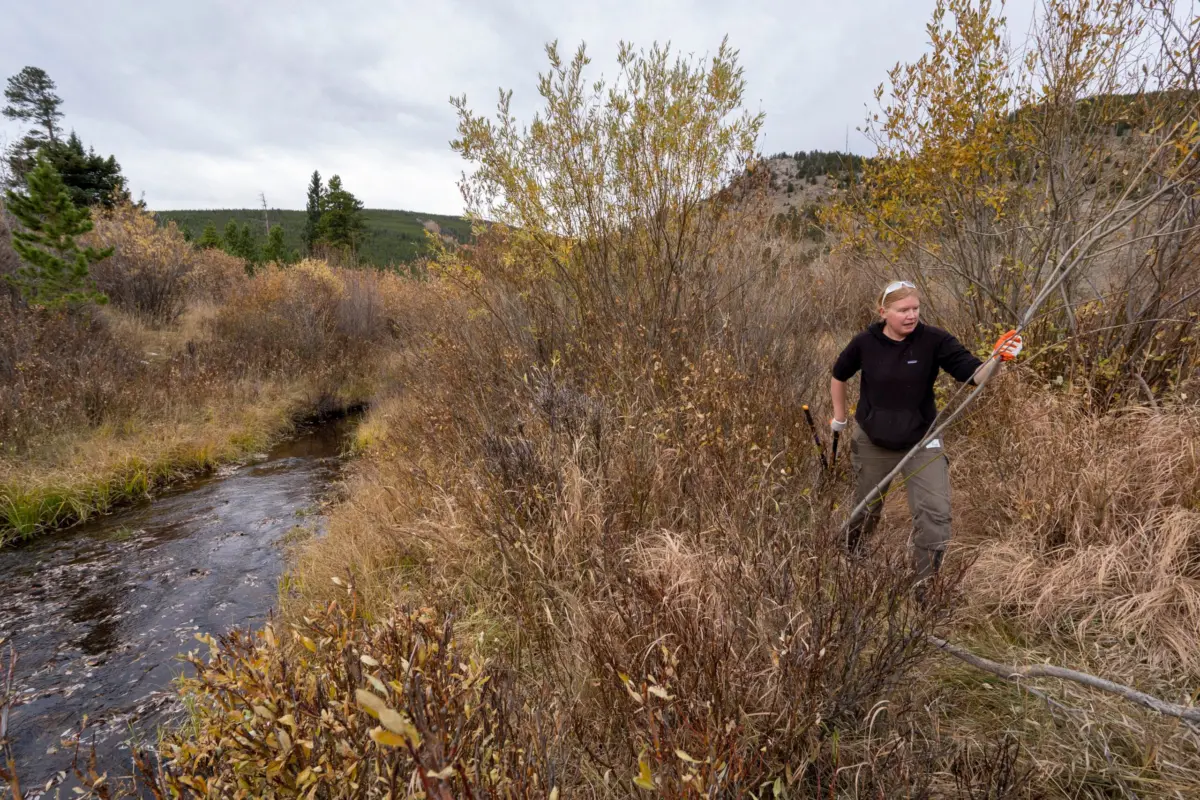
Across all three funding channels, a common denominator emphasized by Audubon and The Nature Conservancy is the embrace of Low-Tech Process-Based Restoration. Rather than relying on massive, expensive, and ecologically disruptive heavy civil engineering, LTPBR utilizes natural analogs—such as Beaver Dam Analogs (BDAs) and Post-Assisted Log Structures (PALS)—to restore river systems to dynamic equilibrium.
By mimicking historical beaver activity and natural wood accumulations, LTPBR reconnects streams to their floodplains, elevates depressed water tables, creates crucial thermal refugia for native aquatic species, and buffers riparian zones against the devastating impacts of wildfire. Because these techniques are cost-effective and scalable, they align perfectly with the funding caps and environmental mandates of the WaterSMART program.
Official Statements and Expert Insights
The collaborative initiative between Audubon and The Nature Conservancy underscores a broader paradigm shift in conservation: the recognition that top-down federal agencies cannot restore complex ecosystems in a vacuum. True watershed resilience requires empowering local actors.
During the joint webinar, conservation leaders emphasized that grassroots watershed groups possess an irreplaceable edge. Operating at the hyper-local level, these community-based organizations understand the intricate nuances of local water law, possess deep-rooted relationships with agricultural landowners and municipal leaders, and can monitor ecological shifts with a frequency and familiarity that federal bureaucrats simply cannot replicate.
"Grassroots watershed groups are uniquely positioned to spearhead the next generation of stream restoration across the American West," noted conservation organizers during the training sessions. "By pairing the ecological vision of groups like Audubon and TNC with the unprecedented capital of the Bureau of Reclamation’s WaterSMART initiative, we are building a durable framework where community dedication meets federal muscle."
Furthermore, experts highlighted the strategic sequencing of grants. For a fledgling watershed group, the roadmap to multi-million-dollar success is rarely a sprint; it is a calculated marathon.
"You don’t simply apply for a three-million-dollar EWRP implementation grant without the groundwork," explained webinar technical leads. "You use CWMP funding to build your coalition and complete your baseline watershed planning. You leverage Applied Science grants to model your hydrologic baselines and get your designs to that critical 60% threshold. Only then do you step up to the EWRP arena. This phased approach transforms small, under-resourced community groups into institutional powerhouses capable of managing landscape-scale conservation."
Future Outlook: Navigating the 2026–2028 Horizon
As the window for WaterSMART funding rounds extends steadily through 2028, the conservation community faces both a golden opportunity and a strict operational imperative. The availability of $85 million signals a monumental turning point, but capturing those funds requires proactive planning, rigorous technical adherence, and cross-sector collaboration.
Key Strategic Recommendations for Watershed Practitioners:
- Audit Project Readiness Immediately: Organizations must evaluate their active project portfolios against Bureau of Reclamation maturity benchmarks. Projects sitting below the 60% design threshold should immediately pivot toward CWMP or Applied Science funding streams to bridge the gap.
- Leverage Technical Partnerships: Grassroots groups that lack internal engineering or advanced hydraulic modeling capacity should lean heavily on institutional partners like Audubon, The Nature Conservancy, and state conservation districts to co-develop competitive, scientifically robust proposals.
- Prioritize Climate and Wildfire Integration: Given the West’s escalating climate crisis, proposals that explicitly integrate wildfire risk reduction, post-fire recovery, and drought resilience—such as Wildfire Ready Watershed plans—will enjoy a decisive competitive edge across federal and state review boards.
- Utilize Official Federal Resources: Practitioners are strongly encouraged to actively monitor and navigate the Bureau of Reclamation’s official digital architecture to track shifting deadlines, technical criteria, and funding announcements. Essential resources include:
Conclusion
The convergence of federal capital, cutting-edge low-tech restoration science, and grassroots determination has created an unprecedented window for ecological renewal across the American Rockies and beyond. By strategically navigating the complexities of the WaterSMART program—guided by the expert frameworks provided by Audubon and The Nature Conservancy—local watershed groups are well-equipped to turn millions of federal dollars into thriving, resilient aquatic ecosystems that will sustain birds, wildlife, and human communities for generations to come.