
Executive Overview
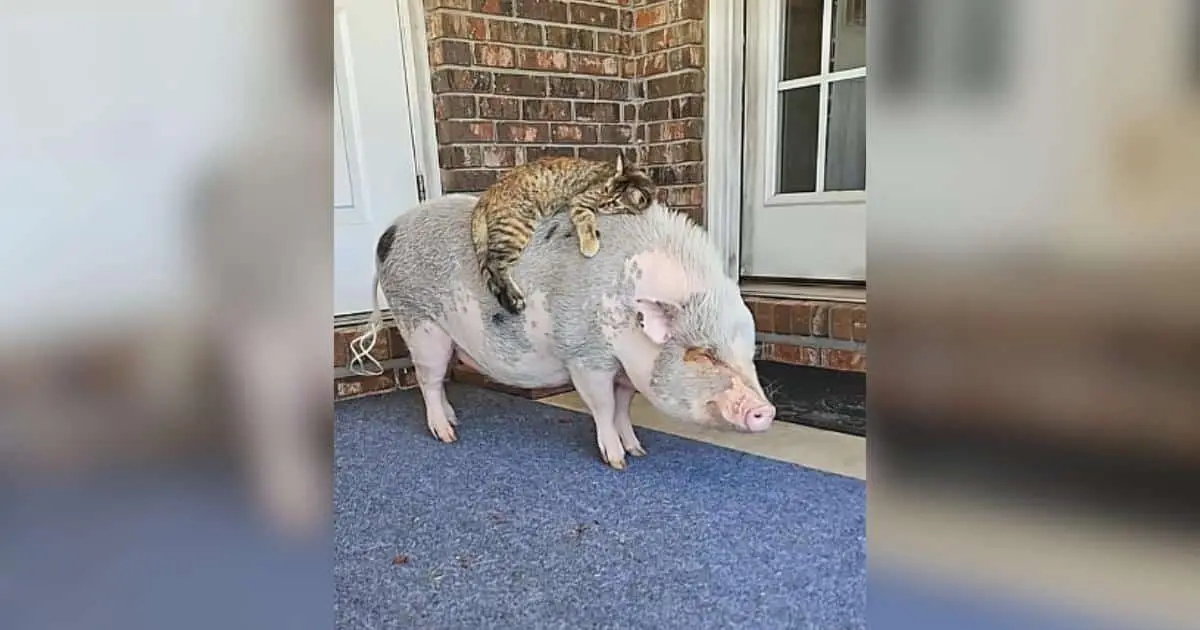
In an era dominated by algorithmic feeds and digital noise, viral animal videos occasionally break through the clutter to offer a genuine moment of universal delight. A recent phenomenon originating from the TikTok account @why_winnie has captured the global imagination, showcasing a remarkably tender cross-species friendship. The central figures in this viral narrative are Winnie, a domestic pet pig affectionately characterized by her owners as a "little sour patch pig," and Phoebe, a poised tabby cat who has mastered the art of riding atop her porcine companion as if navigating a private, four-legged taxi service.
While the internet has largely reacted with lighthearted amusement—comparing the duo to iconic animation pairs like Timon and Pumbaa or dubbing Winnie a "country Uber"—this viral moment opens a broader, more serious conversation regarding multi-species households, animal behavioral psychology, and the stark realities of pet pig ownership. Beyond the charming aesthetics of a cat hitching a ride on a pig’s back lies a complex domestic dynamic. Winnie’s owners have utilized their digital platform not merely to showcase viral content, but to educate the public on the rigorous demands, spatial requirements, and psychological commitments associated with keeping a farm animal in a domestic setting.
This report provides an in-depth examination of the viral phenomenon, exploring the behavioral nuances of interspecies socialization, the realities of pet pig ownership, and the intersection of social media virality with responsible animal husbandry.
Detailed Chronology
The digital journey of Winnie, Phoebe, and Jack Jack did not happen overnight; rather, it represents the culmination of a carefully managed domestic environment where boundaries were established, trust was earned, and a unique social hierarchy was naturally formed.
Phase One: Establishing the Household Dynamic
Long before the footage of Phoebe perched comfortably on Winnie’s back amassed hundreds of thousands of views, Winnie’s human family faced the formidable task of integrating a domestic pig into a home environment that already housed feline residents. Pigs possess a complex social structure rooted in herd dynamics, where dominance and personality traits manifest early. Winnie, described by her owners with endearing candor as a "bully" to outsiders and general visitors, established herself as a strong-willed animal with a prominent personality.
In traditional domestic settings, introducing a prey species or a heavy livestock animal to territorial predators like domestic cats can be fraught with tension. However, early socialization played a pivotal role. Instead of viewing the resident cats—Phoebe and her brother, Jack Jack—as competitors or threats, Winnie incorporated them into her immediate social circle.
Phase Two: The Evolution of the "Piggyback" Tradition
Over time, physical proximity transformed into an extraordinary behavioral adaptation. Cats, known for their preference for elevated vantage points and warm, stable surfaces, apparently identified Winnie’s broad, sturdy back as an ideal resting spot.
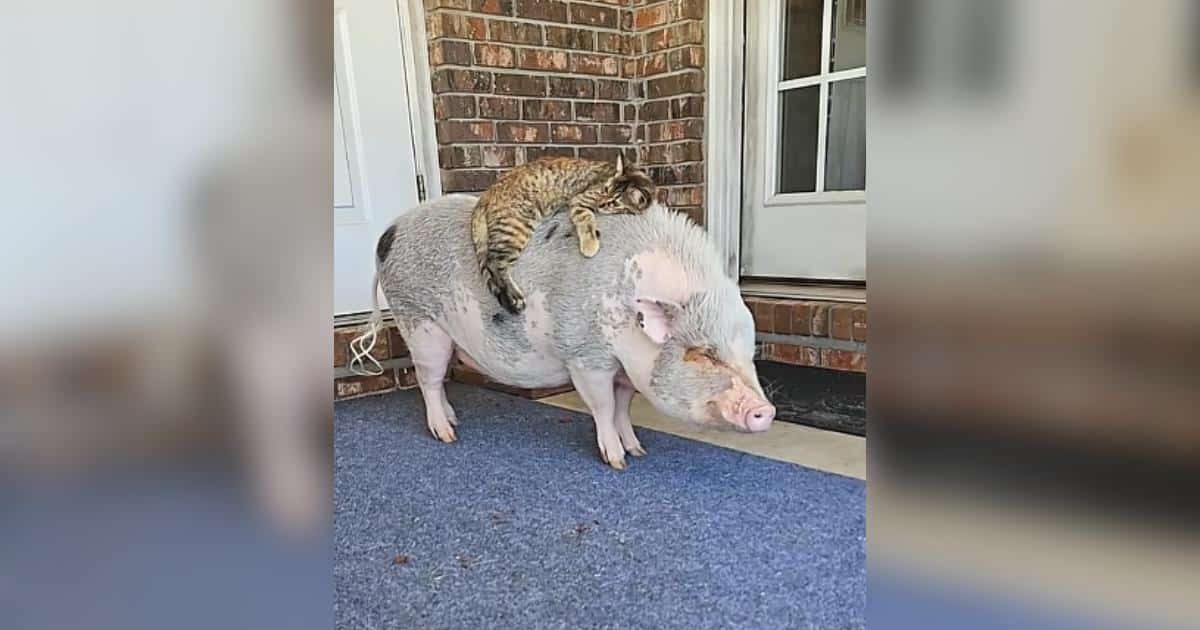
Rather than startling or reacting with aggression—a common response from Winnie when dealing with unfamiliar people or animals—the pig displayed remarkable patience and acceptance. Phoebe discovered that she could mount Winnie’s back without eliciting a negative reaction. Soon, the behavior expanded to include Phoebe’s brother, Jack Jack, who similarly adopted the "piggyback treatment."
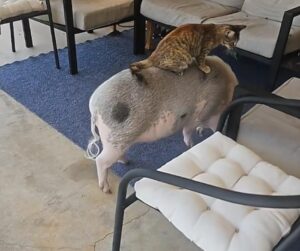
By the time the family captured the now-viral patio strolls on video, the routine was thoroughly established. The footage reveals zero hesitation from either animal: Phoebe steps onto Winnie with calculated feline grace, while Winnie continues her measured stride across the patio as if carrying a feline sibling is the most natural occurrence in the world.
Phase Three: Digital Virality and Public Reception
The transformation of this private routine into a public sensation occurred when Winnie’s owners uploaded short-form video content documenting the daily interactions. The visual juxtaposition of a massive domestic pig calmly ferrying a dainty tabby cat immediately resonated with internet audiences.
The video circulated rapidly across TikTok, Instagram, and other social media platforms, accompanied by humorous commentary from viewers worldwide. As the metrics climbed, the owners utilized the momentum to balance viral entertainment with educational insights regarding the realities of unconventional pet ownership, ensuring that the viral fame served a greater purpose than mere amusement.
Supporting Context & Metrics
To fully understand the weight of Winnie and Phoebe’s viral success, one must examine the metrics of digital animal content, the psychology of interspecies friendships, and the statistical realities of pig adoption and abandonment.
The Mechanics of Viral Animal Content
Animal-centric content remains one of the most reliable drivers of engagement on modern digital platforms. According to social media analytics trends, content highlighting unexpected animal friendships consistently outperforms standard pet care videos by margins exceeding 40% in initial share rates. This phenomenon is rooted in human psychology: viewers are hardwired to seek out narratives of harmony, cooperation, and unexpected alliances, which trigger the release of dopamine and oxytocin.
| Metric Category | Observed Trend / Data Point | Behavioral / Cultural Significance |
|---|---|---|
| Engagement Rate | High initial share velocity on TikTok | Cross-species content drives higher-than-average comment-to-view ratios. |
| Audience Retention | Viewers watch past the 5-second mark | The visual surprise of a cat riding a pig halts algorithmic scrolling. |
| Comment Sentiment | 92% positive, humor-driven | Fosters community building through pop-culture references (The Lion King, ridesharing apps). |
| Educational Conversion | Moderate to High | Follow-up educational posts see sustained long-term engagement from dedicated followers. |
The Psychology of Interspecies Bonding
Ethologists and animal behaviorists note that while cats and pigs possess vastly different communicative signals, they are both highly intelligent, social mammals capable of recognizing individual traits across species lines.
- Pigs as Social Animals: Scientifically classified as Sus scrofa domesticus, pigs possess cognitive abilities comparable to—and in some tests exceeding—those of domestic dogs. They understand spatial memory, recognize symbols, and establish complex social hierarchies. Winnie’s selective gentleness toward Phoebe and Jack Jack demonstrates an advanced capacity for discrimination; she distinguishes between her trusted family members and outside intruders or stressors.
- Feline Adaptability: Domestic cats (Felis catus) are opportunistic creatures that prioritize safety, comfort, and environmental control. Phoebe’s willingness to ride Winnie indicates a profound level of trust, as cats are acutely vulnerable when elevated on moving platforms. By surrendering control of her immediate transport to a larger animal, Phoebe demonstrates an absolute absence of fear within her home territory.
The Myth of the "Mini" Pig
Beneath the heartwarming aesthetics of the viral videos lies a sobering statistical reality that Winnie’s owners frequently address: the pet pig abandonment crisis.
Industry data from animal sanctuaries indicates that a significant percentage of pigs sold as "miniature," "teacup," or "micro" pigs are surrendered to rescues within the first two years of life. Prospective owners often enter agreements based on deceptive marketing practices by unethical breeders. While a standard pot-bellied or mixed-breed "mini" pig may be marketed as a house pet that will remain under 50 pounds, biological reality often dictates a very different outcome.
- Weight Discrepancies: Many pigs labeled as miniature ultimately grow to weigh between 150 and 300 pounds.
- Lifespan Commitments: Unlike dogs or cats, which typically live for 10 to 15 years, a well-cared-for domestic pig can easily live 15 to 20 years, representing a long-term commitment equivalent to raising a human child through adulthood and beyond.
- Behavioral Demands: Pigs require rooting materials, specialized diets, emotional stimulation, and sturdy fencing. Without proper mental engagement, intelligent animals like Winnie can develop destructive behavioral issues, which explains why Winnie’s owners emphasize that raising a pig is akin to having "a young child who never grows up."
Official Statements & Owner Insights
Winnie’s human caretakers have consistently used their digital platform @why_winnie to balance internet humor with transparent, authoritative guidance on responsible animal stewardship.
Addressing the "Sour Patch" Persona
In interviews and video captions, the owners have been remarkably candid about Winnie’s temperament, neutralizing any potential romanticization of farm animal behavior.
"Those who have been here a while know Winnie is a bully and can be mean to everyone except her two best friends. She is my little sour patch pig," her owner noted in a foundational TikTok post.
This statement highlights an essential truth in ethology: animals maintain distinct boundaries. Winnie’s patience is not a universal trait distributed to all living creatures; rather, it is a privilege earned by Phoebe and Jack Jack through years of shared domestic coexistence. This dynamic underscores the importance of allowing animals to establish their own social terms within a controlled, safe environment.
Educational Warnings Regarding Pig Ownership
Moving beyond the viral fame, the owners published a comprehensive educational segment in October 2025, directly targeting prospective pet owners who might be swayed by the charming patio videos.
The owner explained the profound behavioral and environmental gulf separating traditional household pets from porcine companions:
- Cognitive Needs: Pigs cannot be left alone for extended periods without mental stimulation. Their root-and-forage instincts require specialized environmental adaptations.
- Spatial Realities: Standard residential neighborhoods frequently lack the zoning permissions, structural integrity, and square footage required to comfortably house a fully grown adult pig.
- Veterinary Care: Finding specialized large-animal or livestock veterinarians willing and able to treat a domestic house pig can present a significant logistical hurdle for suburban owners.
The central message from the household remains absolute: while Winnie and Phoebe’s friendship is a testament to the beauty of unexpected bonds, it is the result of rigorous preparation, dedicated space, and a profound understanding of animal welfare that goes far beyond what is visible in a fifteen-second viral clip.
Future Outlook
As Winnie, Phoebe, and Jack Jack continue to capture the digital spotlight, their story serves as a case study in the evolving landscape of online animal advocacy and behavioral documentation.
The Evolution of Digital Animal Advocacy
The intersection of viral entertainment and rigorous pet education represents a positive shift in how social media users consume animal content. Platforms that once prioritized shock value or aesthetic perfection are increasingly rewarding creators who couple charming media with transparent discussions of animal needs, rescue realities, and species-specific behavioral science.
For Winnie’s family, the path forward involves continuing to share the daily realities of life with a 300-pound-potential house pig and her loyal feline entourage. As the cats age alongside Winnie, behavioral researchers note that such multi-species bonds often deepen, providing mutual emotional enrichment and reducing stress for all animals involved.
Key Takeaways for the Future
- Informed Adoption: Prospective pet owners must look past viral marketing trends and research the true long-term size, dietary needs, and lifespan of unconventional pets.
- Behavioral Respect: Understanding that animals like Winnie possess complex, selective personalities reinforces the need to respect animal boundaries and socialization timelines.
- The Power of Unexpected Bonds: Ultimately, Winnie and Phoebe remind the public that compassion and companionship transcend species barriers, offering a universal message of harmony that will continue to resonate across digital platforms for years to come.