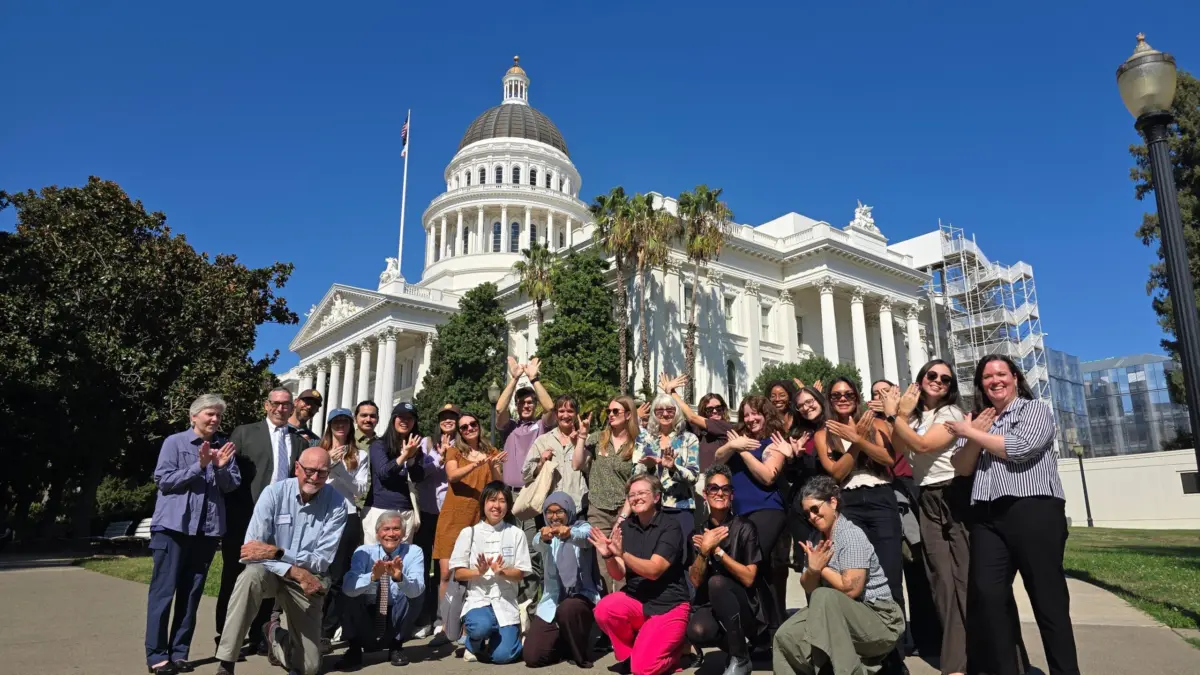

SACRAMENTO, Calif. — Under a blazing August sun, the halls of the California State Capitol played host to a vibrant tapestry of grassroots mobilization on August 11. In an event rich with symbolism and strategic significance, Audubon California marked its triumphant return to in-person lobbying with the official relaunch of its annual Advocacy Day. After a seven-year hiatus, the organization brought together a coalition of conservationists, students, community organizers, and regional leaders who converged on Sacramento to advocate for the preservation of fragile ecosystems stretching from the hyper-saline waters of the Salton Sea to the sweeping Pacific coastline and the bustling concrete jungles of the state’s major urban centers.
This high-stakes gathering was far more than a traditional lobby day. It served as a powerful demonstration of intersectional environmentalism, highlighting the inextricable link between the survival of native avian species and the health, resilience, and environmental justice of human communities. By uniting seasoned legislative advocates with first-time civic participants, Audubon California orchestrated a masterclass in grassroots mobilization, proving that personal narratives remain one of the most potent catalysts for systemic political change.
Executive Overview
The scale and diversity of the delegation that descended upon the State Capitol on August 11 reflected the vast ecological complexity of California itself. Participants traveled from every corner of the state, representing a broad spectrum of Audubon’s extended network: dedicated local chapter members, emerging environmental stewards from Audubon on Campus initiatives, alumni of the prestigious Coastal Leadership Program, and frontline advocates from the Salton Sea Leadership Program.
United by a singular, overarching mission—protecting the critical habitats that birds and humans mutually depend upon for survival today and tomorrow—the delegation engaged in a rigorous slate of direct meetings with key State Senate and Assembly staff members.
At its core, the event underscored a pivotal truth in modern conservation science: protecting birds means protecting the environments that sustain all life. From vanishing wetlands that serve as crucial pitstops along the Pacific Flyway to urban heat islands requiring aggressive canopy expansion, the policy priorities championed by Audubon’s network addressed the compounding crises of climate change, biodiversity loss, and environmental inequity.
The successful relaunch after a seven-year pause not only signals a renewed legislative presence for Audubon California in Sacramento, but also establishes a refreshed blueprint for community-driven advocacy that bridges the gap between grassroots passion and legislative execution.
Detailed Chronology: A Day of Action at the State Capitol
Morning: Arrival, Briefing, and the First Wave of Meetings
The day commenced early as participants gathered in downtown Sacramento for a comprehensive orientation and briefing. For many attendees, the morning air was thick with anticipation. The delegation was a study in contrasts and unity: veterans of environmental policy reviews stood shoulder-to-shoulder with college students experiencing the labyrinthine corridors of the Capitol for the very first time.
Following a detailed rundown of the day’s legislative priorities—which spanned water rights for shrinking interior lakes, funding for coastal resilience projects, and policies safeguarding urban biodiversity—the delegates were divided into regional and thematic teams. Armed with informational packets, scientific data, and, most importantly, deeply personal stories of local environmental degradation and stewardship, the groups fanned out across the Capitol annex and surrounding legislative office buildings.
The initial round of meetings set a collaborative yet urgent tone. Legislative aides and policy directors from both sides of the aisle welcomed the diverse delegations. Unlike corporate lobbyists armed with transactional talking points, Audubon’s advocates brought the living, breathing reality of California’s ecosystems directly to the desks of lawmakers.
Midday: Mentorship in Motion and Collaborative Storytelling
As the morning bled into afternoon, the true magic of the coalition’s diversity began to manifest. In the brief lulls between legislative appointments, huddled in Capitol cafeterias and on sun-drenched outdoor plazas, a dynamic process of peer-to-peer mentorship unfolded organically.
First-time advocates, initially hesitant about the formal cadence of political discourse, found reassurance in the guidance of seasoned chapter leaders. Veterans shared practical advice on how to distill complex ecological data into compelling human narratives, how to read a legislative aide’s body language, and how to pivot smoothly when faced with difficult policy questions.
This cross-pollination of experience transformed the delegation from a collection of disparate interest groups into a cohesive, highly functioning advocacy machine. Participants exchanged anecdotes about the specific landscapes that fueled their activism—from watching burrowing owls struggle against encroaching suburban sprawl in the Central Valley to monitoring declining migratory bird populations along the shrinking shores of the Salton Sea. By the time the afternoon sessions commenced, even the most novice participants radiated newfound confidence, stepping into legislative offices with poise and conviction.
Late Afternoon: Synthesizing Impact and Final Briefings
The final stretch of legislative appointments tested the physical and mental stamina of the attendees, yet energy levels remained remarkably high. Groups moved briskly from the Senate side to the Assembly chambers, putting their newly honed skills into real-time practice.
By late afternoon, as the final meetings concluded, a collective sense of accomplishment settled over the delegation. Participants debriefed outside the legislative chambers, comparing notes on which lawmakers showed the most receptivity to their conservation proposals. The overwhelming consensus was clear: personal stories had cut through the bureaucratic noise. Lawmakers and their staffers were forced to reckon not just with abstract environmental statistics, but with the lived experiences of constituents whose livelihoods, cultural traditions, and community health are directly tied to the fate of California’s natural heritage.
Evening: Celebration and Connection at the Happy Hour Reception
To cap off the rigorous day of advocacy, Audubon California hosted an evening happy hour reception designed to transition the mood from high-pressure lobbying to community celebration. The reception provided a vital space for participants to decompress, share highlights from their respective legislative meetings, and forge enduring bonds.
Laughter and animated conversations echoed through the venue as chapter members from Northern California swapped stories with campus leaders from the south. The event underscored a fundamental reality of sustainable social movements: effective advocacy is deeply relational. By building a robust, interconnected community of practice during the day and celebrating that solidarity at night, Audubon California laid the interpersonal groundwork necessary for sustained, multi-year legislative campaigns.
Supporting Context & Metrics: The Stakes for California’s Ecosystems
To fully appreciate the urgency of Audubon California’s Advocacy Day, one must examine the precarious ecological landscape of the Golden State. California sits at the intersection of several major ecological stress points, making it a critical bellwether for global biodiversity trends.
The Pacific Flyway Crisis
As a core segment of the Pacific Flyway—a major north-south flyway for migratory birds extending from Alaska to Patagonia—California has historically provided indispensable wetland stopovers. However, decades of agricultural over-extraction, prolonged megadroughts exacerbated by climate change, and aggressive urban development have decimated over 90% of the state’s historical wetlands. Species that rely on these waystations are facing unprecedented population bottlenecks.
Salton Sea: An Environmental and Public Health Emergency
Among the most critical battlegrounds highlighted by the delegation is the Salton Sea. Once a vibrant resort destination, California’s largest lake is now experiencing severe shrinkage and escalating salinity. As the water recedes, thousands of acres of toxic lakebed (playa) are exposed to the elements. High winds whip these fine particulate pollutants into the surrounding air, creating a public health crisis for local communities—predominantly low-income communities of color—while simultaneously destroying a vital wetland sanctuary for millions of migratory birds. The inclusion of Salton Sea Leadership Program alumni in the Capitol delegation brought urgent, frontline visibility to this unfolding catastrophe.
Urban Conservation and Environmental Justice
Beyond the wildlands and agricultural basins, Audubon’s network increasingly focuses on urban centers. The concrete expanses of Los Angeles, the Bay Area, and Sacramento present unique ecological challenges. Urban heat island effects, habitat fragmentation, and light pollution threaten resident bird populations while depriving marginalized urban neighborhoods of equitable access to green spaces. The presence of Audubon on Campus and urban chapter members in Sacramento emphasized that conservation is an environmental justice issue: communities lacking parks and tree canopy suffer disproportionately from environmental degradation, a disparity that intentional state policy must urgently address.
Official Statements
The resounding success of the August 11 Advocacy Day drew enthusiastic commentary from organizational leaders and participants alike, highlighting the profound emotional and strategic impact of the relaunch.
Reflecting on the emotional resonance of returning to the Capitol after a seven-year hiatus, leadership noted:
"After seven years, returning to the State Capitol for Advocacy Day felt especially meaningful. The day reminded us that advocacy is not only about what happens in meetings with policymakers, but also about building relationships, learning from one another, finding confidence in our collective voice, and creating a community of people willing to speak up for the places we love."
Participants echoed this sentiment, emphasizing the transformative nature of direct civic engagement:
"For some participants, this was familiar territory; they had years of experience speaking up for their communities and the issues they care about. For others, it was their first time stepping into a meeting and sharing their story with policymakers. That mix of experience was one of most meaningful parts of the day."
Audubon California leadership also extended deep gratitude to the grassroots network that made the mobilization possible:
"We are grateful to everyone who showed up, shared their stories, and helped make our relaunch of Advocacy Day so special. We can’t wait to see everyone, and hopefully even more of you, back in Sacramento next year!"
Future Outlook: Building a Lasting Legacy of Conservation Power
The relaunch of Audubon California’s Advocacy Day is not viewed by its organizers as a one-off event, but rather as the foundational cornerstone for a long-term, highly coordinated legislative strategy. As California faces compounding climate hazards in the years ahead, the necessity for an organized, vocal, and diverse conservation constituency has never been more pronounced.
Strategic Priorities Moving Forward
- Legislative Follow-Up: Following the August 11 meetings, Audubon’s policy team is maintaining an active dialogue with the Senate and Assembly offices that engaged with the delegation, tracking specific bill proposals and budget allocations related to water conservation, wetland restoration, and urban canopy funding.
- Expanding the Grassroots Pipeline: Building on the momentum generated by the campus chapters and leadership programs, Audubon California plans to scale its training initiatives. By equipping more young people, frontline community members, and chapter activists with professional advocacy tools, the organization aims to multiply its legislative footprint exponentially.
- Institutionalizing Annual Mobilizations: Following the successful seven-year hiatus comeback, Audubon California has formally committed to making Advocacy Day an annual fixture on the state political calendar. Organizers have already set their sights on the next legislative session, issuing a rallying cry to mobilize an even larger, more representative coalition for the return to Sacramento.
Ultimately, the events of August 11 served as a potent reminder that while the halls of power may occasionally feel distant to ordinary citizens, democracy remains responsive to those who show up with authenticity, preparation, and a unified vision. By giving voice to the birds, deserts, coasts, and urban centers of California, Audubon’s advocates proved that when communities stand together for the environment, policymakers cannot afford to look away.