
Published: September 17, 2026
Organization: Alley Cat Allies Advocacy Desk
Executive Overview
The landscape of community cat advocacy is shifting rapidly across the United States and its territories, driven by a combination of legislative milestones, urgent legal interventions, and grassroots mobilization. As municipalities grapple with the complexities of feline population management, advocacy organizations like Alley Cat Allies remain at the forefront, steering public policy away from outdated, punitive measures—such as feeding bans—and toward proven, humane alternatives like Trap-Neuter-Return (TNR).
This report provides an in-depth examination of recent developments across several key jurisdictions as of September 2026. From a monumental legislative push in Puerto Rico and a cruelty prosecution in Biscayne Park, Florida, to policy battles in Ripon, California, and statewide reform efforts in Michigan, animal welfare advocates are actively reshaping how communities interact with outdoor cats. Furthermore, this overview highlights the critical legal rights protecting caregivers who dedicate their time and resources to safeguarding vulnerable feline populations.
Detailed Chronology of Recent Advocacy and Legal Actions
The month of September 2026 has brought a flurry of legal and legislative activity, marking both significant victories for feline welfare and ongoing struggles against regressive municipal ordinances.

1. Puerto Rico: Capitalizing on Momentum for Humane Coexistence
Building upon recent victories—such as the hard-fought defense of community cats at Paseo del Morro against the U.S. National Park Service—Alley Cat Allies has amplified its campaign for systemic reform across Puerto Rico. This global call for humane action has directly inspired a fresh legislative push for lifesaving programs.
In response to the recent chamber passage of H.B./P.C. 1192, Alley Cat Allies formally reached out to Puerto Rican legislators to offer expert guidance, resources, and institutional support. The bill explicitly recognizes and supports TNR as an essential component of a broader strategy to foster community coexistence and authorize Municipal Animal Protection Offices. The success of this legislative milestone highlights the power of grassroots generosity and advocacy.
2. Biscayne Park, Florida: Demanding Justice in Cruelty Cases
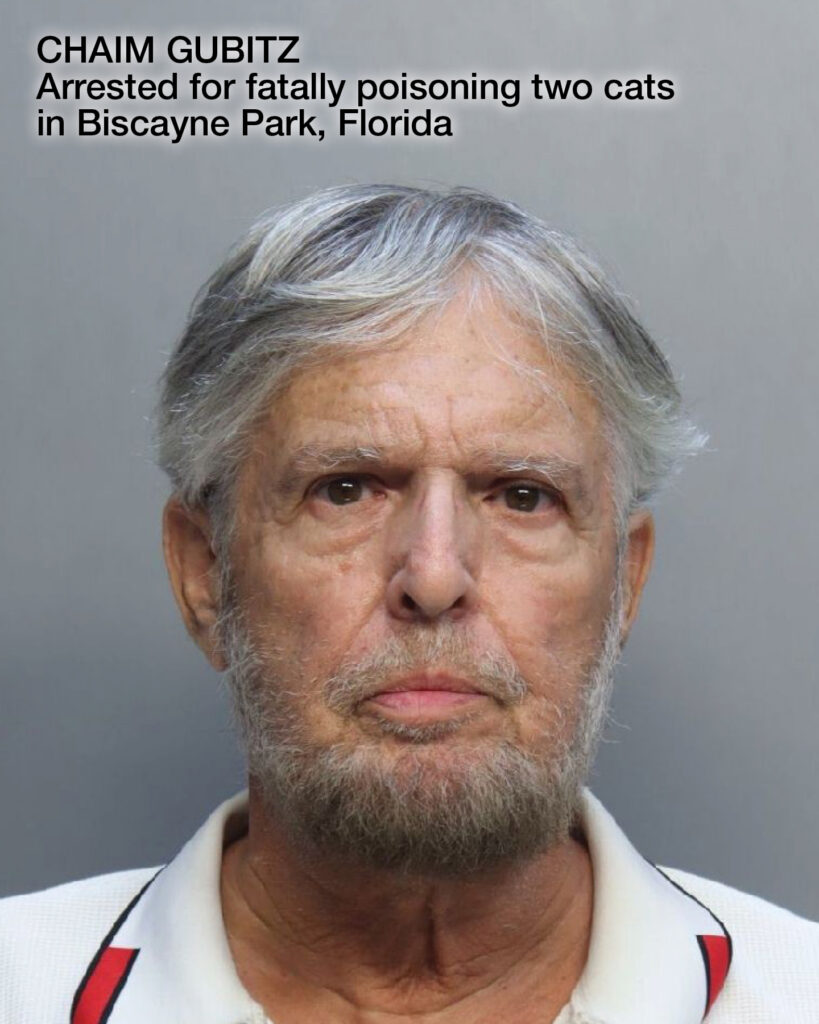
In Florida, the fight for animal protection took center stage following the arrest of Chaim Gubitz in Biscayne Park. Gubitz was charged with animal cruelty after allegedly using surveillance-monitored poison to target and kill two beloved neighborhood cats, Little and Stella, who accessed the toxic food placed along a shared fence line.
Poisoning remains one of the most insidious and agonizing forms of animal cruelty, causing extreme, prolonged suffering. To ensure that the legal system treats this offense with the gravity it demands, Alley Cat Allies intervened by sending a formal letter to the prosecuting attorney, urging the imposition of the maximum allowable sentence and offering specialized assistance from its animal cruelty expert network.

3. Ripon, California: Defeating Regressive Feeding Bans
In August 2026, the Ripon City Council introduced Ordinance 939, a restrictive measure designed to ban the feeding of cats on public property. Recognizing that feeding bans are both inherently cruel and demonstrably ineffective at reducing cat populations, Alley Cat Allies mobilized immediately, contacting councilmembers to voice strenuous opposition.
The pushback culminated on September 8, when local residents and advocates flooded the city council chambers to defend community cats and champion the efficacy of TNR. Faced with united community resistance—and equipped with expert resources provided by animal welfare organizations—a councilmember formally requested alternative guidance. Consequently, Ordinance 939 was tabled. However, advocacy efforts remain active as the city considers secondary registration requirements that could inadvertently penalize and suppress TNR participation.
4. Michigan: Refining Statewide TNR Legislation
During the summer legislative session, Michigan Representative Jason Morgan introduced House Bill 6317 (HB 6317), a landmark measure intended to institutionalize and promote TNR programs statewide. While welcoming Michigan’s commitment to progressive animal welfare reform, Alley Cat Allies conducted a thorough legal review to optimize the bill’s effectiveness.
Identifying potential administrative barriers and ambiguous language within the text, the organization submitted formal recommendations for amendments to Representative Morgan. These proposed changes aim to streamline TNR operations, ensuring that the final statute offers robust, unambiguous protections for both community cats and their human caregivers.
Supporting Context & Metrics: The Science of TNR vs. Feeding Bans
To understand the weight of these legislative battles, one must examine the foundational science and public policy data governing outdoor cat management.
Why Feeding Bans Fail
Municipalities frequently resort to feeding bans under the mistaken assumption that starving outdoor cats will cause them to disperse or die off. Decades of municipal data and animal behavior studies prove otherwise:
- The Vacuum Effect: Removing or starving an existing colony does not eliminate the habitat. Instead, it creates a "vacuum," drawing unsterilized cats from surrounding areas into the newly available territory, where they rapidly resume breeding.
- Public Health Risks: Starving cats become desperate, leading them to forage more aggressively in garbage containers and come into closer, more chaotic contact with human populations.
- Humanitarian Concerns: Feeding bans do not stop people from caring for animals; they simply drive caregivers underground, making it significantly harder to trap, neuter, and vaccinate the feline population.
The Proven Efficacy of Trap-Neuter-Return (TNR)
In contrast, TNR is endorsed by major veterinary associations, humane societies, and animal control agencies worldwide as the only humane and effective method of population control.
- Stabilization: By humanely trapping, sterilizing, vaccinating, and returning cats to their outdoor homes, colonies stabilize immediately and naturally decline in size over time through natural attrition.
- Behavioral Improvements: Neutering eliminates most nuisance behaviors associated with unspayed cats, such as yowling, roaming, and fighting, while halting the cycle of endless kitten litters.
- Economic Efficiency: TNR reduces the burden on municipal animal shelters, lowering intake numbers and sparing taxpayers the high costs associated with roundups and subsequent euthanasia.
Official Statements and Expert Guidance
The advocacy efforts spearheaded throughout September 2026 rely heavily on direct communication between subject-matter experts, legislators, and the judiciary.
-
On Legislative Support in Puerto Rico:
“The passage of H.B./P.C. 1192 represents a paradigm shift in how Puerto Rico approaches community animals. By authorizing Municipal Animal Protection Offices that champion TNR, the legislature is laying the groundwork for true community coexistence. We are committed to standing alongside local lawmakers to ensure these protections are codified and effectively implemented.” -
On the Biscayne Park Poisoning Incident:
“Poisoning is a premeditated, exceptionally cruel act that inflicts agonizing suffering upon defenseless animals. It is a crime plain and simple. By urging the maximum sentence in the Chaim Gubitz prosecution, we send an unequivocal message that society will not tolerate the malicious destruction of community and pet cats.” -
On Caregiver Empowerment and Rights:
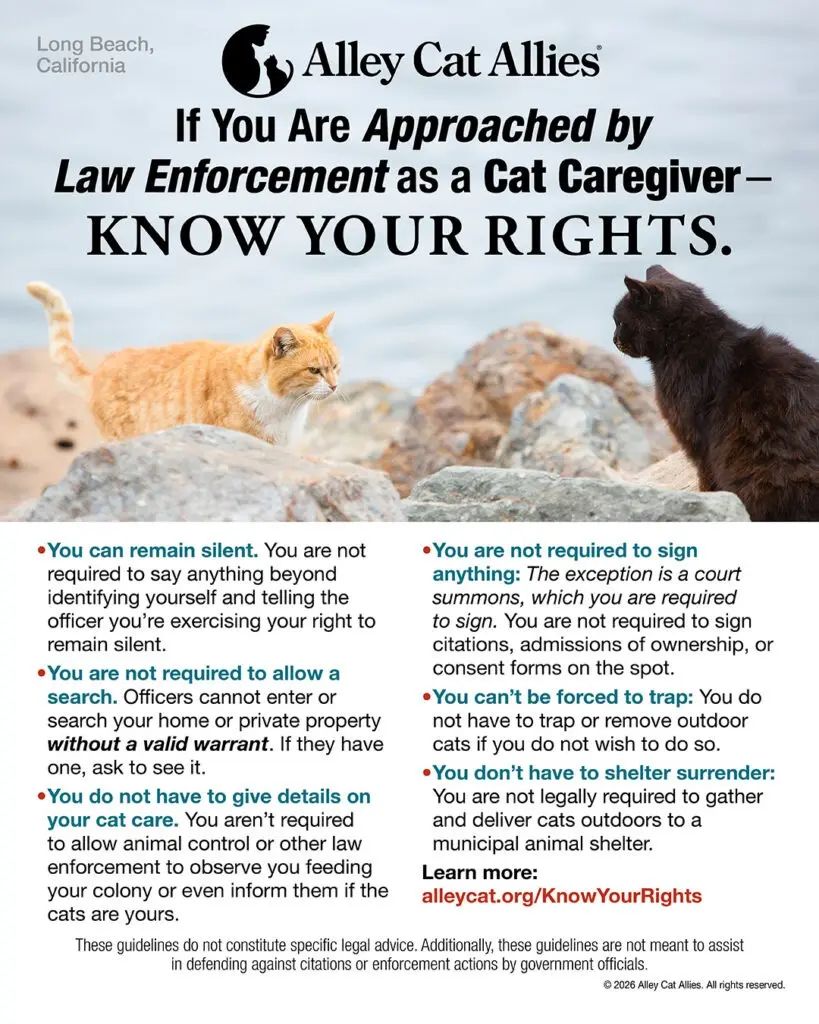
“Caregivers are the unsung heroes of neighborhood animal welfare. Understanding your legal rights is not just a matter of self-defense; it is essential for the ongoing protection of the cats who rely on you. Laws exist to protect those who engage in lawful, compassionate community service.”
Future Outlook: The Road Ahead for Community Cat Advocacy
As the final quarter of 2026 approaches, the trajectory of animal welfare legislation points toward increased national engagement and localized policy reform.
- Monitoring Michigan’s HB 6317: Alley Cat Allies will maintain a vigilant watch as the Michigan legislature reconvenes to review proposed amendments. The objective remains securing a statewide framework that eliminates bureaucratic obstacles for volunteer caregivers.
- Defending Ripon: In California, advocates must remain mobilized to ensure that the Ripon City Council does not replace Ordinance 939 with covert registration schemes designed to deter participation in TNR initiatives.
- Expanding Educational Outreach: Empowering citizens remains a core pillar of modern advocacy. Resources such as the Know Your Rights campaign (
alleycat.org/KnowYourRights) and poisoning response guides (alleycat.org/Poison) are vital educational tools designed to equip everyday citizens with the knowledge needed to counter cruelty and safeguard their local cat populations.
Ultimately, sustainable progress relies on active collaboration between local government bodies, humane organizations, and the compassionate individuals who care for outdoor cats every day. Through continued vigilance, education, and legal advocacy, the vision of a truly humane world for all cats is steadily becoming a reality.