
Executive Overview
Dublin’s public transportation network presents a complex, fragmented landscape for pet owners. Navigating Ireland’s capital and its surrounding commuter belts with a canine companion requires careful planning, as regulations vary wildly depending on the mode of transport, the size of the animal, and, in some cases, the discretion of individual staff members.
While small dogs enjoy relatively welcoming accommodations on coastal, commuter, and intercity rail lines, larger breeds face significant logistical hurdles. Meanwhile, light rail systems enforce absolute bans, and bus networks rely heavily on subjective, driver-by-driver enforcement. For residents and tourists alike, understanding these nuanced rules is essential to avoiding a disrupted journey. This report offers a comprehensive breakdown of Dublin’s transit ecosystem for pet owners, examining official policies, operational grey areas, and the practical realities of traveling through the city with dogs.
Detailed Chronology: Investigating Dublin’s Transit Rules
To uncover the precise parameters governing animals on Dublin’s public transit network, a formal inquiry was launched across major operators during the summer of 2016. The investigation revealed a stark contrast between formalized, codified rail policies and ambiguous, discretionary bus regulations.
Dublin Bus: The Era of Driver Discretion
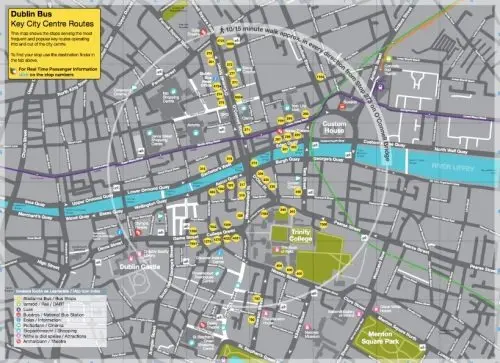
Operating an extensive network of urban and suburban routes throughout the Greater Dublin Area, Dublin Bus has historically maintained a policy silence regarding non-assistance animals. To clarify how pet owners should navigate this ambiguity, an official inquiry was dispatched to customer relations on July 24, 2016.
The resulting operator response highlighted a reliance on frontline staff discretion:
"All guide dogs and assistance dogs are permitted on all of Dublin Bus services however it is up to the discretion of the driver to decide whether any other dog is allowed to board the bus."
This leaves pet owners in a perpetual state of uncertainty. While a small dog safely secured inside an enclosed pet carrier or held securely in a passenger’s arms is rarely challenged, medium-to-large dogs leashed at their owner’s side face a high-risk scenario. Boarding a Dublin Bus with a larger canine essentially amounts to rolling the dice, entirely dependent on the mood, workload, and personal preference of the bus driver on duty.
Irish Rail (Iarnród Éireann): Codifying the Lap-Dog Privilege
Irish Rail operates the coastal DART system, regional commuter services, and intercity lines connecting Dublin to the rest of the country. Seeking to verify whether uniform pet regulations applied across all three rail sectors, a formal follow-up inquiry was submitted to Irish Rail. On August 4, 2016, corporate communications confirmed that the company’s core animal policy extends across its passenger operations.
According to official guidelines:
- Small Dogs: Permitted to travel free of charge within passenger compartments, provided they remain seated on the owner’s lap (either leashed or housed in a carrier).
- Assistance Animals: Guide dogs and accredited assistance dogs are welcomed across all Iarnród Éireann services without restriction.
- Large Dogs on Intercity Routes: Accompanied larger dogs are prohibited from passenger carriages and must be transported in a Guard’s Van (a non-passenger luggage compartment). This option is strictly limited to specific routes featuring dedicated vans—most notably Dublin-Cork and Dublin-Belfast services—and incurs additional freight charges.
The LUAS and Bus Éireann Restrictions
Further compounding the fragmented nature of Dublin’s transit network are the absolute restrictions enforced by the light rail operator LUAS and the national intercity coach provider Bus Éireann. Despite featuring two major tram lines (the Red and Green lines) serving the urban core, LUAS maintains an uncompromising stance: no companion animals of any size are permitted on board.
Similarly, despite sporting an iconic hound as its corporate logo, Bus Éireann explicitly prohibits domestic pets on its intercity coach fleet, aligning its policy with long-distance bus operators worldwide.
Supporting Context & Metrics: The Dublin Transit Ecosystem
To contextualize these transit policies, it is helpful to examine the scale and structural framework of Dublin’s public infrastructure. The city’s transit grid is managed by the National Transport Authority (NTA) and serviced by several distinct operating companies, each with legacy rules regarding animal transport.
The Multi-Modal Transit Grid
- Dublin Bus: The backbone of intra-city transit, operating hundreds of localized routes. Because it relies heavily on street-level boarding, dwell times at bus stops influence drivers’ willingness to grant entry to unconventional passengers like dogs.
- LUAS Light Rail: Comprising the Red Line (connecting Tallaght/Saggart to The Point) and the Green Line (connecting Broombridge to Brides Glen), this high-capacity tram network moves tens of thousands of commuters daily. Its zero-tolerance pet policy remains a primary bottleneck for cross-city pet mobility.
- DART (Dublin Area Rapid Transit): Running north-south along the scenic Irish Sea coast from Howth and Malahide down to Greystones, the DART acts as a vital artery for suburban commuters. Its integration with Irish Rail rules makes it the most reliable rail option for small-dog owners.
- Intercity and Commuter Rail: Connecting Dublin Connolly and Dublin Heuston stations to regional hubs across Ireland. These services offer the rare infrastructure needed for larger dogs (the Guard’s Van), though availability remains scarce.
Quantitative Metrics of Access
- Percentage of network explicitly welcoming small pets on laps/carriers: Approximately 60% (spanning DART, Commuter Rail, and Intercity Rail).
- Percentage of network welcoming large pets inside passenger cabins: 0% (large dogs are either barred entirely or relegated to luggage vans on select intercity routes).
- Proportion of light rail capacity accessible to pets: 0% (complete prohibition outside of certified assistance dogs).
Official Statements & Regulatory Framework
The regulatory stance on animals within Irish public transport is heavily influenced by statutory obligations toward accessibility, balanced against passenger hygiene, allergy management, and spatial constraints.
The Ascendancy of Assistance Animals
Across every transit provider in the Republic of Ireland—spanning Dublin Bus, LUAS, Irish Rail, and Bus Éireann—federal and corporate mandates guarantee unconditional access for accredited guide dogs and assistance animals. These animals are recognized not as pets, but as vital medical and mobility aids under Irish equality legislation. Transit staff are universally trained to welcome them without fare requirements or spatial restrictions.
The Regulatory Void for Pets
For domesticated pets, however, no overarching statutory right to public transit access exists in Ireland. Transport providers are legally empowered to set their own carriage conditions. This explains the stark regulatory divergence between:
- Irish Rail’s pragmatic accommodation of lap-sized dogs, which reflects British and European railway traditions where small animals in enclosed spaces are viewed as benign cargo.
- LUAS’s risk-averse ban, designed to prevent overcrowding, allergic reactions, and potential animal distress in high-density urban tram environments.
- Dublin Bus’s delegation of authority to individual drivers, which shifts the regulatory burden to frontline personnel who must balance schedule adherence against passenger complaints.
Future Outlook: Modernizing Urban Transit for Pet Owners
As Dublin continues to expand rapidly as a major European tech and financial hub, demographics are shifting. Urban densification, combined with rising rates of pet ownership among young professionals and families, is placing mounting pressure on municipal authorities and transport operators to modernize their infrastructure and policies.
Unification and Network Expansion
The physical integration of the LUAS Red and Green lines marked a major milestone in Dublin’s transit evolution. As urban planners look toward future Metro projects and expanded bus corridors (such as the BusConnects program), passenger advocacy groups are increasingly lobbying for harmonized, progressive pet policies.
Toward a European Standard?
Cities like Berlin, Paris, and London have long demonstrated that urban transit can successfully accommodate dogs of various sizes under standardized rules (e.g., mandatory leashes, muzzles for larger breeds, or discounted pet tickets). For Dublin to transition toward a similar standard, operators will need to move away from ad-hoc driver discretion and restrictive blanket bans.
Clear, codified guidelines—such as permitting leashed dogs during off-peak hours or designating specific pet-friendly carriages on commuter trains—would eliminate uncertainty for commuters. Until such systemic reforms are enacted, Dublin remains a city where traveling with a dog requires careful navigation, strategic carrier use, and a healthy dose of good fortune.
For travelers planning multi-city journeys or seeking comparative data on pet-friendly public transit across the globe, consult comprehensive transit guides such as Dog Jaunt’s curated repository of global public transit pet policies.