
Executive Overview
Pyometra—a severe, life-threatening uterine infection affecting intact female dogs and cats—remains one of the most critical medical and surgical emergencies encountered in small animal veterinary practice. Characterized by the accumulation of purulent exudate within the uterine lumen, this condition typically develops during the luteal phase (diestrus) of the canine estrous cycle. Under the influence of progesterone, the endometrium undergoes cystic hyperplastic changes (cystic endometrial hyperplasia, or CEH), creating an ideal, nutrient-rich environment for bacterial proliferation while simultaneously suppressing local myometrial contractions and immune defenses.
This case study, originally presented by Kendra Freeman, DVM, MS, DACVS (Large Animal/Small Animal), details the clinical presentation of a nine-year-old intact female Bulldog. The patient manifested classic systemic signs of illness, including lethargy, hyporexia, dehydration, and acute abdominal pain. Laboratory diagnostics revealed profound systemic inflammation, systemic inflammatory response syndrome (SIRS) indicators, and acute kidney injury (azotemia).
By analyzing this case through an investigative veterinary lens, clinicians can better understand the multifaceted pathophysiology, diagnostic pathways, epidemiological risk factors, and aggressive multidisciplinary management required to save patients suffering from advanced pyometra. This report explores the nuances of the condition, utilizing the patient presentation as a springboard for a comprehensive examination of canine reproductive health, clinical challenge assessment, and modern veterinary standards of care.
Detailed Chronology of the Case
Presentation and Initial Evaluation
A nine-year-old intact female Bulldog was presented to the veterinary facility with a primary complaint of acute-onset lethargy and a markedly decreased appetite spanning the previous 48 hours. The owner reported that the dog had been progressively less responsive, reluctant to move, and increasingly withdrawn.
Upon physical examination by Dr. Freeman, the patient exhibited significant systemic compromise. Vital parameters indicated mild hypothermia and tachycardia, while clinical evaluation of hydration status revealed tacky-to-dry mucous membranes, consistent with moderate-to-severe dehydration. Abdominal palpation elicited a marked, generalized tense response, suggesting painful visceral distension, peritonitis, or localized inflammation within the caudal abdomen.
Diagnostic Workup and Findings
Given the signalment (an older, intact female dog) and the acute clinical signs, a uterine infection was immediately prioritized on the differential diagnosis list. Blood was collected for a comprehensive diagnostic panel, including a complete blood count (CBC) and serum biochemistry profile.
- Hematology (CBC): The blood work revealed a striking leukocytosis characterized by a marked neutrophilia, frequently accompanied by a left shift (presence of immature neutrophils or band cells). This hemogram pattern underscored a severe, active inflammatory or infectious process occurring within the body.
- Serum Biochemistry: The biochemistry profile identified significant azotemia, demonstrated by elevated blood urea nitrogen (BUN) and creatinine levels. This pointed toward pre-renal azotemia secondary to dehydration and hypovolemia, compounded by potential renal compromise induced by circulating bacterial endotoxins (septic nephrosis or glomerulonephritis). Furthermore, serum globulins were markedly elevated, reflecting chronic or subacute antigenic stimulation and immune system activation secondary to the massive uterine infection.
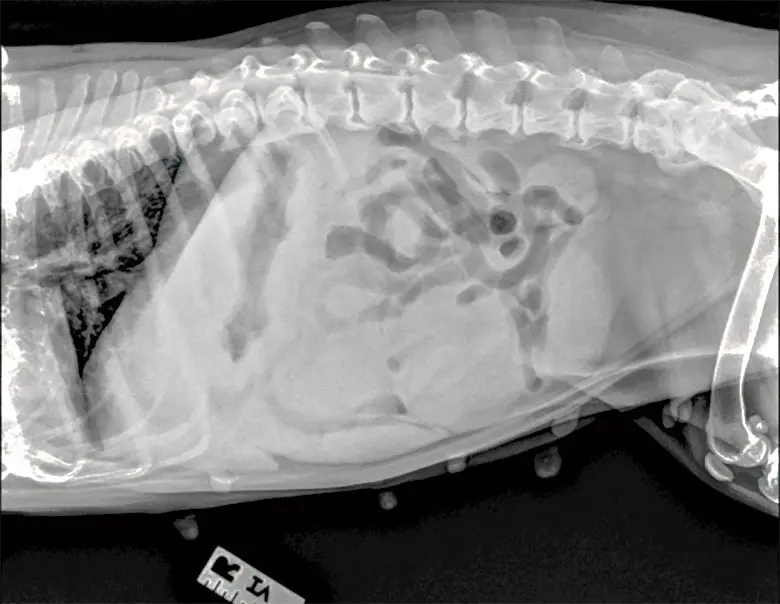
- Diagnostic Imaging: Abdominal radiography (as captured in the lateral abdominal view associated with the case file) characteristically demonstrates a tubular, fluid-filled soft-tissue opacity within the central and caudal abdomen, displacing the intestinal loops cranially and dorsally. Ultrasonographic evaluation confirms the diagnosis by visualizing a markedly enlarged, fluid-distended uterus with thickened walls and anechoic to hyperechoic luminal contents.
Clinical Stabilization and Intervention
The constellation of findings—lethargy, tacky mucous membranes, a tense abdomen, leukocytosis with neutrophilia, azotemia, and hyperglobulinemia—demanded immediate stabilization. Fluid therapy utilizing balanced isotonic crystalloids was initiated aggressively to correct perfusion deficits, restore renal blood flow, and address electrolyte imbalances. Broad-spectrum intravenous antimicrobial therapy, selected to cover common uropathogens, was administered concurrently.
Surgical intervention in the form of an emergency ovariohysterectomy (OHE) represents the definitive treatment of choice for closed-cervix pyometra (where purulent material cannot drain externally, escalating the risk of uterine rupture and peritonitis). Careful, atraumatic surgical technique is paramount to prevent iatrogenic rupture of the fragile, septic uterus during exteriorization and removal. Post-operative intensive care, including continued fluid diuresis, pain management, and monitoring of renal parameters, remains vital to ensure full recovery.
Supporting Context & Metrics: Unpacking the Clinical Challenges
To fully grasp the gravity of this case, veterinary professionals must evaluate the underlying epidemiological factors, pathophysiological metrics, and microbial agents driving the disease process. The clinical challenges highlighted in Dr. Freeman’s presentation provide a roadmap for this evaluation.
Challenge 1: Risk Factors for the Development of Pyometra
Question: Risk factors for the development of pyometra include:
- a) Retriever breed
- b) Estrogen administration/exposure
- c) Increased age
- d) All of the above
Correct Answer: d) All of the above
Detailed Context:
Pyometra is fundamentally a disease of hormonal influence and advancing age.
- Breed Predisposition: While any intact female dog can develop pyometra, epidemiological studies consistently demonstrate a higher incidence in certain breeds. Popular breeds frequently cited in veterinary literature include Golden Retrievers, Cavalier King Charles Spaniels, Rottweilers, Bernese Mountain Dogs, and Miniature Schnauzers, indicating a potential genetic predisposition in immune regulation or uterine physiology.
- Hormonal Exposure: Exogenous administration of estrogens (historically used for mismating protocols) or progestins (used for estrus suppression) significantly increases the risk of cystic endometrial hyperplasia. Estrogen primes the uterus by increasing the synthesis of progesterone receptors, and subsequent progesterone dominance during diestrus sets the stage for bacterial infection.
- Increased Age: The risk of pyometra increases cumulatively with age. With each successive estrous cycle, the endometrium undergoes repeated cycles of proliferation and regression, culminating in progressive histological changes (CEH). Consequently, unspayed bitches over the age of five are at exponentially higher risk than young nulliparous females.
Challenge 2: The Incidence of Pyometra in Intact Females
Question: The incidence of pyometra in intact females is:
- a) 15 percent
- b) 20 percent
- c) 25 percent
- d) 30 percent
Correct Answer: c) 25 percent
Detailed Context:
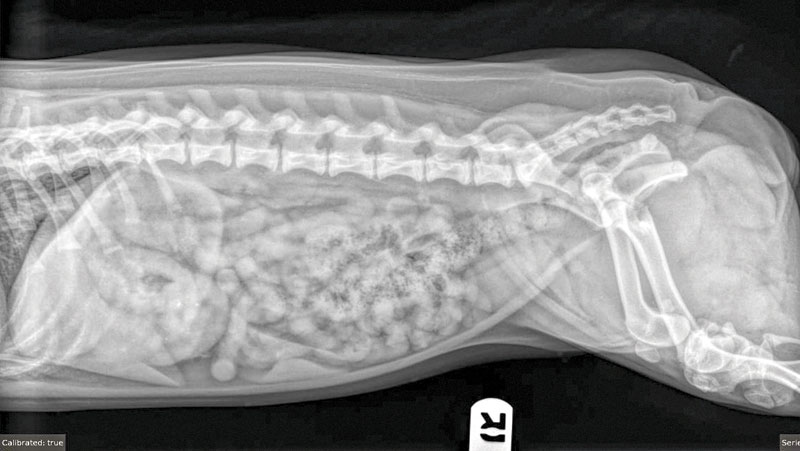
Epidemiological data compiled across large cohorts of intact female dogs reveal startling statistics regarding reproductive health risks. Landmark studies evaluating canine population health indicate that roughly one in four unspayed female dogs will develop pyometra by the time they reach 10 years of age.
This remarkably high incidence rate transforms pyometra from a rare medical anomaly into one of the most common endocrine-mediated infectious diseases in veterinary medicine. Despite public education campaigns by veterinary organizations, a significant percentage of female dogs remain intact, ensuring that veterinarians will continually face this emergency in daily clinical practice.
Challenge 3: The Most Common Pathogen in Pyometra Discharge
Question: The most common bacteria isolated from pyometra discharge is:
- a) E. coli
- b) Streptococcus sp.
- c) Staphylococcus sp.
- d) Klebsiella pneumoniae
Correct Answer: a) E. coli
Detailed Context:
While the canine vagina and lower urogenital tract harbor a diverse resident microbiota, the uterine environment during diestrus becomes uniquely susceptible to ascending infection by specific uropathogenic bacteria.
- Escherichia coli (E. coli): Accounts for approximately 75% to 80% of all bacterial isolates cultured from canine pyometra cases. E. coli strains capable of causing pyometra frequently possess specific virulence factors, such as P-fimbriae (adhesins), which allow the bacteria to bind securely to specific receptors on the canine endometrial epithelium, resisting mechanical clearance mechanisms.
- Other Isolates: Less frequently, secondary or opportunistic invaders such as Staphylococcus species, Streptococcus species, Proteus mirabilis, and Pseudomonas aeruginosa may be isolated, either as single infections or as part of a mixed microbial community. The profound endotoxemia often observed in severe pyometra cases is directly attributable to the lipopolysaccharide (LPS) cell wall components shed by gram-negative organisms like E. coli.
Official Statements and Expert Perspectives
Veterinary surgical specialists and emergency clinicians emphasize that pyometra must be treated as a systemic disease rather than a localized pelvic infection.
Dr. Kendra Freeman notes in her clinical summaries that the presentation of lethargy, dehydration, and abdominal pain in an intact older female must immediately trigger an emergency diagnostic protocol. "We cannot afford to view pyometra as a simple surgical extraction of an organ," emphasizes veterinary critical care specialist Dr. Elena Vance. "The systemic inflammatory response syndrome (SIRS) triggered by bacterial endotoxins released into the bloodstream can rapidly progress to multiple organ dysfunction syndrome (MODS). Renal impairment, as indicated by azotemia in this Bulldog, is an early warning sign of systemic collapse."
Furthermore, academic researchers in veterinary gynecology highlight the preventive imperative. According to data from the American Animal Hospital Association (AAHA) and global veterinary associations, early elective ovariohysterectomy remains the gold standard for entirely eliminating the risk of pyometra, cystic endometrial hyperplasia, and associated reproductive tract neoplasias.
When medical management (using prostaglandin F2-alpha analogs and progesterone receptor antagonists like aglepristone) is attempted in valuable breeding bitches, specialists stress that strict patient selection criteria must be met. Medical therapy is contraindicated in closed-cervix pyometra due to the extreme risk of uterine rupture, peritonitis, and death. Experts maintain that even when medical management successfully resolves an episode of open-cervix pyometra, recurrence rates in subsequent cycles remain exceedingly high, making definitive surgical intervention the preferred ethical and medical choice for long-term welfare.
Future Outlook and Clinical Takeaways
As veterinary medicine continues to advance, the management of complex reproductive emergencies like pyometra relies heavily on the integration of rapid point-of-care diagnostics, refined perioperative critical care, and targeted antimicrobial stewardship.
Diagnostic Evolution
The future of diagnosing conditions like the one seen in this nine-year-old Bulldog points toward faster, chairside biomarker assays capable of quantifying systemic inflammation and early endotoxemia before clinical parameters deteriorate significantly. Advanced ultrasonographic imaging and color Doppler assessment of uterine perfusion will further refine clinicians’ ability to assess tissue viability and predict surgical complications.
Antimicrobial Stewardship
With rising concerns regarding global antimicrobial resistance, veterinary practitioners are moving away from empirical, prolonged broad-spectrum antibiotic regimens without culture and sensitivity guidance. Future protocols emphasize targeted antimicrobial therapy based on uterine swab cultures obtained intraoperatively, combined with rigorous pharmacokinetic monitoring to ensure adequate tissue penetration in compromised patients.
Educational Outreach and Prevention
Ultimately, the most profound future outlook for pyometra management lies in prevention. Veterinary practices, kennel clubs, and animal welfare organizations must continue collaborative educational outreach campaigns targeting pet owners. Emphasizing the 25% cumulative incidence rate among intact females helps demystify the physiological risks of leaving female dogs unspayed and underscores the profound health benefits of elective pediatric or young-adult ovariohysterectomy.
For clinicians facing cases mirroring Dr. Freeman’s Bulldog presentation, the clinical takeaway is clear: prompt recognition of systemic signs, aggressive fluid resuscitation, meticulous surgical execution, and intensive post-operative supportive care transform a potentially fatal reproductive emergency into a successful survival story.